
Traceability is no longer just an optional added value—it is the foundation of any reliable supply chain. Whether it’s food, pharmaceutical products, or technical goods: Anyone who needs to know at any given time where a batch comes from, what route it has taken, and where it is currently located requires clear concepts, uniform standards, and end-to-end processes.
But the reality in many warehouses and shipping areas is quite different: incomplete labeling, inconsistent master data entry, and system disconnects that cost valuable time in an emergency—such as a product recall. This is exactly where this guide comes in.
You’ll learn what traceability means in a logistics context, how tracking and tracing differ, and what role established GS1 standards such as SSCC, GTIN, or EPCIS play in practice. We’ll also outline the applicable legal requirements and explain how to ensure seamless implementation—from inventory management to operational multi-channel logistics. PackageHERO® supports you every step of the way with in-depth practical expertise.
Table of Contents
- What Is Traceability? – Definition and Purpose
- Tracking vs. Tracing – A Comparison of Forward and Backward Tracking
- Product Recalls and Batch Traceability – Why Traceability Is Critical
- GS1 Standards for Traceability – GTIN, SSCC, GLN, GS1-128, and EPCIS
- Legal Framework – Article 18 of Regulation (EC) No. 178/2002 and the EU Traceability Requirement
- Implementing Traceability in Practice – Systems, Data, and Labeling
- Conclusion – Traceability as a Core Strategic Competency in the Supply Chain
- FAQ
What Is Traceability? – Definition and Purpose
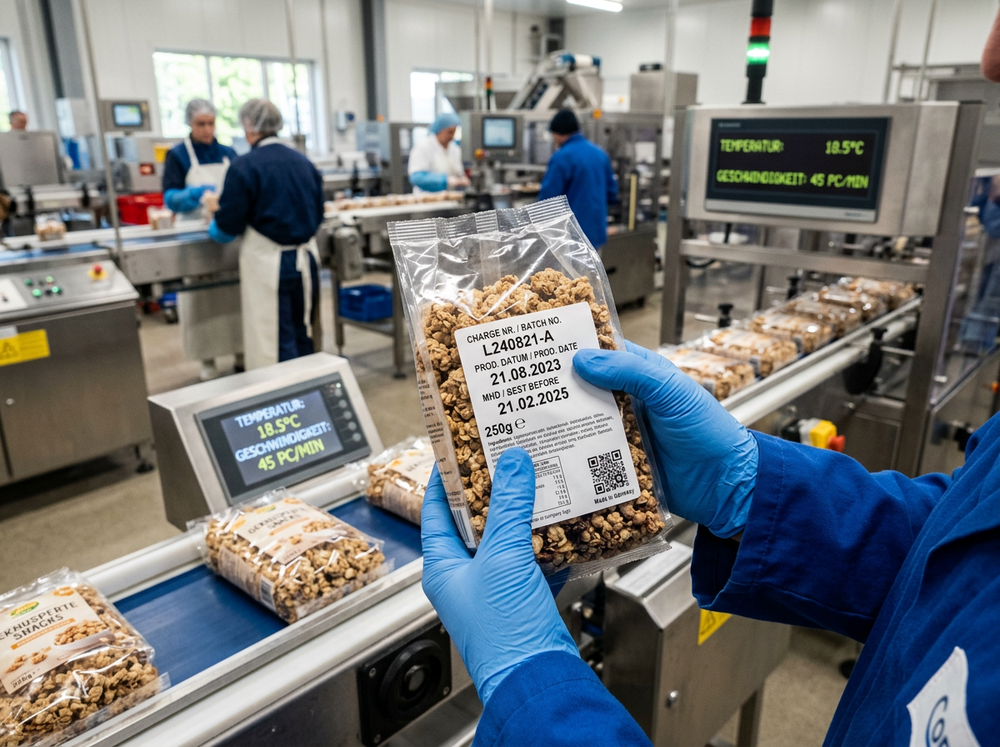
At its core, traceability refers to the ability to track the path of a product, a batch, or a raw material throughout the entire supply chain at any time. The concept encompasses the complete product genealogy: Who purchased, processed, or transferred what from whom, and when? It is crucial that this be a continuously maintained information system spanning all stages—not merely a one-time documentation effort.
Regulation (EC) No. 178/2002, which entered into force on January 28, 2002, and became mandatory as of January 1, 2005, governs precisely this requirement: It requires companies to ensure complete traceability from primary production to the final point of sale. It is important to distinguish this from mere labeling: lot number, batch number, or best-by date are technical requirements—traceability is the overarching system that brings this information together in a structured flow of data. ISO 22005, first published in 2007, is recognized internationally as the framework for the systematic development of such traceability management systems, although it does not impose a general certification requirement.
Tracking vs. Tracing – A Comparison of Forward and Reverse Tracking

Within a traceability system, two complementary processes can be distinguished; in practice, these are collectively referred to as “tracking” and “tracing,” but operationally they address opposite directions. Tracking refers to forward tracking along the supply chain—that is, the ability to determine, starting from a known point of origin, where a product or batch has been shipped (downstream). Tracing, on the other hand, answers the reverse question—where does this product come from, to which batch does it belong, and which upstream supplier provided it—by performing targeted backward tracking (upstream).
In this context, the term “reverse traceability” is deliberately understood as systematic tracking back to origin, batch, and supplier—and explicitly not as a returns process. Both directions rely on the same structured data points, which must be accurately recorded and passed on at every stage of the supply chain. The minimum legal requirements for this data path are outlined in the section on the legal framework (→ Legal Framework).
Tracking – Forward Tracking Along the Supply Chain
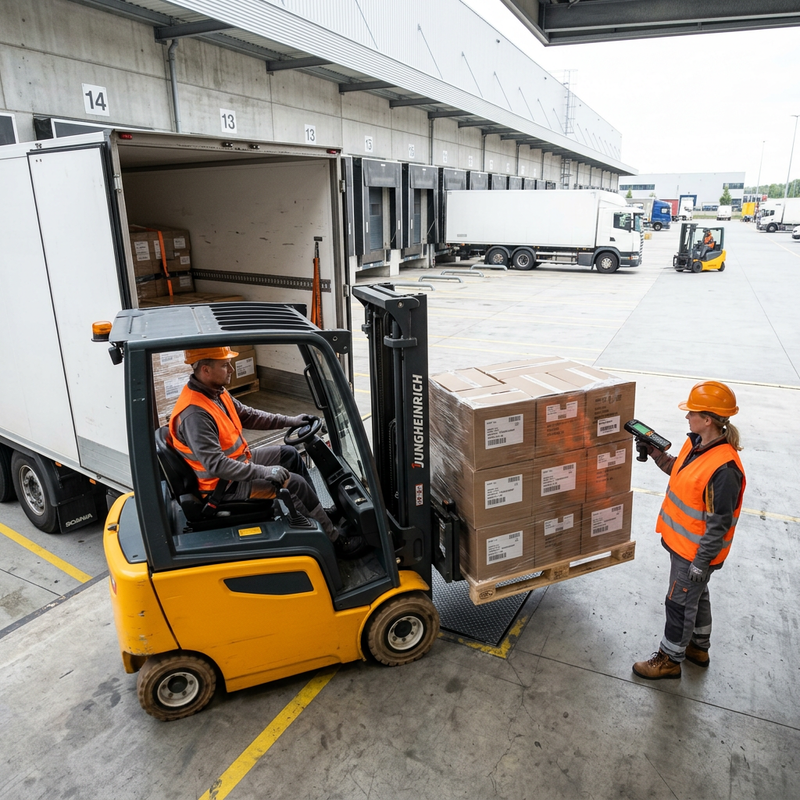
The practical value of downstream tracking lies not in the direction it indicates, but in the precision of the data points recorded for each station type. At the production site, the lot number, GTIN, and production date are recorded as the initial event. Upon transfer to the carrier, the SSCC of the shipping unit is added as the unit identifier (→ SSCC/NVE section). At the distribution center, the incoming scan, putaway location, and, if applicable, a transfer batch are recorded; at the retail recipient, a goods receipt scan completes the data path with the receipt date and order reference.
For particularly high-value or safety-critical products, the SGTIN (Serialized GTIN) offers an extension option: It supplements batch-based tracking with a unique serial number for each individual item, thereby enabling a complete genealogy down to the item level, independent of the batch context. Where the SGTIN is used, each unit can be treated as an independent tracking object—even if it moves from one shipping unit to another during the supply chain. A regulatory requirement arises in the field of medical devices: EU Regulation 2017/745 (EU MDR) mandates a Unique Device Identification (UDI) for medical devices starting with Class I, which follows the SGTIN logic on a carrier basis. Each device must be provided with a machine-readable UDI carrier that contains both the product identifier (DI, corresponding to the GTIN level) and the production identifier (PI, corresponding to the serial number or lot level). The UDI data must be stored in the European EUDAMED database—meaning that item-level traceability in this sector is no longer an optional improvement but a statutory minimum requirement.
Tracing – Traceability to Origin, Lot, and Supplier

In practice, upstream tracking places higher demands on traceability than forward tracking, because real-world production processes rarely allow for a linear, one-to-one mapping from input to output batches. Three scenarios structurally complicate batch traceability:
Lot splitting refers to the division of an input lot into multiple output lots—for example, when a raw material container is used for two production runs. In this case, the tracing system must be able to assign both output lots to their common source lot. Even more complex is the multi-ingredient problem: When ingredients from different delivery batches are combined in a single production step, the resulting output batches can be traced back to multiple source batches. Without explicit documentation of these n-to-m relationships in the system, the product genealogy can no longer be fully reconstructed backward. Third, gaps arise during batch consolidation in logistics when pallets containing different production batches with the same GTIN are transferred together without preserving the batch reference for each trade item.
A fourth source of complexity arises with cross-border batch splits: If an incoming batch is divided among production sites in different countries—such as the EU and the UK after Brexit—different national traceability requirements and retention periods come into play. Since 2021, the United Kingdom has had its own “retained law” regulations, which largely align with EU law in substance but are enforced nationally and may result in differing documentation requirements in specific cases. A tracing system must account for this divergence for each sub-batch and document the applicable legal basis in each case.
These four complexity scenarios demonstrate that upstream tracing is not merely a matter of data availability, but rather one of structural modeling decisions. ISO 22005 Chapter 5 explicitly requires that the transformation relationships between input and output units be defined as explicit system components—not as a retrospective reconstruction. Which of these relationships the system can map from the outset determines how far traceability actually extends in the event of an incident (→ batch identification and master data).
Product Recalls and Batch Traceability – Why Traceability Is Critical
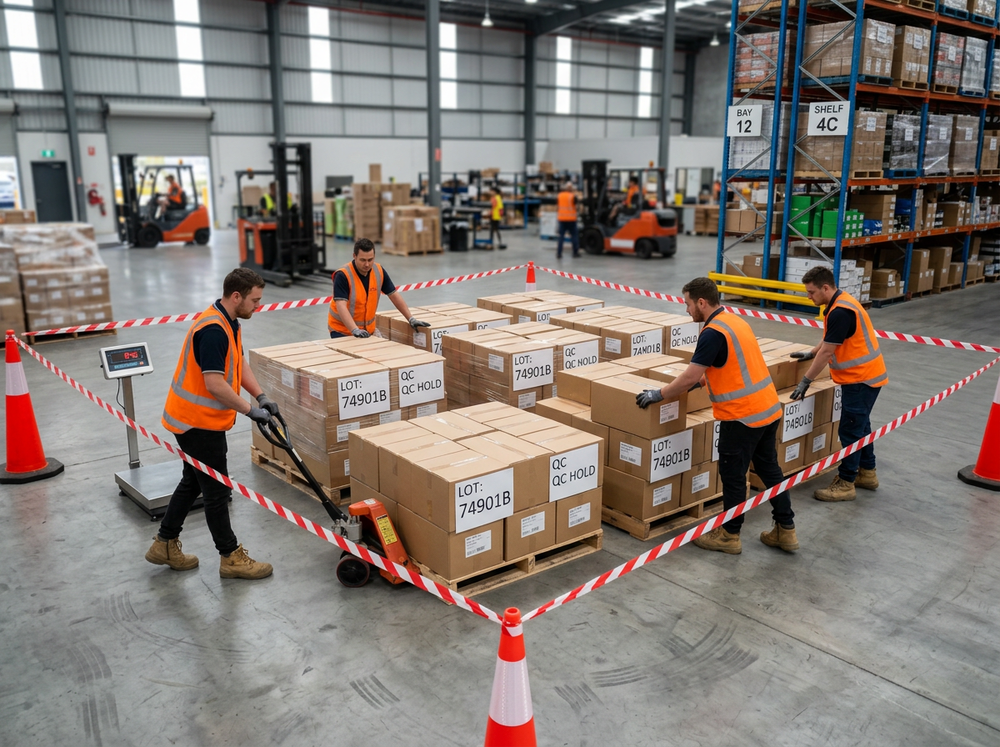
A product recall is not a single decision but a structured process with clearly defined phases—and each phase places specific demands on the traceability system:
- Event Detection: Quality defects, contamination, or safety risks are identified—either internally through internal controls or externally through customer reports or notifications from regulatory authorities. The system must immediately provide the affected lot number as the starting point.
- Batch identification: Based on the batch number, all affected lots, shipping units (SSCCs), and production runs are determined. In the case of mixed batches, all affected incoming batches must be traced backward. The goal is to establish a complete quantity balance within the timeframes required by regulatory authorities.
- Customer Notification: Forward tracking provides a list of all recipients supplied for each affected SSCC. Companies with end-to-end SSCC tracking can precisely narrow down the scope of affected goods because only the customers and units that were actually delivered are specifically identified—rather than blocking entire product lines as a precaution. Notifications must be verifiably documented; missing recipient data makes targeted notification impossible.
- Market Recall: Physical retrieval or blocking of the product at the customer’s location. The SSCC enables identification even if the original packaging has already been opened—provided that the unit level has been consistently tracked.
- Regulatory Notification: Food businesses are required under Article 19 of Regulation (EC) No. 178/2002 to immediately notify the competent authority if a product does not meet food safety requirements. The notification must include batch details, affected quantities, and the whereabouts of the goods—information that only a fully maintained data path can provide in a timely manner.
Product recalls and market withdrawals are therefore not exceptional events that can be handled on an ad hoc basis, but rather scenarios for which the traceability system must be structurally prepared.
Crisis Communication: Providing Information to Government Agencies and Affected Entities

If traceability fails in the event of an incident, or if batch traceability reveals a safety risk, two legally distinct reporting and information systems come into play, which must be precisely distinguished in terms of their content.
RASFF and National Authorities – Food Safety under Regulation (EC) No. 178/2002: The EU’s RASFF (Rapid Alert System for Food and Feed) distinguishes between three types of notifications: Alert Notifications for products already on the market that pose a serious risk; Information Notifications for products that pose a risk but do not require an immediate response; and Border Rejection Notifications for shipments rejected at the EU’s external borders. Article 50 of Regulation (EC) No. 178/2002 requires Member States to forward RASFF notifications without delay; in practice, a response time of within 24 hours after a request from the authorities serves as a guideline for national enforcement practices—not a legally codified threshold, but an established standard for the competent authorities. At the national level, coordination is carried out by the food control agencies of the federal states as well as the Federal Office of Consumer Protection and Food Safety (BVL); public consumer information is published via the portal lebensmittelwarnung.de.
Supply Chain Act (LkSG) – Different Scope of Traceability: The LkSG, which entered into force on January 1, 2023, takes a fundamentally different approach than the batch-based traceability required under Article 18 of Regulation (EC) No. 178/2002. It does not require companies to maintain product genealogy, but rather to fulfill human rights and environmental due diligence obligations toward direct suppliers and—where there are concrete indications—indirect suppliers. Upon entry into force, the law initially applied to companies with 3,000 or more employees in Germany; as of January 1, 2024, a lower threshold of 1,000 employees in Germany applies. Anyone who equates the LkSG with batch traceability is conflating two legally and operationally distinct systems—which together contribute to transparency in the supply chain but impose different documentation and process requirements.
GS1 Standards for Traceability – GTIN, SSCC, GLN, GS1-128, and EPCIS
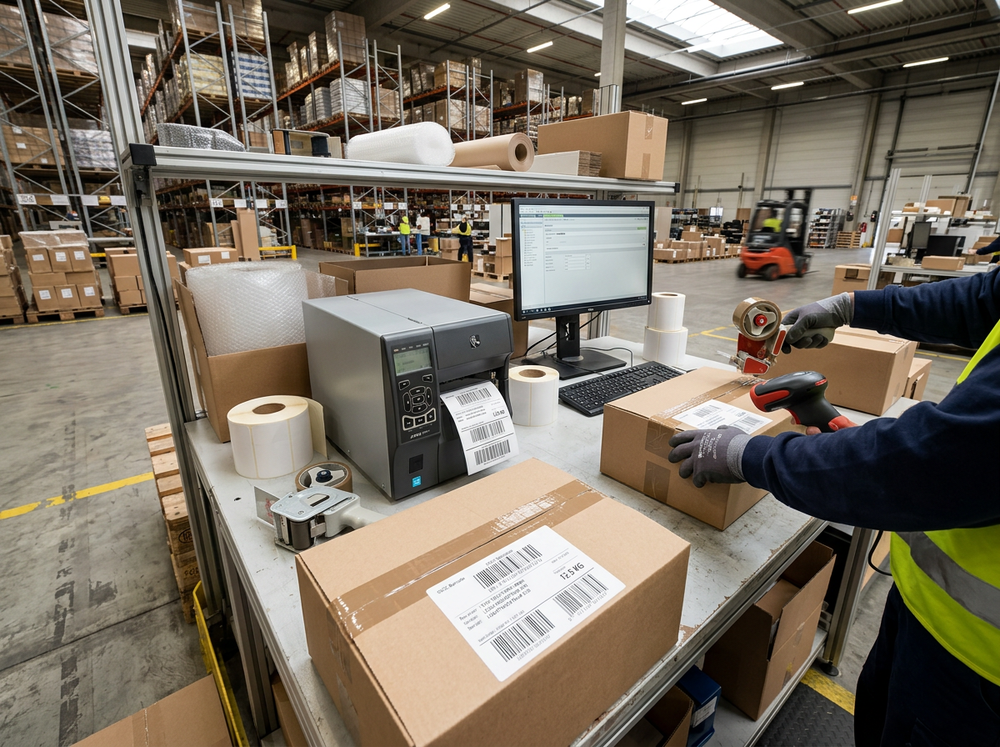
As the world’s leading standards organization for identification, communication, and data management in supply chains, GS1 forms the foundation for cross-system, seamless traceability. GS1 operates in over 150 countries; more than 2 million companies worldwide use GS1 standards (Source: GS1 Global). The key feature of this framework is that it is not a patchwork of isolated solutions, but rather a cohesive system that connects all levels of the supply chain: products, shipping units, locations, and event data.
The structural challenge here is fundamental: No single company knows all the downstream points a product will reach after its initial transfer. Supply chain paths emerge organically—through a sequence of commercial relationships that are not yet determined at the time of production. This is precisely why a common identification framework—followed by all participants, from raw material suppliers to retailers—is not merely a convenient solution, but the only technical foundation upon which supply chain paths can be seamlessly linked across corporate boundaries.
An overview of the four key building blocks:
- GTIN – uniquely identifies the contents of a shipment; see the section on GTIN for details.
- SSCC/NVE – uniquely identifies the logistics shipping unit worldwide; see the section on SSCC and NVE for details.
- GLN – answers the questions of “who” and “where”; details in the section on GLN, GS1-128, and EPCIS.
- GS1-128 / EPCIS 2.0 (published in 2022) – machine-readable labeling and standardized event data exchange; details are also provided in the section on GLN, GS1-128, and EPCIS.
Companies that consistently apply this understanding of the system to their labeling practices lay the operational foundation for robust traceability—and at the same time create the conditions necessary for suppliers and customers to be integrated into a common, end-to-end data path.
GTIN – Product Identification as the Basis for Product Traceability
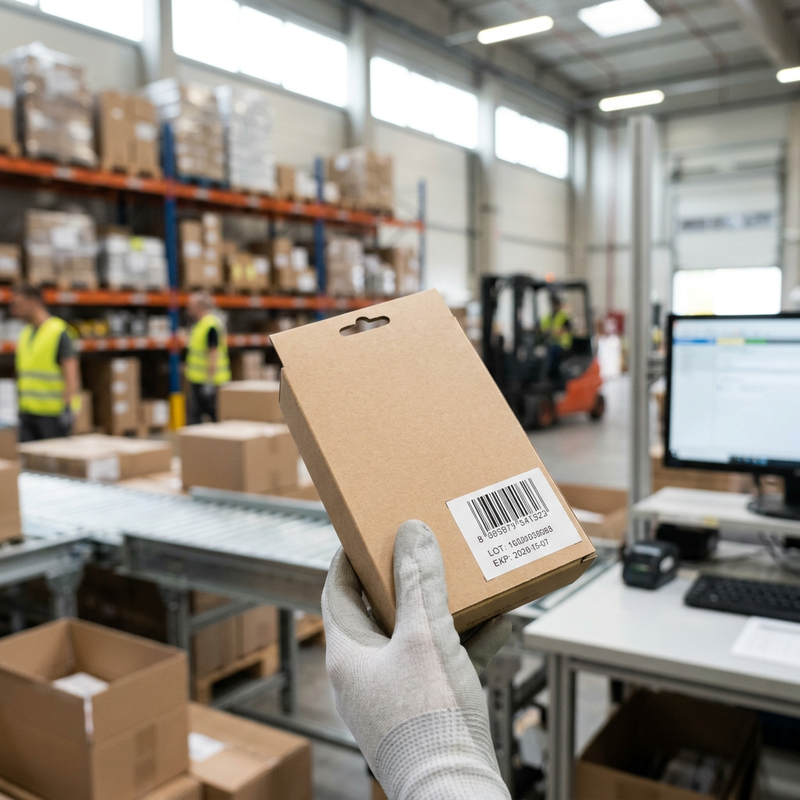
The GTIN (Global Trade Item Number) is a globally unique and non-overlapping identification number for trade items—whether a consumer unit, variant, or packaging level. It answers only the question of which product or variant is involved, thereby forming the indispensable foundation for product-based traceability: Without a GTIN, batch and traceability data cannot be uniquely assigned to a specific item.
On consumer units and trade items, the GTIN is applied in machine-readable form as a barcode—either an EAN or UPC—and is automatically captured at every scanning point. The EAN standard was introduced in Germany on July 1, 1977, and has since established itself as the product identification standard in over 100 countries; according to GS1 Germany, more than 130,000 companies in Germany alone have adopted it (as of GS1 Germany 2023). Only the GTIN, as a stable product identifier, makes it possible to consistently associate event and transaction data with a product throughout the entire supply chain.
SSCC/NVE – unique shipping unit and mandatory component of the shipping label
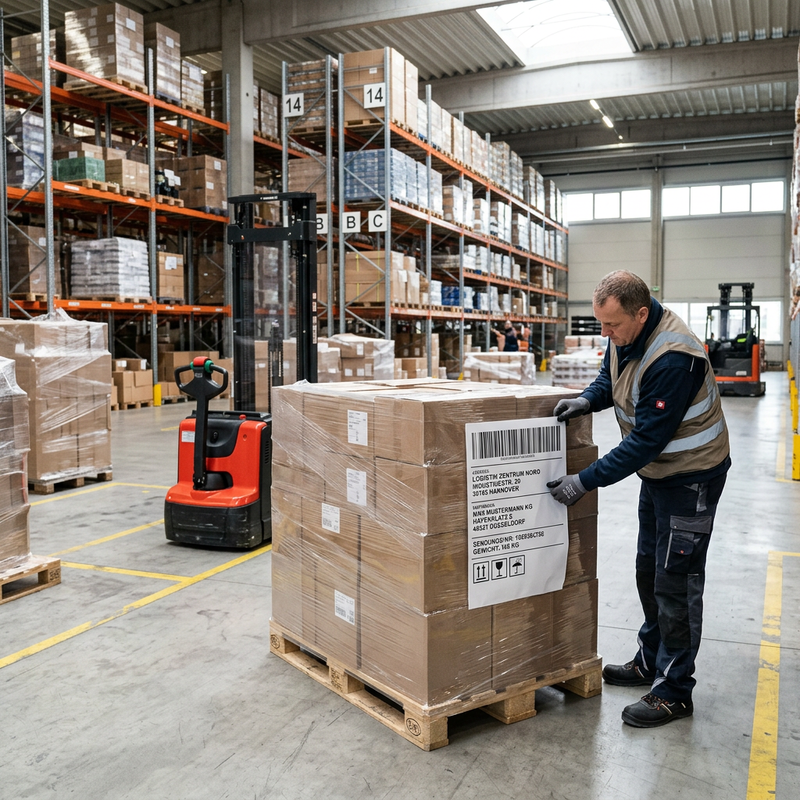
As a mandatory component of the GS1 shipping label, the SSCC—Serial Shipping Container Code, also known in Germany as the NVE (shipping unit number)—uniquely identifies each physical shipping unit, such as a pallet or a carton, worldwide without any overlap. Internationally, it has established itself on all five continents as the “License Plate Standard” in accordance with ISO/IEC 15459. Its true strength, however, lies in its role as a logistical bridge: The SSCC is linked to information about the contents, batch, sender, and recipient, thereby enabling seamless documentation of all storage, retrieval, and transfer steps across logistical boundaries.
It is represented primarily in the GS1-128 barcode standard, but also as an EPC (Electronic Product Code) and in the electronic data exchange formats EANCOM® and GS1 XML—and can thus be automatically captured and electronically transmitted. Every company operating within the GS1 system is required to use the SSCC on the shipping label.
GLN, GS1-128, and EPCIS – Location, Data Carriers, and Digital Data Exchange

As digital links in the GS1 framework, GLN, GS1-128, and EPCIS supplement product- and unit-related identifiers by adding the dimensions of location, label, and cross-organizational data exchange. The Global Location Number (GLN) identifies companies, locations, and functional areas as specific participants within the supply chain—thereby unambiguously answering the questions of “who” and “where.”
The GS1-128 barcode standard consolidates all relevant attributes—GTIN, lot number, best-by date, and SSCC—into a single machine-readable barcode on the logistics label, making this data automatically captureable at every scanning point. For cross-system data exchange, EPCIS (Electronic Product Code Information Services) is available as an open GS1 standard: It structures supply chain events according to the pattern “Who did what with a product, when, and where,” thereby enabling automated EPCIS traceability even across company boundaries. Consistent maintenance of item, supplier, and location data—as described in the section on master data quality—is essential for these three building blocks to reach their full potential.
Legal Framework – Article 18 of Regulation (EC) No. 178/2002 and the EU Traceability Requirement

In the European Union, the legal requirement for traceability in the food sector is based on Article 18 of Regulation (EC) No. 178/2002—the so-called General Food Law. This regulation sets forth the general principles and requirements of food law and mandates traceability from primary production through to the final point of sale. Since January 1, 2005, all companies that place on the market or process food, food ingredients, substances relevant to animal feed, or animals are required to establish and maintain a corresponding system on an ongoing basis.
The core operational principle is “one step back – one step forward”: Every company must be able to identify and document its immediate supplier and know to whom it has delivered. This obligation applies across all stages—from agriculture through processing, storage, and trade to logistics.
Noteworthy here is the prescriptive nature of Article 18: The regulation prescribes the result—complete traceability—not the technical method by which this result is achieved. Whether barcode, RFID, paper-based batch list, or EPCIS integration: the legislature leaves the choice of system up to the companies. However, this freedom of choice also means that the burden of proof lies entirely with the company. Anyone who cannot provide complete information in the event of an incident cannot cite a lack of technical requirements—but has simply failed to achieve the mandated result. In addition, at the national level, the German Food and Feed Code (LFGB) applies, transposing European requirements into German law. This legal framework is systematically embedded in the HACCP concept as a preventive control framework for food safety.
Implementing Traceability in Practice – Systems, Data, and Labeling
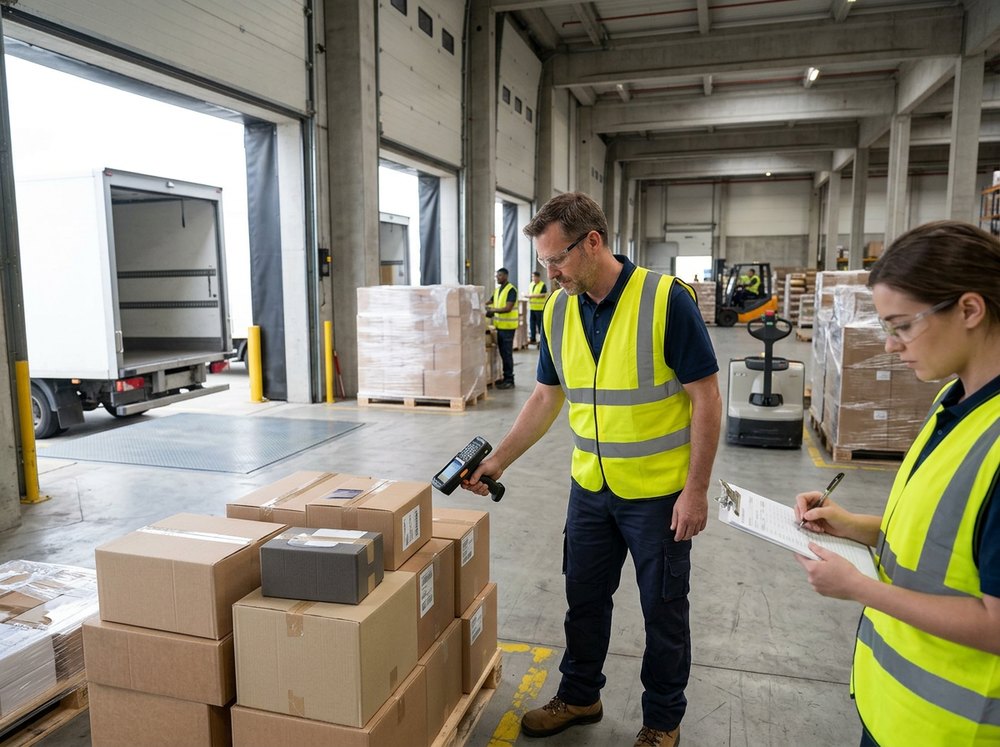
In practice, gaps in traceability often arise in the same places—regardless of how well the underlying concept is laid out on paper. If the bidirectional ERP interface to the warehouse management system is missing, silent batch breaks occur: A pallet is physically transferred correctly and posted in the WMS, but the associated order reference remains in the ERP with the status of the incoming batch. Reconciliation in the event of a recall then requires manually bridging the gap between the two systems—an effort that structurally jeopardizes the regulatory-mandated responsiveness during ongoing recall operations.
A well-designed replenishment control system that takes batch boundaries into account as planning parameters also prevents the creation of mixed inventories of different production lots in the warehouse, which would subsequently complicate upstream traceability. The section on digitization and system integration explains how individual event types are corrupted by system disconnects and which technical countermeasures are effective (→ Digitization and System Integration). PackageHERO® helps companies design labeling and logistics solutions so that physical labeling and digital data capture are coordinated from the very beginning.
Batch Identification and Master Data Quality as the Foundation of Traceability

Reliable traceability stands or falls with the quality of the underlying master data. ISO 22005 Chapter 5 specifies the required level of system detail: It stipulates that the traceability unit—that is, the smallest traceable unit—must be explicitly defined and that the transformation from input to output unit must be documented for each processing stage. Chapter 6 specifies which attributes must be uniquely assigned to this unit—from the lot number and supplier to the production date and quantity. These specifications determine how granular the system’s information can be in the event of an incident. For the practical implementation of master data capture across all involved systems, these definitions must be maintained not only completely but also consistently.
Incorrect master data turns every batch query into a manual search—which directly impacts the ability to provide information to regulatory authorities within statutory deadlines. In practice, typical master data errors occur that structurally disrupt the flow of information:
- Ambiguous batch numbers across multiple suppliers: If different upstream suppliers assign the same batch number to different production runs, it becomes impossible to clearly trace the origin in the event of a recall—the obligation to provide information to regulatory authorities cannot be met within the required timeframe.
- Missing GLN links during location changes: If a warehouse or production site is added to the system without being assigned a GLN, anonymous transfer points arise in the process flow—movements cannot be assigned to a specific entity.
- Inconsistent product master data: Discrepancies in GTIN assignments between the ERP and WMS systems result in batch movements not consistently following a product, causing traceability queries to yield no results.
Each of these types of errors has a direct impact on the ability to provide information in the event of a recall: If a transfer station cannot be unambiguously assigned to a recorded unit, traceability is lost at that exact point—and with it, the basis for a legally compliant response.
Digitalization and System Integration – End-to-End Traceability via Interfaces
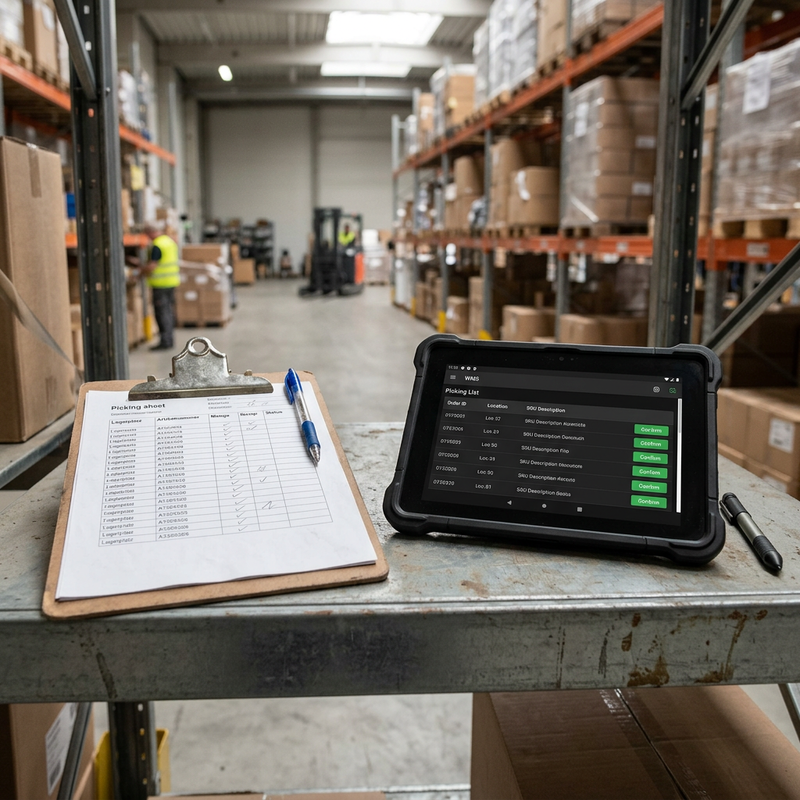
For a robust traceability system, digitization determines not only efficiency but also the fundamental functionality of traceability—especially when data must be exchanged across organizational boundaries. In practice, the implementation stages typically range from structured delivery notes and spreadsheet-based templates, through barcode- and scanner-based warehouse inventory tracking, to fully integrated ERP and WMS systems with EPCIS data connectivity as the integration goal.
However, even mature internal systems reach their limits as soon as heterogeneous IT landscapes collide at interfaces with suppliers or customers. This is precisely where the most common gaps arise. The greatest leverage therefore lies in standardized data exchange formats that connect all stages. EPCIS defines specific event types for this purpose: ObjectEvent describes a status change for a single object—such as the scanning of a pallet during goods issue. AggregationEvent documents the consolidation of units, for example, when cartons are consolidated onto a pallet. TransactionEvent links an object to a specific business transaction, such as a purchase order or a delivery note.
Each of these event types has a specific susceptibility to errors resulting from certain system disconnects: A lack of ERP feedback in the WMS primarily corrupts TransactionEvents – Warehouse movements are physically recorded correctly without the corresponding business transaction being reflected in the back-office system, resulting in a discrepancy between the logistical event and the back-office batch. Manual batch entries at scan points, on the other hand, primarily corrupt ObjectEvents: Typing errors or mix-ups in the batch number create incorrect object identities that propagate through all subsequent events and make later upstream resolution structurally impossible. For multi-channel logistics, this means: Even if the same batch is delivered via different fulfillment channels, all events remain assigned to a common data thread only if ObjectEvents and TransactionEvents are recorded completely and consistently.
A structural advantage of EPCIS over retroactively editable ERP batch records lies in the architecture of event logging: EPCIS logs are designed as append-only event chains—once events are written, they cannot be overwritten but can only be supplemented by new events. This makes them structurally more tamper-resistant than ERP entries, which can be corrected, redated, or overwritten in day-to-day operations. In the context of government agencies, this makes a concrete difference in terms of the burden of proof: A complete, immutable EPCIS log documents the actual state at the time of the event—whereas a retroactively modified ERP data record may require further explanation in case of doubt.
Conclusion – Traceability as a Core Strategic Competency in the Supply Chain

Traceability requirements will expand substantially in the coming years—both from a regulatory and technological standpoint—going beyond the obligations currently in place. Those who systematically build out their existing systems today will lay the foundation for both areas of development.
Regulatory Outlook: The EU Digital Product Passport will become mandatory for selected product groups starting in 2027. The first group affected will be batteries, in accordance with EU Regulation 2023/1542; for textiles and electronics, the Ecodesign Regulation (ESPR) forms the legal basis for corresponding implementing regulations. The product passport makes digital traceability data available throughout a product’s lifecycle and accessible to authorities and market participants—thereby requiring an infrastructure that goes far beyond today’s batch tracking. At the same time, the CSRD (Corporate Sustainability Reporting Directive) phases in its application by company group: publicly traded companies with more than 500 employees will report for the first time for the 2024 fiscal year; large unlisted companies will follow for the 2025 fiscal year, provided they exceed at least two of the three thresholds: more than 250 employees, total assets of more than 20 million EUR, or net revenue of more than 40 million EUR. Both sets of regulations require a robust database on supply chain structure as a prerequisite for non-financial reporting as well.
Technology Outlook: In parallel with the regulatory expansion, GS1 is developing an approach—the concept of Verifiable Credentials—that not only stores traceability data internally but also makes it cryptographically verifiable and verifiable across companies. A concrete first regulated use case is emerging for RASFF notifications: In the future, authorities could retrieve directly verifiable proofs of origin—which are cryptographically anchored to the respective supply chain events—instead of manually querying batches, thereby structurally reducing response times in the event of an alert. Those who invest today in end-to-end systems—from labeling and master data management to EPCIS integration—are laying the foundation upon which these upcoming requirements can be built. PackageHERO® supports companies in planning and implementing professional labeling and logistics solutions as a concrete foundation for a future-proof traceability system.
How does an efficient product recall work in practice—what information needs to be available, and by when?
An efficient product recall follows clearly defined phases: First, the affected batch number must be immediately available as a starting point. Building on this, all affected lots, shipping units (SSCCs), and receiving batches are identified through backward tracking—including a quantity reconciliation. Forward tracking is used to generate the complete list of recipients for each SSCC, so that only those customers who were actually supplied are specifically notified. The competent authority must be informed immediately—with batch details, affected quantities, and the current location of the goods. The legal basis for this reporting obligation is Article 19 of Regulation (EC) No. 178/2002, which requires food business operators to immediately notify the authorities. Only a consistently maintained data trail can provide this information in a timely manner.
What role does batch traceability play in a product recall—and how does a seamless traceability system help limit the scope of the recall to
In the event of a product recall, batch traceability is crucial for precisely defining the scope of the recall. The starting point is always the affected batch number: Through upstream tracing, all associated incoming batches, raw materials, and upstream suppliers are identified—and in the case of blended batches, multiple sources of origin can be identified simultaneously. Downstream tracking uses the SSCC to provide a complete list of customers supplied and affected shipping units. A seamless traceability system prevents entire product lines from having to be suspended due to a lack of information. Instead, only the batches and recipients that are actually affected can be specifically addressed.
What is the difference between tracking (forward, downstream: “Where to?”) and tracing (backward, upstream: “Where from?”) in the supply chain?
Tracking and tracing are two complementary aspects of a traceability system that operate in opposite directions: Tracking (downstream) answers the question “Where to?”: Starting from a known point—such as the production site—it tracks where a batch or product was sent. Typical data points include GTIN, SSCC, receipt date, and order reference for each station. Tracing (backward tracking, upstream) answers the question “Where from?”: It traces backward to determine which batch a product comes from, which supplier provided it, and which incoming batches were processed. Both methods rely on the same structured data points, which must be accurately recorded and passed on at every stage of the supply chain.
To which items does traceability apply—does it apply only to products, or also to raw materials, packaging, and transport units?
Traceability does not apply solely to finished products, but to all traceable items along the supply chain. These include: - Raw materials and ingredients – along with their respective delivery batches and origins - Semi-finished and finished products – identified by GTIN and lot number - Packaging units – as independent tracking objects, for example, when multiple lots with the same GTIN are transferred together - Transport units (shipping units) – uniquely identified by the SSCC/NVE It is crucial that the connection between these object levels is documented at every transfer point—that is, which raw material batch became which shipping unit in which production run. It is precisely these transformation relationships that form the core of a functioning traceability system.
What economic and legal risks arise if a company cannot demonstrate effective traceability?
The absence of a functioning traceability system gives rise to significant economic and legal risks. Legally, violations of Article 18 of Regulation (EC) No. 178/2002 may result in fines and regulatory orders. From an economic perspective, missing data in the event of a recall means that entire product lines must be suspended instead of specifically isolating the affected batches—which massively increases recall costs. Added to this are reputational damage, liability claims from affected business partners or consumers, and the loss of business partnerships that require traceability as a contractual condition.
For which industries and company sizes is supply chain traceability relevant?
Traceability is relevant across all industries—especially in sectors where product or batch quality has a direct impact on health and safety. The food and feed industries (legally required under Regulation (EC) No. 178/2002), the pharmaceutical and medical device industries, and the automotive and electronics industries are particularly affected. With regard to company size, the legal requirement for traceability applies regardless of company size. Whether a small food retailer, a medium-sized producer, or a large corporation—anyone who manufactures, processes, or distributes food, ingredients, or related products is generally subject to these requirements. Retail and logistics companies, as intermediate links in the supply chain, also bear responsibility.
What is traceability in the supply chain—and why is this topic becoming increasingly important for companies?
Traceability—also known as *traceability*—refers to the ability to seamlessly track the path of a product, batch, or raw material throughout the entire supply chain at any time: from primary production to the point of sale. It is not just a matter of labeling, but rather a consistently maintained information system that spans all stages. The issue is gaining importance because companies are legally required—for example, by Regulation (EC) No. 178/2002 —and because, in the event of an incident—such as a product recall—only a functioning traceability system enables a rapid, targeted response and prevents costly blanket recalls.
What role do professional packaging and labeling solutions play in the practical implementation of traceability requirements—and how do they
Professional packaging and labeling solutions form the operational foundation of every traceability system: Without correctly applied batch and SSCC labels on shipping units, neither forward tracking nor backward tracing can function reliably. Incomplete or inconsistent labeling directly leads to system failures—with costly consequences in the event of a recall. PackageHERO® helps companies establish this operational foundation properly: with practical expertise in GS1-compliant labeling, suitable packaging solutions for traceable distribution processes, and well-founded recommendations throughout the entire process chain—from master data entry to scannable labeling on pallets and shipping units.
What technical and organizational requirements must companies meet to ensure seamless traceability in their logistics operations?
To ensure seamless traceability, companies need both technical and organizational measures: Technically, standard-compliant labeling on every unit is crucial—such as GTIN at the product level and SSCC on shipping units. Every stage along the supply chain must capture event data in a machine-readable format: batch number, production date, storage location, and goods receipt scan. Systems such as EPCIS enable cross-company data exchange without media breaks. Organizationally, master data must be maintained in a complete, consistent, and up-to-date manner. Transformation relationships between input and output batches—such as in the case of lot splitting or mixed batches—must be explicitly documented. System disconnects between warehouse, shipping, and IT systems must be eliminated so that, in the event of an incident, all data points can be retrieved in a timely manner.
What consequences do companies face for violating the traceability requirements under food law as set forth in Regulation (EC) No. 178/2002?
Companies that violate the traceability requirements under Regulation (EC) No. 178/2002 face serious consequences on several levels: Regulatory measures include on-site inspections, product recalls, mandated market withdrawals, and fines—the amount of which is determined by national law and, in Germany, is regulated by the LFGB. Liability risks arise when, due to incomplete documentation, damages could not be mitigated in a timely manner and affected customers or consumers assert claims for damages. Operational consequences primarily relate to product recalls: Companies that cannot provide batch data to authorities within the required timeframe risk extensive product suspensions—far beyond the scope of the goods actually affected.
What does Article 18 of Regulation (EC) No. 178/2002 cover—and what does the “one step back—one step forward” principle mean for companies in practice?
Article 18 of Regulation (EC) No. 178/2002 requires all businesses in the food and feed chain to ensure the traceability of their products at all stages of production, processing, and distribution. The “one step back – one step forward” principle operationalizes this obligation: Each business must document from which immediate supplier it received a product—and to which immediate customer it passed it on. Full traceability across all stages is not required; the connection between the individual links in the chain is established through the complete documentation of each stage. In practice, this means that supplier and recipient data must be accessible at any time for each batch—particularly in response to requests for information from regulatory authorities and in the event of a recall.
How do GTIN (Global Trade Item Number) and GLN (Global Location Number) differ—and what role do these two identifiers play in the development of e
GTIN and GLN are two fundamentally different GS1 identifiers that answer different questions in the traceability system. The GTIN (Global Trade Item Number) identifies a product—in other words, “What is it?” It uniquely identifies a trade item and forms the basis for batch and shipment tracking. When combined with a batch number or serial number (SGTIN), the product identifier becomes a complete tracking anchor. The GLN (Global Location Number) identifies a location or organization—that is, “Where is it?” or “Who is involved?” It uniquely identifies production sites, warehouses, recipients, or suppliers in a machine-readable format. In the traceability system, the two are interlinked: The GTIN identifies the object in the flow of goods, while the GLN identifies the involved locations. Only together do they enable a complete reconstruction of the product’s genealogy—from the incoming batch at the upstream supplier to the customer receiving the delivery.
What does EPCIS (Electronic Product Code Information Services) offer in terms of cross-company traceability—and how does it complement existing
EPCIS (Electronic Product Code Information Services) is a GS1 standard that captures event data throughout the supply chain in a uniform format and enables it to be exchanged across companies. At the heart of the standard is the documentation of so-called events: When was a product observed, where, in what condition, and in what business context? In this way, EPCIS closes a critical gap in existing barcode systems: While GTIN, SSCC, or GS1-128 identify objects and units, EPCIS documents what actually happened to these objects at each stage. Barcode systems provide the “what”—EPCIS provides the “when, where, and why.” For cross-organizational traceability, this means that event data from production, warehousing, transportation, and goods receipt is consolidated into a structured, cross-system-compatible format—thereby enabling both forward tracking and upstream tracing across multiple organizational boundaries.
What are the most important GS1 standards for traceability—and what specific functions do GTIN, SSCC/NVE, GLN, GS1-128, and EPCIS each serve?
The most important GS1 standards for traceability are interconnected as a system: GTIN (Global Trade Item Number) uniquely identifies a product at the item level—the basis for all batch and product assignments. SSCC/NVE (Serial Shipping Container Code) identifies each shipping unit as a separate, unique logistics unit—which is crucial during the handoff to the carrier and in product recalls. GLN (Global Location Number) uniquely identifies locations and business partners—production sites, warehouses, or recipients can thus be clearly addressed. GS1-128 is the barcode standard that conveys the GTIN, SSCC, lot number, and other attributes in a machine-readable format on the label. EPCIS (Electronic Product Code Information Services) collects and shares event data—when, where, what, why—across companies, thereby enabling seamless forward and backward tracking along the entire supply chain.
Why is batch traceability particularly critical in the food, pharmaceutical, and automotive industries?
In the food, pharmaceutical, and automotive industries, batch traceability is particularly critical because defects in these sectors have direct health or safety implications. Contaminated food, defective medications, or faulty vehicle components can endanger human lives. The regulatory requirements are correspondingly stringent: In the food sector, the “one step back – one step forward” principle mandates the step-by-step documentation of all supplier and recipient relationships; in the medical device sector, the EU MDR 2017/745 requires a unique device identification for each individual unit—mandatory for Class I devices and above. A functional batch traceability system enables all these industries to precisely identify affected units in the event of a recall—rather than suspending entire product lines as a precautionary measure.

