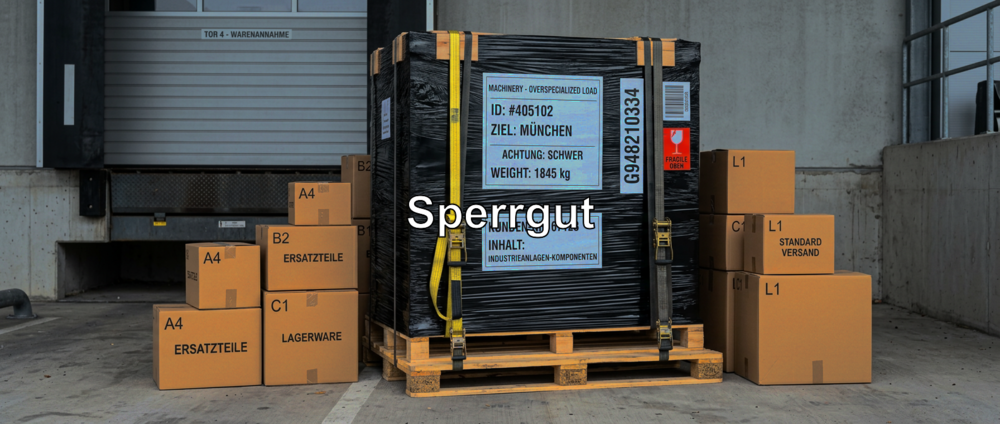
When it comes to oversized shipments in day-to-day shipping operations, it’s rarely just a matter of definition—it’s about cold, hard cash. Shipments that can no longer be handled through the standard package network due to their dimensions, shape, or weight trigger additional fees from nearly all major carriers. Shipping managers or logistics directors who don’t fully understand how this classification is determined end up paying surcharges that could often be avoided with the right processes.
This guide is intended for e-commerce operators, fulfillment service providers, and warehouse managers who make shipping decisions on a daily basis. It explains when a shipment is considered bulky, what thresholds DHL, DPD, Hermes, UPS, and GLS each apply, how the bulky shipment surcharge is actually calculated, and which measures are truly effective—from packaging optimization to automatic measurement at the shipping dock. After all, experience shows that it’s often not the product itself, but a box that’s just a few centimeters too large or an unaccounted-for girth measurement that pushes a shipment into the bulky-item category.
The structure follows the operational logic of the shipping process: from the definition of carrier limits and rate logic to specific preventive measures and a practical checklist. Once you understand the relationships between dimensions, shape, packaging, and rate structure, you can take targeted countermeasures—and permanently eliminate unnecessary costs from your shipping operations.
Table of Contents
- Bulky Items in Shipping: Why This Topic Is Relevant for Warehouses, Fulfillment, and E-Commerce
- What Is Bulky Cargo?
- When is a shipment considered bulky?
- Girth: The Most Common Factor Leading to Bulky Shipments
- How is a bulky shipment surcharge calculated?
- Typical Bulky Shipment Scenarios in Everyday Shipping
- Avoiding bulky item surcharges: Packaging as the first line of defense
- Measure packages correctly to avoid surcharges
- Automated package measurement as a solution for shipping warehouses
- Oversized Package Checklist for Operational Review
- Labeling, Processing, and Insurance for Bulky Items
- International shipping of bulky items
- Recommendations for shipping warehouses and fulfillment centers
- Conclusion
- FAQ


What is bulky waste?
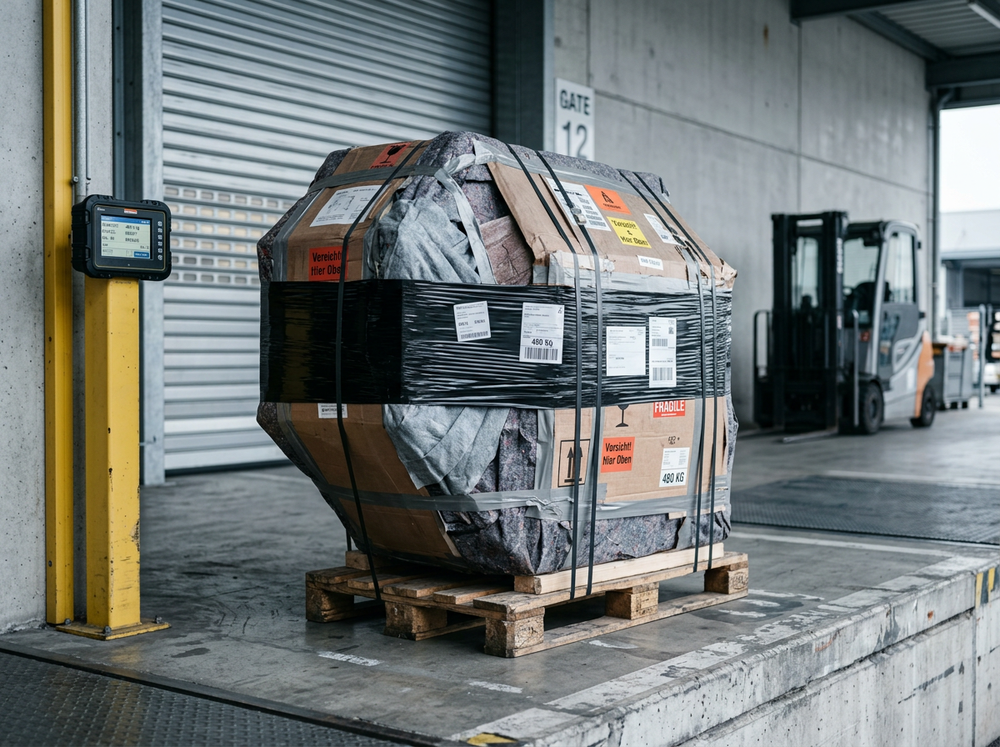
In parcel shipping, a shipment is classified as bulky cargo if, due to its dimensions, shape, weight, or inability to be conveyed, it can no longer be processed in compliance with regulations through a carrier’s automated standard parcel process. This may sound like a minor technical footnote, but in practice it has far-reaching consequences: Shipments that cannot pass through conveyor belts, sorting lines, and transfer points in accordance with standard procedures are manually sorted out, assessed separately, and billed under a different rate category.
The key difference from a standard package shipment isn’t just the weight. A shipment can be light and still be considered bulky—for example, because it is too long, too voluminous, not cuboid in shape, or mechanically unstable. Carriers expect packages for standard operations to be stackable, dimensionally stable, and suitable for machine handling. As soon as one of these requirements is not met, the shipment is diverted from the standard process. This happens, for example, with packages containing protruding parts, roll goods without a stable outer contour, or boxes that do not retain their shape due to inadequate packaging.
What does “oversized cargo” mean in terms of shipping rates? Primarily, it represents a separate price segment with its own assessment criteria. Classification is not based on a single dimension, but rather on a combination of length, overall dimensions, girth, weight, and shape characteristics. For this reason alone, the question of whether a shipment qualifies as bulky cargo cannot be answered from a desk—it must be determined at the shipping desk through accurate measurement and targeted packaging decisions. Carriers also reserve the right to reclassify shipments retroactively if booking data differs from actual dimensions. This results in the dreaded additional charges, which often don’t appear on the invoice until weeks after shipment.
Bulky Items in Shipping: Why This Topic Is Relevant to Warehousing, Fulfillment, and E-Commerce
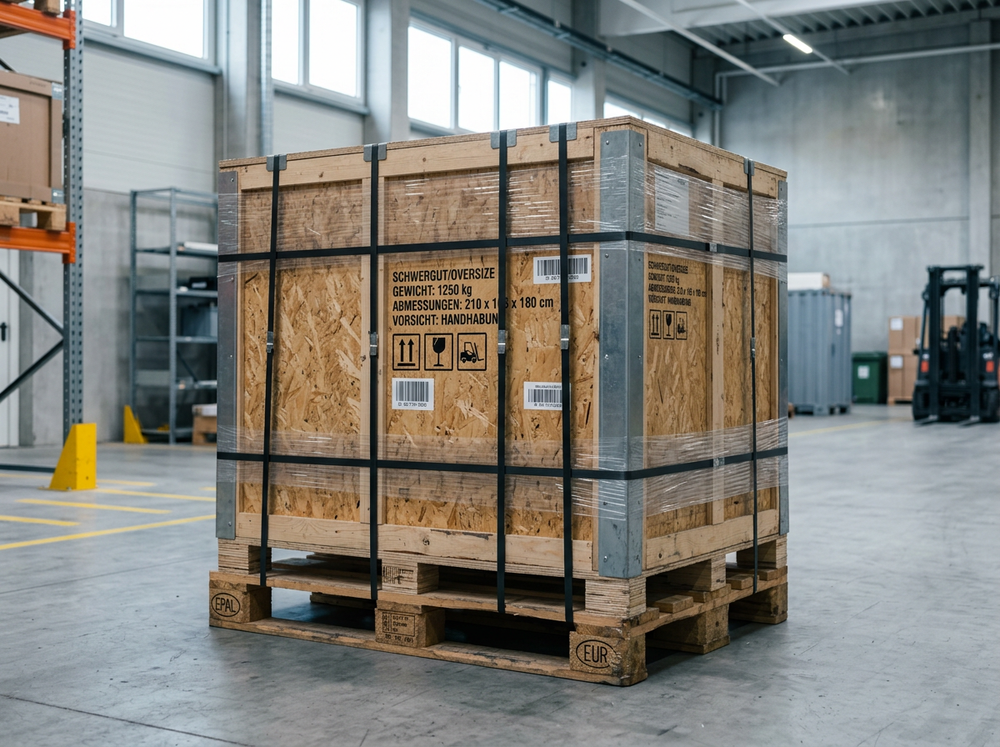
Anyone who ships packages on a daily basis will inevitably encounter the issue of bulky items sooner or later—and usually when it’s already too late: namely, on the carrier’s invoice. That’s because bulky items aren’t just an abstract logistical concept, but an operational cost factor with a direct impact on shipping budgets, margins, and process quality. A single incorrectly sized box, an overlooked girth measurement, or an item with protruding parts can turn a standard shipment into bulky cargo—and thus trigger a surcharge that, in individual cases, amounts to several euros but, when extrapolated across shipment volume, can quickly add up to four-digit monthly costs.
For warehouses, fulfillment service providers, and e-commerce operators, this issue is relevant for at least five reasons. First, additional charges often arise weeks after the actual shipment, when the carrier remeasures the package and identifies discrepancies with the original booking. Second, delivery times for bulky shipments often deviate from the standard promise, which leads to complaints for time-sensitive orders. Third, the risk of damage increases because bulky shipments are handled manually during the sorting process and are therefore more susceptible to damage in transit—especially if the packaging was not done properly. Fourth, the classification as bulky goods is not a uniform standard: Each carrier defines its limits slightly differently, leading to incorrect bookings when teams work without up-to-date guidelines. Fifth, process stability suffers when bulky shipments unexpectedly drop out of the automated workflow and must be processed manually.
The good news: Those who understand the classification logic and consistently enforce measurement accuracy and packaging standards in the outbound process can systematically reduce a large portion of these costs and risks.
Typical characteristics of a bulky shipment
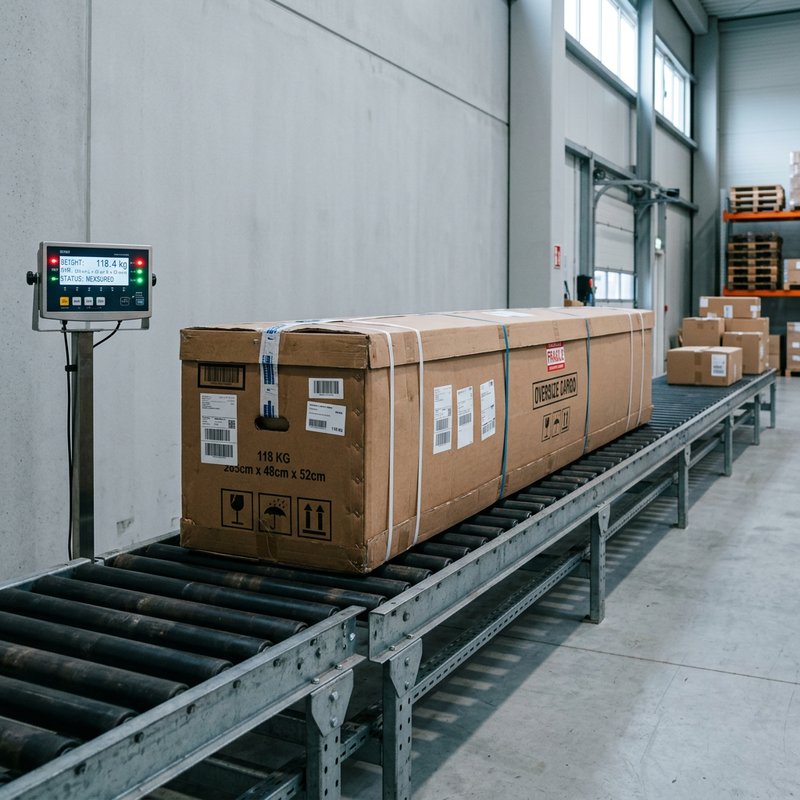
Not every large-format package is automatically classified as bulky cargo—and not every lightweight package stays within the standard rate. The decisive factors are the bulky item criteria, which carriers evaluate in combination: Only when several characteristics coincide or a single one is particularly pronounced does a shipment fall outside the automated process. One of the most common triggers is an oversized side: If the longest edge of a package exceeds the carrier-specific threshold—typically 120 cm or more—the standard process is generally no longer possible. Equally critical is a high girth—that is, the combined circumference of length, width, and height—which, for many carriers, can result in bulky item status even with an edge length of less than 120 cm.
In addition to dimensions, shape plays a significant role. Rolled goods such as carpets or pipes, shipments with protruding or jutting components, and containers without a defined contact surface cannot be safely conveyed by machine—regardless of weight or total volume. Unstable packaging that gives way or loses its shape under conveyor pressure is also unsuitable for automated handling. Another characteristic that is often underestimated in warehouses is high volume combined with low weight. Such shipments take up a disproportionately large amount of cargo space, which carriers factor into their rates based on volumetric weight—and which, in borderline cases, can also contribute to a classification as bulky cargo.
Differences from Regular Packages

The key difference between a standard package and a shipment classified as bulky cargo does not lie in a single metric, but rather in the extent to which the entire handling process can be automated. Standard packages are designed to be processed entirely by machines: They travel along conveyor belts, are automatically sorted, scanned, and discharged—without an employee having to touch the shipment. A prerequisite for this is stable, roughly rectangular packaging that makes the package dimensionally stable and stackable.
As soon as these characteristics are missing, a shipment is excluded from the standard process. This applies to packages that, due to their length, circumference, or irregular shape, do not lie securely on the conveyor belt, are not reliably detected by scanners, or block the automatic sorting process. A lack of stackability is also a common reason for exclusion: Packages without a flat base or with bulging sides cannot be stowed securely in the vehicle and increase the risk of damage during transport.
Added to this are the maximum permissible dimensions for standard packages, which vary by carrier but are often 120 × 60 × 60 cm for domestic shipping. What makes this distinction between bulky and standard packages particularly relevant for shipping managers is that even a package that only slightly exceeds one of these limits automatically falls into a different rate category—regardless of whether it is heavy or light.
At what point is a shipment considered bulky?
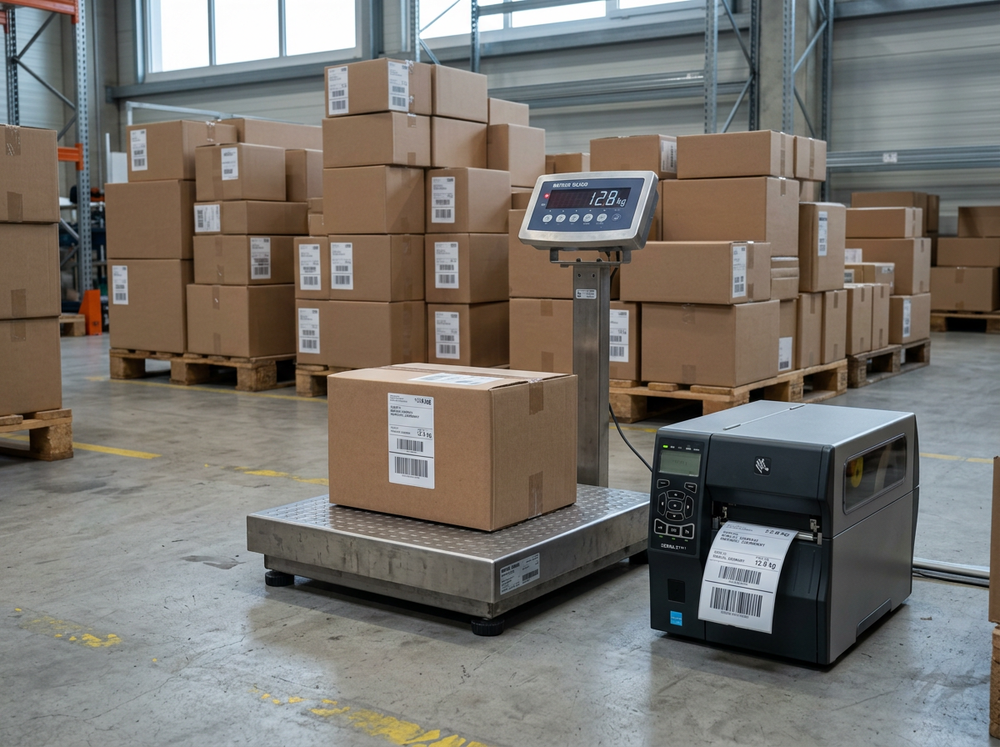
Whether a shipment is classified as bulky cargo cannot be determined based on a single measurement. The classification is the result of a combination of several assessment criteria—and that is precisely what makes it so prone to errors in day-to-day warehouse operations. In operational practice, this means: Before a label is printed and a carrier is selected, each shipment must be systematically checked against the thresholds set by the respective service provider. This is because the same shipment may fall under the standard rate at DHL, trigger an oversized/bulky item surcharge at DPD, and be subject to a different shape regulation at UPS.
For all major carriers, the question of when a shipment is considered bulky depends on at least five factors: the length of the longest side, the interaction of all three external dimensions, the total weight, the girth as a combined circumference measurement, and the shape of the shipment. None of these factors alone is decisive—it’s always about how they interact. A shipment that easily falls within the standard range for length and weight can still be classified as bulky simply because its girth exceeds the limit. Conversely, a heavy shipment can be cuboid-shaped, stackable, and fully automatable—and thus qualify as a standard package without issue.
Particularly tricky is the variation among carriers: weight and size limits, girth thresholds, and shape specifications can differ significantly in some cases. Added to this are business customer terms, which may deviate from published standard rates under individual contracts. Anyone working in a shipping warehouse who relies on fixed limits from memory risks making booking errors. The only reliable basis is regular verification against current carrier price lists, combined with systematic measurement of each shipment before applying the shipping label.
Note on the Current Status of Carrier Requirements
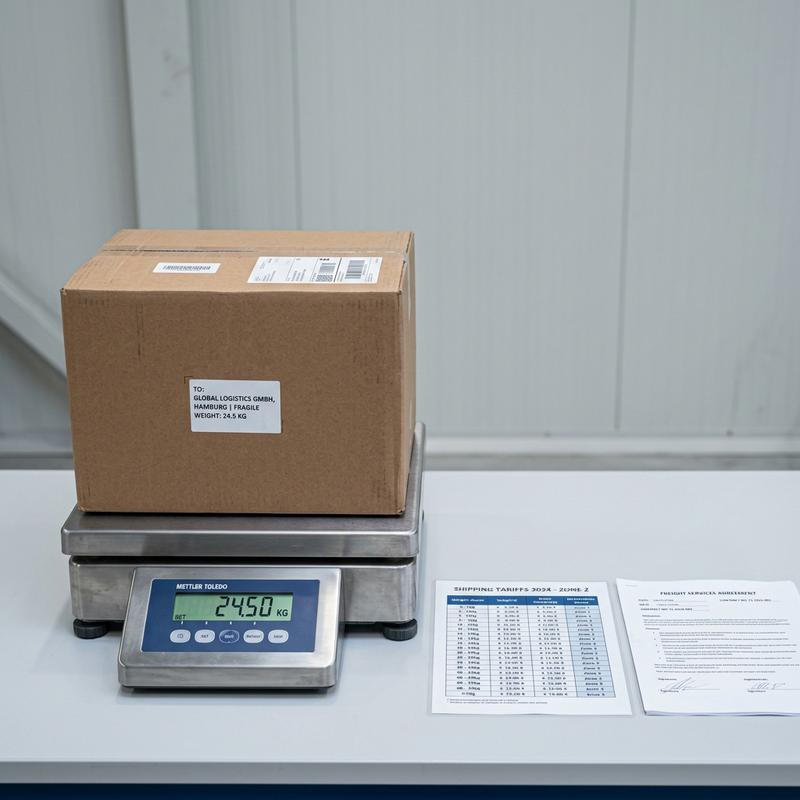
Carrier limits are not static. Price lists are typically updated annually, and in some cases even more frequently during the year—and what is considered a standard package today may fall into a new oversized shipment category following a rate revision. The same applies to individual business customer terms: A negotiated framework agreement may contain size and weight limits that deviate from the published standard rates—either higher or lower. Anyone who works with outdated or non-compliant limits in their day-to-day shipping operations risks systematic booking errors that only become apparent on the monthly invoice.
The situation becomes particularly critical when shipping systems have internal rate logic that is not regularly reconciled with the carrier’s current specifications. An outdated size limit in the warehouse management system results in shipments being classified as standard when the carrier actually classifies them as oversized cargo—leading to corresponding additional charges. For shipping managers, this means in practice: The oversized cargo rates for each carrier used should be checked at least once a year—preferably quarterly—against current price lists, contract documents, and system parameters. In addition, it is advisable to coordinate directly with the respective carrier contact as soon as new product lines, changed delivery areas, or altered shipment profiles shift your shipping mix.
Table: Size Limits for Bulky Items at DHL, DPD, Hermes, UPS, and GLS
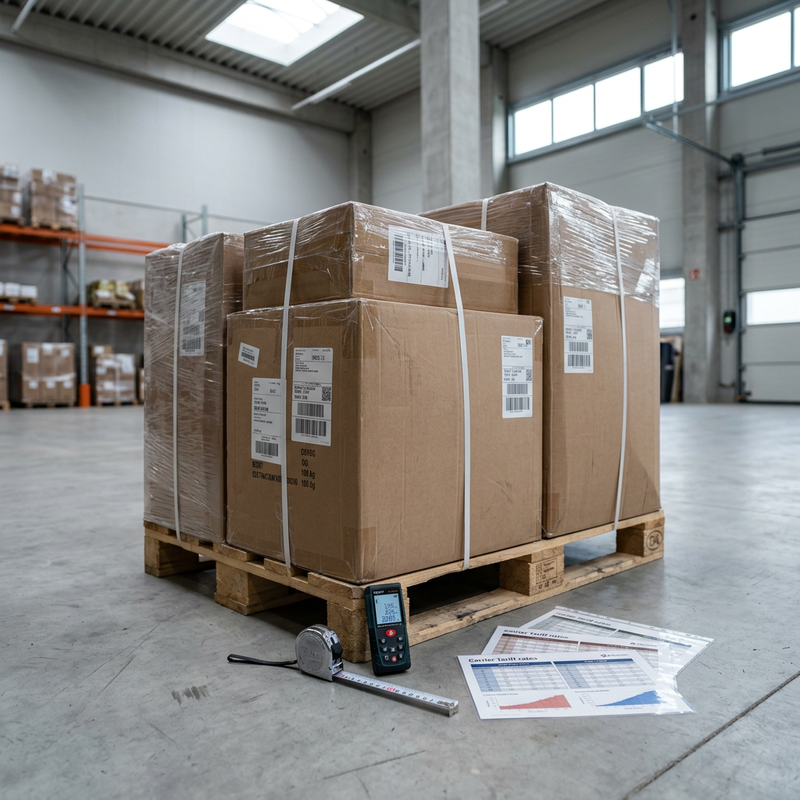
The following overview shows how major carriers currently define their standard limits and restrictions on oversized items. Important note: The values listed are based on published standard rates for domestic shipping within Germany and may vary significantly depending on the destination country, product line, and individual business customer contract. Only the carrier’s current price lists and your own contract documents serve as a binding basis.
DHL Paket allows standard shipments up to 120 × 60 × 60 cm with a maximum weight of 31.5 kg; the girth must not exceed 300 cm. Shipments exceeding these dimensions or with non-rectangular packaging are classified as oversized cargo and processed manually. DPD sets the standard limit at 175 cm for the longest side, a girth of up to 300 cm, and 31.5 kg; a bulky item surcharge applies if any of these values is exceeded. Hermes (now Evri) defines standard packages as having a longest side of up to 120 cm, a girth of up to 300 cm, and a weight of up to 31.5 kg; beyond these limits, separate oversized item rates apply. UPS allows standard packages with a longest side of up to 274 cm, but with a maximum combined length plus girth of 400 cm and a maximum weight of 70 kg; oversized packages with a girth of 270 cm or more are subject to an additional oversize surcharge. GLS limits standard packages to a longest side of 200 cm and a girth of 300 cm, with a weight limit of 40 kg; beyond these limits, a special agreement is required.
The key point in daily practice is this: No carrier evaluates a single dimension in isolation. Length, girth, weight, and shape characteristics are always assessed in combination—and it is precisely this combination that makes a reliable manual assessment prone to error without standardized measurement processes.
An Overview of the Most Important Evaluation Criteria

If you want to reliably check a shipment for oversized items, you need five clearly defined criteria before printing the label—and you must evaluate all five in combination, not just individually. The first criterion is the longest side: If the longest edge of the package ready for shipment exceeds the carrier-specific limit, the standard process is generally terminated, regardless of how compact the other dimensions are. The second criterion is the overall dimensions—that is, the combination of length, width, and height: Even if no single side exceeds the limit, the sum of all three dimensions may mean that the package can no longer be safely handled or transported.
The third criterion is weight: Each carrier defines a maximum weight for standard packages; above this limit, a different rate tier applies. The fourth criterion is the girth —the combined circumference calculated as length plus twice the width plus twice the height. In practice, this measurement is one of the most common triggers for a bulky item surcharge, because it can be exceeded even when the edge lengths themselves are unremarkable. The fifth criterion is deviations in shape: rolls, bulges, protruding components, or a lack of flat contact surfaces make a shipment mechanically unsuitable for conveyor transport—and result in manual special handling, regardless of weight and dimensions.
Girdle measurement: The most common cause of oversized cargo

When checking for oversized packages, many shipping managers focus on the longest side of a package—and in doing so overlook the dimension that, in practice, causes problems much more frequently: the girth. While the longest side represents only a single dimension, the girth captures the combined circumference of a shipment and thus more realistically reflects how much space a package actually takes up in the conveyor system, on the sorting belt, and in the vehicle. Carriers have incorporated this insight into their rate structures: For DHL, DPD, GLS, and others, the girth is a separate screening criterion that can be exceeded regardless of length and weight.
In concrete terms, this means that a package with a longest side of 90 cm—well below typical length limits—can still be classified as oversized if the width and height combined are large enough to exceed the girth limit. In practice, this happens regularly with compact but bulky shipments: wide boxes, large cubic packages, or parcels with dimensions that are uniformly large in all three directions end up in the bulky-item category, even though no single edge stands out. Anyone who does not consistently integrate girth measurement calculations into the verification process makes carrier decisions based on incomplete information.
For day-to-day warehouse operations, this has a clear implication: The dimensional limits for bulky shipments must be systematically checked before labels are printed—not as a downstream check, but as a fixed step in the shipping process. This is especially true for shipments in borderline cases where no single dimension appears out of the ordinary, but the combination of all three measurements is close to the carrier’s limits. A manual check is prone to errors because the girth is calculated from three measurements, and even small deviations in width or height can determine whether a surcharge applies. Automating this step and integrating it into the outbound process closes one of the most common gaps in shipping control.
Real-world example: A few centimeters over the border

A concrete calculation example illustrates the mechanism: An online retailer regularly ships an item in a cardboard box measuring 100 × 50 × 40 cm. The girth is 100 + 100 + 80 = 280 cm—well within the typical 300-cm limit, so no surcharge applies. Now the warehouse switches to a new standard box that allows for slightly more padding: 100 × 55 × 45 cm. The girth is now 100 + 110 + 90 = 300 cm. For some carriers, this exact value is still within the standard; for others, it already triggers the bulky item surcharge. If the box is then filled with a little more packing material and expands to 102 × 56 × 46 cm, the limit is clearly exceeded—with the same product, the same route, and the same weight.
This example shows that choosing a box is not merely a packaging decision, but a pricing decision. Even an additional five centimeters in width and height can mean the difference between standard and oversized shipping—with implications for every single shipment. The problem is exacerbated by inaccurate measurements: Anyone who does not measure the filled box precisely, but instead uses dimensions from master data or estimates them, systematically overlooks the fact that cases requiring a bulky item surcharge often arise from minimal deviations. Precise measurement in the shipping department—on the sealed package ready for shipment—is therefore not just a matter of diligence, but a key driver of economic efficiency.
How the Belt Size Calculation Works

The girth is calculated using a simple formula that is often overlooked in practice: length + 2 × width + 2 × height. Here, the length refers to the longest side of the package ready for shipment; the width and height are each counted twice because they determine the perimeter of the cross-section. A package measuring 80 × 50 × 40 cm thus has a girth of 80 + 100 + 80 = 260 cm—still below the typical carrier limit of 300 cm. If the same item is packed in a box measuring 80 × 55 × 45 cm, the girth already increases to 80 + 110 + 90 = 280 cm. Just a few extra centimeters of padding or an inappropriate choice of box can push the result into the critical range. Anyone who wants to understand the complete girth calculation —including additional calculation examples and carrier-specific limits—will find a detailed explanation there. Crucial for operational implications: The formula shows that width and height are each factored into the result twice —changes to these two dimensions therefore have a greater impact on the girth than an equivalent change in length. This is precisely why cubic or wide packages so often represent unexpected borderline cases in everyday shipping.
How is a bulky item surcharge calculated?
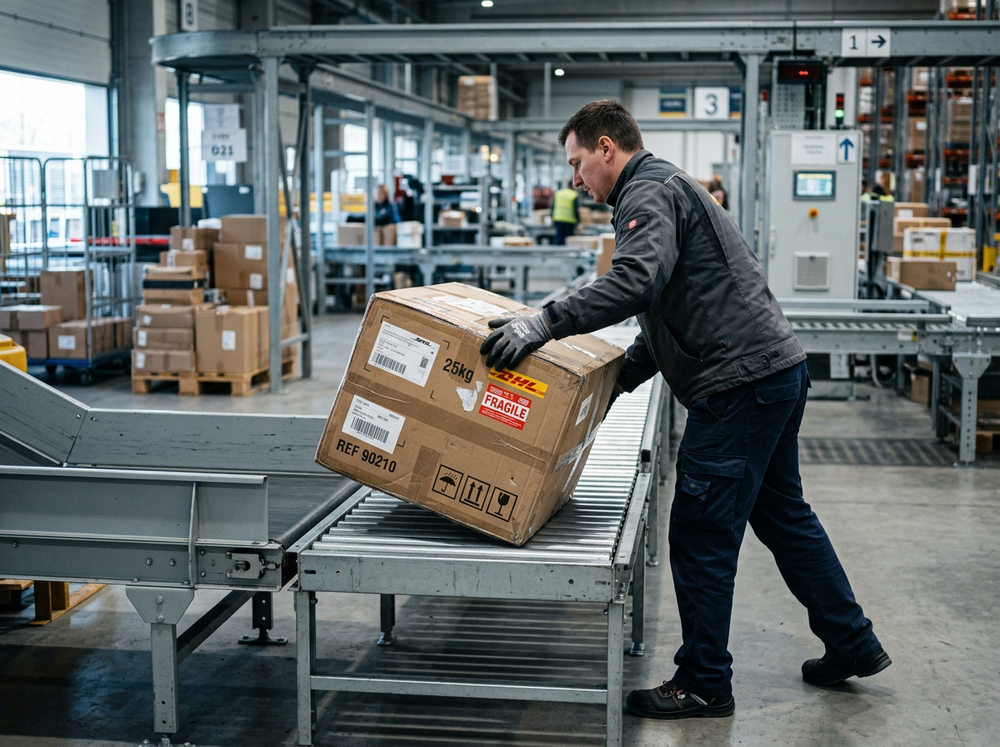
A bulky item surcharge is not an arbitrary fee, but rather is based on a clear pricing logic derived from the actual effort that bulky shipments require within the carrier’s network. The key difference from a standard shipment is that bulky items leave the automated process and must be handled manually: An employee must identify the shipment, remove it from the conveyor, label it separately, and transfer it to a different transport route. This additional effort is directly reflected in the price—regardless of whether the shipment is heavy or light.
Added to this is reduced conveyor compatibility in the sorting process: Packages that cannot be processed by machine potentially block sorting facilities, must be temporarily stored off the main conveyor line, and transported separately. This increases labor costs at several stations along the transport chain—from the drop-off depot to the delivery vehicle. At the same time, bulky shipments take up a disproportionately large amount of loading space in the vehicle: A voluminous package that cannot be stacked due to its shape displaces several standard packages. This increased space requirement within the network represents a direct loss of revenue for carriers, which is offset by the surcharge.
The delivery process for bulky items also often deviates from the standard. Heavy or unwieldy shipments may require a two-person delivery, advance notice, or a non-standard handoff—all factors that increase delivery costs. The bulky item surcharge therefore does not cover a single additional service, but rather the sum of all non-standard handling steps. For shipping managers, this means: The surcharge is not a fixed amount but varies depending on the carrier, route, shipment profile, and the extent to which the size limits are exceeded—and can only be reliably avoided if dimensions, girth, and shape characteristics are consistently checked before the label is printed.
Cost Example: Standard Package vs. Bulky Items

A specific scenario illustrates just how much the rate tier affects the shipping cost. An online retailer ships a piece of fitness equipment with an actual weight of 8 kg. Packaging option A uses a custom-fit box measuring 80 × 45 × 35 cm—girth: 80 + 90 + 70 = 240 cm, volumetric weight: approximately 25 kg. The shipment remains in the standard rate category and is billed by a typical carrier at a package price of around 7 to 9 euros. Option B uses an oversized storage box measuring 100 × 55 × 50 cm—girth: 100 + 110 + 100 = 310 cm. This exceeds the 300-cm limit, so the shipment is classified as bulky goods. Depending on the carrier, the resulting bulky goods surcharge ranges from 5 to 15 euros in addition to the base price. The oversize surcharge for this single shipment therefore increases by up to 200 percent compared to Option A—for the same product, the same route, and the same weight.
Extrapolated to 500 such shipments per month, this means avoidable additional costs of up to 7,500 euros—solely due to a suboptimal choice of cardboard box. This has a direct impact on the margin: What may seem like a manageable surcharge in individual cases adds up to a serious profit problem when scaled across shipment volume. This is precisely why the choice of packaging is not a minor logistical detail, but a business lever with measurable results.
Volume weight as an additional cost driver
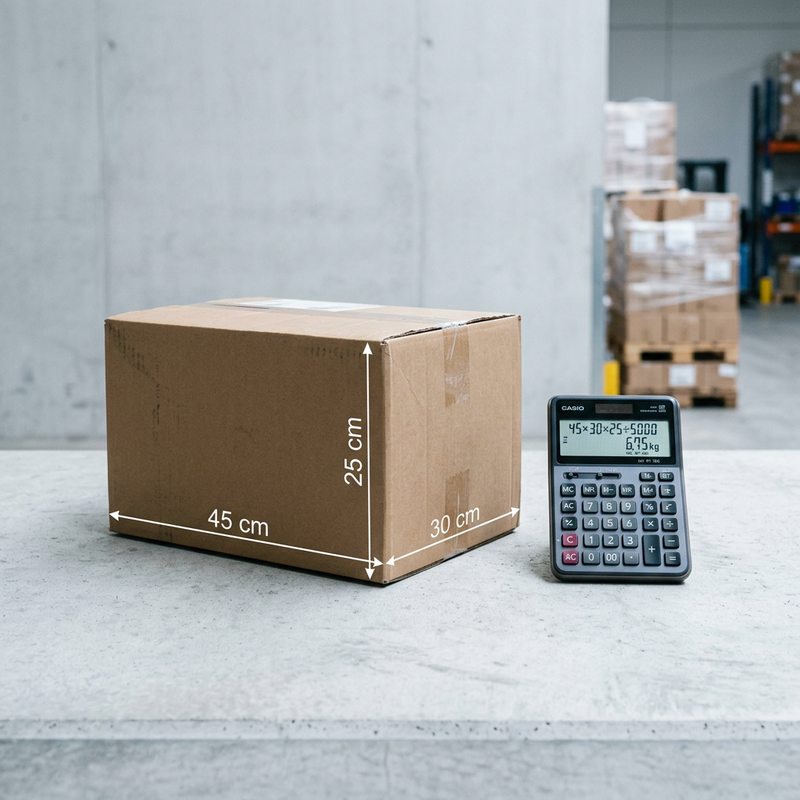
In addition to the formal “bulky goods” classification, there is a second cost factor that is often underestimated in day-to-day shipping: volumetric weight. It comes into play whenever a shipment is light but takes up a lot of space—and determines the weight value the carrier actually uses for billing. The standard formula is length × width × height divided by 5,000 (when measurements are in centimeters and the result is in kilograms). If the calculated volumetric weight exceeds the actual weight, the volumetric weight becomes the basis for billing—regardless of whether the shipment is formally classified as bulky goods.
In everyday shipping, this means: A shipment that falls just below all bulky item thresholds can still end up being significantly more expensive than expected if the packaging is too large. An item weighing 2 kg in a box measuring 60 × 50 × 40 cm results in a volumetric weight—the calculation weight relevant for oversized items—of 24 kg—and is billed accordingly. Too much empty space in the packaging, unnecessarily large boxes, or insufficiently compacted packing material thus drive up shipping costs without even reaching a single bulky item threshold. Anyone who wants to permanently reduce shipping costs must therefore keep both cost factors in mind: avoid bulky item thresholds while simultaneously minimizing packaging volume —both together protect the margin.
What Factors Trigger the Bulky Item Surcharge
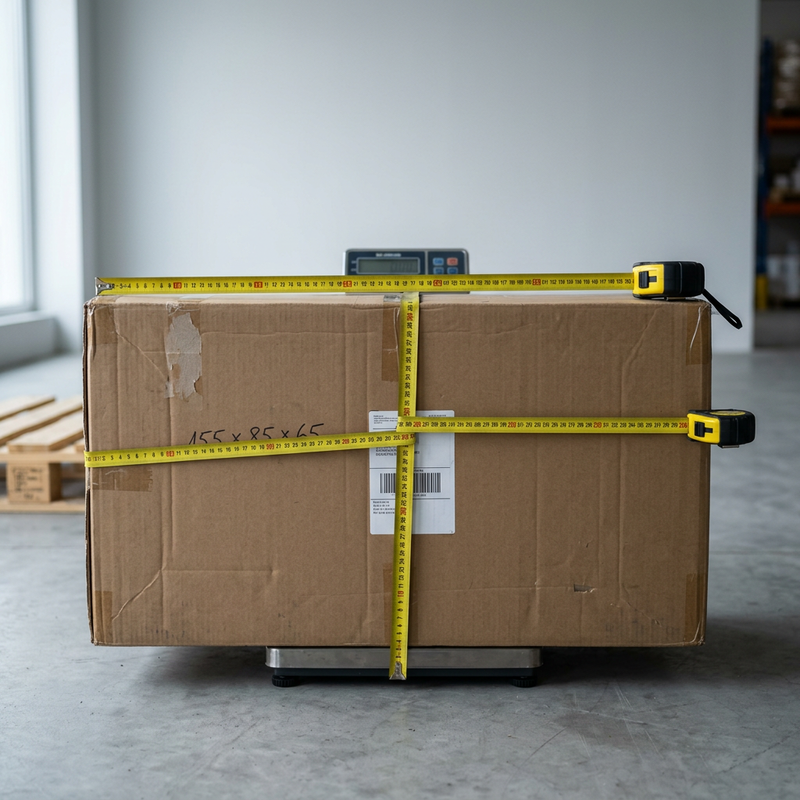
A common misconception in day-to-day shipping is the assumption that a bulky item surcharge is primarily triggered by heavy weight. In fact, weight is only one of several factors—and in many cases, not even the decisive one. The majority of bulky item classifications are due to external dimensions that exceed one or more carrier limits: a side that is too long, a girth that is too high, or a total volume that can no longer be handled by the automated sorting process.
The role of the shipment’s shape is particularly often overlooked. A shipment that is not even approximately rectangular is excluded from the standard process, regardless of its weight and dimensions. Rolled goods such as carpets or pipes, packages with protruding components, or containers without a defined contact surface are not suitable for automated conveyor systems—the surcharge is incurred because they must be handled manually. The inability to roll on the conveyor belt—for example, due to bulging or unstable packaging—is also a separate trigger for exclusion.
Added to this are protruding parts that, although listed on the shipping label as a compact shipment, block sorting lines at the distribution center or get damaged. All these factors— belt clearance, external dimensions, shape, rollability, and protruding components—have a cumulative effect in the carrier system: Shipments exhibiting several of these characteristics simultaneously not only trigger a surcharge but also risk being classified into a higher bulky goods rate category. Reliable shipping decisions therefore require that all these criteria be systematically checked before the shipping label is printed.
Typical Bulky Item Situations in Day-to-Day Shipping
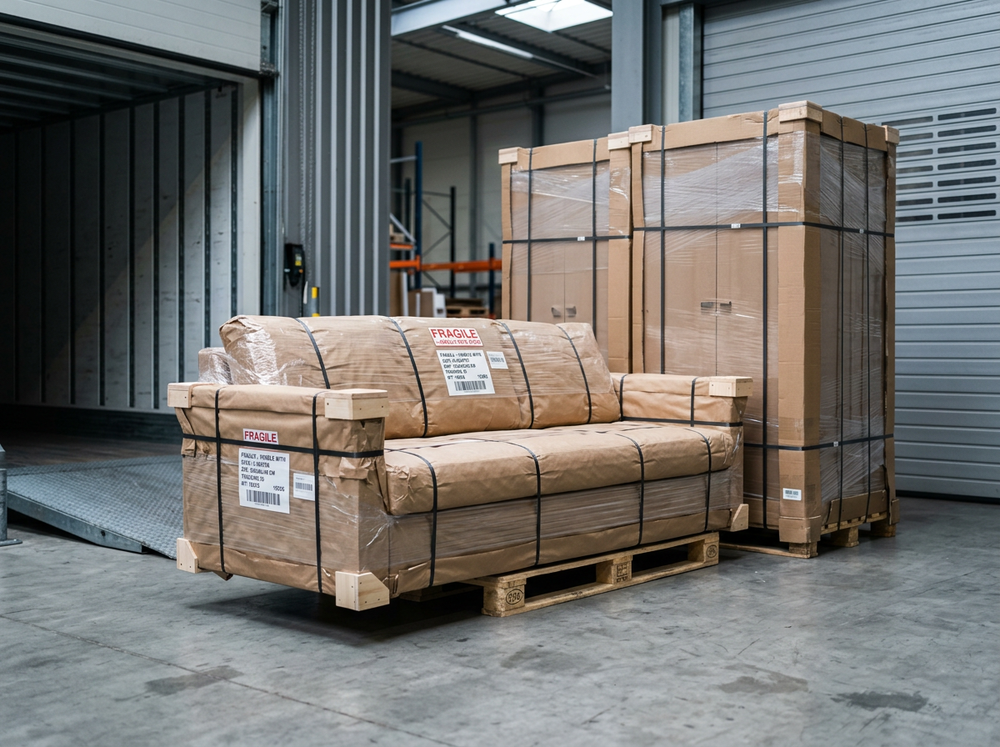
In day-to-day shipping operations, it’s clear that this is not the exception but the rule: Certain product categories repeatedly end up on the desks of shipping managers as examples of bulky goods —often not because the product itself is necessarily bulky, but because the combination of its packaging, shape, or dimensions exceeds critical carrier limits. Those familiar with these typical cases can take targeted countermeasures.
Furniture and home accessories are among the most common problem categories in e-commerce fulfillment. Disassembled shelving systems, tabletops, mirrors, or bed frames regularly exceed the 120-cm length threshold—and often aren’t even particularly heavy. The combination of great length and a flat, wide structure makes them unsuitable for automated conveyor systems. The same applies to light fixtures with protruding shade elements or decorative long items such as curtain rods and drapery rods.
Sports equipment and outdoor gear constitute a second core category. Bicycles, balance bikes, children’s bicycles, skis, snowboards, or larger fitness equipment rarely fall within standard limits even when disassembled—and often have irregular shapes due to handlebars, pedals, or frame geometries that protrude or stick out even after packaging.
Rolled goods represent a third, often underestimated group. Carpets, floor coverings, posters in shipping tubes, or technical cables must be shipped rolled up—and thus do not structurally conform to a rectangular shape. The lack of a flat contact surface and the round cross-section make them unsuitable for sorting lines, even if their diameter and length appear to be within the limits when calculated.
The fourth category is particularly relevant for fulfillment service providers: oversized outer packaging. Here, the problem isn’t the product itself, but the decision made in the warehouse to use a standard box that’s too large. Excessive air space, inefficient use of packing material, and an ill-fitting box size push the girth into the bulky goods category—even though the contents could easily be transported in a smaller box. These cases are the most economically significant because they can be directly avoided through simple process adjustments.
Sports equipment, bicycles, and outdoor gear

When shipping sporting goods, it becomes particularly clear that it is not always the weight, but rather the shape and the amount of packaging required that determine whether an item is classified as bulky. A bicycle is a classic borderline case: even if the frame, wheels, and handlebars are disassembled and packed into a box, the resulting package will almost inevitably exceed standard limits in length and girth. Typical bicycle boxes measure 140 × 80 × 25 cm—the length alone thus exceeds the 120-cm limit set by most carriers. Added to this are protective padding for the fork, pedals, and frame components, which further increase the width and height.
Skis and snowboards follow the same logic: lengths ranging from 150 to 200 cm make them typical long items that cannot be handled by standard packaging processes. Bindings, edges, and protective plates further complicate the creation of uniform, cuboid-shaped packaging. Fitness equipment such as rowing machines, kettlebell racks, or exercise bikes, on the other hand, often present both of these challenges: they are heavy and irregularly shaped, with protruding adjustment elements or pedal attachments that cannot be kept completely flush with the packaging. Finally, larger outdoor products such as camping frames or trampolines regularly exceed the carrier-specific girth limit even when disassembled. For shipping managers in these product categories, it is recommended to conduct a product-specific preliminary check of all dimensions —including the girth—before finalizing packaging specifications and carrier assignments.
Furniture, home accessories, and large items

In the furniture and home accessories sector, bulky furniture is particularly common because the typical product dimensions in this category structurally conflict with the limits of the standard package delivery network. Shelves, tabletops, and bed frames regularly exceed the 120-cm length limit when disassembled—not because of their weight, but simply because their surface area in one direction is too large. Flat, panel-shaped packages are doubly problematic: they are unstable on conveyor belts, cannot be stacked securely, and can tip over or get stuck at transfer points.
Mirrors and large-format wall art add a fragile extra dimension: Here, the necessary edge protection requires additional layers of packaging, which further increase the width and height and can push the girth into critical ranges. Hanging lamps with protruding shades or arms are another example where protruding components rule out the standard process even if the core dimensions would otherwise be acceptable. Curtain rods, on the other hand, are classic long goods: narrow, lightweight, but with a length of 150 to 300 cm—far beyond any standard length specification. For shipping managers in this product segment, this means that a product-specific packaging strategy—including verified carton lengths and defined girth targets—is not an exception but an operational necessity.
Large Outer Cartons in E-Commerce Fulfillment

In e-commerce fulfillment, a pattern emerges that consistently surprises shipping managers: It is not the product itself, but rather the choice of packaging for bulky items that is the actual cause of the bulky item classification. An item that could easily be shipped as a standard package in the right box ends up being classified as bulky due to an oversized outer box, unnecessary air gaps, or the wrong box selection—resulting in a corresponding surcharge on every single shipment. This happens particularly often when warehouses operate with a limited selection of standard box sizes and items are automatically packed into the next-largest available box. The result: the width and height increase, and the girth exceeds the carrier’s limit, even though the product itself is compact. Excessive padding—such as multiple layers of bubble wrap around an item that is already stable—can also turn borderline packaging into clearly bulky packaging. To make matters worse, master data in the warehouse management system often stores the original product dimensions, not the actual shipping dimensions of the fully packed box. This discrepancy leads to incorrect bookings that are only noticed when the carrier remeasures the package. Anyone who wants to systematically address this issue must consistently align box sizes with actual product requirements—and check the actual dimensions of every fully packed shipment before printing the label.
Roll goods, carpets, and irregularly shaped packages

Items such as carpets, floor coverings, or technical piping have a characteristic that is inherently problematic in the packaging process: Due to their design, they cannot be transported in rectangular packaging. When shipped as bulky goods in roll form, the “bulky goods” status is therefore not primarily due to excessive dimensions, but rather to the shape itself. A round cross-section is unstable on conveyor belts, can roll or tip over in automated sorting lines, and cannot be reliably scanned or safely stacked. Carriers therefore structurally exclude such shipments from the standard process—regardless of whether the diameter and length still appear to be within acceptable limits when calculated.
Particularly critical is the combination of a large diameter and considerable length, which regularly occurs with full-size carpets or technical pipes and hoses. For many carriers, a roll diameter of just 15 cm or more is already considered an exclusion criterion for the standard rate. In addition, items wrapped in plastic film without a stable outer contour—such as floor coverings wrapped in stretch film or unpackaged poster tubes—do not retain their shape or dimensions at the depot. If the outer contour becomes deformed during transport, additional risks of damage arise, for which proper packaging is a prerequisite for potential insurance coverage. Anyone who regularly ships goods in rolls should check early on whether a freight forwarding solution is more cost-effective than attempting to keep the shipment within the parcel network.
Avoiding Bulky Cargo Surcharges: Packaging as the First Line of Defense

In day-to-day shipping, unnecessary bulky-item surcharges are rarely caused by the product itself but rather by packaging decisions that can be optimized with minimal effort. The first and most effective way to avoid bulky shipments is therefore at the shipping stage—long before the carrier assesses the shipment.
The starting point is the choice of box. Shipping warehouses that work with too limited a range of box sizes are, by the nature of the system, forced to use the next-largest available box—and thus send air instead of goods through the network. Every unnecessary centimeter in width or height increases the girth measurement without changing the product or route. A structured box matrix that assigns standard items to specific box sizes directly and measurably reduces this effect. The ideal packaging is one that encloses the product as snugly as possible while providing sufficient stability.
The second factor is cushioning. The purpose of packing material is to secure the product and absorb impact energy—not to stuff the box full. Wrapping multiple layers of bubble wrap around goods that are already sturdy or filling empty spaces with excessive amounts of paper increases the width and height without providing any additional safety. A defined cushioning guideline for each product group prevents this gradual increase in dimensions.
The third factor is dimensional stability. Shipping packaging must be cuboid in shape, sealed flush, and dimensionally stable. Bulging sides, loose plastic wraps, or flaps that aren’t completely sealed make a shipment unsuitable for automated handling at the distribution center—even if the dimensions are still within the standard range according to calculations. Edge protection on the long sides and sufficiently reinforced corners are not optional details for longer or flat packages, but rather a basic requirement for standard compliance.
The fourth factor concerns protruding and projecting components. Attachments, handles, plugs, or frame elements must be secured, removed, or embedded in cushioning material before packaging so that no part protrudes beyond the outer wall of the box. Any bulge means the shipment is no longer formally cuboid—and thus no longer qualifies as bulky cargo.
The fifth factor is economic analysis: Anyone who regularly spends more on packaging materials for a shipment that’s borderline than the bulky item surcharge would cost is solving the problem from the wrong angle. In such cases, it’s important to assess whether a palletized solution or an alternative shipping method makes more economic sense than building elaborate custom packaging that barely qualifies for the standard package rate.
When Is a Pallet More Cost-Effective Than a Borderline-Sized Package?
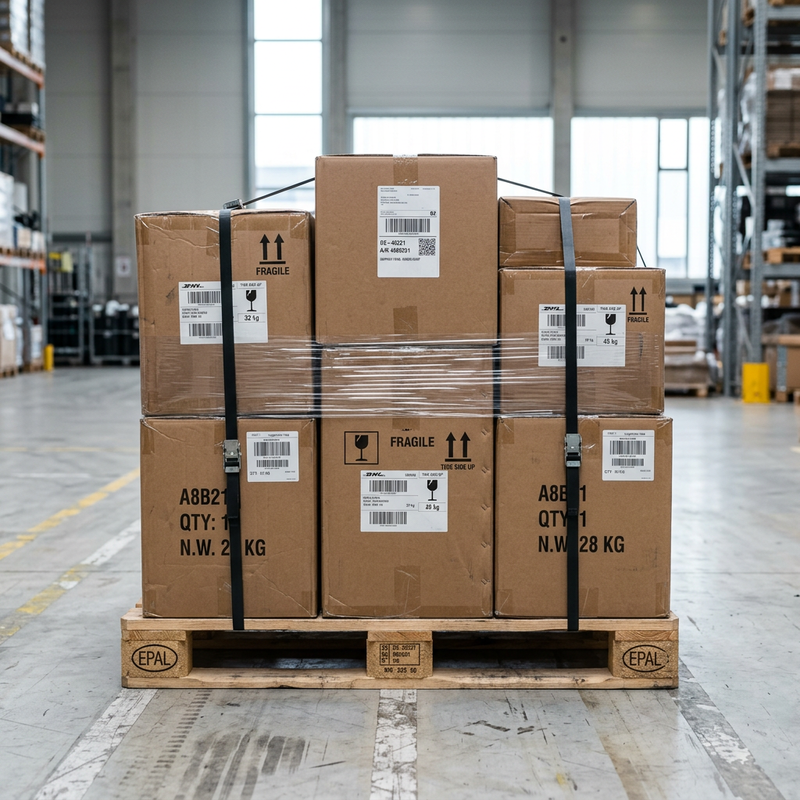
Not every shipment that falls under the bulky goods category must necessarily be shipped as a bulky goods package through the carrier network. At a certain point, attempting to keep a critical shipment with complex special packaging within the standard package rate becomes more expensive than consistently switching to pallet or freight forwarding. Opting for a pallet instead of bulky goods shipping is particularly worthwhile when multiple items can be bundled together: Consolidating ten bulky individual shipments onto a single pallet typically costs significantly less than the sum of the ten individual bulky goods rates. For total weights of around 30 to 40 kg or shipment sizes that must be handled manually in the parcel network, shipping via pallet is often more cost-effective.
The risk of damage is another reason to make the switch: Bulky shipments that are manually sorted out of the package network and transported separately are more susceptible to damage in transit than secured pallet shipments that are properly secured with straps. Added to this is predictability: freight carriers offer more reliable delivery time windows, delivery notifications, and, in many cases, two-person delivery for large or heavy shipments. If the bulky goods surcharge in the parcel network equals or exceeds the freight carrier’s rate, the decision is clear. Shipping managers should therefore, in recurring borderline cases, conduct a direct cost comparison between a package with a surcharge and pallet shipping —and firmly incorporate the result into the carrier assignment settings of their shipping software.
These packaging errors often result in oversized shipments

Packaging errors that unintentionally turn a standard shipment into oversized cargo can, in practice, be traced back to a manageable number of causes—and that is precisely why they are preventable. The most common problem is protruding parts: Handles, plugs, frame elements, or attachments that protrude beyond the outer wall after the box is sealed mean the shipment is no longer technically cuboid in shape. Even a single protruding component is enough to exclude the shipment from the automated conveyor process.
Loose film used as outer packaging has similarly serious consequences: Stretch film without a stable supporting structure gives way during the conveyor process, alters the shipment’s contour, and cannot be reliably stacked or handled by machines. Deformed cartons—caused, for example, by improper storage, insufficient packing material, or weak corrugated cardboard—lose their flat outer surface and are therefore also excluded from the standard. Unnecessarily large outer packaging with a lot of empty space increases the width and height without providing the product with additional protection: The girth increases, triggering a bulky item surcharge. Poor stability due to flaps that are not properly glued or walls that are not sufficiently reinforced makes the shipment unstackable. Containers that cannot be measured or stacked—such as round bundles, irregularly tied packages, or shipments without a defined contact surface—cannot be processed automatically at the sorting facility. Anyone who wants to avoid bulky goods should incorporate these potential sources of error into the packaging process as a checklist.
This is how standard-compliant packaging should be designed

For shipping packaging to be reliably classified as “standard-compliant” within the parcel network, it must meet several criteria simultaneously—and these criteria apply to the box when it is ready for shipment, filled, and sealed, not just when it is empty. The starting point is the rectangular basic structure: All six sides must be flat, sealed flush, and dimensionally stable. Bulging walls, protruding flaps, or loose plastic wrap will exclude a shipment from the automated conveyor process—regardless of its dimensions. The box size should be chosen so that it encloses the product as snugly as possible while providing adequate protection: not too tight, so that cushioning material can fulfill its function, but without unnecessary air volume that increases the width and height—and thus the girth.
Filling material is intended to secure the product and absorb shocks, not to fill the box. Defined cushioning specifications for each product group prevent gradual increases in dimensions caused by excessive use of material. For longer or flat containers, edge protection on all longitudinal edges is not an optional detail but a basic requirement for stackability and conveyor compatibility. Protruding components such as handles, connectors, or frame elements must be removed before sealing the box or secured in such a way that nothing protrudes beyond the outer wall of the box. Those who consistently apply these standards when packaging bulky items for daily parcel shipping lay the structural foundation for ensuring that shipments reliably remain within the standard rate—and do not slip into the bulky-item category due to individual packaging decisions.
Measure packages correctly to avoid surcharges
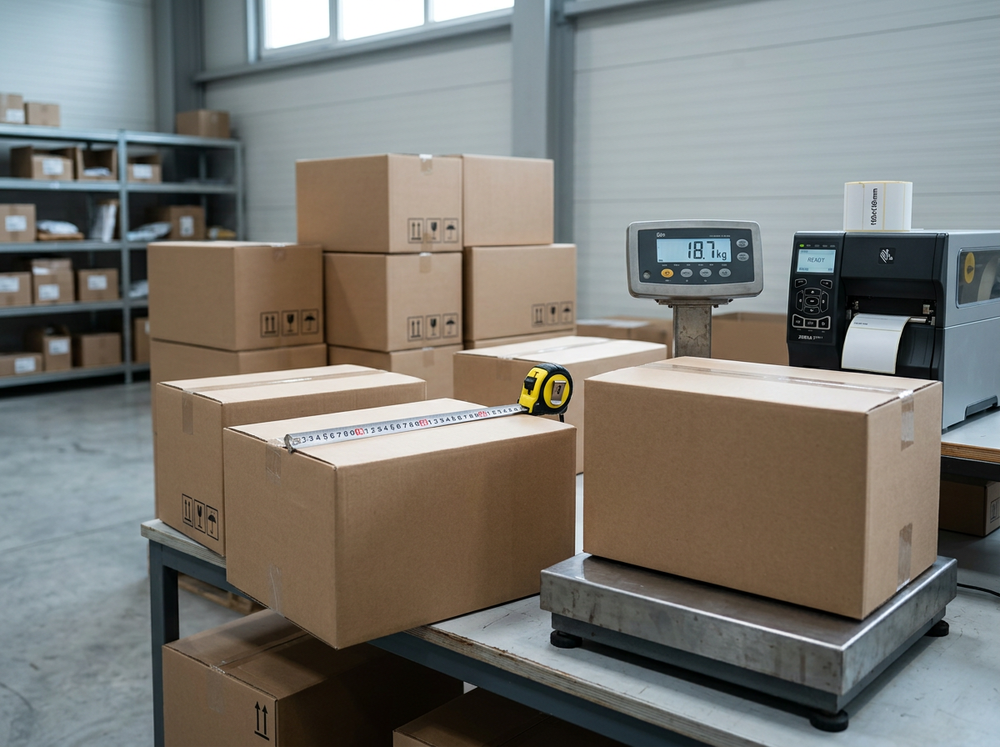
In day-to-day shipping, oversize surcharges often arise not because a product is inherently too large, but because the actual dimensions of the shipment ready for dispatch are not reliably recorded. Consistently and accurately measuring length, width, height, and weight before printing the shipping label provides the only reliable basis for precise carrier selection—and prevents additional charges that arise when carrier data and the dimensions on the shipping label differ.
The operational measurement process begins with the package that is ready for shipment—fully sealed and packed—not with an empty box or product master data. This is because it is only after sealing that it becomes clear how packing material and contents affect the actual external dimensions. Measurements must always be taken at the outermost points: length along the longest side, width and height perpendicular to it, each including all protrusions, adhesive seam overhangs, or layers of film. Anyone who instead uses nominal dimensions from the warehouse system systematically ignores the fact that filled cartons regularly exceed the specified width and height by one to three centimeters—exactly the range in which girth limit values are exceeded.
Weight is the second mandatory parameter in the measurement process. Actual weight and volumetric weight must be known before carrier assignment, because both factors determine the rate structure. If the actual weight is estimated or taken from product data, discrepancies arise that the carrier detects during its own re-measurement and charges as a surcharge. Accurate package measurement therefore always includes both: a physical weight measurement on a scale and a measurement of all three external dimensions of the fully packed package. Only with these four values can the girth be correctly calculated, the volumetric weight derived, and the carrier’s rate logic reliably applied. Accurate measurement data is therefore not just a nice-to-have quality feature, but an operational prerequisite for ensuring that shipping decisions are based on actual shipment characteristics—and not on assumptions that end up costing a lot in the long run.
How to Measure Packages Correctly

If you want to avoid bulky item surcharges on a long-term basis, you need not only the right packaging but also reliable measurement data—and that can only be obtained through a consistent, standardized measurement process applied to the package ready for shipment. In practice, measuring packages correctly means: always place a tape measure or measuring instrument against the outermost points of the sealed, filled box, record all three dimensions separately, and take the actual weight on the scale—do not use values from master data. Only when the length, width, height, and weight are complete and accurate can the girth and volumetric weight be reliably calculated and the carrier’s rate logic be correctly applied. Standardized measurement rules that are mandatory for all employees in the shipping department measurably reduce misclassifications: They structurally eliminate the most common sources of error—rounded values, incorrect reference points, and unaccounted-for protrusions. Mandatory measurement processes are therefore not an additional bureaucratic burden, but rather the operational foundation ensuring that shipping decisions are based on actual shipment characteristics and not on assumptions that the carrier corrects during remeasurement.
Common Measurement Errors in the Warehouse

When measuring packages manually as part of daily operations, errors can creep in that may seem harmless in individual cases but, when added up, systematically lead to incorrect postings. One of the most common errors involves the reference points: If measurements are taken not at the outermost point of the shipment ready for dispatch, but on the cardboard wall itself, protruding adhesive seams, layers of plastic film, and excess cushioning material are not taken into account. The result is regularly one to three centimeters less than the actual external dimensions—exactly the range where carrier limits fall.
A second structural problem is bulging: Filled boxes bulge outward on the sides and bottom because the packing material and contents build up pressure. If you place the measuring tape straight against the box, you measure the nominal surface area—not the actual width or height occupied by the contents. Added to this is the rounding of values: for practical reasons, warehouse staff often round 124 cm down to “120 cm,” even though this already exceeds the limit.
Deformed packaging also plays an underestimated role in accurately measuring package dimensions: A box that has lost its shape due to storage or filling can no longer be reliably described with a single measurement—and if one attempts to do so anyway, the result is a value that is systematically too low. Outdated master data poses an equally significant risk: If length, width, and height are recorded only once and not updated afterward, they fail to reflect changes in packaging or updated cushioning requirements—and lead to persistent misclassifications.
Automatic Package Measurement as a Solution for Shipping Warehouses

In day-to-day shipping operations, a careful measurement process alone is not always sufficient to reliably identify borderline cases. Measurement inaccuracies of just a few millimeters, rotating staff in the shipping department, or variations in handling at the packing table can lead to critical shipments being misclassified despite nominally correct processes. This is exactly where automated measurement comes in: Instead of basing the decision on whether a package qualifies as standard or oversized on the individual measurement practices of specific employees, a measurement system consistently provides the same values for every package—regardless of the time of day, workload, or level of experience among staff.
The economic core of this solution lies in the handling of borderline cases. Shipments that are just a few centimeters above or below a carrier’s limit pose the greatest risk in the manual process: Depending on the employee’s mood that day, they are either assessed too generously or too conservatively—both of which cost money. Automated systems objectively measure the shipping-ready box, calculate the girth and volumetric weight in real time, and directly compare the results against stored carrier limits. This structurally reduces the occurrence of incorrect bookings, which often don’t appear until weeks later as additional charges on the carrier’s invoice. Paketwaage.com offers measurement and weighing technology specifically designed for this purpose in the outbound shipping process: dimension and weight measurement in a single step, integrable into existing shipping processes before label printing.
For warehouses with high shipment volumes, package measurement is also a matter of process speed. Manual measurement takes time—automatic systems record length, width, height, and weight in seconds and transfer the data directly to the shipping system. This not only reduces errors but also measurably cuts the time required per shipment. The payback logic is straightforward: Anyone who saves even just 50 avoidable oversize surcharges of 8 euros per month through more reliable measurement data will quickly achieve a cost reduction that justifies the system’s use from an economic standpoint.
Use a volume measuring device at the shipping dock

In the shipping department, many misclassifications are not caused by incorrect carrier assignments, but by inaccurate or inconsistent dimensional data. A volume measuring device solves this problem at its root: Instead of manually measuring length, width, and height with a tape measure, the system captures all three dimensions of the package ready for shipment in a single pass—contactlessly, with repeatable accuracy, and independently of the specific employee at the packing table. The result is consistent shipping data that is based on the same measurement criteria for every shipment and can therefore be fed directly into the carrier rate calculation. Especially for shipments in the borderline range—that is, packages whose girth is close to the 300-cm threshold or whose longest side falls within the critical range—it is precisely this repeatability that makes the economic difference. Anyone working without standardized automatic measurement is tolerating a systemic measurement inaccuracy that, with shipment volumes of several hundred packages daily, directly results in avoidable oversize surcharges. Volume measurement devices provide the basis for reliably calculating girth and volumetric weight before label printing—and thus for assessing carrier limits objectively, rather than intuitively.
Why Manual Processes Are Risky in Borderline Cases

In the day-to-day operations of a fulfillment center, just a few centimeters can determine whether a shipment is billed as a standard package or as oversized cargo. This is exactly what makes manual measurement processes so risky in borderline cases: One employee rounds 122 cm down to 120 cm, another measures the cardboard wall instead of the actual outer contour—and suddenly a shipment is labeled as standard-sized, only for the carrier to classify it as oversized after remeasuring it. The result is discrepancies with the carrier that appear as additional charges on the invoice, often weeks after shipment and with no direct connection to the original booking. At the same time, misclassifications occur in the opposite direction: shipments that would actually qualify as standard-sized are booked as oversized as a precaution—which generates unnecessary surcharges before the carrier has even taken any measurements. Both types of errors cost money. To make matters worse, the girth is calculated from three separate measurements: even a single inaccurate value for width or height alters the result in such a way that the carrier’s limit is misjudged. Claims, return processes, and the effort required to resolve additional charges tie up additional resources. Automatic warehouse measurement solves this problem at the structural level because it objectifies the basis for decision-making and makes it independent of individual personnel.
Which Key Performance Indicators Improve Through Automated Measurement

The most measurable effect of automated measurement is not evident in the technology itself, but in the key metrics that change within shipping control. The reduction in oversize surcharges has the most significant impact: By objectively measuring each box before printing the label and reliably calculating its girth and volumetric weight, companies can avoid borderline cases that are regularly decided manually to the detriment of the shipper. At the same time, carrier-imposed retroactive charges decrease—that is, the difference charges that arise when booked dimensions deviate from the carrier’s own remeasurements. In many shipping operations, this is one of the least transparent cost items and, at the same time, one of the most direct levers for improving control over shipping costs for bulky goods.
Another KPI is master data quality: Every automatically recorded shipment provides verified actual dimensions that update the stored product data and make future bookings more precise. This results in greater rate compliance —that is, a smaller discrepancy between the booked rate and the rate actually charged. Last but not least, the speed of the outbound process improves: Automatic measurement replaces several manual measurement steps and measurably reduces the time required per shipment—a gain in efficiency that, with high shipment volumes, directly impacts turnaround times.
Use a volumetric scale to measure volume and weight

Anyone who records the dimensions and weight of a shipment separately is working with two data points that, only when combined, provide the complete basis for calculating shipping rates. A volumetric scale combines precisely these two measurement tasks into a single device: The external dimensions of the package ready for shipment are measured contactlessly, while the integrated weighing unit simultaneously provides the actual weight. Both values can be used to immediately calculate the girth and volumetric weight —without any disruption in the workflow, without manual intermediate steps, and without the risk that the dimension and weight data come from different measurement times and thus do not match the same shipment.
This combination is crucial for rate compliance: Carriers bill based on whichever of the two values is higher—actual weight or volumetric weight. Those who know only one of the two values make carrier-related decisions based on incomplete data and risk incurring additional charges if the carrier’s system determines different values during its own scan. Data quality improves measurably as soon as both values come from a single, standardized measurement: master data becomes consistent, incorrect entries become less frequent, and the basis for automated carrier mapping becomes more reliable. Especially for shipments that are right on the borderline—where a single gram or centimeter can determine whether a surcharge applies—simultaneously recording both dimensions and weight is not a convenience feature but an operational necessity.
Integrating package measurement into existing shipping processes

Automatic dimensional data only realizes its full potential when it is not collected in isolation but is fed directly into the shipping process. Measuring a package seamlessly before label printing ensures that the length, width, height, and weight are already available at the moment the carrier is selected—rather than requiring a subsequent correction or manual entry into the shipping system. This is the key difference from a measurement that does take place but whose results are not automatically passed on. Only the direct transfer of data to the warehouse management system or shipping software allows for real-time comparison of the package’s dimensions and volumetric weight against stored carrier thresholds and enables rate assignment based on actual shipment characteristics. For carrier mapping, this means: Instead of assigning a shipment to a carrier on a blanket basis, the system selects the most cost-effective and process-compliant service provider based on verified dimensional data—automatically, reproducibly, and without the need for manual decision-making. At the same time, the integration improves master data quality: Each measured shipment updates the stored shipping dimensions, making future bookings for the same product more accurate. Those who consistently integrate package measurement before label printing close the most common gap in shipping control.
Bulky Items Checklist for Operational Inspection
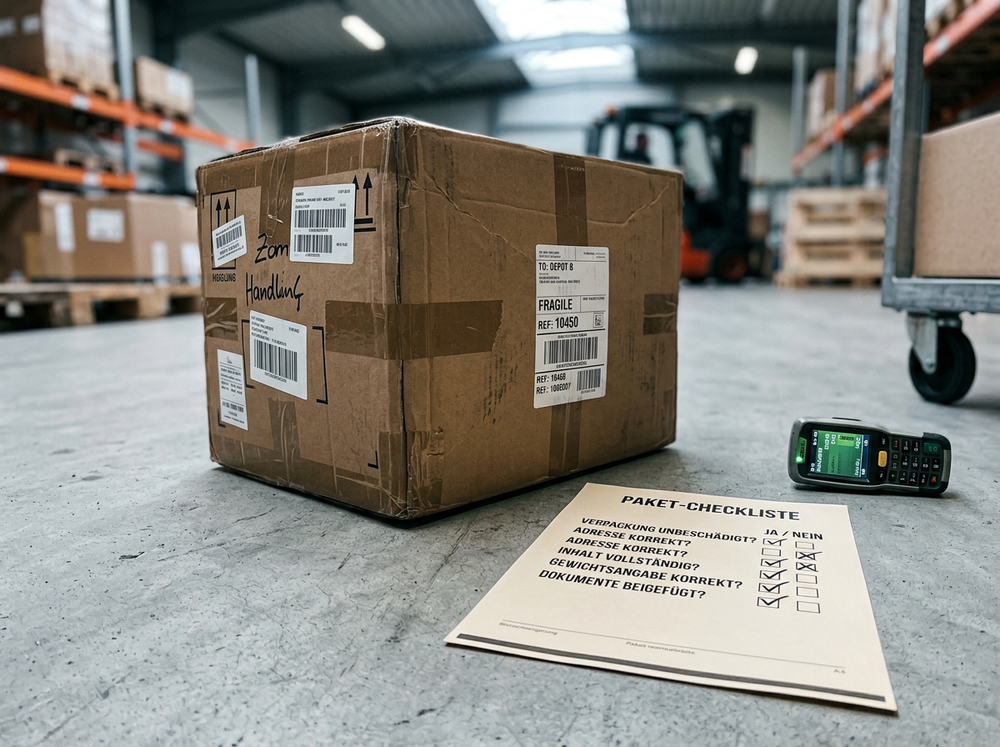
Before printing a shipping label, a structured bulky items checklist can be used to quickly and reliably determine whether a shipment qualifies for standard shipping or must be assessed separately. The following yes/no questions form the operational checklist—all answers should be “No” so that a shipment can be sent without an oversized item surcharge.
Does the longest side of the sealed package, ready for shipment, exceed the carrier-specific limit—typically 120 cm for domestic shipping in Germany? Is the calculated girth (length + 2 × width + 2 × height) above the threshold set by the selected carrier, often 300 cm? Does the actual weight exceed the maximum weight for standard packages set by the selected carrier? Is the volumetric weight (length × width × height ÷ 5,000) higher than the actual weight, which indicates oversized packaging? Is the shipment not even approximately cuboid in shape—for example, because it consists of rolled goods, an irregularly shaped container, or a bundle without a defined contact surface? Do components, handles, frame elements, or cushioning material protrude beyond the outer wall of the box? Is the packaging unstable, bulging, or not completely sealed flush, such that transportability and stackability cannot be guaranteed?
If even one of these questions is answered with “Yes,” there is a concrete risk of the shipment being classified as bulky cargo. The next step is not to print the label, but to determine whether customized packaging would solve the problem, whether another carrier with more lenient limits is an option, or whether a freight forwarding solution makes more economic sense. This checklist does not replace a comprehensive carrier rate review, but it significantly reduces the number of booking errors that arise in day-to-day operations due to incomplete or superficial checks. Those who consistently answer the questions based on the fully packed package—not on master data or estimates—create the decision-making basis that actually matters in the operational shipping process.
When a Freight Forwarder Is a Better Choice Than a Package Delivery Service

The decision between a package delivery service and a freight forwarder for bulky items depends on several factors that are often underestimated in day-to-day shipping. A clear first indicator that a freight carrier is the better option is when shipments are classified as bulky goods within the parcel network and the surcharge for them approaches or exceeds the freight carrier’s rate. Anyone who still relies on a parcel service at this point pays the higher price without the added value of a transport infrastructure designed for such shipments.
Weight and volume are two other crucial factors: For shipments weighing 40 kg or more, or those that must be handled manually due to their shape or dimensions, freight forwarders generally offer more reliable handling standards and a lower risk of damage. Especially for fragile, heavy, or irregularly shaped goods—such as machine parts, outdoor structures, and disassembled furniture—the damage rate is significantly lower when shipped on a secured pallet with tension straps compared to manual parcel handling.
For international shipping, there’s another key advantage: freight forwarders are much better equipped to handle cross-border shipments of bulky goods, which involve varying country-specific limits, more complex customs clearance, and longer transit times. Delivery quality also favors freight forwarders whenever a delivery notification, a fixed time window, or a two-person delivery is required—services that are not structurally provided for in the standard parcel network. The rule of thumb is: use a parcel service as long as standard delivery is feasible; use a freight forwarder as soon as costs, the risk of damage, or delivery requirements make standard delivery impractical.
Key Questions to Ask Before Creating a Shipping Label

Before printing a shipping label, most errors can be avoided by asking seven specific questions. The first concerns the longest side of the package ready for shipment: Does it exceed the carrier-specific limit set by the planned service provider? The second question focuses on the girth—a measurement that many teams do not systematically record in their day-to-day warehouse operations: Is the sum of the length plus twice the width plus twice the height above the carrier’s threshold? The third question concerns the shape: Is the item rolled goods, an irregularly shaped container, or a shipment without a flat base? If so, the standard process is often not an option, regardless of dimensions and weight. The fourth question checks for protruding parts: Does a component, flap, or padding material extend beyond the outer wall of the box? The fifth question concerns weight—is it above the maximum weight for standard packages of the selected carrier? The sixth question concerns packaging stability: Is the box sealed flush, dimensionally stable, and stackable? The seventh question is crucial for the bottom line: Were the dimensions measured on the sealed, shipping-ready package —not taken from master data? Those who consistently answer these questions, make checking for oversized items a fixed step in the shipping process, and record all measurements on the actual package eliminate the most common cause of avoidable oversized item surcharges: decisions based on incomplete or outdated data.
Labeling, Handling, and Insurance for Bulky Items
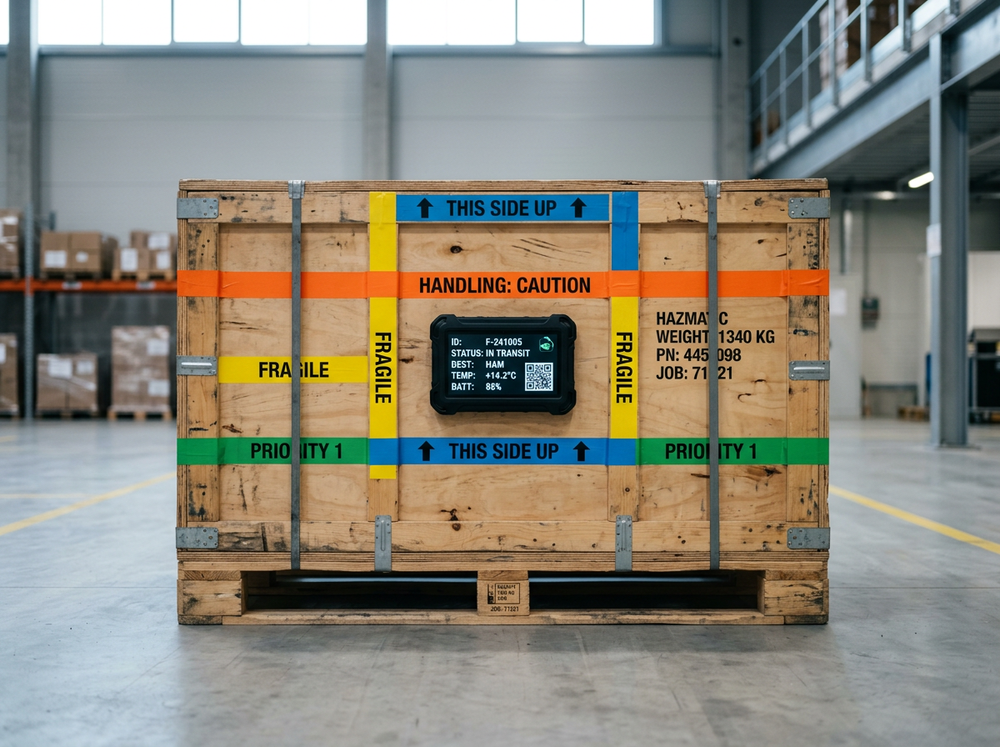
In the bulky goods shipping process, the operational procedures differ fundamentally from those for standard packages in several respects—and it is precisely these differences that have a direct impact on transit times, the risk of damage, and the conditions under which damage incurred in transit can be settled.
Bulky goods shipments receive special labeling at the depot that identifies them as non-automated. Depending on the carrier, this is done using internal labels, color markings, or digital status flags in the scanning system. This marking determines the subsequent handling path: The shipment is manually diverted, temporarily stored separately, and routed via a transport path that differs from the standard flow. For shipping managers, this means that tracking for bulky shipments often provides less granular interim status updates than in the standard process—not because the system isn’t tracking them, but because they pass through fewer automated scanning points.
Delivery time variations are therefore not an exception but an inherent feature of the system: While standard packages travel through fully automated sorting lines, bulky items pass through manual transfer points whose capacity varies throughout the day. Delivery guarantees under the standard rate generally do not apply to bulky items. Those handling time-sensitive orders should take this into account in their customer communications and specify delivery times for bulky items separately.
Proper packaging plays a particularly important role in insurance coverage. In the event of damage to bulky shipments, carriers and insurers routinely check whether the packaging was appropriate for the transport risk. If corner protectors are missing, the packaging is unstable, or protruding parts were not secured, this can lead to the claim being denied in whole or in part—even if the shipment was formally insured. Proper packaging is therefore not merely an additional recommendation, but a formal requirement for an enforceable claim in the event of damage.
Why Packaging Is Crucial for Insurance Coverage
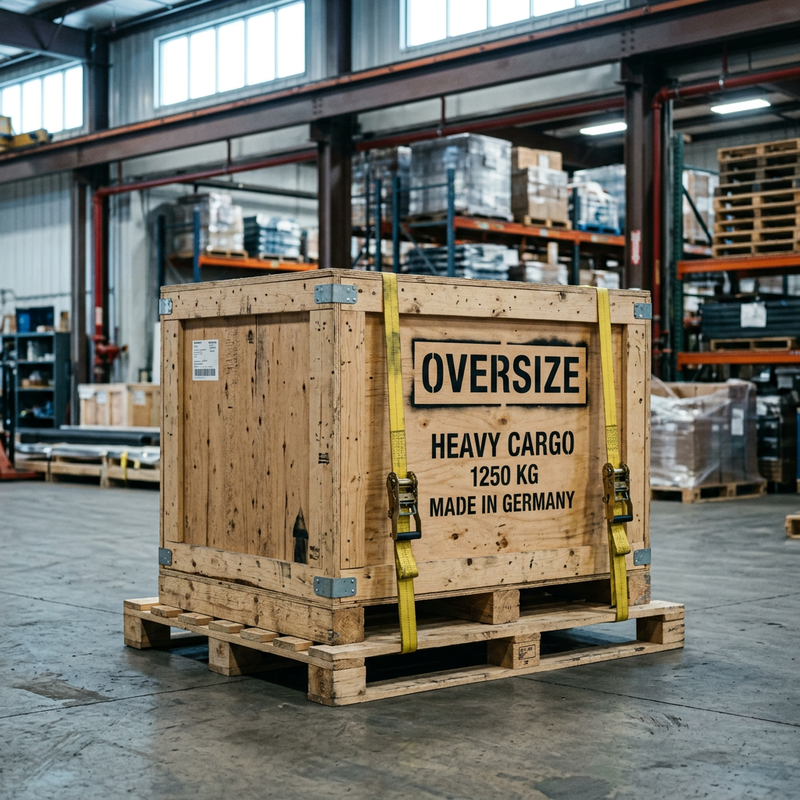
For bulky shipments, packaging plays a role that goes far beyond simply protecting the contents during transit: It is often the decisive factor in determining whether a claim for transit damage will be honored at all. In the event of damage, carriers and insurers routinely check whether the packaging was appropriate for the specific risk of the shipment—and stricter standards apply to bulky goods than to compact standard packages. Anyone who cuts corners or improvises here risks coming away empty-handed in the event of damage.
For bulky goods insurance, it is crucial that the packaging can be proven to have been properly executed at the time of handover to the carrier: sturdy, flush-sealed outer packaging; adequate edge protection at exposed points; secured attachments; and cushioning that protects the product even during manual handling. If edge protection is missing, the box is unstable, or components protrude uncontrollably, this can lead to partial or complete denial of the claim—regardless of whether the shipment was formally insured. To make matters worse, bulky goods are manually unloaded at the depot and transported separately, which fundamentally increases the handling risk compared to automated standard shipments. Documented packaging standards —such as photos of the fully packaged parcel before handover—significantly strengthen your position in the event of a dispute and are a sensible operational routine for high-value bulky goods.
What "Bulky Items" Labels Mean in the Process

In the warehousing and transportation process, labels for bulky shipments serve a clear operational control function: They signal to all parties involved along the supply chain that a shipment cannot be processed through the automated standard process and must therefore be handled separately. The labeling for bulky shipments can take various forms—internal labels, colored stickers, digital status flags in the scanning system, or standardized markings on the shipping document. What matters is not the specific form, but the function: The labeling determines which transport route, which handling team, and which storage area are responsible for this shipment. Without proper marking, there is a risk that a bulky shipment will initially be fed into the standard flow, where it will block sorting lines or be damaged, and subsequently require manual reprocessing—resulting in lost time and an increased risk of damage. At the shipping depot, the marking indicates that the shipment is to be diverted, temporarily stored manually, and routed via an alternative transport path. For shipping warehouses that use their own internal labeling systems, the following applies: The label must be clearly and permanently affixed to the shipment before it is handed over to the carrier to ensure that no information is lost during the handover process.
International Shipping of Bulky Items
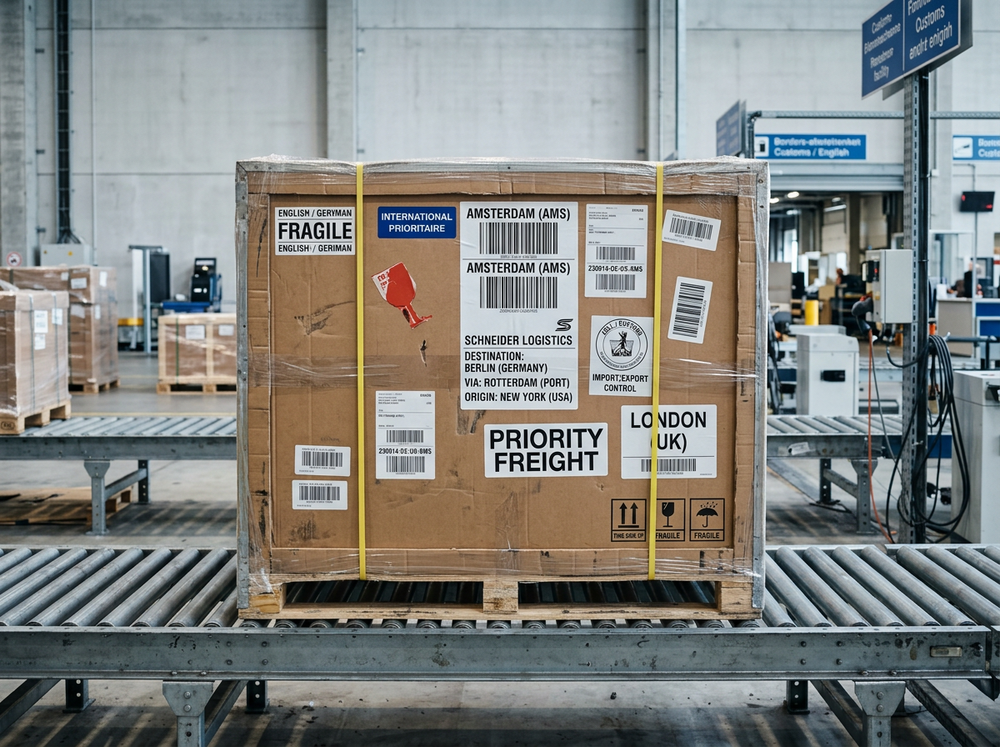
Cross-border shipments of oversized items present shipping managers with a combination of logistical, rate-related, and administrative challenges that do not arise in domestic shipping. This begins with carrier restrictions: What is still accepted as a standard bulky item package in the German parcel network may exceed the maximum dimensions set by another network operator in the destination country—with the result that the shipment is rerouted, held up, or billed at a different rate. Sending oversized items internationally therefore always requires knowing the limits on both sides: those of the shipping carrier and those of the foreign delivery partner.
In addition, transit times are significantly longer. While a standard package within Europe typically takes two to four business days, shipping bulky items internationally—depending on the destination country, route, and amount of manual handling required—can take five to ten business days. Especially in countries where the shipper does not have a direct carrier network, the shipment is handed over to local partner service providers, who have their own definitions of bulky goods and handling processes. Tracking, which works seamlessly for domestic shipments, often becomes less reliable in these cases—intermediate statuses are missing because not all international transfer points report every scan event.
The most critical difference, however, lies in customs and shipping documents. Within the EU, customs clearance is not required because the free movement of goods applies—bulky items can be shipped without additional customs paperwork. As soon as the shipment leaves the EU customs territory, this changes fundamentally: Depending on the value of the goods and the destination country, a customs declaration of contents is required
When International Bulky Shipments Become Particularly Critical
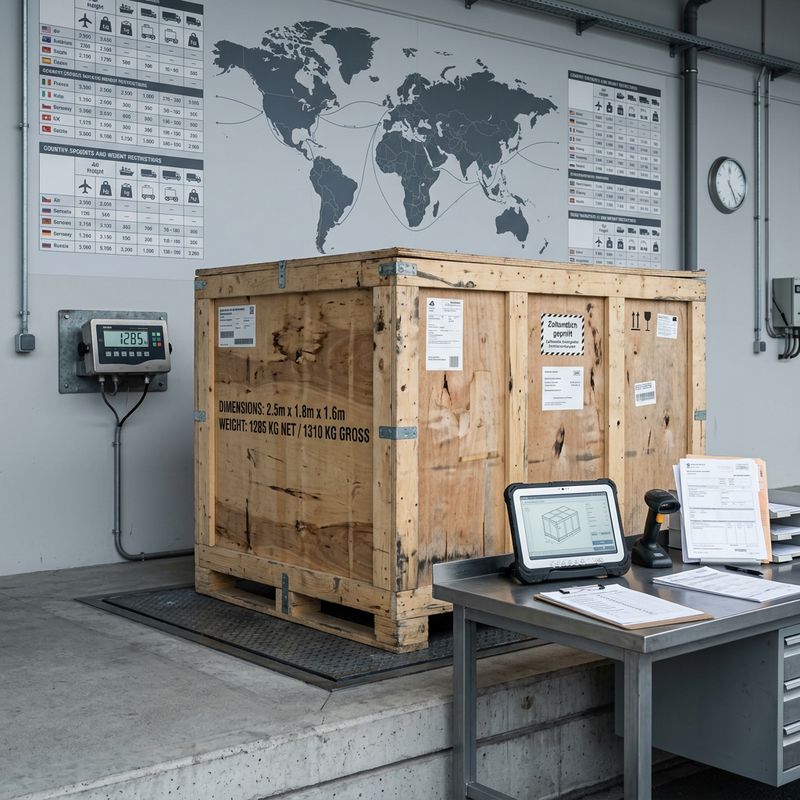
When shipping bulky items abroad, the risks that are already well-known domestically are magnified—and new ones are added. The first—and often underestimated—problem concerns varying country-specific limits: A package that is still accepted as a standard bulky item by the German carrier may exceed the maximum dimensions allowed by the foreign delivery partner. Since many carriers in the international network work with local service providers that have their own limits and handling processes, checking domestic limits alone is not sufficient. Shipping bulky goods internationally requires that the limits of both parties—the originating carrier and the delivery partner in the destination country—be known and adhered to.
Added to this are the increased packaging requirements: In international transport, bulky goods are handled more frequently, pass through more transfer points, and are therefore exposed to a higher risk of mechanical damage than in domestic shipping. What is considered proper packaging for domestic shipping is often insufficient for long transport routes— edge protection, securing of attached parts, and the quality of the outer packaging must be correspondingly higher. Longer transit times are another structural characteristic: Manual handling, international transfer points, and—outside the EU—customs clearance result in waiting times that do not occur in domestic shipping. Tracking becomes less reliable because not all international transfer points report scan events. In cases of complex delivery situations in the destination country—such as the lack of direct delivery or varying delivery times—the risk of a return at the sender’s expense also increases.
Distinguish Between EU and Non-EU Shipping
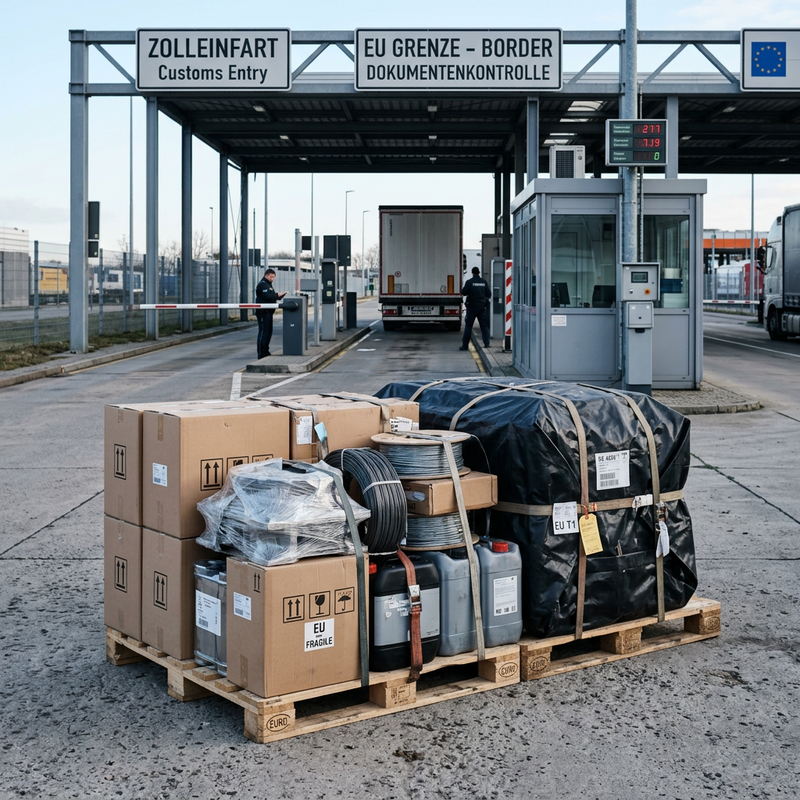
Within the European Union, bulky goods shipments benefit from the free movement of goods: There are no customs formalities, and no separate customs documentation is required. Nevertheless, those responsible for shipping should note that individual EU member states have country-specific import restrictions for certain product categories—regardless of customs status. As soon as a shipment leaves the EU customs territory, the situation changes fundamentally. For bulky goods, different customs documents are required depending on the value of the goods and the destination country: For goods valued at up to 300 euros, the simplified CN22 form is often sufficient; for amounts above that, a CN23 form with a complete description of the goods, quantity, weight, and value is mandatory. For commercial shipments, a commercial invoice must also be included; for samples or returns that are not for sale, a pro forma invoice replaces the commercial document. If these documents are missing or the information is incomplete, customs will hold the shipment—which directly affects delivery time and may result in additional costs due to storage fees in the destination country. An additional complication with bulky shipments is that the weight and volume listed on the documents must exactly match the actual shipping dimensions, as discrepancies detected during the customs scanning process automatically trigger a re-inspection. Anyone who regularly ships bulky goods to third countries should also check country-specific import bans and quantity restrictions in advance.
Recommendations for Distribution Centers and Fulfillment Operations

Anyone who deals with bulky goods on a daily basis in a shipping warehouse doesn’t need theory—they need a clear framework for implementation. The first step is to maintain up-to-date carrier limits in the warehouse management system: The dimensions, girth thresholds, and weight limits for each carrier must be reconciled with current price lists and contract documents at least once a year. Outdated parameters in the system are one of the most common structural causes of incorrect bookings and the resulting additional charges.
The second step involves packaging standardization. If carton sizes are not systematically aligned with actual product requirements, oversized shipments will gradually increase—with a direct impact on girth and bulky goods surcharges. A defined carton matrix, supplemented by cushioning specifications for each product group, measurably reduces this variation. The third step is to define binding measurement rules for outbound shipping: Length, width, height, and weight are measured on the sealed package ready for shipment—not taken from master data, not estimated. Anyone who takes avoiding bulky goods in the warehouse seriously as an operational goal must embed this step as a fixed part of the process, not as an occasional control measure.
The fourth step is carrier logic in the shipping system. Dimensions checks, volumetric weight calculations, and oversized package flagging should be automated before carrier assignment, not performed manually afterward. The fifth step is the automated review of borderline cases: Shipments that are close to carrier limits represent the most economically significant segment—and are simultaneously the most error-prone when processed manually. Automated measurement technology in the outbound area objectifies these decisions, makes them reproducible, and protects against additional charges that are not visible in day-to-day operations but reliably appear on the monthly invoice. Those who consistently implement these five building blocks lay the foundation for permanently lower shipping costs and greater process stability.
The 5 Most Important Immediate Steps to Avoid Unnecessary Oversize Cargo Surcharges

There are five measures that can be implemented immediately in shipping operations to avoid the bulky item surcharge —without major investments or process changes. First: Keep carrier thresholds up to date. If you haven’t entered the dimensional and girth thresholds for all your carriers into the system—or haven’t checked them in over a year—you’re working with outdated information. This leads to incorrect charges that only become apparent on the monthly invoice. Second: Introduce a box matrix. Assign a verified box variant to each standard product that reliably complies with the preferred carrier’s girth limit. This prevents warehouses from defaulting to the next-largest box out of convenience. Third: Define cushioning guidelines. Uncontrolled use of packing materials increases width and height—a simple guideline per product group eliminates this common source of error. Fourth: Make dimensions a required field before label printing. Checking strap dimensions and volumetric weight only after the fact is too late. Both must be calculated before carrier assignment. Fifth: Automatically check borderline cases. Shipments close to carrier thresholds pose the greatest risk in a manual process. Automated measurement technology in the outbound area makes this decision objective and reproducible—and eliminates the measurement inaccuracies that arise inherently from manual work.
Conclusion

At the end of this guide, one thing is clear: bulky goods are not a marginal logistics issue, but rather an operational cost factor that comes into play every day in shipping warehouses, fulfillment centers, and e-commerce operations. Whether a shipment is classified as bulky is not determined by a single measurement, but by a combination of length, girth, shape, weight, and packaging stability—and it is precisely this complexity that makes the issue so prone to errors in practice.
The most important insight here is structural in nature: by far the largest portion of unnecessary bulky-item surcharges is not caused by the product itself, but by avoidable decisions made during outbound shipping. A box that’s too large, excessive padding, missing edge protection, protruding components, or simply inaccurate measurements of the fully packed package—any of these factors can turn a standard shipment into a bulky one, even if the product, route, or weight hasn’t changed. The packaging decision is therefore always also a decision regarding shipping rates.
Once you understand this connection, you’ll also recognize the three most effective ways to avoid unnecessary surcharges: first, accurate measurement data for the sealed, ready-to-ship package—not taken from master data, not estimated; second, precisely tailored packaging that consistently keeps girth and shape within standard ranges; and third, automated measurement technology in the shipping department that objectively and consistently assesses borderline cases before the label is printed. Together, these three building blocks create the process discipline necessary to permanently and systematically keep bulky items out of the shipping budget—not through case-by-case checks, but through structural safeguards in the right place within the process.
Why are bulky item surcharges often charged even when the package dimensions appear to be within the allowed limits?
Oversized item surcharges are often due not only to the package’s dimensions alone, but also to the overall handling involved. Shape, weight, circumference, and packaging are also key factors: Long, round, irregularly shaped, or protruding items are quickly classified as bulky goods, even if they appear to be within standard dimensions at first glance. Examples include rugs, tires, bicycles, or poorly packaged furniture parts. Such shipments often do not fit neatly on conveyor belts, must be sorted manually, and require more space during transport. Exceeding typical limits—such as 120 × 60 × 60 cm, over 5 kg, a circumference over 3 m, or a wheel diameter over 15 cm—can also trigger surcharges.
What types of products are commonly shipped as bulky items in e-commerce?
In e-commerce, bulky items—products that are too large, too long, too heavy, or irregularly shaped for standard shipping—are the most common items shipped. Typical examples include furniture, rugs, mattresses, bicycle frames or complete bicycles, car tires, gardening tools, large mirrors, paintings, musical instruments, and sporting goods such as skis, surfboards, or fitness equipment. Items with protruding parts or cylindrical shapes are also often classified as bulky goods. The decisive factors are not only weight but also dimensions and shape. If shipments exceed standard package limits, they are usually classified as bulky goods, handled separately, and shipped with a surcharge. It is important to use particularly sturdy, transport-safe packaging.
How do carriers calculate bulky item surcharges for oversized shipments?
Carriers charge oversize surcharges if a shipment exceeds standard limits or cannot be processed through the normal package route due to its shape or handling requirements. Typical triggers include, for example, a longest side exceeding 120 cm, dimensions exceeding 120 × 60 × 60 cm, a circumference exceeding 3 m, large-diameter rolls, irregular shapes, or protruding parts. The surcharge is usually calculated as a fixed oversize surcharge or as a separate rate—depending on dimensions, weight, route, service, and destination country. For international shipments, customs clearance and additional costs may apply. Important: Pack items securely, as poor packaging can result in surcharges, damage, or even the loss of insurance coverage.
When is a bulky item surcharge applied in addition to the standard shipping rate?
A bulky item surcharge applies when a shipment cannot be processed as a standard package and must therefore be handled separately. This is usually the case for oversized, heavy, or irregularly shaped packages, for example, if the longest side is longer than 120 cm, the dimensions exceed 120 × 60 × 60 cm, the circumference is greater than 3 m, or rolls have a diameter greater than 15 cm. Protruding parts, round shapes, or goods that are difficult to stack may also be considered bulky items. Typical examples include rugs, tires, bicycles, or furniture parts. Important: The exact classification and amount of the surcharge always depend on the specific shipping provider.
How do the bulky item limits differ between DHL, DPD, Hermes, UPS, and GLS?
The size and weight limits for oversized packages vary significantly depending on the shipping carrier. Generally, a shipment is classified as bulky if it is too large, too heavy, too long, or not cuboid in shape. DHL often classifies shipments exceeding standard dimensions—such as 120 × 60 × 60 cm—or those with an unusual shape as bulky. DPD, Hermes, UPS, and GLS each have their own maximum limits for length, girth, and weight; shipments often become problematic if they are 120 cm or longer, have a circumference of over 3 m, or have irregular shapes such as tires, bicycles, or rugs. UPS and GLS sometimes allow different limits than DHL or Hermes, but then charge surcharges. Important: Always check the dimensions, shape, and packaging in advance.
What role does the girth play in determining whether an item is classified as oversized cargo?
The girth is a key criterion for classifying a shipment as oversized, because it better reflects the overall size of a shipment than just the longest side. It is usually calculated as length + 2 × width + 2 × height. If the package exceeds the limit set by the shipping provider, it is often no longer considered a standard package but rather oversized cargo. This also applies to shipments that, while not extremely heavy, are very bulky. Typical additional limits include a longest side exceeding 120 cm, a circumference exceeding 3 m, or irregular shapes. The result: special handling, a bulky item surcharge, and often stricter packaging requirements.
What dimensions and weights typically result in an oversized shipment classification?
Typically, a shipment is considered bulky if it exceeds the dimensions of a standard package or cannot be sorted automatically due to its shape. Common guidelines include: a longest side exceeding 120 cm, a circumference exceeding 3 m, rolls with a diameter greater than 15 cm, or irregular shapes with protruding parts. Weights exceeding 5 kg may also be subject to bulky item screening depending on the provider, but the respective rate limits are always the deciding factor. In practice, maximum dimensions such as 120 × 60 × 60 cm are often considered the standard limit. Typical examples include bicycles, rugs, tires, furniture parts, and musical instruments. Bulky items usually incur surcharges and require secure packaging.
At what point is a shipment considered oversized by carriers?
Carriers generally classify a shipment as oversized if it no longer fits within standard package shipping guidelines—due to dimensions, weight, or shape. Typical criteria include: longest side over 120 cm, circumference over 3 m, weight over 5 kg, or a cylindrical shape with a diameter greater than 15 cm. Irregular, non-rectangular shipments or packages with protruding parts are also often classified as oversized items. Examples include bicycles, rugs, tires, furniture, or musical instruments. Important: The exact limits vary by provider. Bulky items usually incur an extra charge, require specially secure packaging, and often need additional customs documentation when shipped to non-EU countries.
How does bulky cargo differ from a regular package?
Bulky items differ from regular packages primarily in terms of size, weight, or shape. Bulky items are generally defined as those that exceed standard dimensions, e.g., longer than 120 cm, heavier than 5 kg, with a circumference greater than 3 m, or in the form of a roll with a diameter greater than 15 cm. Irregular shapes, protruding parts, or non-rectangular shipments are also often included in this category. For this reason, bulky items are handled separately, require especially secure packaging, and usually cost more than a standard package. Typical examples include bicycles, rugs, tires, or furniture parts. For international shipments, customs documentation may also be required, especially outside the EU.
What exactly is bulky cargo in package shipping?
Bulky items in package shipping are shipments that cannot be sent as standard packages because they are too large, too heavy, or too unwieldy. Typical criteria include a longest side exceeding 120 cm, a circumference exceeding 3 m, rolls with a diameter greater than 15 cm, or irregular shapes with protruding parts. Even if standard maximum dimensions such as 120 × 60 × 60 cm are exceeded, items are often classified as bulky goods. Examples include bicycles, rugs, tires, furniture, and musical instruments. Bulky goods require particularly sturdy packaging and usually incur an additional charge. Depending on the provider, pickup, tracking, and—for international shipments—customs documentation may be required.
What measures are most effective for e-commerce operators in preventing bulky items on a long-term basis?
The most effective approach is to avoid bulky items right from the start—during product selection, design, and packaging. E-commerce operators should, whenever possible, select or develop items that stay within standard dimensions—for example, under 120 × 60 × 60 cm—without protruding parts or irregular shapes. Products that can be disassembled, flat-pack packaging designs, and standardized box sizes are helpful. Product bundles should also be planned so that the longest side, the circumference, and the weight do not exceed the limits for bulky items. It is also important to have a fixed oversized cargo checklist in the warehouse: Dimensions, weight, shape, roller diameter, and packaging quality must be verified before shipment.
How can shipping managers systematically review and document carrier requirements?
Shipping managers should check carrier requirements using a standardized oversized shipment checklist for each shipment and service provider. This checklist should include dimensions, weight, girth, shape deviations such as rollers, protrusions, or irregular contours, as well as packaging and labeling requirements. It is helpful to use a carrier matrix that compares limits and surcharges by provider, for example, for longest side over 120 cm, circumference over 3 m, or irregular shapes. The inspection should be documented in the shipping system before approval, including the date, inspector, carrier policy, result, photos, and selected shipping method. For international shipments, customs requirements and exclusions must also be included in the documentation. This leads to transparent decisions, fewer retroactive charges, and greater transport security.
How important are volumetric weight and actual dimensions when appraising bulky goods?
For bulky items, actual dimensions and volumetric weight often matter more than the weight in kilograms alone. The actual dimensions indicate whether a shipment no longer qualifies as a standard package due to its length, circumference, or irregular shape—for example, if it exceeds 120 × 60 × 60 cm, has a circumference of more than 3 m, or has protruding parts. Volume weight measures how much space the bulky item takes up in the vehicle or sorting system. Large, lightweight items can therefore be more expensive than small, heavy ones. When determining the price, the higher value of the actual weight and volumetric weight is often used. This is important for determining the rate, transportation costs, and the appropriate shipping method.
When is it worth measuring packages in the warehouse to reduce bulky item costs?
Measuring packages in the warehouse is particularly worthwhile if oversize surcharges are frequently incurred or if unclear shipment dimensions lead to misclassifications. Bulky items usually occur when standard dimensions are exceeded—for example, when dimensions exceed 120 × 60 × 60 cm, the longest side is over 120 cm, the circumference exceeds 3 m, or the shape and attached parts make the item unsuitable for conveyor belts. Automatic measurement reliably captures dimensions, volumetric weight, and shape. This allows oversized, irregularly shaped, or improperly packaged parcels to be identified early on, repackaged, or rerouted to appropriate shipping methods. This reduces additional charges, lowers bulky item costs, and improves rate selection for each service provider.
How do automatic volume measurement devices help avoid surcharges for bulky items?
Automatic volume measurement devices record the length, width, height, and in some cases the shape of a package as early as the time of acceptance or at the sorting center. This allows for early detection of whether a package exceeds standard dimensions—for example, if it measures more than 120 × 60 × 60 cm, has a longest side longer than 120 cm, has a circumference greater than 3 m, or is classified as oversized due to its irregular shape. This helps ensure that shipments are packed correctly, declared appropriately, and assigned the correct rate right away. As a result, it helps avoid retroactive bulky item surcharges, manual recalculations, and delays. This is a major advantage, especially for items such as tires, bicycles, carpets, or furniture parts.
What mistakes occur most frequently in day-to-day warehouse operations when measuring shipments that may contain bulky items?
Common errors result from inaccurate or inconsistent measurements: Only the longest side is measured, while the circumference, roll diameter, or protruding parts are overlooked. Incorrect measurement points are also common—measurements are taken on the box itself rather than at the actual bulkiest point, including handles, feet, or padding. Another common mistake is relying on estimates instead of precise measurements, as well as failing to account for the packaging. It’s also problematic to incorrectly classify irregular shapes as standard packages. In day-to-day warehouse operations, such errors quickly lead to additional workload, delays, and manual rework. Clear measurement guidelines, standardized inspection processes, and trained staff prevent most misclassifications of bulky items.
How do you measure package dimensions correctly to prevent incorrect classification as oversized cargo?
Always measure the length, width, and height at the outermost points of the fully packaged shipment—including padding, edge protectors, handles, wheels, or protruding parts. Lay the package flat and measure in centimeters using a measuring tape or folding ruler. For rolls, measure the length and diameter. Important: Do not measure the item itself, but rather the package as it is ready for shipping. Then check the service provider’s limits, e.g., longest side over 120 cm, dimensions exceeding 120 × 60 × 60 cm, circumference exceeding 3 m, or an irregular shape. Also weigh the entire package. This will help you avoid additional charges and incorrect classification as bulky goods.
How can oversize cargo surcharges be avoided through optimized packaging?
Oversize surcharges can often be avoided if the shipment meets the package service’s standard dimensions and is packed in a rectangular shape. The key factors are compact dimensions, no protruding parts, and sturdy, fully sealed outer packaging. If possible, disassemble bulky items, fold in handles, and pack loose parts separately in the box. Use boxes that fit the items perfectly instead of makeshift packaging, fill any empty spaces neatly with padding, and protect the edges. Rollers, tires, bicycles, or furniture are often classified as bulky items due to their shape and size. Always check the carrier’s size limits before shipping, as exceeding them will result in surcharges.
What are the consequences for shipping warehouses when dimensions are reported incorrectly for bulky shipments?
Incorrect size specifications for bulky shipments often lead to significant additional costs and operational disruptions in shipping warehouses. If a shipment is listed as too small, it does not fit into standard processes and must be manually reprocessed and reclassified. This delays putaway, order picking, transportation planning, and delivery. Often, this results in bulky item surcharges, retroactive billing, or even refusal of acceptance by the service provider. Storage space, conveyor systems, and delivery routes are also planned incorrectly, which reduces efficiency. For international shipments, additional problems with customs declarations may arise. It is therefore important to accurately record the length, circumference, weight, and shape of the shipment and to pack the goods properly; otherwise, insurance coverage may also be limited in some cases.
How do packaging shape and excess length affect the bulky item classification?
The type of packaging is a key criterion for bulky items: Shipments that are not rectangular or cylindrical are often considered bulky items—for example, those with protruding parts, irregular shapes, or without sturdy outer packaging. Round, loose, or difficult-to-stack goods are also frequently classified as such. Excess length also plays a major role: If the longest side exceeds typical standard dimensions—such as 120 cm or the package size of 120 × 60 × 60 cm—a bulky item surcharge usually applies. The same applies to large circumferences or thicker rolls. Important: Pack neatly, seal securely, and label clearly—otherwise, you risk surcharges, damage during transport, or limited insurance coverage.