
Three channels, three warehouses, three different versions of the truth about available inventory—and, in the end, an angry customer because the product ordered online was simply no longer in stock at the fulfillment center. Multi-channel logistics is no longer an optional upgrade, but rather the operational reality for every retailer that operates marketplaces, online stores, and brick-and-mortar locations in parallel.
The real challenge rarely lies in opening another sales channel. It lies in the question of how inventory, master data, and returns flows are synchronized across channels—in real time, error-free, and scalable. This is precisely what determines whether additional channels will boost margins or cause complexity to grow uncontrollably.
This guide from PackageHERO® provides a structured overview of definitions, distinctions, system architectures, and fulfillment models. Whether you’re evaluating your existing logistics or planning a new setup, you’ll find the technical foundation here to make informed decisions.
Table of Contents
- What Is Multi-Channel Logistics? – Definition and Vision
- A Comparison of Single-Channel, Multi-Channel, Cross-Channel, and Omnichannel
- Challenges: Inventory Synchronization, Master Data, and Returns
- Systems & Technology: ERP, WMS, and OMS Working Together
- Fulfillment Models: Centralized, Decentralized, Ship-from-Store, and Click & Collect
- Cross-Channel Returns Management: Reverse Logistics in Multi-Channel Operations
- From a Multi-Channel Start to Omnichannel: Maturity Level and Roadmap
- Conclusion: Multi-Channel Logistics as an Ongoing Strategic Task
- FAQ
What Is Multi-Channel Logistics? – Definition and Vision
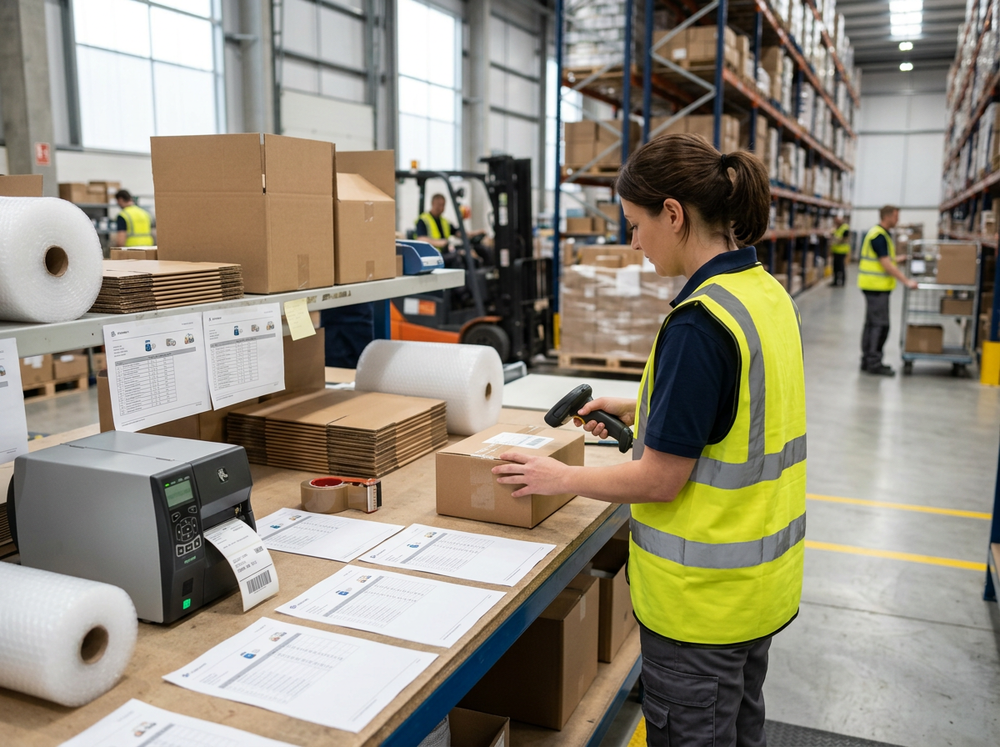
Retailers who sell through multiple sales channels today quickly face a key question in practice: How can orders from sources as diverse as their own online store, brick-and-mortar locations, marketplaces like Amazon or eBay, and B2B portals be processed reliably and cost-effectively? This is exactly where multichannel logistics comes in. It refers to the coordinated logistical processing of orders received through multiple, largely independently operated sales channels. Each channel may have its own process rules, packaging guidelines, documentation requirements, and status models—yet all must still be reliably supplied with merchandise.
The goal is clear: avoid overselling, offer end customers a consistent delivery experience, and keep all channels operationally manageable. In the traditional multi-channel approach, channels are often still operated with separate inventories or distinct processes. The real challenge lies in managing these silos in a way that ensures the entire network functions effectively—because with every new channel added, the complexity of interfaces, master data requirements, and the risk of inconsistent inventory information increase structurally. Multi-channel logistics is thus an integral part of the overarching distribution chain.
A Comparison of Single-Channel, Multi-Channel, Cross-Channel, and Omnichannel
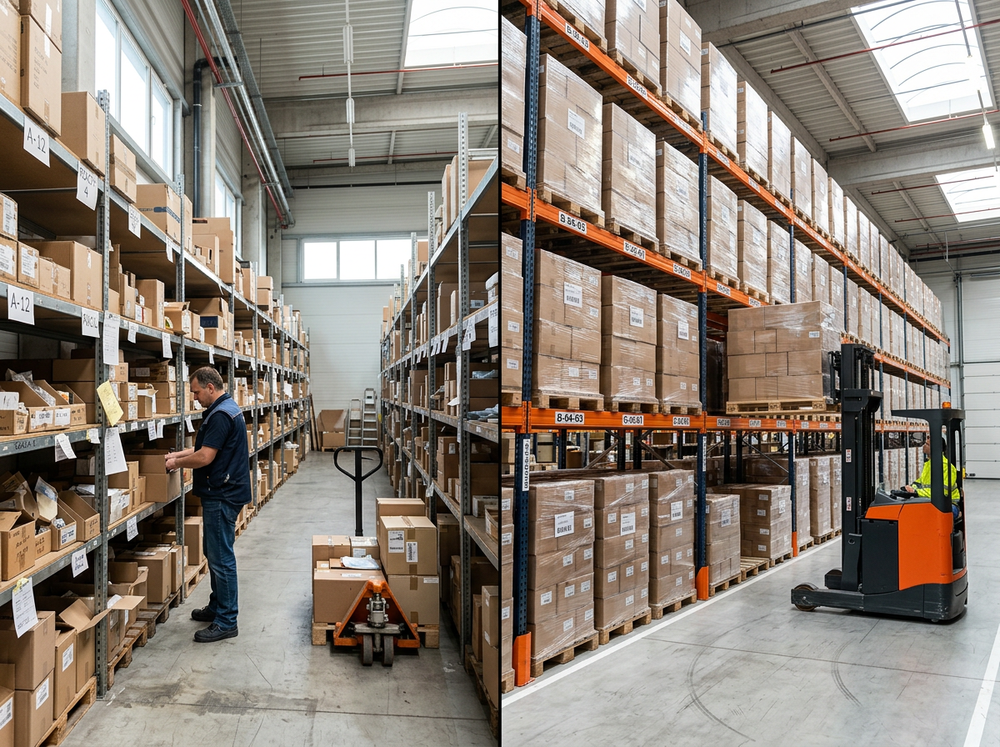
Anyone making strategic decisions for a growing retail model must first understand what stage of channel integration their company is at—because the answer significantly determines which software architecture, interface strategy, and inventory model make sense in the first place. The terms “single-channel,” “multi-channel,” “cross-channel,” and “omnichannel” do not describe marketing categories, but rather fundamentally different logistical operating models. The difference between multi-channel and omnichannel is most evident in whether inventory and customer data are available across channels in real time or whether separate data silos still exist.
| Model | Inventory Management | Process Integration Across Channels | Customer Experience | Typical System Architecture | Distinctive Feature |
|---|---|---|---|---|---|
| Single-Channel | One inventory, one channel | None | Uniform, but limited to one channel | One ERP or WMS, no interface complexity | Simplicity and clear processes |
| Multi-channel | Separate inventories per channel (silos) | Low to none | Inconsistent, channel-dependent | Multiple isolated systems, often without a shared database | Operating in parallel without channel integration |
| Cross-channel | Partially integrated, initial synchronization | Process-based integration (e.g., Click & Collect, in-store returns) | Channel switching is possible, but not seamless | WMS/ERP with an interface solution or an OMS approach | Channels share defined processes |
| Omnichannel | Fully integrated, shared inventory pool | Fully integrated, in real time | Seamless, no media discontinuity | Centralized database (single source of truth), OMS + WMS + ERP integrated | A single customer journey across all channels |
What the table doesn’t immediately reveal: With each level of integration, not only does the coordination effort increase, but so does the number of active interfaces—from a handful of isolated system connections in multi-channel operations to a fully synchronized real-time architecture in omnichannel. In practice, this means that investments in middleware, API management, and interface monitoring increase disproportionately as the level of integration rises and must be factored into the budget as early as the model selection phase.
Challenges: Inventory Synchronization, Master Data, and Returns

In practice, the operational management of multichannel systems rarely fails due to individual process errors—it fails because of three structural issues that are closely intertwined: cross-channel inventory synchronization, the quality of master data, and the management of returns. What makes these three challenges particularly insidious is that weaknesses in one area systematically exacerbate the problems in the others. Incorrect master data entry leads to inaccurate inventory reports; inconsistent inventory data, in turn, makes it difficult to make any meaningful decisions regarding returns, because it remains unclear which channel can actually accept returned goods. Furthermore, effective replenishment control requires reliable inventory information from all channels simultaneously. A finding widely documented in supply chain research is considered groundbreaking: Up to 75 percent of the potential for improvement in supply chain optimization lies in the structure of the network as a whole—not in the optimization of individual process steps. For multichannel logistics, this means that isolated measures addressing master data, inventory synchronization, or returns management will only achieve their full effect once the overall network is structurally sound. Inventory synchronization in a multichannel environment forms the foundation for this: if it is unstable, improvements to master data or returns logistics will have only a limited effect. The following subsections examine each of the three problem areas in detail and highlight where concrete solutions must be implemented.
Real-time inventory synchronization across all channels
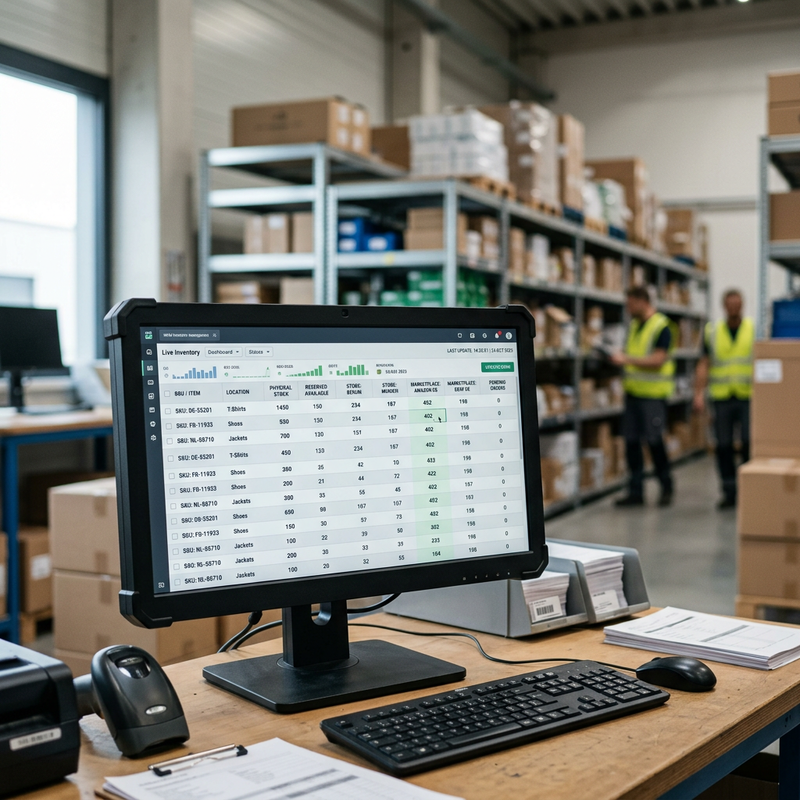
If inventory levels are tracked separately by channel, a classic overselling risk arises: An item is shown as available in one channel, while another channel has already reserved the same inventory. For marketplace-related systems—such as Amazon or eBay—update intervals of less than 60 seconds are considered a standard best practice to reduce inventory discrepancies to a level that can be managed operationally. Systems that operate with longer latency times result in measurably higher cancellation rates when order volumes are high.
To ensure that real-time transparency regarding inventory levels remains actionable even during shortages, channel-specific safety stock and prioritization logic in order management supplement the shared pool. You define which channel is given priority in the event of a shortage, thereby protecting high-margin or contractually bound sales channels. This control mechanism also ensures that a growing channel network does not automatically lead to a proportional increase in cancellation costs.
Consistent Master Data as the Foundation for Error-Free Processes

Inconsistent product master data is one of the most frequently underestimated sources of error in multichannel logistics: Incorrect weights, missing GTINs/EANs, or inconsistent units of measure lead to picking errors, incorrect shipping labels, and interface errors between systems. In logistics practice, it has been shown that missing or incorrect GTIN entries can result in up to 3–5 percent additional picking errors per affected item—a figure that quickly becomes operationally significant when dealing with a broad product range and multiple active channels. The minimum required fields for a GS1-compliant master data record are: GTIN, item description, package dimensions (length, width, height), weight, and—where applicable—hazardous goods class, as well as channel-specific attributes.
Centralized master data maintenance is therefore recommended as the core data foundation, with clearly defined rules governing who is authorized to create and modify data records—what is known as master data governance. Only when responsibilities, maintenance cycles, and quality thresholds are clearly defined can master data be maintained consistently across all channels in a way that structurally reduces interface errors and manual corrections.
Returns as a Challenge for Inventory and Process Quality

In a multi-channel context, returns from fundamentally different channels with very different requirements arrive at the warehouse: A returned B2C package typically requires different processing and documentation than a return from the B2B segment. The difference in volume is structurally significant: In B2C e-commerce, return rates range between 20 and 50 percent depending on the product line, while in the B2B segment they are generally below 10 percent. With each new end-customer channel added, the volume of returns therefore increases disproportionately—an effect that is often underestimated in network planning.
A lack of transparency regarding the overall process of cross-channel returns management has been shown to make it nearly impossible to isolate the actual causes of problems. Without clear process logic, an uncontrolled mix develops in the returns warehouse, which directly jeopardizes both inventory quality and the resaleability of returned goods. Increased inventory in the returns warehouse also ties up capital and strains liquidity—a consequence that can quickly reach significant proportions when operating multiple parallel channels. The section on cross-channel returns discusses how specific returns processes can be structured.
Systems & Technology: ERP, WMS, and OMS Working Together

No single software solution can meet all the requirements of multichannel logistics on its own—and this is not an exception, but the norm. In established IT landscapes, there are typically no uniform platforms, but rather heterogeneous system environments in which ERP, WMS, and OMS operate at different levels and only work together to form a powerful whole. The actual integration effort lies between these three system levels—and this is the key differentiator of high-performance multichannel architectures. The following subsections each examine one of these levels: ERP and WMS for inventory and warehouse management, the OMS for order orchestration, and interfaces and data architecture for cross-system integration.
ERP and WMS: Inventory Management and Operational Warehouse Control
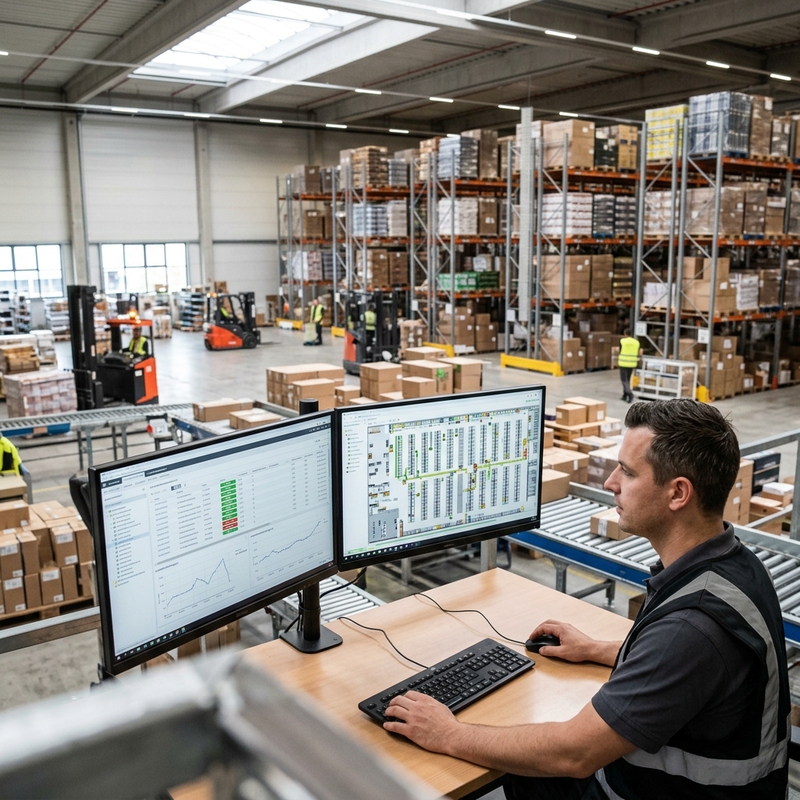
Within the interplay of the three system levels, ERP and WMS perform clearly defined but closely integrated tasks. The ERP system is responsible for commercial inventory management: It manages supplier relationships, controls procurement, and forms the basis for structured replenishment control. The WMS, on the other hand, translates these commercial specifications into operational warehouse processes—from putaway through picking procedures such as “pick & pack,” batch, and multi-order picking, to quality checks via scanning or weighing, and finally to shipping processing. In multi-channel operations, complexity at the WMS level increases significantly: The system must automatically apply channel-specific packing instructions, labeling rules, and documentation requirements—different shipping labels for B2C shipments, store transfer documents for brick-and-mortar retail, or specific B2B delivery documents are generated without manual intervention. For this division of labor between ERP and WMS to function reliably, bidirectional, low-latency communication between the two systems is not optional but a mandatory requirement: inventory changes, goods receipts, and order confirmations must be transmitted in both directions without delay.
Order Management System (OMS): Order Orchestration Across All Channels

The Order Management System acts as an orchestrating layer between the sales channels and the fulfillment warehouse systems: It receives orders from all channels, checks inventory availability in real time, and determines the optimal fulfillment location—whether a central warehouse, a store, or a dropshipment. The OMS then forwards the order to the responsible WMS or an external logistics service provider and sends status information—such as track-and-trace details and estimated delivery times—back to both the customer and the relevant sales channels.
Typical OMS functions include order routing, split-order logic, prioritization based on delivery promises, and automated carrier selection. In practice, routing rules are based on specific SLA parameters: Same-day cutoff times—often between 12:00 p.m. and 2:00 p.m. for same-day shipping—define which fulfillment location is still eligible for an incoming order. If this orchestration layer is missing and order control is performed manually, the error rate in channel assignment and carrier selection increases measurably—with corresponding negative effects on delivery reliability and the scalability of the entire fulfillment process.
Interfaces and Data Architecture: Single Source of Truth
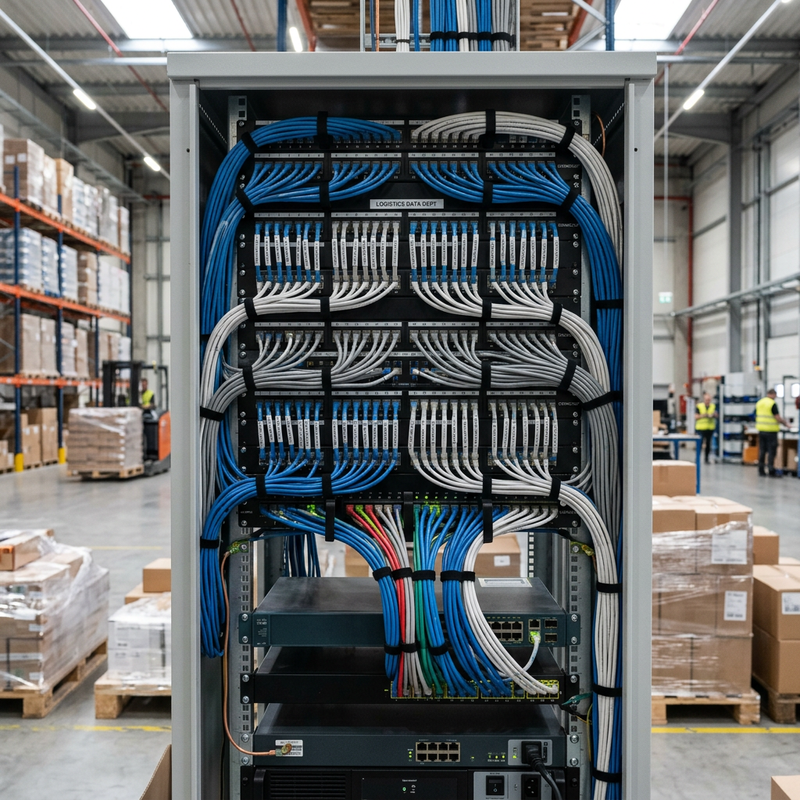
For the interaction between ERP, WMS, and OMS to function reliably in multichannel logistics, a well-designed data architecture is required that is based on a clear principle: Each system recognizes exactly one primary data source, and redundancies are systematically avoided. The data flow follows a defined chain—from the sales channels (online stores, marketplaces, POS) through the OMS to the warehouse and ERP systems, from there to carriers and tracking services, and finally into BI and reporting environments. In historically evolved, heterogeneous IT landscapes—as is common in practice—middleware or iPaaS (Integration Platform as a Service) platforms handle the translation and synchronization between these system layers—without requiring line-of-business applications to communicate directly with one another. Clear interface governance also regulates which external partners—such as suppliers or fulfillment service providers—are permitted to access which data areas. Aggregated channel and warehouse data flows into BI and data mining systems, which use it to generate demand forecasts and identify bottlenecks early on.
Fulfillment Models: Centralized, Decentralized, Ship-from-Store, and Click & Collect
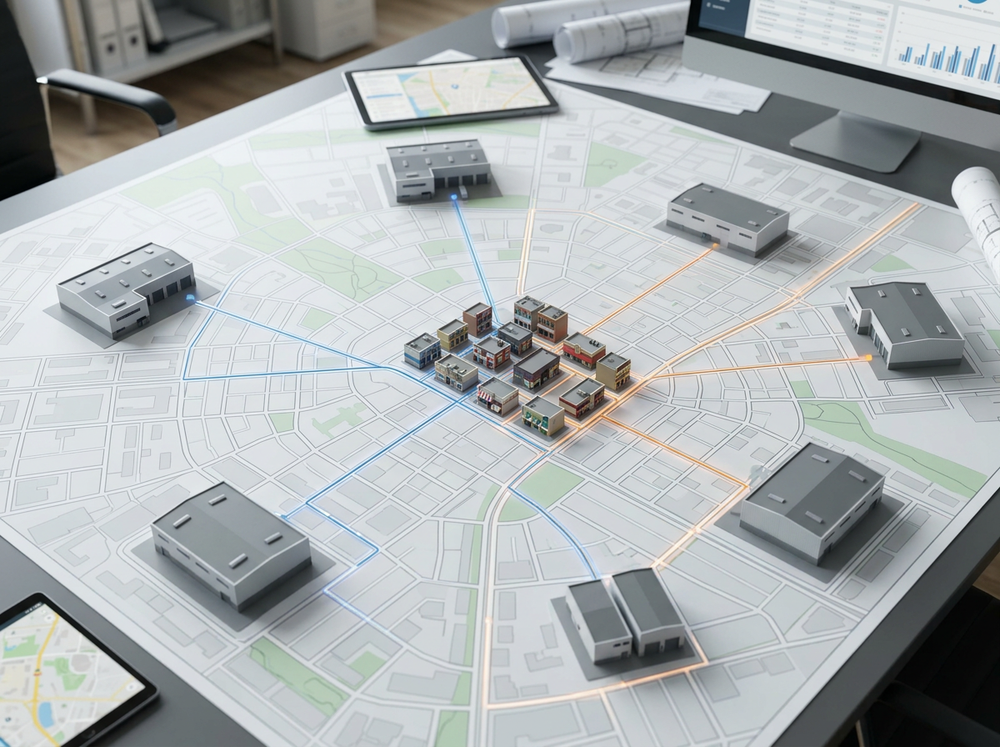
Choosing the right fulfillment models is one of the most strategically important decisions for any multichannel retailer: It directly impacts delivery times, warehousing costs, and the scalability of the entire network. In practice, most companies do not rely on a single model but rather on hybrid solutions that combine multiple approaches depending on the situation. The following three subsections examine complementary model variants: the fundamental structural decision between centralized and decentralized warehousing, the Ship-from-Store model as an approach to actively utilizing store inventory for online order fulfillment, and Click & Collect as a cross-channel pickup model that procedurally links physical and digital retail, thereby specifically bridging channel boundaries.
Centralized vs. Decentralized Warehousing: Trade-offs and Decision-Making Criteria
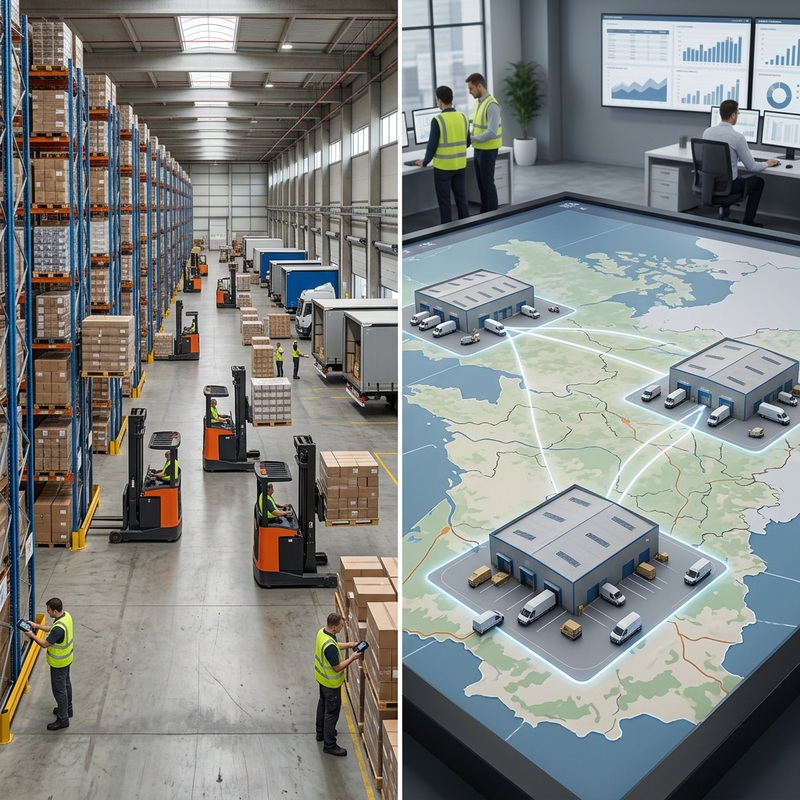
The decision between a centralized and a decentralized warehouse in a multichannel operation is not purely an operational issue—it shapes the entire network structure. A centralized warehouse serves all channels from a single inventory pool: inventory efficiency is high, capital tied up is lower, and synchronizing the channels is comparatively easy. The downside is potentially longer delivery routes to remote regions. Decentralized fulfillment centers shorten these routes and enable faster delivery—but they significantly increase the complexity of inventory synchronization and carry a higher risk of overstocking or understocking at each location. Robust forecasting and planning processes across locations are then absolutely essential. The decision depends on specific criteria: product range, promised delivery times per channel, seasonality, transportation costs, and the available IT infrastructure.
Ship-from-Store: Store Inventory as a Fulfillment Resource
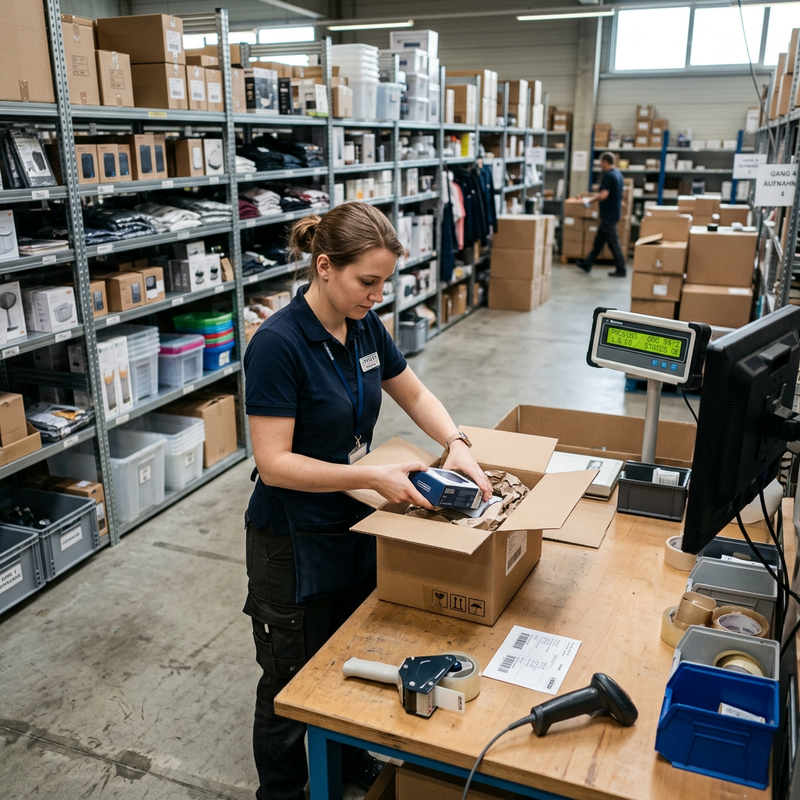
Ship-from-Store uses the store warehouse as an active fulfillment resource: Online orders are picked directly on-site and shipped to the end customer. This approach is particularly well-suited for high-margin or bulky items, where fast regional delivery offers a clear advantage.
The challenges, however, lie in the details: In practice, stores often achieve inventory accuracy of only 70 to 85 percent, while automated central warehouses achieve rates of 98 to 99 percent. This difference is immediately reflected in the error rate during order fulfillment and requires significantly greater management effort in ship-from-store operations. Furthermore, picking processes on the sales floor differ structurally from defined warehouse processes, and the reliable handoff to carriers must be organized separately. Systemic prerequisites include real-time visibility of store inventory in the OMS and WMS, channel-specific packing guidelines, and trained store staff who reliably handle fulfillment tasks alongside sales operations.
Click & Collect: Order online, pick up in-store
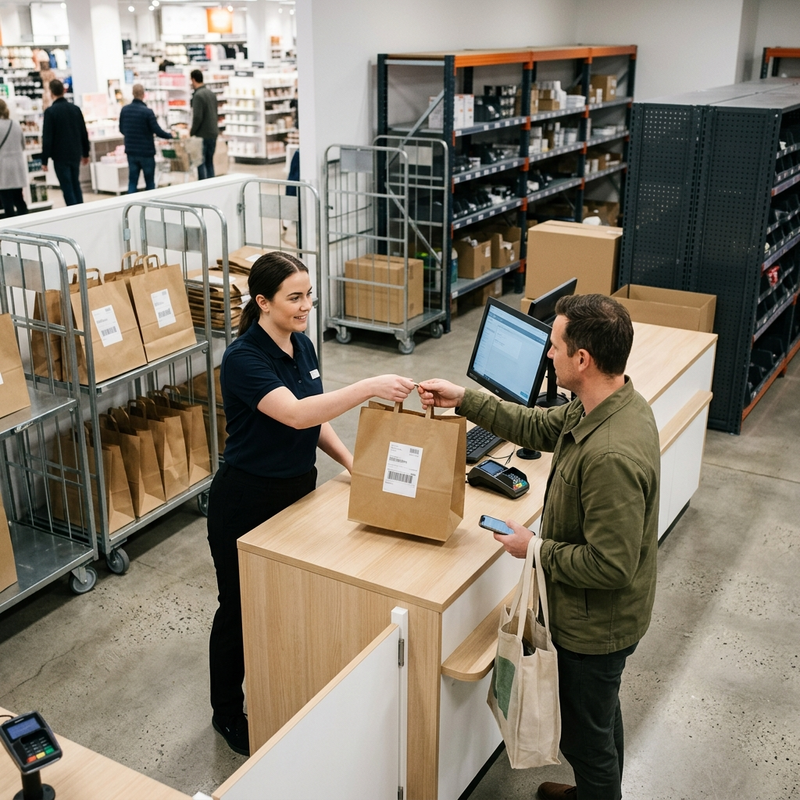
As a cross-channel fulfillment model, Click & Collect combines the digital purchasing process with the physical store: The customer places an order online but picks up the merchandise in person at the selected location—no package shipping, no last-mile delivery. Unlike with “Ship-from-Store,” the merchandise remains entirely within the brick-and-mortar environment; there is no shipping process. A measurable advantage of this model lies in structurally lower return rates: While B2C shipping returns in the fashion segment sometimes exceed 40 percent, the rates for Click & Collect are significantly lower, as customers can inspect the merchandise at the pickup location.
For the Click & Collect model to function reliably, inventory reservation at the destination warehouse must take effect at the time the order is placed: Systems must clearly separate reserved inventory from available inventory to prevent double sales. The subsequent preparation process—picking, storage in a designated preparation zone, and notification logic for the customer—must be just as well-regulated as the handover documentation at the time of pickup. From a systems perspective, this clear separation of inventory represents one of the most challenging requirements.
Cross-Channel Returns Management: Reverse Logistics in Multi-Channel Operations

Returns are not a marginal issue in multi-channel operations—as a standalone process, they directly impact inventory quality, warehouse capacity, and customer satisfaction. The fact that returns logistics continues to be neglected in many companies—even though this is precisely where there is significant potential for optimization—is a structural oversight with measurable consequences. In addition, multi-channel operations introduce a specific level of complexity: Each sales channel comes with its own return policies, varying documentation requirements, and differing inspection standards—ranging from legal frameworks such as the European WEEE Directive and Packaging Directive to channel-specific service agreements. Efficient returns management in a multichannel environment therefore requires two complementary approaches: a structured operational triage process that quickly and reliably evaluates returned goods and routes them to the correct disposal path, as well as a strategic perspective that leverages returns data as a source of information for decisions regarding product assortment, quality, and sales channels.
Triage, Restocking, and Resalability
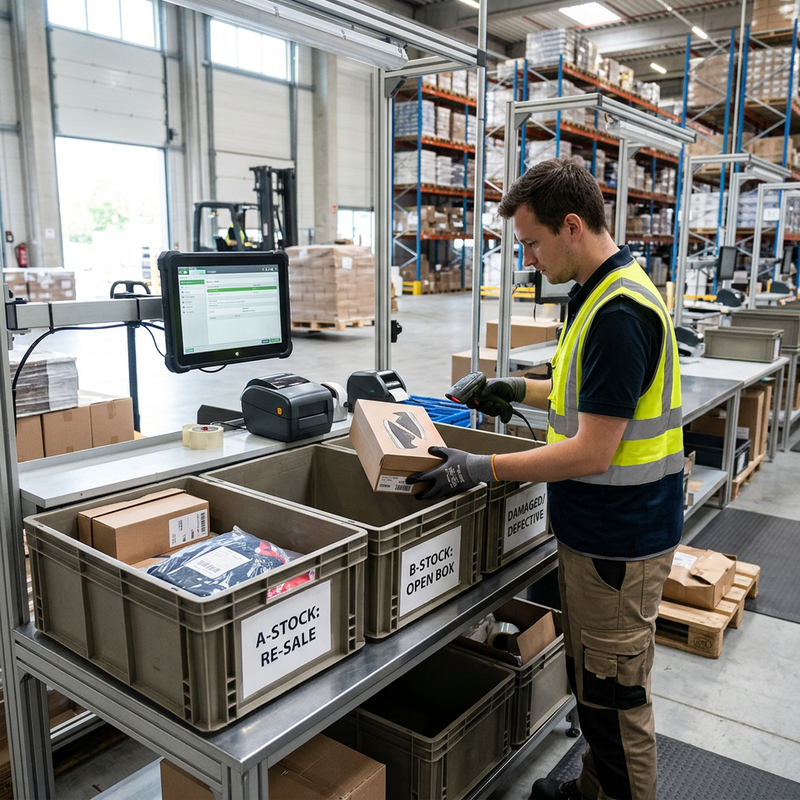
As soon as returned merchandise arrives at the receiving warehouse, a structured returns process begins, which—in a multichannel operation—must be documented on a channel-specific basis: Each shipment is first scanned and acknowledged as belonging to its respective channel of origin. This is followed by triage, during which each item is assigned to one of three categories—like-new, requiring refurbishment, or unsellable. Scanning documentation of each triage step is mandatory: This is the only way to evaluate channel-specific return rates and clearly resolve liability issues involving damaged goods. Typical turnaround times for triage range, depending on the complexity of the product assortment, from a few minutes for standardized items to several hours for products requiring explanation or inspection. Depending on the findings, the item is either immediately returned to inventory, refurbished and relabeled, routed to a special channel—such as a B-stock store—or disposed of. Dynamic returns zones in the warehouse act as buffers for volume spikes that regularly occur following promotional periods.
Returns Logistics as a Competitive Factor: Transparency, Channel Flexibility, and Data Utilization

In terms of omnichannel maturity, customers expect to be able to return items purchased online at a store—and vice versa. This places high demands on cross-channel credit and inventory management. At the same time, customer transparency—such as through structured status updates like “Return received,” “Inspected,” or “Refund initiated”—becomes a measurable factor in customer satisfaction. It’s clear that accelerated restocking pays off financially: Merchandise becomes available for resale sooner, and capital tied up decreases. At the same time, aggregated returns data provides strategically valuable insights—into product defects, channel-specific issues, and packaging shortcomings—that should be systematically incorporated into BI reporting. End-to-end, cross-channel returns logistics thus not only creates operational efficiency but also provides a solid basis for decision-making regarding product assortment and quality assurance.
From a Multi-Channel Launch to Omnichannel: Maturity Level and Roadmap
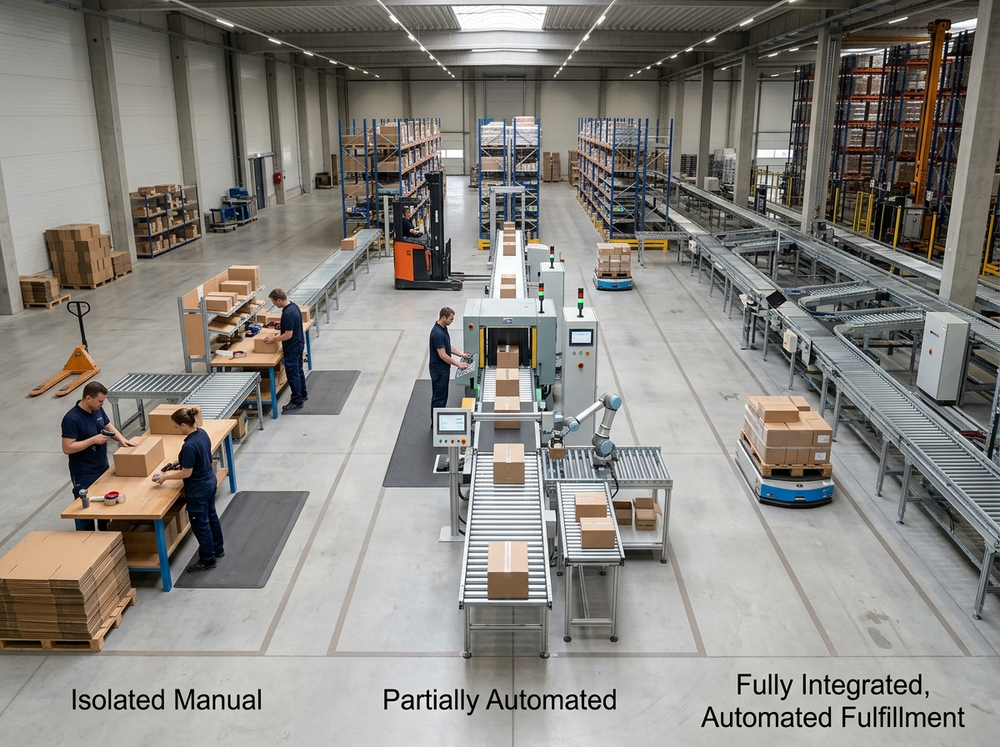
The evolution from simple multichannel operations to full omnichannel orchestration follows a clear logic—and anyone who ignores this logic risks costly misinvestments. A practical maturity model breaks this journey down into three stages.
At the first stage, channels operate largely in parallel with separate inventories and manual or loose system integration. The operational priority is on avoiding overselling and consolidating master data. The entry criterion for transitioning to the next stage is documented master data coverage of at least 95 percent of all active items with complete mandatory GS1 fields.
The second stage—integrated multichannel—features a shared inventory pool, an OMS as the control layer, automated interfaces, and channel-specific packing rules in the WMS. The quality threshold for this operating mode is an OMS routing error rate of less than 0.5 percent and inventory accuracy of at least 98 percent. Experience shows that the transition from Level 1 to Level 2 requires a project duration of 6 to 12 months for medium-sized retailers—depending on the initial state of the IT landscape and data quality.
Stage three marks the achievement of omnichannel orchestration: complete real-time data transparency, a seamless customer journey, predictive demand planning, and cross-channel returns management. The customer experience becomes a differentiator, and BI-driven optimization becomes routine. A key warning from real-world experience is crucial here: The direct leap from Level 1 to omnichannel regularly fails due to insufficient data quality and a lack of process maturity—not due to a lack of budget. The roadmap must therefore be designed sequentially. PackageHERO® supports companies with a structured maturity assessment to precisely pinpoint their current starting point—as the foundation for a realistic and prioritized expansion strategy.
Conclusion: Multi-channel logistics as an ongoing strategic priority

Multi-channel logistics in retail and e-commerce is not a one-time IT project, but rather an ongoing strategic initiative that affects processes, systems, and organizational structure in equal measure. Anyone wishing to approach the implementation in a structured manner should follow a proven order of priority: First, establish master data governance and ensure the completeness of product data—without this foundation, any system integration remains prone to errors. Only then is it worthwhile to connect ERP, WMS, and OMS via robust interfaces. Channel expansion—new marketplaces, ship-from-store, click-and-collect—should only be tackled once the integration foundation is stable and functioning in a measurable way.
In practice, typical pitfalls lurk during OMS implementation: Unclear ownership of routing rules, a lack of escalation paths for split-order conflicts, and underestimated testing efforts for channel-specific edge cases often lead to delays or error rates that only become apparent during live operations. Addressing these risks early on saves significant costs associated with corrective measures.
For the initial monitoring dashboard, we recommend a manageable selection of KPIs that directly highlight the critical weak points of multi-channel operations: inventory accuracy by channel, OMS routing error rate, return processing time until restocking, and cancellation rate due to overselling. These four metrics provide a robust early-warning system before problems escalate. ERP, WMS, and OMS are enablers—but they’re only as good as the processes they support. PackageHERO® supports companies with system expertise and process experience throughout the entire process—from inventory strategy to operational warehouse management. Contact us or use our in-depth guide pages to take the next step.
What is "Ship-from-Store," and for which types of retailers is this fulfillment model suitable?
"Ship-from-Store" refers to a fulfillment model in which orders placed through the online channel are picked and shipped directly from a store rather than from a central distribution center. The store thus temporarily serves as a decentralized warehouse location. This model is particularly well-suited for brick-and-mortar retailers with a dense network of stores and significant on-site inventory—such as fashion retailers or electronics retailers. A prerequisite is precise inventory management at the store level, as inaccurate inventory levels directly lead to overselling or order cancellations. For retailers with few or poorly connected stores, however, the model is difficult to manage operationally.
How do inaccurate or inconsistent master data affect cross-channel logistics?
In multi-channel logistics, incorrect or inconsistent master data is one of the most frequently underestimated yet operationally serious sources of error. Incorrect weights, missing GTINs/EANs, or inconsistent units of measure directly lead to picking errors, incorrect shipping labels, and interface errors between systems. In practice, incorrect GTIN entries can cause up to 3–5 percent additional picking errors per affected item—a figure that quickly becomes operationally significant when dealing with a broad product range and multiple active channels. Added to this is a compounding effect: Inconsistent master data leads to incorrectly reported inventory levels, which in turn complicates decisions regarding returns and undermines reliable replenishment control.
Which interfaces (APIs, EDI) are absolutely essential for effective multichannel logistics?
Effective multi-channel logistics requires interfaces at multiple levels. REST or SOAP APIs connect online stores, marketplaces (Amazon, eBay), and internal systems such as ERP, WMS, and OMS in real time—they enable inventory reconciliation, order transmission, and status updates. EDI connections (e.g., EDIFACT, ANSI X12) are indispensable, particularly in the B2B sector and for shipping service providers, for standardized document messages such as delivery notes or order confirmations. In addition, there are webhook-based real-time notifications for time-sensitive processes, as well as middleware or integration solutions that bridge heterogeneous system landscapes and ensure data consistency across channels.
What functions does an ERP system perform in multichannel logistics, and where do standard ERP solutions reach their limits?
In multi-channel logistics, an ERP system serves as the central backbone for inventory management, order processing, master data management, and financial accounting. It consolidates data from various channels, controls replenishment processes, and lays the foundation for a shared database. However, standard ERP solutions reach their limits when real-time requirements and complexity increase: They are typically not designed for high-frequency inventory synchronization in the range of seconds, as is necessary for high-volume marketplace integrations. Likewise, granular warehouse management functions and cross-channel order orchestration are often lacking—tasks that must be handled by dedicated WMS and OMS solutions.
What is a shared inventory pool, and under what conditions does it make sense in a multi-channel operation?
A shared inventory pool refers to the consolidation of all inventory into a single, cross-channel warehouse from which all sales channels are served simultaneously. Instead of separate siloed warehouses for each channel, the entire available inventory is accessible to all channels. In multi-channel operations, this approach makes sense when real-time data is available across all channels, a powerful order management system controls prioritization logic, and channel-specific safety stock levels are maintained. If these conditions are not met, a shared pool significantly increases the risk of overselling—especially with high order volumes and fluctuating demand across multiple channels.
What does inventory synchronization mean in a multichannel context, and why is it the key operational challenge?
Inventory synchronization ensures that the actual available inventory is consistently and accurately displayed across all active sales channels—online store, marketplaces, and physical stores—at all times. The key operational challenge is that maintaining separate inventory records for each channel creates a classic risk of overselling: An item may be listed as available in one channel, while another channel has already reserved the same stock. For marketplace-related systems such as Amazon or eBay, update intervals of less than 60 seconds are considered the standard in practice. Longer latency times result in measurably higher cancellation rates when order volumes are high. Furthermore, inventory synchronization forms the foundation of all other processes: if it is unstable, improvements to master data or returns management will have only limited effect.
What is the specific difference between single-channel, multi-channel, cross-channel, and omnichannel logistics?
The four models differ primarily in the degree of channel integration and inventory management: Single-Channel operates exactly one sales channel with a single inventory—maximum simplicity, no interface complexity. Multi-Channel serves multiple parallel channels but maintains separate inventories and processes for each channel. The channels are largely isolated, leading to inconsistent customer experiences and the risk of overselling. Cross-Channel links channels through shared processes—such as click-and-collect or cross-channel returns—without achieving full real-time integration. Omnichannel goes the furthest: a fully integrated shared inventory pool, real-time data availability, and a central database as the single source of truth ensure a seamless customer journey across all channels.
What is meant by "multi-channel logistics," and what is a precise definition of the term?
Multi-channel logistics refers to the coordinated logistical processing of orders received through multiple, largely independently operated sales channels—such as a company’s own online stores, brick-and-mortar retail locations, marketplaces like Amazon or eBay, and B2B portals. Each channel may have its own process rules, packaging guidelines, documentation requirements, and status models, yet all must still be reliably supplied with merchandise. In the traditional multi-channel approach, channels are often still operated with separate inventories or distinct processes. The overarching goal is to avoid overselling, ensure a consistent delivery experience for the end customer, and maintain operational control over all channels.
What criteria should retailers and e-commerce companies use to select and evaluate a multichannel logistics system?
When selecting a multichannel logistics system, retailers should consider the following criteria: Integration capabilities: The system must reliably connect all relevant channels—online store, marketplaces, and physical stores—via high-performance interfaces (APIs) and communicate with existing ERP, WMS, and OMS solutions. Real-time inventory synchronization: The system must transmit inventory changes across all channels without significant latency to prevent overselling. Scalability: The system must remain stable as the number of channels and orders grows, without causing disproportionately rising operating costs. Master Data Quality: Support for centralized master data maintenance according to the GS1 standard, including GTINs, dimensions, and weights. Returns Management: Cross-channel returns processes must be mappable. Total Cost of Ownership: Realistically compare implementation, operating, and interface costs.
What role do inventory control and planning play in a multichannel logistics structure with multiple sales channels?
Inventory control and planning are particularly challenging in a multichannel structure because they require reliable inventory information from all channels simultaneously. Only when inventory data is consistent and up-to-date across all channels can minimum stock levels, replenishment times, and quantity decisions be reliably calculated for each channel. Without this foundation, either unnecessary excess inventory or critical gaps in channel supply will result. Channel-specific safety stock levels also help ensure that high-margin or contractually bound sales channels are prioritized during shortages. However, isolated planning measures only achieve their full effect when the entire network is structurally aligned.
How does the choice of fulfillment model (in-house warehouse, 3PL, dropshipping) affect the complexity of multichannel logistics?
The fulfillment model plays a key role in determining how many interfaces, system levels, and process alignments must be actively managed in a multichannel operation. In-house warehousing offers maximum control over inventory, master data, and processes, but requires full in-house system expertise (ERP, WMS, OMS) and ties up significant resources. 3PL outsources operational complexity but creates new interface requirements: inventory synchronization, status updates, and returns management must be reliably handled between the retailer and the service provider. Dropshipping reduces warehousing needs but increases dependence on supplier data—incorrect inventory reports directly lead to overselling. With each additional channel, these model-specific risks multiply.
At what channel or order volume does it become worthwhile to implement a dedicated multichannel logistics software solution?
Experience shows that a dedicated multichannel logistics software solution is worthwhile once a business operates at least three active sales channels or reaches a daily order volume at which manual synchronization results in measurable error rates. In practice, it’s clear that businesses operating an online store, a marketplace, and brick-and-mortar retail simultaneously will quickly reach their limits without systemic support—especially when it comes to inventory synchronization. With each additional channel, interface complexity and the risk of inconsistent inventory information increase structurally. Retailers should therefore measure the need for investment not by revenue, but by the operational error rate and the effort required for manual corrections.
How do the logistics requirements of B2C and B2B retailers differ in a multichannel environment?
In multi-channel logistics, B2C retailers face high order volumes with small shipment sizes, short delivery expectations, and return rates ranging from 20 to 50 percent, depending on the product line. Packaging requirements, tracking information, and customer-focused communication are the top priorities. B2B retailers, on the other hand, typically process larger order quantities per order, require more detailed shipping documents and delivery notes, and often need EDI connections to customer systems. Their return rate is structurally below 10 percent. It becomes particularly challenging when both segments are handled in parallel using the same logistics infrastructure: processes, prioritization logic, and packaging standards must then be configured on a channel-specific basis without compromising the operational efficiency of the overall system.
How can returns from different channels (online, store, marketplace) be effectively consolidated and managed through a structured process?
Returns from the online store, retail locations, and marketplaces can only be seamlessly consolidated if all channels are based on a uniform process logic. The central control tool is an Order Management System (OMS) that records incoming returns regardless of the channel, assigns them to a defined inspection workflow, and makes the inventory available again once the goods inspection is complete. In practice, this means that every return—regardless of the return route—goes through standardized steps: identification via scan, condition assessment, and a decision on whether to restock, refurbish, or write off the item. Without this structure, an uncontrolled mix develops in the returns warehouse, which, according to Seitenbasis, directly jeopardizes both inventory quality and resaleability and ties up capital. In addition, channel-specific characteristics should be reflected in the process: Marketplace returns are often subject to platform-specific deadlines and documentation requirements, while in-store returns...
What are the advantages and disadvantages of a central warehouse compared to a decentralized warehouse network in multichannel logistics?
A central warehouse offers clear advantages: lower storage costs, simpler inventory management, higher utilization, and less excess inventory, since all channels are served from a single pool. Master data maintenance and process control are structurally easier to standardize. The disadvantages include longer delivery routes, greater dependence on a single location, and potential bottlenecks during peak volumes. If the central warehouse fails, all channels are affected simultaneously. A decentralized warehouse network enables shorter delivery times and regional availability, but significantly increases complexity, capital tied up, and the effort required for synchronization—additional costs that must be taken into account early on in network planning.
How does Click & Collect work from a logistical standpoint, and what requirements does it place on inventory management at the store level?
With Click & Collect, the customer places an order online and picks up the merchandise at a store. Logistically, there are two options: Either the item is transferred from the central warehouse to the store, or the store fulfills the order directly from its own inventory. The latter places special demands on inventory management at the store level: Store inventory levels must be reported in real time to the higher-level system so that only items that are actually available are reserved online. At the same time, reserved inventory must be immediately blocked from walk-in sales to prevent double sales. Physical fulfillment is also critical: Reserved items must be reliably picked, labeled, and stored separately for pickup—a process that quickly leads to errors in traditional stores without dedicated warehouse space and clear process rules.

