Logistics costs include all expenses incurred through the movement, storage, handling, provision, and information-based management of goods. These include direct logistics-related costs such as freight, warehouse space, or shipping packaging, as well as indirect expenses, such as those for planning, IT, documentation, and shipping processing.
An expense is considered a logistics cost only if it can be objectively assigned to a logistics service, a process step, or a reference object such as an order, shipment, warehouse movement, or inventory. This distinction forms the basis for a robust definition of logistics costs and for subsequent analyses in cost accounting.
Table of Contents
- Introduction: Why Logistics Costs Are Important for Businesses
- What Are Logistics Costs?
- What Types of Logistics Costs Are There?
- Calculating Logistics Costs
- Benchmarks and Market Data on Logistics Costs
- Strategies for Reducing Logistics Costs
- Conclusion: Systematically Understanding and Categorizing Logistics Costs
- FAQ
Introduction: Why Logistics Costs Are Important for Businesses

In day-to-day business operations, logistics costs form the basis for economic assessments: What does an order actually cost? What additional costs does a shipment requiring special handling incur? And to what extent does a high level of inventory tie up capital? Only a clear breakdown of costs reveals whether expenses arise primarily in transportation, warehousing, inventory management, or administrative processes.
Particularly in the B2B environment, this has direct implications for investment and management decisions. Whether maintaining in-house warehouse capacity is economically viable, what delivery speed remains sustainable, or whether services should be outsourced to third-party providers can only be assessed based on a reliable overview of total logistics expenses.
What are logistics costs?
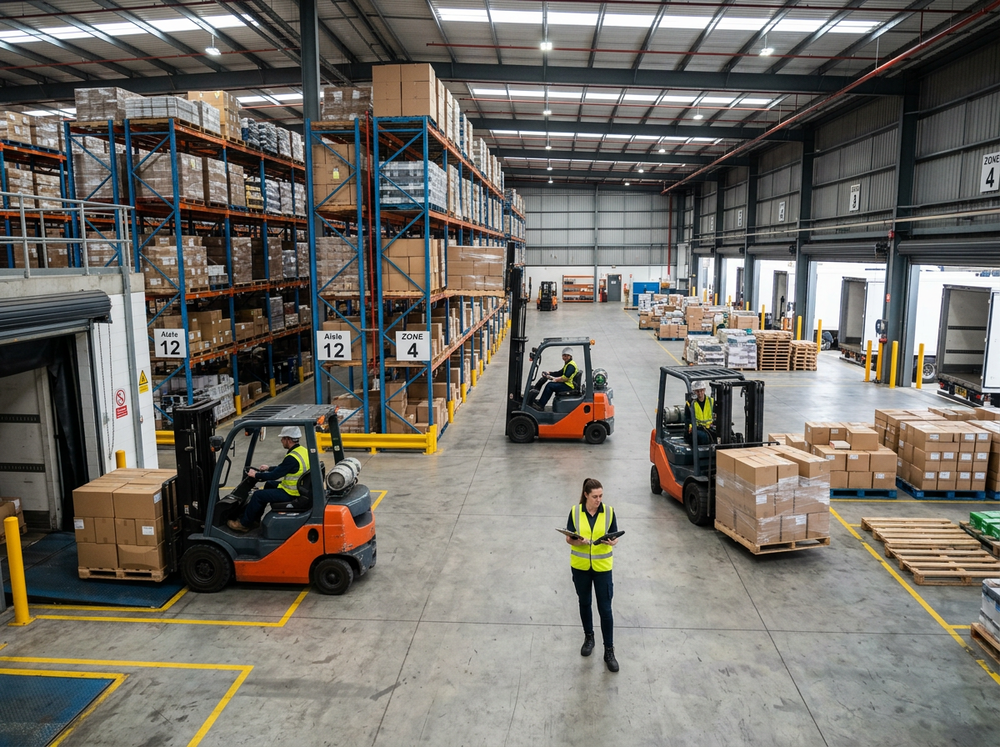
The definition of logistics costs is based on a functional analysis of the flow of goods. It takes into account expenses for physical services such as transportation, warehousing, and handling, as well as for the management of these processes. Thus, the term encompasses both operational activities and the information processing required to carry out logistics services.
In practice, logistics costs arise along the logistics chain—from the movement of goods to distribution or shipping within the distribution chain —and include process and system costs. The decisive factor here is not the organizational assignment within the company, but rather the verifiable connection to a logistics function.
Definition of Logistics Costs in a Business Context

In a business context, logistics costs are allocated to different cost objects depending on the purpose of the analysis. A shipping analysis typically includes freight, shipping materials, packing activities, shipment data, and carrier-related incidental costs. A warehouse cost analysis focuses primarily on space costs, warehouse staff, technology, maintenance, and internal movements.
For customer or order analyses, additional order-specific services are also considered, such as multi-stage order picking, partial deliveries, express shipping, or increased documentation requirements. This ensures that the allocation is not made in a general manner, but rather on a case-by-case basis and in a reliable way.
Distinction from Production, Sales, and Overhead Costs

The distinction is made based on clear-cut examples. Packaging used to protect goods during storage or shipping is closely related to logistics; packaging used for marketing or product presentation is more closely related to sales. An internal transfer from the warehouse to the shipping area is considered logistics, whereas the transport of materials as a direct step in manufacturing is more closely associated with production.
For administrative activities as well, the proximity to the service is the deciding factor: shipping documents, customs paperwork, and transport-related order processing fall under logistics. General central administration is included in logistics costs only if a verifiable connection to a specific logistics service can be demonstrated.
Origins Along the Distribution Chain
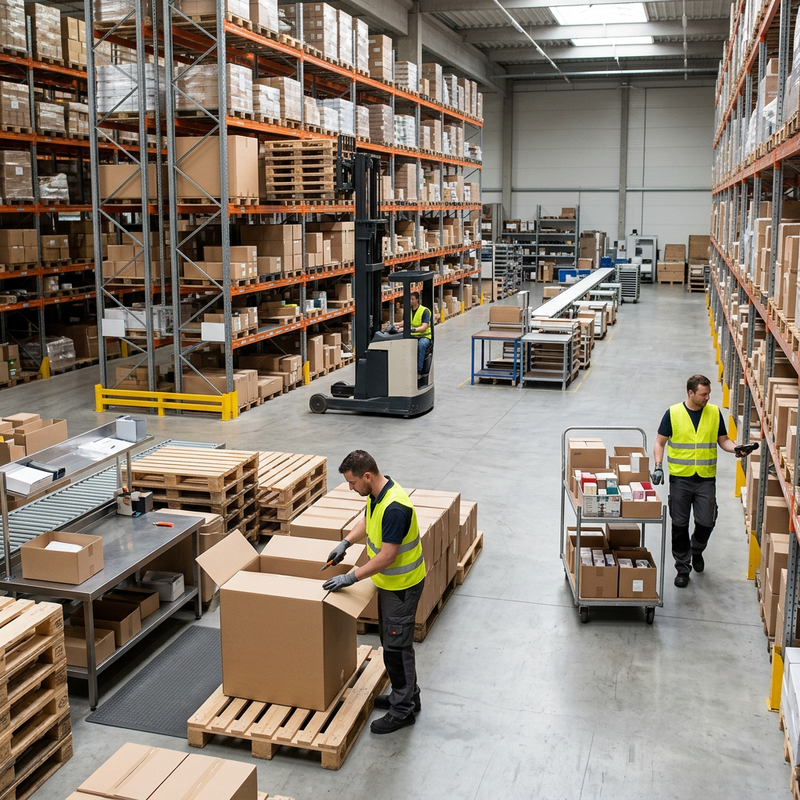
Logistics costs are incurred on a process-by-process basis. In goods receiving, handling and inspection costs are the primary expenses; in putaway, storage and system costs predominate; and in stock transfers, handling and movement costs are again the main expenses. Picking and packing primarily incur labor, material, and process costs, while loading and shipping mainly generate transportation- and documentation-related costs.
Depending on the business model, the focus shifts between these process stages. Inventory-intensive structures often incur higher storage and capital-tie-up costs, while models with high shipping volumes tend to incur higher transportation and handling costs.
What types of logistics costs are there?

For analysis and cost accounting purposes, logistics expenses are typically broken down into five main categories: transportation costs, warehousing costs, inventory and capital tie-up costs, handling and transshipment costs, and administrative and system costs. This structure facilitates comparisons across time periods, locations, and processes and provides a practical basis for systematically tracking logistics cost categories within the company.
Handling and Transshipment Costs
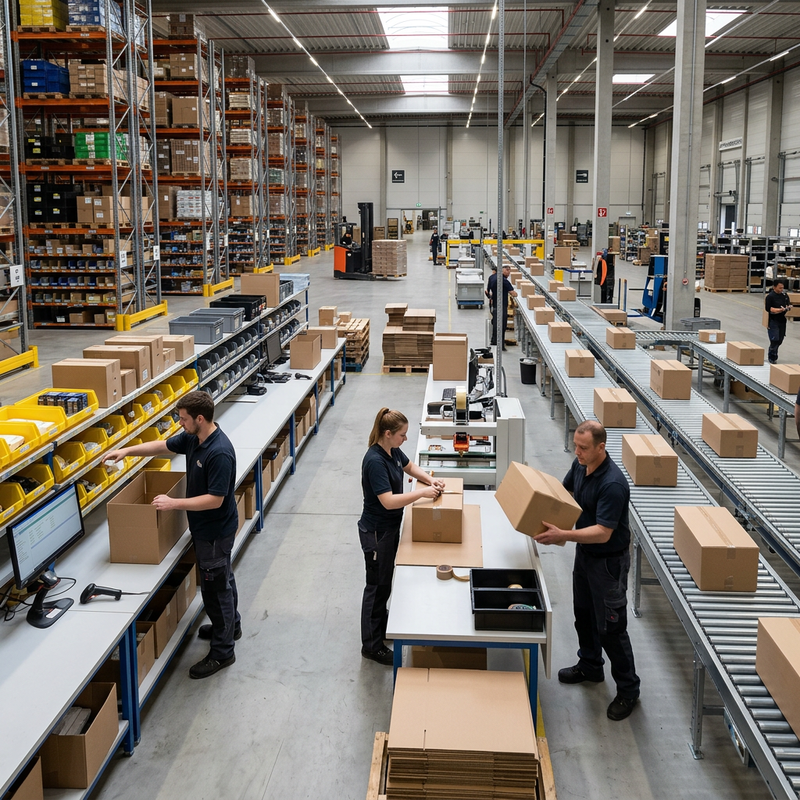
Handling and transshipment costs arise in all operational activities related to moving, assembling, and preparing goods within logistics processes. These include, in particular, order picking, packaging, loading and unloading, labeling, and internal transportation.
From a technical standpoint, these services are part of the TUL processes. Cost drivers include, among other things, the number of order lines, the complexity of the product range, the process design at the warehouse location, and the degree of automation.
Administrative and System Costs

Administrative and system costs relate to the organizational and technical support for logistics services. These include expenses for planning, management, controlling, and IT systems in logistics, as well as scheduling, order processing, documentation, customs and shipping documents, and the operation of warehouse management and transportation management systems.
In practice, these costs are often less immediately apparent than freight or warehouse space, yet they are indispensable to the effectiveness of logistics. They are therefore frequently allocated using appropriate allocation formulas.
Shipping Costs

Transportation costs include all expenses associated with moving goods between two locations. These include freight invoices from freight forwarders and package delivery services, as well as costs for company-owned vehicles, drivers, tolls, and incidental expenses, provided they can be directly attributed to the transport.
Key cost drivers include distance, mode of transport, shipment structure, service level, and the physical characteristics of the shipment. In addition to actual weight, volumetric weight often plays a role in the parcel and general cargo sectors because service providers frequently bill freight based on the cargo space occupied.
Warehouse costs
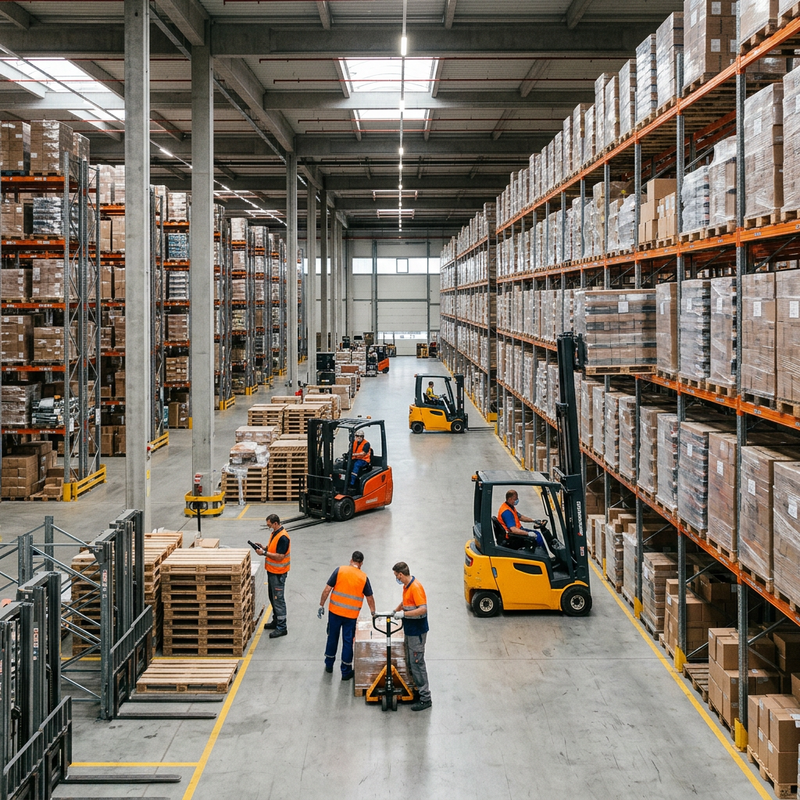
Warehouse costs arise from maintaining and operating warehouse infrastructure. Typical cost items include rent or imputed costs for company-owned space, energy, shelving systems, material handling equipment, maintenance, and warehouse staff.
Analyses often distinguish between fixed and variable components. While space and overhead costs are largely independent of throughput, personnel and activity-related expenses increase with the number of stock entries and stock removals.
Inventory and Capital Commitment Costs
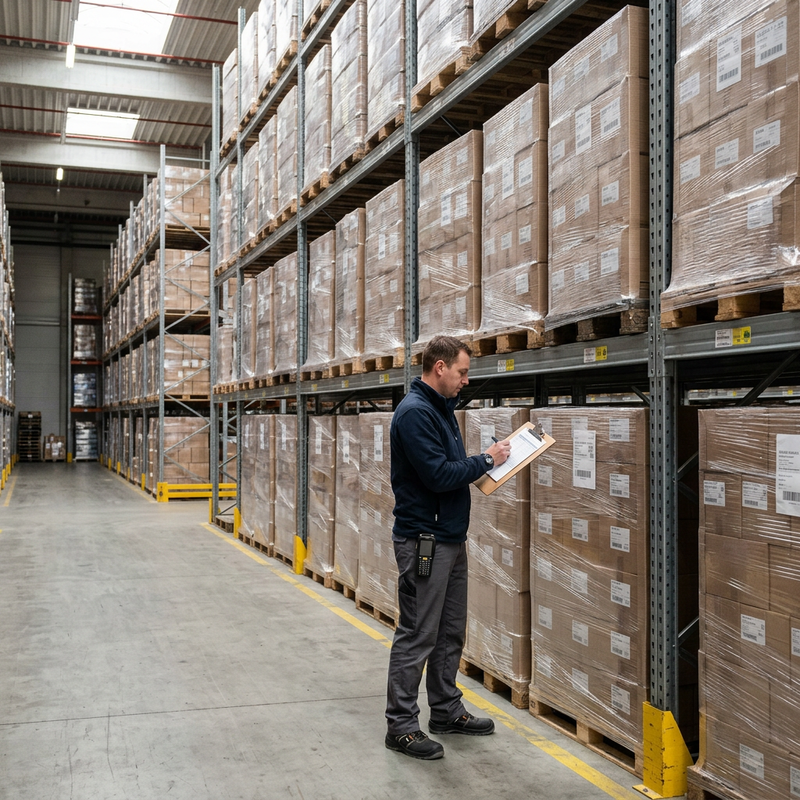
Inventory and capital tie-up costs arise because goods in storage tie up capital. This capital is not available for other operational purposes during the storage period and thus incurs imputed costs.
This cost category becomes particularly relevant in cases of high safety stock levels, slow-moving items, or excess inventory resulting from inaccurate planning. Replenishment control plays a central role here because it coordinates order quantities, lead times, and safety stock levels.
Calculate Logistics Costs

Anyone who wants to calculate logistics costs typically follows a three-step process: First, all logistics-related expenses are fully recorded; then, they are assigned to appropriate reference categories; and finally, they are consolidated into key performance indicators. This transforms individual cost items into a robust logistics cost analysis that highlights both the big picture and operational anomalies.
Key Figures and Logistics Cost Share

Both structural and performance metrics can be derived from cost accounting. A key structural metric is the ratio of logistics costs to revenue; it shows what percentage of net revenue is spent on logistics services.
Logistics Cost Ratio (%) = Total Logistics Costs / Net Revenue × 100
For this metric to be reliable, the total logistics costs must be consistently aggregated from the subcategories of transportation, warehousing, handling, administration, and other logistics-related expenses. In addition, operational metrics are commonly used, such as logistics costs per order, logistics costs per pallet, or logistics costs per warehouse movement. Such metrics help provide a more detailed understanding of cost structures: costs per order highlight the cost-effectiveness of order-related processes; costs per pallet are particularly suitable for comparisons related to warehousing and transportation; and costs per warehouse movement reveal the effort involved in individual physical handling steps.
Simplified Calculation Example

The following example illustrates the calculation method used in an internal report and is not intended to serve as a standard industry target ratio or benchmark. The values are arbitrary.
For a given period, a company records €480,000 in transportation costs, €210,000 in warehousing costs, €190,000 in handling costs, €70,000 in administrative costs, and €50,000 in other logistics-related expenses. This results in total logistics costs of €1,000,000.
With net sales of €12,500,000, logistics costs account for 8.0%. If 50,000 shipments are processed during the same period, this results in logistics costs of €20 per shipment.
Fundamentals of Logistics Cost Accounting

Logistics cost accounting is a subfield of management accounting and takes a different approach than financial accounting. While financial accounting primarily records expenses according to accounts and posting rules, logistics cost accounting classifies the same expenses according to logistics functions and service areas.
A typical structure starts with cost elements and then breaks them down into cost centers, process steps, or cost objects. This approach makes it possible to track not only total costs but also the economic impact of individual processes such as warehouse operations, shipping, or inventory holding.
Allocation to Processes, Divisions, and Cost Objects
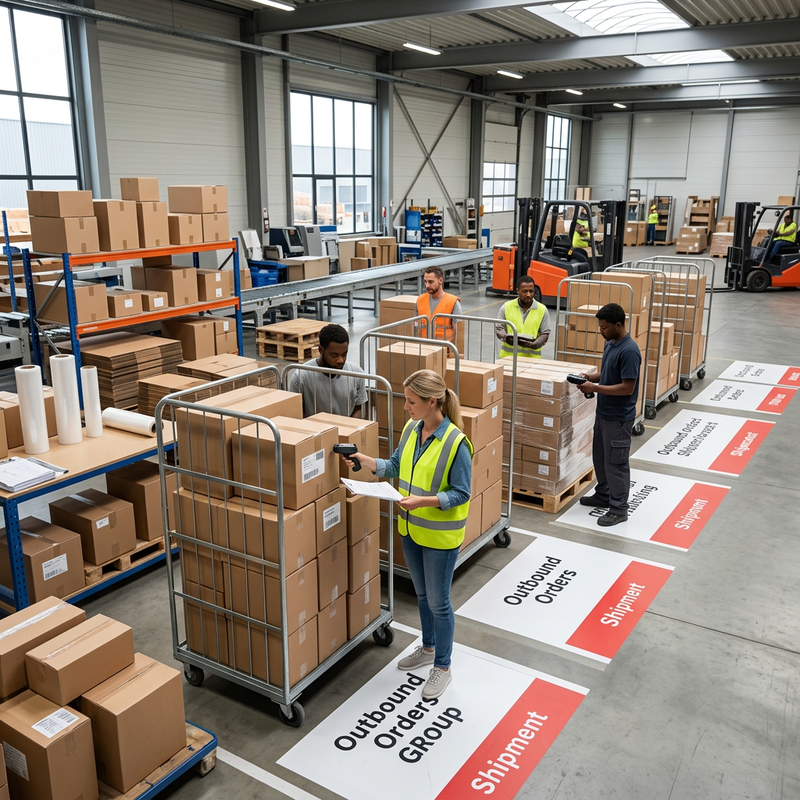
After recording comes allocation. Shipment-related costs can often be directly allocated to an order or a delivery, such as freight, packaging materials, or additional shipping services. In addition, costs are allocated to objects such as orders, customers, product groups, or shipments using appropriate cost center and cost object mechanisms.
Area-, time-, or system-related expenses are allocated using appropriate allocation keys, for example, based on occupied area, processing time, number of transactions, or transaction volume. It is crucial that the selected allocation key reflects the actual utilization of logistics services as accurately as possible. Only then can differences between departments, orders, or service types be evaluated in a technically sound manner.
Benchmarks and Market Data on Logistics Costs

Market data illustrates the economic scale of logistics services and, at the same time, shows why individual cost categories may change. The Fraunhofer Institute for Integrated Circuits IIS, Supply Chain Services Division, estimates the logistics market volume in Germany at approximately 335 billion euros in its “TOP 100 Logistics for 2024” report. According to Knowledge Base Cluster 06, based on the BVL study “Logistics in Retail—Structures, Success Factors, Trends,” the retail sector accounted for approximately 30 percent of logistics costs in 2014, corresponding to about 64 billion euros.
Knowledge Base Cluster 06 also provides an analysis of current transportation data and external cost drivers: In 2024, the volume of road freight transport carried out by German trucks decreased by approximately 1.9 percent compared to 2023, while it increased by approximately 0.8 percent in rail freight transport and by approximately 4.7 percent in inland waterway transport. In addition, the toll increase effective December 1, 2023, had an impact on contract freight rates at the beginning of 2024. The expansion of the toll requirement, effective July 1, 2024, to vehicles with a technically permissible gross vehicle weight of more than 3.5 metric tons and less than 7.5 metric tons is expressly excluded from the underlying analysis.
Scale of the Logistics Market in Germany

Market volume describes the overall economic size of the logistics sector—that is, the scope of transportation, warehousing, and other logistics services in Germany. For companies, this serves as a benchmark for assessing the sector’s economic significance, but it does not provide a direct indication of their own cost ratio.
There is therefore an important distinction between market volume and corporate costs: one measures the size of the sector, while the other measures the individual expenses incurred by a specific business model.
Share of Retail in Logistics Costs
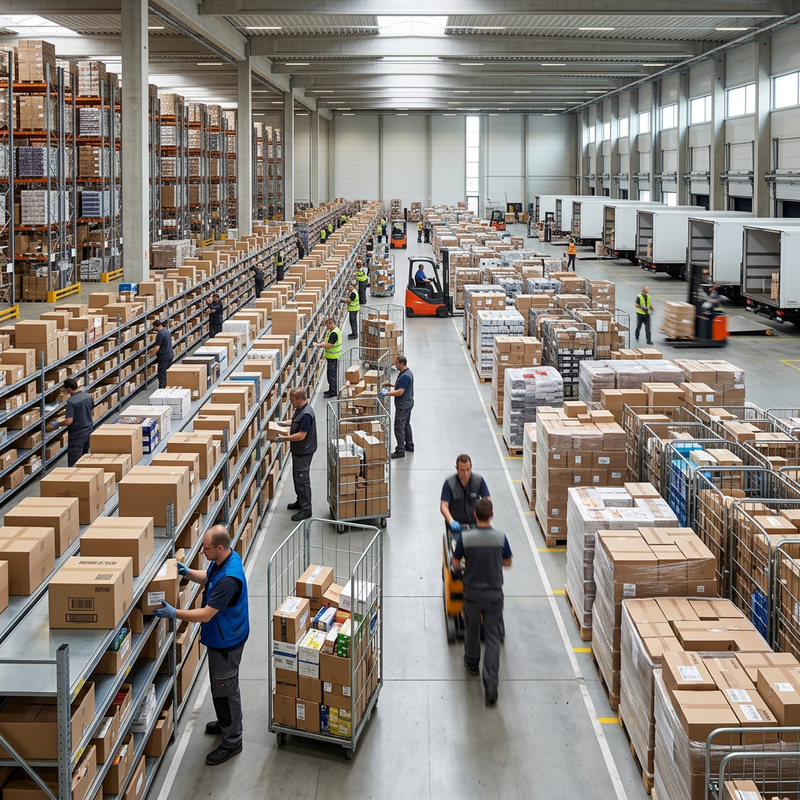
An industry overview of the retail sector shows that logistics costs can vary significantly depending on the business structure. Retail-oriented models are often characterized by high inventory turnover rates, broad product assortments, store- or customer-based deliveries, and significant effort required for order picking and inventory management.
For operational analysis, therefore, it is not so much the absolute industry figures that are decisive, but rather the question of which cost categories have a particularly strong impact on one’s own business model.
How to Interpret Benchmarks Correctly

Benchmarks are only meaningfully comparable if their scope aligns with your own cost accounting. Before making a comparison, you should therefore verify whether the same cost components are included and whether the underlying conditions are comparable.
- Is the cost definition comparable—for example, does it include or exclude inventory and system costs?
- Does the service level correspond to your own service promise—for example, standard versus express delivery?
- Is the shipment structure similar—for example, in terms of the proportion of packages, general cargo, route deliveries, or order sizes?
- Is the degree of outsourcing comparable—that is, in-house versus outsourced operations?
- Is the network structured similarly, for example, in terms of the number of locations, warehouse tiers, or delivery frequencies?
Leverage for Reducing Logistics Costs

Although this article primarily explains what logistics costs are and how they are tracked, it’s worth taking a brief look at the key factors that influence them. In practice, the most important levers for change are usually found in process design, the degree of automation, the quality of shipment data, and inventory management.
Transport Optimization Through Improved Shipment Data
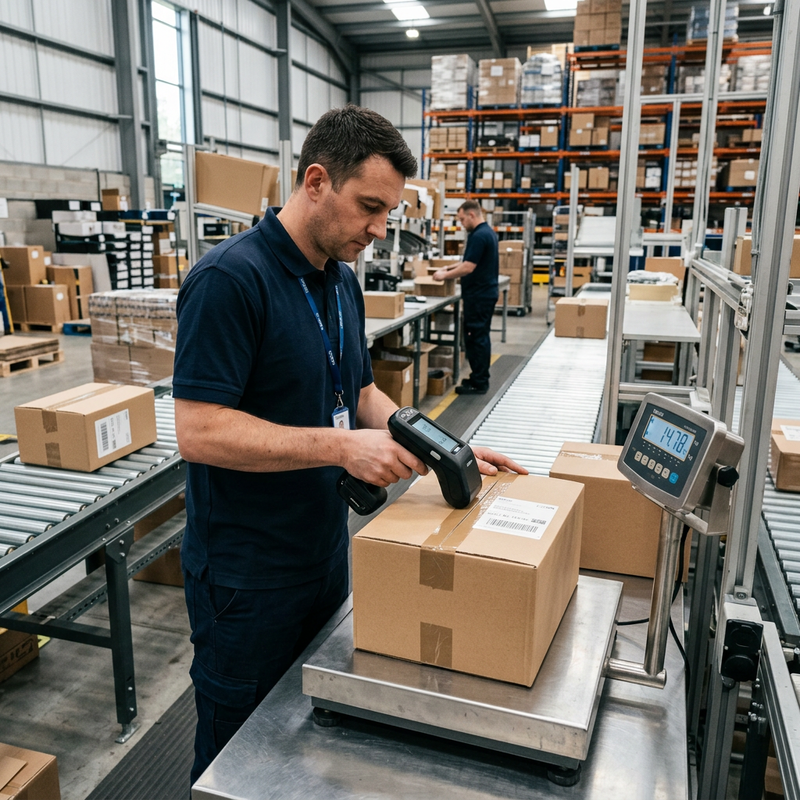
A key factor in shipping is the quality of data regarding dimensions and weights. Inaccurate information can affect rate classification and lead to subsequent corrections by service providers. Accurate data capture at the packing station therefore improves the basis for calculation, particularly when volume is a factor in billing.
A solution like PackageHERO® can help ensure that volume and weight data are recorded accurately. This helps reduce logistics costs by minimizing shipping charges and the need for retroactive adjustments.
Manage inventory levels and stock ranges in a targeted manner
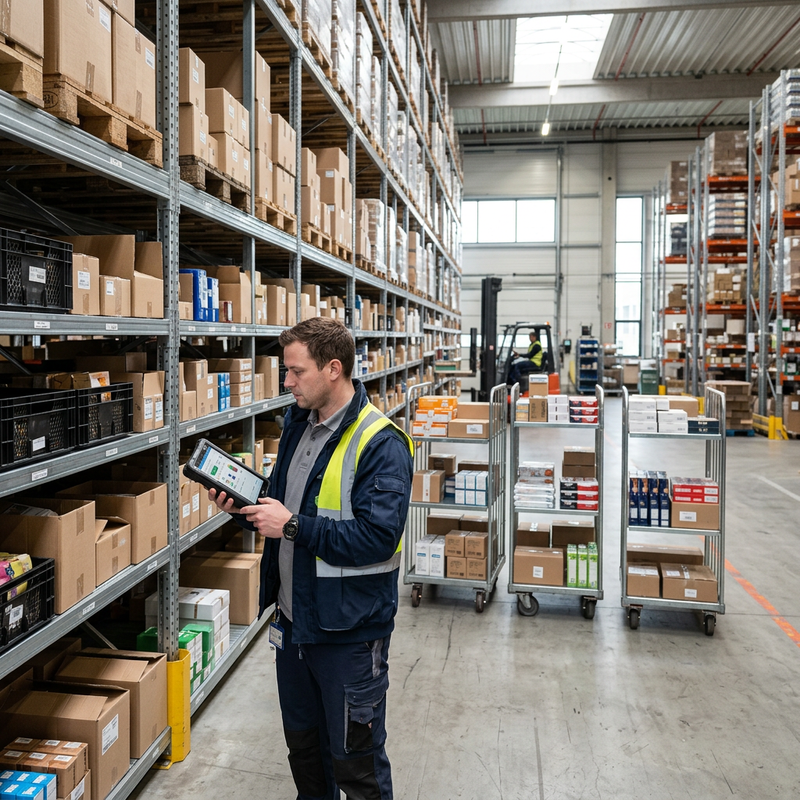
Inventory levels affect not only delivery capacity but also tied-up capital and space requirements. By regularly reviewing safety stock levels, lead times, and replenishment parameters, companies can reduce tied-up capital without unnecessarily jeopardizing supply.
Standardize processes and reduce waste
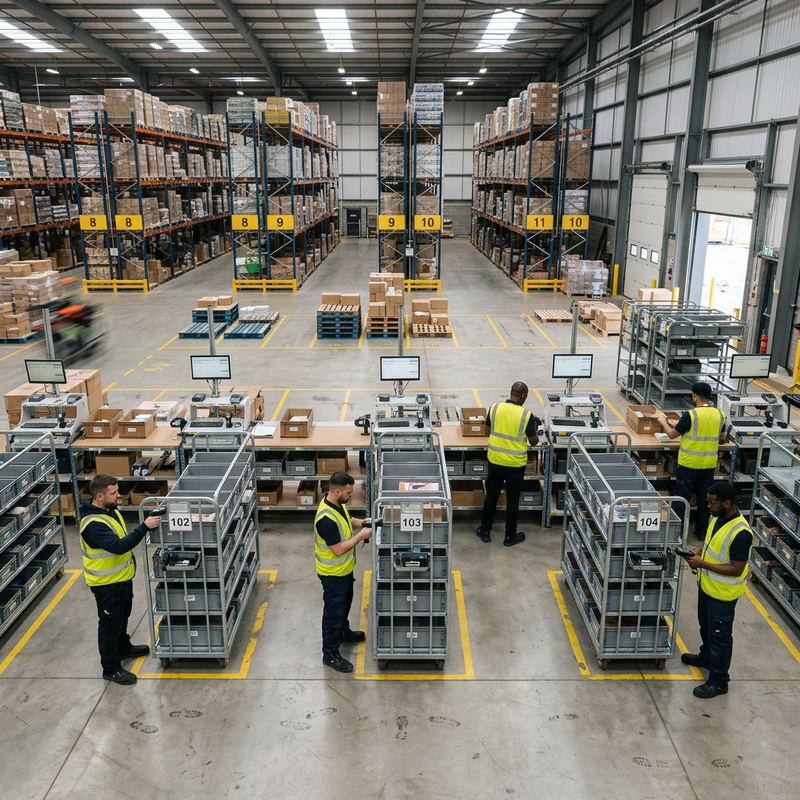
Inconsistent procedures result in additional search times, follow-up inquiries, error corrections, and unnecessary movements. Standardized process steps in receiving, order picking, and shipping reduce these inefficiencies and make it easier to plan service delivery.
Automation and Digitalization in Warehousing and Shipping
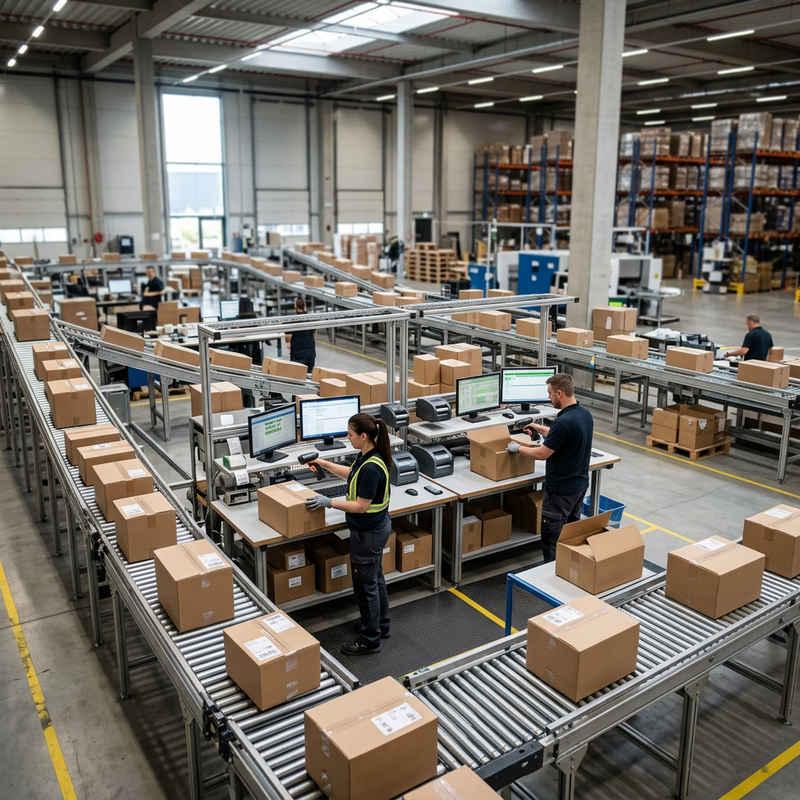
Digital data capture, system-supported workflows, and automated postings reduce manual effort in warehousing and shipping. This applies to both operational activities and administrative tasks such as documentation, status processing, and data transfers between systems.
Conclusion: Systematically Understanding and Categorizing Logistics Costs
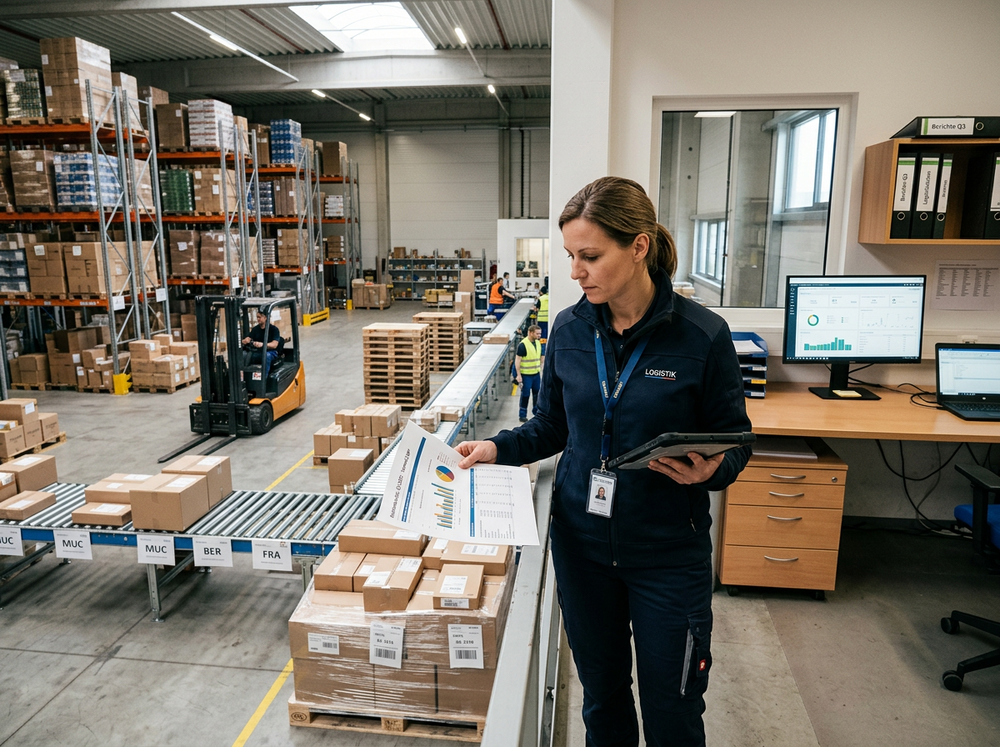
Logistics costs include direct and indirect expenses that are clearly related to logistics services, processes, or reference objects such as shipments, orders, warehouse movements, or inventory.
They can only be reliably analyzed through accurate allocation in logistics cost accounting, appropriate metrics such as the logistics cost ratio, and a cautious assessment of external benchmarks and market data.
What is the difference between direct and indirect logistics costs?
Direct logistics costs can be directly attributed to a specific order, product, customer, or shipping transaction. These include, for example, freight-related shipping costs, packaging materials, or order-related order fulfillment. Indirect logistics costs also arise in logistics but cannot be readily attributed to a single cost object. Typical examples include warehouse management, IT systems, facility costs, fleet overhead costs, or the salaries of logistics management. In practice, direct costs are usually recorded directly, while indirect costs are allocated via cost centers and allocation keys. This distinction is important for making cost calculations more precise and better identifying cost drivers in logistics processes.
What counts as administrative and system costs in logistics?
Administrative and system costs in logistics include all indirect expenses related to planning, control, monitoring, and IT support for logistics processes. These include, for example, personnel and material costs for scheduling, route planning, shipping processing, customs and freight documents, inventory planning, controlling, complaint handling, and supplier coordination. On the systems side, costs include those for ERP, WMS, TMS, or shipping software, interfaces, licenses, maintenance, support, data entry, scanners, servers, and cloud services. This also includes training, process documentation, and administrative quality assurance. It does not include direct physical services such as transportation, warehousing, or handling, but rather their organizational and digital management.
What handling and transshipment costs are incurred in logistics processes?
Handling and transshipment costs arise wherever goods are physically moved, received, sorted, transshipped, or made available. These include, for example, costs for loading and unloading, order picking, packing, repacking, labeling, scanning, goods receipt and goods issue, internal transport, palletizing, and temporary storage at loading docks or transshipment areas. Also relevant are labor costs, industrial trucks, conveyor systems, energy, wear and tear, auxiliary equipment, and space-related costs associated with these process steps. In practice, these costs often increase with the number of manual handling operations, stock transfers, shipment items, and interfaces. They thus represent a major cost component in all transportation, transshipment, and warehousing processes.
How can transportation costs be distinguished from other logistics costs?
Transportation costs are the portion of logistics costs that arise directly from the movement of goods from one location to another. These typically include freight, freight space procurement, tolls, fuel surcharges, transportation insurance, freight forwarding fees, and transportation-related packaging and shipping costs. These costs must be distinguished from warehousing costs, inventory and capital tie-up costs, handling costs, and administrative logistics costs. In practice, the distinction is made by asking: Does the expense arise because goods are being transported, or because they are being stored, picked, managed, or held in inventory? Pre- and post-carriage, express surcharges, and return shipments are generally included in transportation costs, whereas purely internal warehouse movements are usually not.
What types of costs are included in logistics costs?
Logistics costs typically include all costs associated with the planning, management, and execution of logistics processes. These primarily include transportation costs for shipping, freight, and routes; warehouse costs for space, personnel, and equipment; inventory and capital tie-up costs for stored goods, and handling and transshipment costs—such as those for order picking, loading and unloading, and internal transport. In addition, there are administrative and system costs, such as those for scheduling, logistics planning, IT systems, software, and process control. Depending on the company, costs for packaging, returns, quality assurance, or external logistics service providers may also be included in logistics costs.
What is the definition of logistics costs in a B2B context?
In a B2B context, logistics costs refer to the expenses recorded in business accounting that arise from organizing the supply and delivery of goods to companies. This includes costs associated with typical business processes such as goods receipt, warehousing, internal provisioning, order picking, shipping, and distribution-related information processing. This definition is particularly relevant for controlling and cost accounting because it enables the consistent allocation of logistics expenses to functions, processes, or areas of responsibility. In contrast to a narrow view focused solely on freight costs, the term in the B2B context encompasses the entire operational effort required to deliver goods reliably, on time, and cost-effectively.
What are logistics costs?
Logistics costs are all costs incurred through the planning, management, execution, and monitoring of logistics processes within a company. These include all expenses that facilitate the flow of materials, goods, and information between procurement, warehousing, internal movement, and delivery. In a B2B context, the term thus encompasses not only visible transportation expenses but, in principle, all process-related logistics costs. Logistics costs are therefore the financial expression of a company’s logistics performance. Depending on how they are defined within the company, they may refer to individual departments, processes, locations, or the entire supply chain.
How can companies reduce logistics costs through process optimization, automation, and accurate volume and weight tracking with PackageHERO®?
Companies reduce logistics costs by optimizing material flow, warehousing, order picking, and shipping as an end-to-end process: this minimizes unnecessary movement, wait times, duplicate entries, and manual verification steps. Automation speeds up data capture, labeling, shipping approvals, and inventory reconciliation, which reduces costs associated with errors, labor, and rework. Precise volume and weight capture is particularly effective, as incorrect master data leads to excessively high freight rates, retroactive charges, and poor space utilization. PackageHERO® supports this process with standardized, rapid capture of relevant shipping data. This enables better selection of packaging materials, more accurate freight calculations, more efficient planning of warehouse capacity, and a sustainable reduction in costs per shipment.
What benchmarks and market data are available regarding logistics costs in Germany?
In Germany, benchmarks for logistics costs vary significantly depending on the industry, vertical integration, product range, and service level. As a rough guideline, logistics costs in the B2B sector are often in the mid-single-digit to low-double-digit percentage range of revenue. Retail companies often have higher costs than lean industrial processes, and e-commerce typically exceeds even those levels. Key metrics for comparison include transportation costs per shipment, warehousing costs per storage space or order, inventory turnover, turnover rate, and costs per order line. Market data from the crisis years of 2021 through 2024 shows increased pressure, particularly from rising energy, labor, rent, and transportation costs. To establish reliable benchmarks, companies should therefore always use current, industry-specific, and size-class-based comparative figures.
How does inventory control affect logistics costs?
Replenishment management affects logistics costs because it determines when, in what quantities, and at what intervals materials or goods are replenished. As a result, it directly influences the alignment between demand, availability, and operational execution. When replenishment decisions are made in line with consumption, processes remain more stable, and unnecessary disruptions in the warehousing and shipping processes are avoided. The key factor affecting cost levels is whether replenishment parameters are reliably aligned with actual demand. Effective management thus reduces the need for ad hoc measures and supports a more even utilization of logistics resources. This makes logistics as a whole more predictable and cost-effective.
Why is volumetric weight relevant to shipping and transportation costs?
Volume weight is important because shipping costs are calculated not only based on actual weight but often based on the amount of cargo space required. Light but bulky shipments place a greater strain on vehicles, containers, or warehouse capacity than compact goods. That’s why many carriers use the higher value between actual weight and volumetric weight. For businesses, this means that large packaging, air cushions, and inefficient box sizes can increase shipping costs, even though the product itself weighs very little. Accurate measurement of dimensions and weight therefore helps prevent rate discrepancies, ensures shipments are calculated correctly, and enables targeted optimization of packaging and packing density.
What role does the supply chain play in the generation of logistics costs?
The supply chain determines how products travel from the company to the customer—and thus also where logistics costs are incurred. The key factors are, above all, the number of transfer points, the distribution of inventory across the network, and the allocation of tasks between the company’s own locations and external partners. Direct delivery results in different cost structures than a multi-stage supply chain involving warehouses and hubs. For companies, therefore, it is not just the individual shipment that matters, but the entire distribution model. The role of the distribution chain is to align service requirements, the delivery area, and network structure in such a way that the supply chain remains economically and organizationally manageable.
How are logistics costs and TUL processes related?
Logistics costs are closely linked to TUL processes because these three areas constitute the basic operational functions of physical logistics. Transportation refers to the movement of goods between locations; transshipment refers to the handling and transfer of goods at interfaces; and warehousing refers to the storage of goods over time. For cost analysis, it is important to consider these process types separately because they have different cost drivers: for transport, for example, distance and shipment structure; for transshipment, the number of movements; and for storage, primarily duration and space requirements. TUL processes thus serve as a framework for clearly assigning cost sources and implementing optimization measures in a targeted manner at the right points.
Which key metrics are particularly important for analyzing logistics costs?
Key metrics that make costs transparent, comparable, and manageable are particularly important. The logistics cost as a percentage of revenue is central. In addition, costs per shipment, per order, per pallet, per kilometer, or per metric ton to evaluate processes based on their actual causes. For warehousing and inventory, storage costs per storage location, inventory range, inventory turnover, and capital tied up per item or product group are relevant. Added to these are on-time delivery, delivery rate, damage rate, and return rate, because service issues often increase hidden logistics costs. In B2B, the combination of cost metrics, inventory metrics, and performance metrics is particularly meaningful, rather than a single isolated figure.
What formula is used to calculate the percentage of logistics costs relative to revenue?
Logistics Costs as a Percentage of Revenue (%) = (Logistics Costs / Revenue) × 100 This metric shows what percentage of revenue is spent on logistics services. It is important that the numerator and denominator correspond to the same time period and the same reporting period, such as monthly or annually. Example: If logistics costs amount to €250,000 and revenue is €5,000,000, the calculation is: (250,000 / 5,000,000) × 100 = 5% In B2B controlling, this formula is frequently used as a percentage metric to compare locations, product groups, or time periods. If necessary, the relevant portion of revenue for a division or customer segment can be used instead of total revenue.