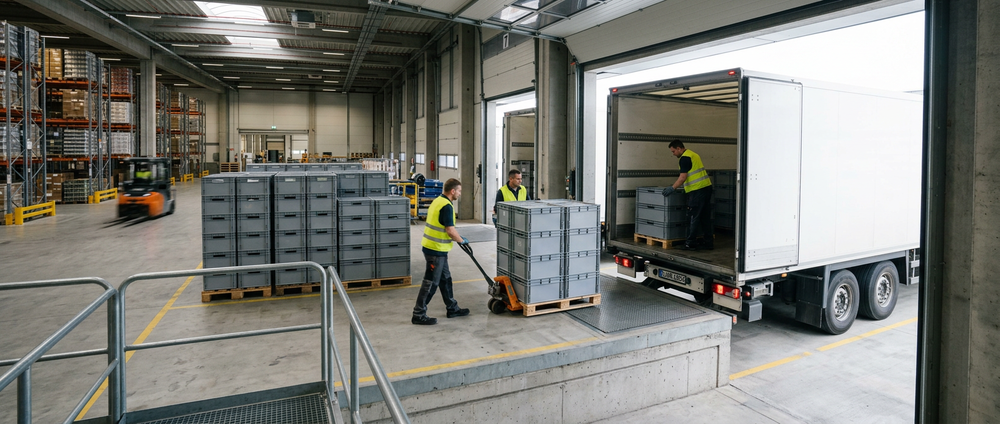
Reusable packaging is at the heart of one of the most profound transformations currently taking place in B2B logistics. Rising raw material prices, stricter legal requirements under the Packaging Act and the new EU Packaging Regulation, as well as growing pressure to improve sustainability performance, are forcing companies to fundamentally rethink their packaging strategies. Those who still rely exclusively on single-use cardboard boxes and single-use films today risk not only rising disposal costs but also regulatory disadvantages and falling further behind the competition.
Yet reusable packaging is no longer a niche topic. Pooling systems, small load carriers (SLCs), reusable transport packaging, and standardized pallet circulation systems are integral components of efficient TUL processes in modern supply chains. They lower material costs, reduce waste, and can be seamlessly integrated into smart replenishment management—a potential that has so far been largely untapped in practice: In the beverage sector, for example, the actual reuse rate stands at 43.3% (UBA, 2023), even though the political target is 70%.
This guide from PackageHERO® provides you with the expertise you need to make informed decisions: from clear definitions and direct comparisons with single-use solutions, to a structured overview of common reusable systems, the current legal framework, life cycle assessments, and practical implementation tips for day-to-day logistics operations. Compact, evidence-based, and practical.
Table of Contents
- What Is Reusable Packaging? Definition and Distinction
- Single-Use vs. Reusable: A Comparison Based on Cost, Life Cycle Assessment, and Number of Cycles
- Reusable Systems at a Glance: Pooling Systems, KLTs, Pallets, and MTV
- Legal Framework: the German Packaging Act (VerpackG) and the EU Packaging and Packaging Waste Regulation (PPWR)
- Life Cycle Assessment and Sustainability: When Is Reusable Packaging Really Better?
- Reusable Packaging in Logistics: Practice and Implementation
- FAQ
What Is Reusable Packaging? Definition and Distinction
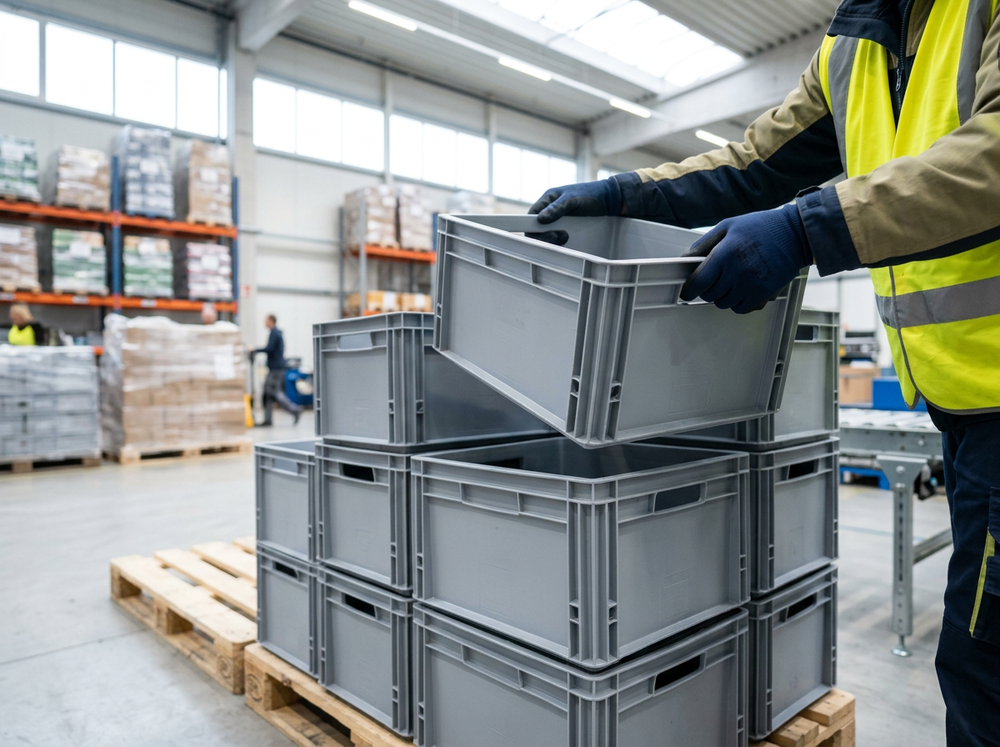
Reusable packaging refers to packaging that, after its initial use, is collected, cleaned, reconditioned, and then refilled and returned to circulation. This circular principle can be described simply as follows: Use → Collection → Cleaning and Reconditioning → Reuse. The key point here is that the container fulfills its function not just once, but over many cycles. In a B2B context, typical examples include small plastic load carriers (KLT), reusable pallets, and reusable transport packaging made of durable materials such as plastic, metal, or glass—all designed for durability, stackability, and ease of cleaning.
The requirements for cleanability vary depending on the material: Plastic containers made of polypropylene or polyethylene can be processed in standardized continuous-flow washing systems at 60–80 °C and tolerate common alkaline cleaning agents; metal containers often require customized corrosion protection measures; glass containers are considered the least material-sensitive, but are more prone to breakage during transport. These material-specific differences significantly influence actual cleaning costs and thus the overall cost-effectiveness of the respective system.
Reusable packaging must be clearly distinguished from two concepts that are often confused: single-use packaging is disposed of after a single use; recyclable single-use packaging is recycled as material but does not enter a reuse cycle—recycling is explicitly not the same as reusable. This distinction is also legally relevant, as the EU Packaging and Packaging Waste Regulation (PPWR) (Regulation (EU) 2025/40) treats reusable packaging and recycling as separate target categories.
Single-Use vs. Reusable: A Comparison Based on Cost, Life Cycle Assessment, and Number of Cycles
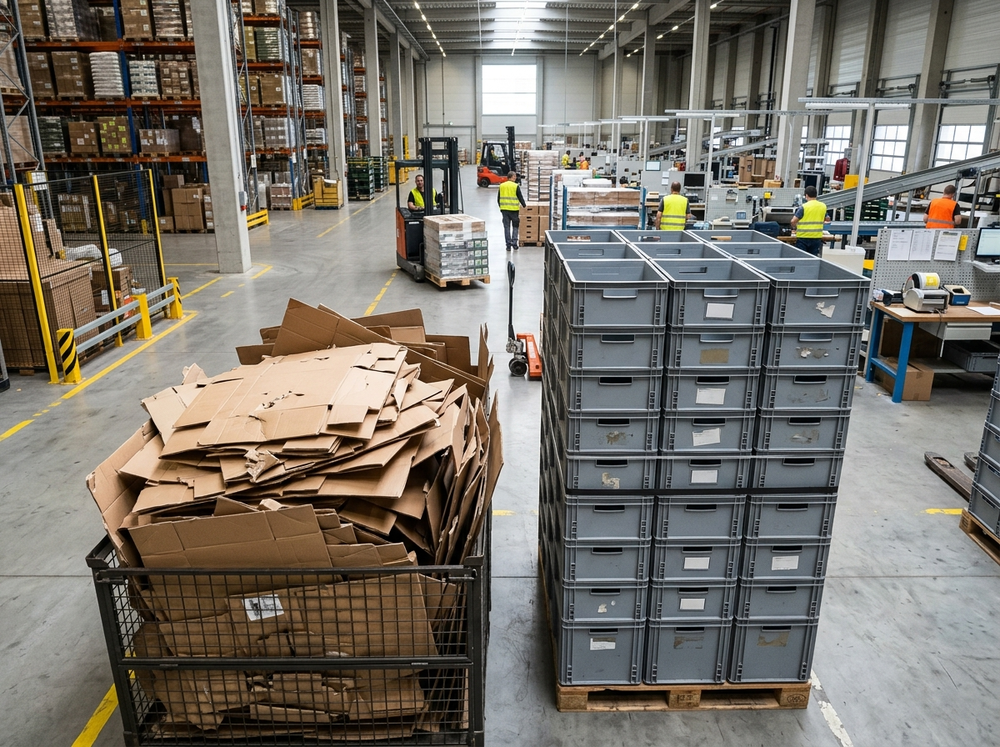
The choice between single-use and reusable packaging fundamentally depends on one key question: Is the supply chain closed or open? In closed-loop systems with defined partners and guaranteed return transport, reusable solutions fully demonstrate their economic and environmental advantages. In open supply chains with varying recipients and no organized return system, however, single-use packaging is often the pragmatically superior choice—regardless of sustainability goals.
Single-use packaging scores points for its low acquisition costs and minimal infrastructure requirements. Reusable packaging, on the other hand, pays for itself over multiple cycles: The higher initial costs are spread across each subsequent cycle, so that the total costs over the life cycle decrease. The environmental benefits are reflected in concrete metrics: The IFEU life cycle assessment (2008) found that for every 1,000 liters of contents, the reusable PET bottle (1.0 L) emitted 69 kg of CO₂ equivalents, compared to 139 kg for the single-use PET bottle (1.5 L)—a reduction of about 50%. More detailed life cycle assessment data and the calculation methods can be found in the life cycle assessment section of this guide.
| Criterion | Single-use packaging | Reusable packaging |
|---|---|---|
| Acquisition costs | Low | Higher |
| Total cost over the life cycle | High (no reuse effect) | Decrease as the number of cycles increases |
| Carbon footprint | Unfavorable | Up to 50% fewer CO₂ equivalents per unit of use (IFEU 2008) |
| Circulation rate | 1 | Clearly environmentally beneficial after approximately 25 cycles (based on IFEU calculations) |
| Cleaning effort | None | Required (water, energy, cleaning agents) |
| Infrastructure requirements | Low | High (return, cleaning, pool management) |
| Disposal costs | Incur after each use | Largely nonexistent during ongoing operation |
| Suitability for closed-loop systems | Not suitable | Ideal—requires a functioning return logistics system |
The table makes it clear: The primary decision-making criterion is not the unit price of the container, but the structure of the supply chain. Disposable containers remain justified where no organized return processes exist. As soon as this condition is met, the advantages of reusable solutions outweigh the disadvantages—both economically and environmentally.
An Overview of Reusable Systems: Pooling Systems, KLTs, Pallets, and MTVs
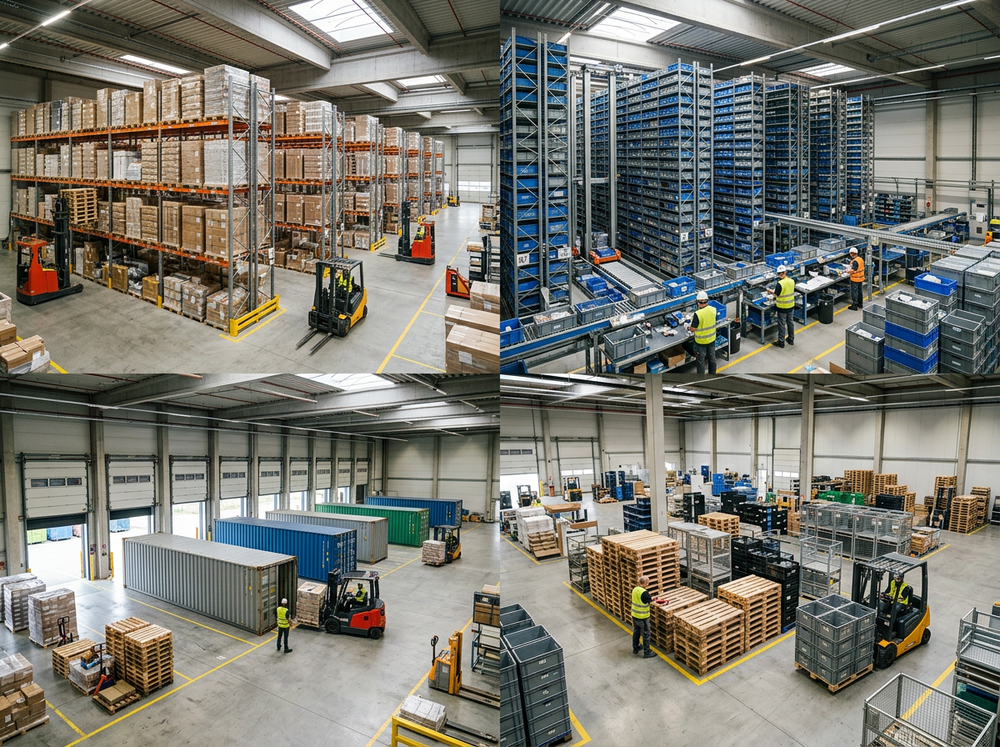
The reusable packaging systems available in the B2B sector can be divided into four categories, each with different logistical requirements, regulatory frameworks, and typical circulation rates. The following overview table provides a general guide before delving into the individual system types in greater detail.
| System Type | Main Area of Application | Typical Circulation Rate | Standard Reference |
|---|---|---|---|
| Pool System | Cross-industry load carrier management by third-party operators | Depends on container type; high utilization rate due to multiple users | Operator-specific standards (e.g., CHEP, EPAL) |
| Small load carriers (SLC) | Batch delivery, production supply, order picking (primarily automotive, electronics) | 50–200 cycles (depending on material and maintenance) | VDA 4500 (VDA small load carrier standard) |
| Reusable pallet | General cargo transport, warehouse logistics, food and industrial logistics | 5–10-year service life with ongoing maintenance | EPAL standard, UIC 435-2 |
| Reusable transport packaging (MTV) | Industry, retail, and transportation; product-specific supply chain routes | 25–50 cycles (depending on design and return rate) | DIN 15155 (mesh box), product-specific |
The four system types differ not only in their areas of application and number of cycles, but above all in their investment models: Companies that operate their own KLT or MTV systems bear the full capital commitment for acquisition, maintenance, and replacement. Pool systems convert this CAPEX burden into a variable usage fee—the operator handles cleaning, quality control, and inventory management in exchange for a recurring fee. Which model is more advantageous depends largely on network size, utilization rate, and existing cleaning infrastructure; the cost-effectiveness section of this guide offers a structured decision-making tool.
Pooling Systems and Reusable KLTs/Containers (Shared Use vs. Standardized Equipment)
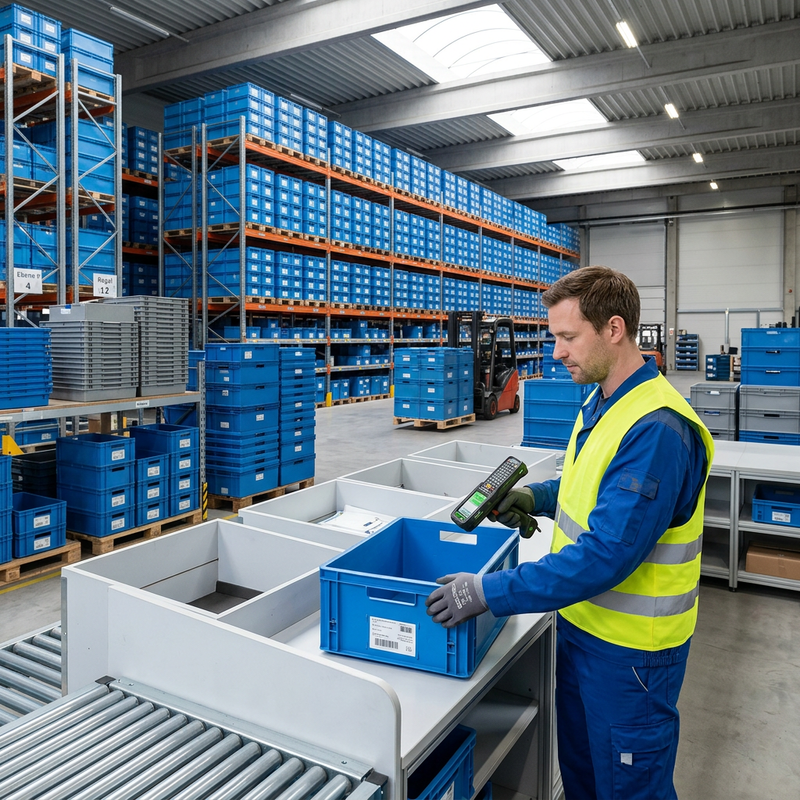
At the heart of many reusable systems is the pooling principle: Instead of maintaining their own container inventories, multiple companies jointly use a managed load carrier pool provided by a specialized operator. Well-known examples include CHEP pallet pools or industry-wide reusable KLT pools. Users incur no CAPEX for purchase or replacement but benefit from professional cleaning, quality control, and higher overall utilization of the containers. System limitations arise when the network is too small or availability bottlenecks occur, such as during seasonal peaks.
Small load carriers (KLT) play a central role within pooling systems. Standardized, stackable KLTs made of impact-resistant plastic—typically conforming to the VDA KLT standard (VDA 4500)—enable an economically viable and process-reliable reusable container circulation between partners only when their dimensions and interfaces are consistently standardized. Only standardized containers can be used in automated conveyor and storage systems without the need for retrofitting and can be easily exchanged between suppliers, plants, and distribution centers. Their range of applications extends from production supply to order picking and intra-company logistics. The smooth management of the KLT cycle—return, cleaning, and inventory monitoring—is closely linked to TUL processes, which view transport, handling, and storage as an integrated resource.
Reusable Pallets (EPAL Standard, Pool Variants, and Repairability)
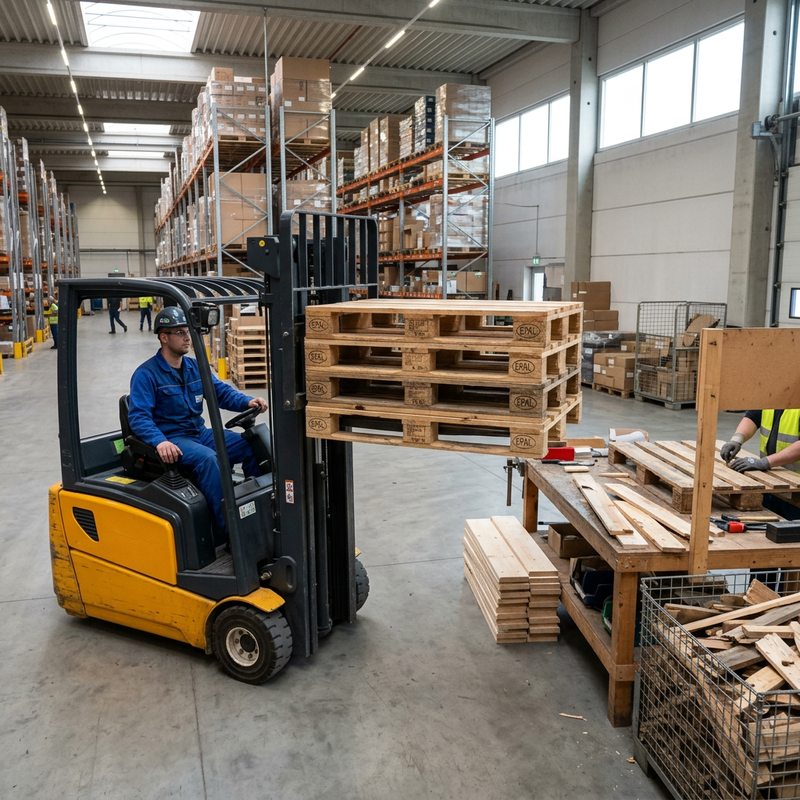
As load-carrying units at the lowest level of the supply chain, reusable pallets are the most widely used equipment in industry, retail, and food logistics. The starting point is the EPAL Euro pallet (1,200 × 800 mm), a globally recognized standard: Its standardized dimensions ensure compatibility with shelving systems, industrial trucks, and automated conveyor systems alike. In addition to the open exchange system, in which damaged pallets are immediately replaced with inspected ones, there are rental and pooling models—such as CHEP—in which the operator centrally manages, cleans, and inspects the stock for quality. The range is complemented by specialty variants such as the Inka pallet or the Dolly, which meet specific process requirements in the retail sector.
A key feature of all wood-based variants is their reparability: Damaged individual components—blocks, deck boards, runners—can be replaced in accordance with regulations without having to replace the entire pallet. As standardized reusable packaging in the load-carrying sector, the EPAL Euro pallet achieves a service life of 5 to 10 years under regular use and ongoing maintenance. Compliance with quality requirements is ensured by the EPAL quality control program, which subjects manufacturers and repair shops to regular audits, thereby guaranteeing the safety of the pallets in circulation. In the reusable systems of B2B logistics, the pallet is thus not merely a means of transport, but an actively managed asset in the cycle.
Reusable transport packaging (MTV) for the movement of goods between industry and commerce
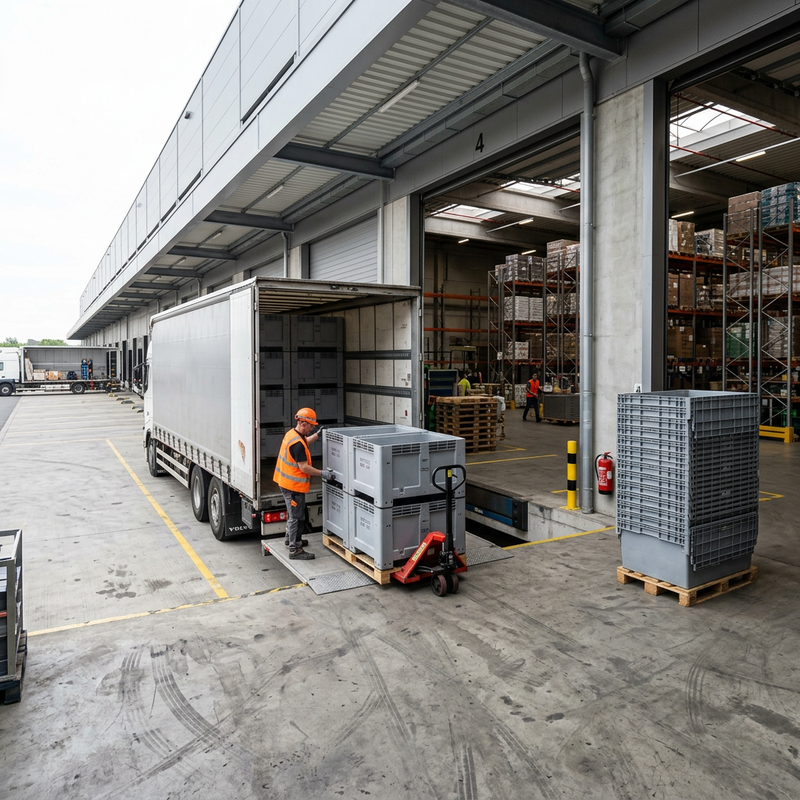
In the movement of goods between industry and retail, reusable transport packaging (MTV) constitutes a distinct category separate from KLT containers and pallets. Typical examples include reusable trays, roll containers, and mesh boxes—robust outer packaging that is often designed for specific products and tailored to defined supply chain routes. As a guide for standard dimensions, consider, for example, the mesh box conforming to DIN 15155 with the common external dimensions of 1,240 × 835 × 970 mm, which fits into standardized storage and transport systems. Unlike KLTs, which circulate primarily in production supply chains, reusable transport packaging often serves as the retail unit and is therefore designed for longer, sometimes cross-industry supply chain routes.
Unlike sales packaging, which remains with the end customer at the point of sale, reusable transport packaging (MTV) systematically returns to its point of origin through organized return systems. For this to work in practice, it is advisable to enshrine return obligations in supplier and customer agreements: Clear regulations regarding return deadlines, condition requirements, and liability for loss or damage minimize shrinkage and ensure the economic viability of the cycle. The gradual reduction in costs through increased circulation, as well as an improved environmental footprint along the entire supply chain, will only be fully realized once these organizational prerequisites are met.
Legal Framework: the German Packaging Act (VerpackG) and the EU Packaging and Packaging Waste Regulation (PPWR)

Anyone wishing to use reusable packaging in a B2B context in compliance with the law must navigate a two-tier regulatory framework: At the national level, the Packaging Act (VerpackG)—enacted on July 5, 2017, effective as of January 1, 2019, and most recently amended by Article 6 of the Act of October 25, 2023 (BGBl. 2023 I No. 294). It defines the obligations for placing packaging on the market, take-back, and high-quality recycling, and forms the central national framework for all stakeholders along the supply chain.
In addition, the EU Packaging Waste Regulation (PPWR) (Regulation (EU) 2025/40) will apply as of August 12, 2026, and is directly applicable in all Member States. As an EU regulation, it takes precedence over national law where it sets explicit requirements; the VerpackG remains applicable in non-harmonized areas. For companies in manufacturing, retail, and logistics, this means that both sets of regulations must be observed simultaneously, and their respective effective dates and obligations must be carefully distinguished. The VerpackG was originally enacted to implement Directive 94/62/EC of December 20, 1994; the PPWR replaces this directive and supplements the framework with EU-wide requirements for reuse and recyclability.
Packaging Act (VerpackG): Mandatory Reusable Packaging Starting January 1, 2023

For B2B operators, Section 33 of the Packaging Act (VerpackG) is primarily relevant indirectly: Since January 1, 2023, the law has required operators of restaurants and delivery services—that is, B2C touchpoints—to also offer takeout food and beverages in reusable packaging. However, rising volumes of reusable packaging in the end-customer channel directly increase the demand for compatible reusable transport packaging in the upstream B2B supply chain. Furthermore, the price parity requirement in Section 33 stipulates that the reusable option must not carry a surcharge compared to the single-use alternative.
Exceptions apply to very small businesses: Companies with fewer than five employees and a sales area of less than 80 m² are exempt from the full obligation to offer reusable options; instead, they may offer to fill containers brought in by customers. For all other operators, the obligation applies without restriction. In parallel, the Packaging Act (VerpackG)—enacted on July 5, 2017, and most recently amended by Article 6 of the Act of October 25, 2023 (Federal Law Gazette 2023 I No. 294)—contains – sets forth extensive registration and system operator obligations: Manufacturers and distributors of packaging subject to the system participation requirement must register with the Central Packaging Register (ZSVR) and report their packaging volumes. The ZSVR thus serves as the central supervisory and transparency authority for the entire dual waste management system in Germany. The system participation obligations that actually apply to B2B manufacturers and distributors are governed by §§ 7–17 of the Packaging Act (VerpackG); the ZSVR registration requirement applies to all distributors of packaging subject to system participation, regardless of the distribution channel.
EU Packaging Regulation (PPWR) (Regulation (EU) 2025/40): Deadlines and Requirements

Under the EU Packaging Regulation (PPWR)—full title: Regulation (EU) 2025/40 of the European Parliament and of the Council of December 19, 2024, published in the Official Journal of the European Union (Series L) on January 22, 2025—directly applicable Union law will take effect on August 12, 2026, replacing the previous Directive 94/62/EC of December 20, 1994. The central goal: By 2030, all packaging placed on the market in the Union must be reusable or recyclable (Design for Recycling). In addition, there will be mandatory reusable quotas for certain packaging categories as well as bans on selected single-use formats.
This results in specific requirements for B2B transport and industrial packaging. Article 26 of Regulation (EU) 2025/40 sets out mandatory reuse rates for commercial transport packaging—including pallets, transport containers, and shipping units in B2B traffic—with phased targets for 2030 and 2040. The Commission must establish the exact rates for each packaging category by 2026 at the latest via a delegated act. This means that B2B companies already need to take action today when designing their systems: Those who wait to adapt their packaging concepts until after the delegated acts are published risk not being able to fully utilize the remaining transition periods. In addition, the PPWR requires economic operators to design packaging so that it meets the recyclability criteria set forth in Article 6 of the Regulation—with phased requirements leading up to 2030 and 2035. The regulatory pressure is underscored by the Regulation’s own assessment of raw material use: 40% of the plastics used in the Union and 50% of the paper used are accounted for by packaging (Source: Regulation (EU) 2025/40, European Parliament and Council)—material flows that the regulation aims to specifically steer toward a circular economy. Redesigns and material declarations for existing packaging must therefore be planned now.
Life Cycle Assessment and Sustainability: When Is Reusable Really Better?
There is no one-size-fits-all answer to whether reusable packaging is truly more sustainable than single-use packaging—the key factor is the number of times it is reused. The IFEU life cycle assessment (2008) provides the most frequently cited data set for the beverage sector: When comparing CO₂ emissions per 1,000 liters of bottled mineral water, the Heidelberg Institute for Energy and Environmental Research calculated a value of 139 kg of CO₂ equivalents for the single-use PET bottle (1.5 L), 84 kg for the reusable glass bottle (0.7 L) 84 kg, and for the reusable PET bottle (1.0 L) just 69 kg—a reduction of up to 50% compared to the single-use version. The IFEU study uses a circulation rate of 25 refills for the reusable PET bottle as the basis for its calculations; higher circulation rates further improve the environmental performance. Note: The study dates from 2008; more recent life cycle assessment data for individual packaging categories may differ.
In the beer segment, the IFEU life cycle assessment (2010) shows similar results: The 0.5-liter NRW glass pool bottle emits approximately 150 kg of CO₂ equivalents per 1,000 liters, while aluminum cans (approximately 295 kg), tin cans (around 300 kg), and single-use glass bottles (around 350 kg) perform significantly worse—also based on an assumed 25 refills. In practice, the actual number of refills is sometimes significantly higher: According to a Deloitte study (2013), the NRW bottle is refilled an average of 42 times, which further improves its life cycle assessment compared to the study’s scenario. This study, too, is over ten years old; for current procurement decisions, validation using more recent industry data is recommended.
Nevertheless, sweeping generalizations are misplaced. The life cycle assessment depends on the system—materials, cleaning energy, and transportation routes significantly influence the result. In the beverage sector, the politically targeted reusable rate is 70% according to the Federal Environment Agency; the rate actually achieved was most recently 43.3%, according to the Federal Environment Agency (UBA, Report 2023). This gap of nearly 27 percentage points illustrates that the sustainability potential of reusable packaging remains largely untapped across the entire system.
Reusable Packaging in Logistics: Practice and Implementation
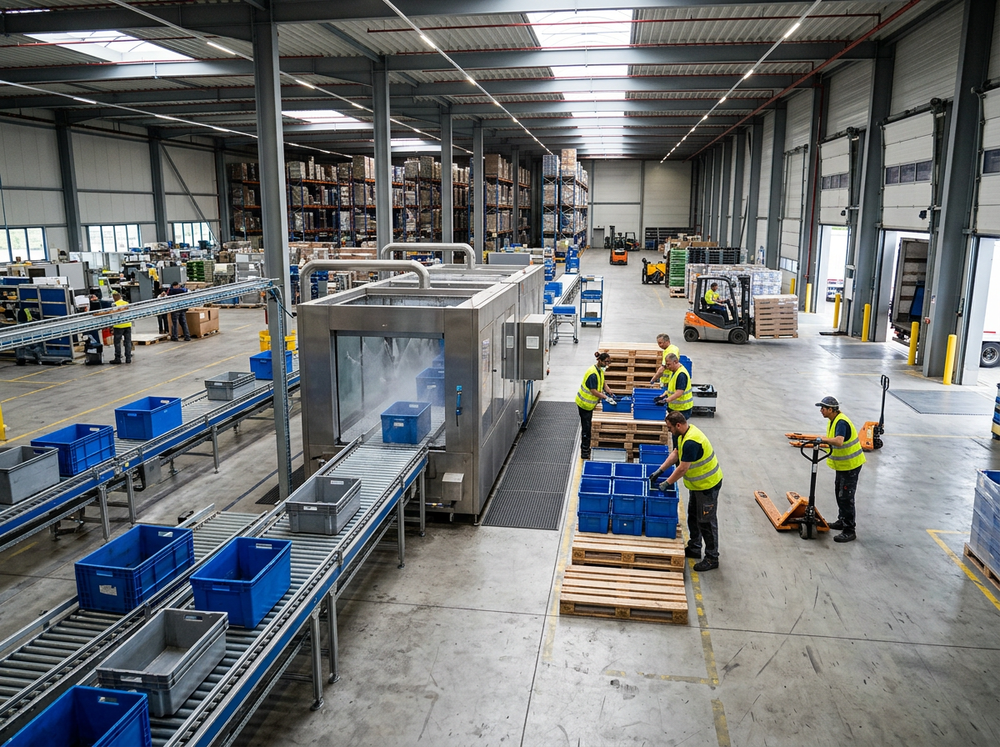
The greatest operational risk in reusable container systems is uncontrolled container loss. Experience shows that in poorly managed open systems, loss rates range from 5 to 15% per year (industry benchmark based on logistics practice; no standardized data collection framework is available). The specific financial consequences of this loss rate and the return rate required for a reusable system to be operated profitably in the long term are detailed in the economic viability section of this guide.
Consistent inventory tracking via RFID, barcodes, or digital pool management software is therefore not an optional add-on, but a fundamental operational requirement for achieving positive TCO figures. The return rate per circulation period has proven to be a reliable KPI: It is calculated as the ratio of returned containers to the total number of units issued during the same period and provides immediate insight into where losses occur within the network.
In practice, losses are concentrated in three shrinkage hotspots, each of which should be addressed with specific countermeasures:
- Recipient side: Containers are not returned on time or are misused. Effective countermeasure: Supplier training with mandatory return protocols that reduce mishandling and lower the number of damaged returns.
- Transit: Mis-sorted and damaged units drop out of the cycle. Effective countermeasure: GS1-compliant labeling of each container with a unique scan event upon issuance and return, so that shortages can be immediately located.
- Return Transport: Inadequately coordinated routes lead to uncontrolled accumulation of empties at the customer’s location. Effective countermeasure: Route-synchronized return collection—integrating container collection into existing delivery routes minimizes empty runs and shortens turnaround time without incurring additional transportation costs.
In addition, deposit systems have proven particularly effective in semi-open networks with varying recipients: A financial incentive for return structurally increases the return rate and reduces administrative overhead. Combining these measures with seamless digital tracking forms the operational foundation on which stable return rates can be achieved over the long term.
Recovery, Cleaning, and Processing: The Recycling Cycle
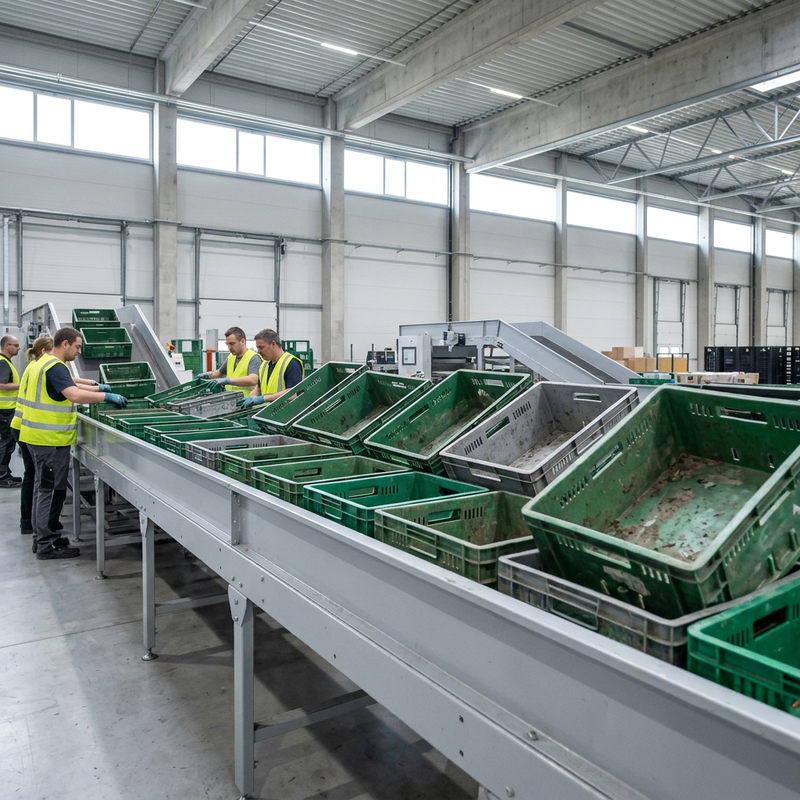
The operational cycle of reusable packaging is divided into four consecutive phases. First, the filled packaging is delivered to the recipient—either via direct delivery or through a packaging pool operator that centrally manages the provision of packaging. Once emptied, the return logistics process begins: A logistics service provider organizes pickup and sorting of empty containers, often on the same routes as delivery to minimize empty trips. In the third step, a cleaning service provider handles the reconditioning—the washing process, quality control, and repairs if necessary—before the container is returned to storage and made available to the end user again.
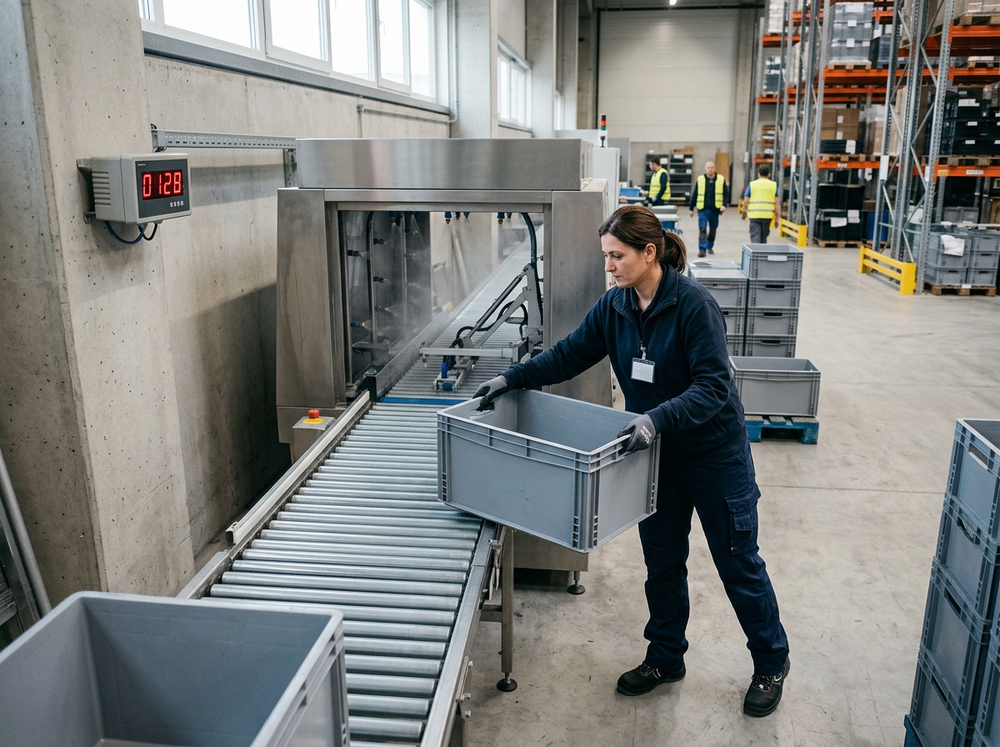
The following guidelines are relevant for planning specific process parameters: In industrial continuous-flow washing, the cleaning cycle duration per KLT unit is typically 8 to 15 minutes, depending on the degree of soiling and system throughput. The empty container turnaround time—that is, the period between emptying at the recipient’s site and re-delivery to the point of origin—averages 3 to 7 business days in a well-organized closed-loop system. Longer turnaround times tie up container capital unnecessarily and increase the required safety stock; systematically reducing them is therefore a key lever for improving overall cost-effectiveness.
In practice, reusable container systems encounter typical bottlenecks: heterogeneous IT systems among participating partners, limited data availability outside one’s own business unit, and significant coordination efforts with suppliers and customers. Concrete solutions address these challenges on two levels: At the interface level, EDI connections enable standardized, automated data exchange between the ERP systems of network partners and significantly reduce manual reconciliation loops. At the data level, GS1-EPCIS-compliant data formats establish a common language for container movements: Every scan event—issuance, transit, return, cleaning—is recorded in a standardized event model and is visible to all authorized partners in real time. This combination of EDI integration and EPCIS-based traceability lays the foundation upon which replenishment control can proactively plan container inventories and identify bottlenecks in the cycle at an early stage.
Cost-Effectiveness, ROI, and System Selection (TCO Instead of Unit Price): Integration into Processes

The cost-effectiveness of reusable packaging cannot be determined solely by the unit price—what matters is a total cost of ownership (TCO) analysis that fully accounts for capital expenditures (CAPEX), cleaning costs, return rates, and storage space for empties. Based on industry experience, the following applies: Given a guaranteed circulation rate of 15 to 20 cycles, a robust investment in KLT containers (standard plastic containers per VDA 4500, mid-price range) generally pays for itself in full compared to a comparable single-use solution (Industry benchmark based on logistics practice; validation with company-specific cost data required). For higher-quality reusable containers—such as product-specific specialty reusable containers with more complex designs and higher cleaning costs—the break-even point shifts to 25 to 30 cycles (industry benchmark based on logistics practice; validation with company-specific cost data required).
The return rate is a key factor in determining whether this break-even point is actually reached. The threshold of at least 85% is considered the industry benchmark for closed B2B cycles with defined partners—that is, for systems in which both the sender and the recipient are contractually obligated to return the containers and logistics are organized by both parties. In more open networks with varying recipients, the actually achievable rate is often lower, which correspondingly worsens the profitability analysis. The difference between the target and actual return rate can be directly translated into replacement costs: Each percentage point below the threshold corresponds to an additional annual requirement for new containers amounting to 1% of the total inventory.
The following decision matrix provides structured guidance for choosing between an in-house system and a pool model:
| Criterion | Threshold / Characteristic | In-House System Recommended | Pool model recommended |
|---|---|---|---|
| Network size | Number of active delivery points | Few, fixed partners (< 20 locations); closed-loop system with stable return routes | Many, rotating partners (> 20 locations); open or semi-open network without guaranteed return routes |
| Monthly circulation volume | Container units per month | High, predictable volume (> 5,000 units/month); utilization justifies in-house investment and cleaning capacity | Low or highly fluctuating volume (< 5,000 units/month); pool model buffers seasonal peaks without tying up capital |
| Existing cleaning capacity | In-house washing facility or service provider | In-house cleaning infrastructure in place or planned; full costs per cleaning cycle are calculable and competitive | No in-house cleaning infrastructure; outsourcing to a pool operator is more cost-effective than in-house operation |
A phased approach is recommended for implementation: In the first step, measure the return rate and turnaround times under current conditions; in the second step, assess cleaning capacities and IT integration; in the third step, contractually bind suppliers and customers and clearly define KPIs—turnover rate, return rate, and loss rate. Well-founded inventory planning supports replenishment management and ensures that container stocks are available at the right place and time.
What advantages do small load carriers (KLT) and reusable containers offer over single-use cardboard boxes in intralogistics?
Small load carriers (KLT) and reusable containers offer several key advantages over single-use cardboard boxes in intralogistics. Standardized KLTs compliant with VDA 4500 are stackable, impact-resistant, and can be integrated into automated conveyor and storage systems without the need for retrofitting. Thanks to their durability—typically 50 to 200 cycles—they eliminate the ongoing disposal costs associated with single-use cardboard boxes, which are incurred after each use. Their uniform dimensions enable seamless exchange between suppliers, plants, and distribution centers. At the same time, they can be seamlessly integrated into TUL processes and smart replenishment control—a potential for efficiency that single-use cardboard containers are structurally unable to offer.
What is a pooling system for reusable packaging—and which systems are particularly common in the B2B sector?
A pool system is an organized, reusable循环 model in which multiple companies jointly use a managed inventory of load carriers instead of maintaining their own containers. A specialized operator handles cleaning, quality control, and inventory management—the user pays a recurring usage fee instead of incurring high upfront costs. The following are particularly common in the B2B sector: - CHEP pallet pools (Euro pallets, cross-industry) - EPAL exchange system (open pallet exchange according to the EPAL standard) - Industry-wide KLT pools (e.g., according to VDA 4500 in the automotive industry) Pool systems enable high overall utilization of the containers, but they fail when networks are too small or when availability bottlenecks occur during peak seasons.
At what number of reuses does reusable packaging become more environmentally friendly than single-use packaging?
Starting at about 25 cycles, reusable packaging has a clear environmental advantage over single-use packaging—this is based on IFEU calculations. The reason: Reusable packaging initially requires more resources than single-use packaging during production, cleaning, and return. Only as the number of cycles increases does the environmental impact per unit of use decrease significantly. A functioning return logistics system is always crucial; without a guaranteed return process, reusable packaging fails to deliver its environmental benefit. The specific CO₂ comparison values for PET bottles, as well as the importance of the supply chain structure, are discussed in detail in the Life Cycle Assessment FAQ.
When does switching from single-use to reusable packaging actually make economic sense in a B2B setting?
In the B2B sector, switching to reusable packaging makes economic sense, especially when there is a closed supply chain with defined partners and reliable return logistics. What matters is not the unit price of the container, but the total cost analysis over its life cycle: The higher initial costs are spread out over each cycle, whereas single-use packaging incurs disposal costs with every use. Pooling systems further reduce capital tied up by converting CAPEX into variable usage fees. For companies without organized return processes—such as those with changing recipients—disposable packaging remains the pragmatically superior choice.
What is meant by "reusable transport packaging" (MTV)—and what types of packaging fall under this category?
Reusable transport packaging (MTV) is a robust type of transport packaging designed for reuse, used in the movement of goods between industry and commerce, and constituting a distinct category separate from KLT containers and pallets. Its defining feature is its design for multiple loading and transport cycles across defined supply chain routes. Typical examples of MTV include: - Mesh boxes (standard reference: DIN 15155) - Reusable trays - Roll containers The typical number of cycles is 25–50 cycles, depending on the quality of construction and the organized return rate.
According to Section 3(3) of the Packaging Act (VerpackG), what criteria must packaging meet in order to be considered reusable packaging?
Under Section 3(3) of the Packaging Act (VerpackG), packaging is considered reusable if it can be demonstrated that it is intended to be taken back after its initial use, cleaned or reconditioned, and then refilled and returned to circulation. The key factor is the principle of a closed-loop system: The packaging must be designed and constructed for multiple uses—not merely theoretically reusable, but actually managed within an organized take-back and reconditioning system. Simple recycling after a single use does not meet this requirement, as it does not constitute a reuse cycle in the legal sense. The national definition in the Packaging Act (VerpackG) corresponds to the European framework of the PPWR.
What is reusable packaging—and how does it differ legally from recyclable packaging?
Reusable packaging is packaging that is collected after use, cleaned, reconditioned, and refilled—in contrast to single-use packaging, which is disposed of after a single use. Legally, it is important to distinguish this from so-called reusable packaging: The EU Packaging and Packaging Waste Regulation (PPWR) (Regulation (EU) 2025/40) treats reusable and recycled packaging as separate target categories. Packaging that is recycled is expressly not considered reusable packaging—even if the recycling process is of high quality. Reusability necessarily requires a closed reuse cycle: use → return → cleaning and reconditioning → reuse.
What common implementation mistakes should companies avoid when setting up a corporate reusable container system in B2B logistics?
Typical implementation errors when setting up a corporate reusable container system in B2B logistics are primarily structural in nature. The most common mistake is launching the system without a reliable return logistics process: Anyone who introduces reusable containers without establishing organized return processes will lose containers and fail to achieve cost-effectiveness. Equally critical is a lack of standardization—containers that do not comply with standards cannot be used in automated systems and are hardly compatible with partners. Other common mistakes include insufficient cleaning capacity and underestimating the capital tied up in maintaining an in-house container fleet—the latter can be specifically reduced by switching to a pool model with a recurring usage fee.
How can a reusable system be successfully integrated into existing TUL processes (transport, handling, storage)?
The integration of a reusable system into existing TUL processes is most successful when transport containers, handling equipment, and warehouse infrastructure are coordinated with one another. The use of standardized load carriers—such as KLTs compliant with VDA 4500 or EPAL pallets—is crucial, as they can be integrated into automated conveyor and warehouse systems without requiring any retrofitting. Return logistics must be planned from the outset as an integral part of the process—return flows, cleaning capacities, and buffer stocks must be taken into account, as must clear responsibilities among suppliers, plants, and distribution centers. Smart replenishment control significantly increases the overall efficiency of the cycle.
Why is the actual reuse rate for beverage packaging in Germany so far below the statutory target of 70%?
The actual reuse rate for beverage packaging in Germany stands at 43.3% (UBA, 2023)—well below the policy target of 70%. The causes are structural in nature: Reusable systems require a functioning return and cleaning infrastructure, which is difficult to organize reliably in open supply chains with varying distribution channels. Single-use packaging has the advantage of low infrastructure requirements and ease of use. Added to this are market trends such as the shift toward single-use PET and cans in the food retail sector, as well as a lack of consumer incentives in certain sales channels—all of which significantly slow down the actual reuse rate despite statutory targets.
Under what conditions is reusable packaging truly more sustainable than single-use packaging—what does the life cycle assessment show?
Whether reusable packaging performs better environmentally than single-use packaging depends largely on the number of times it is reused and the structure of the supply chain. The IFEU life cycle assessment (2008) shows: A reusable PET bottle (1.0 L) generates approximately 69 kg of CO₂ equivalents per 1,000 liters of contents—whereas a single-use PET bottle (1.5 L) generates 139 kg, or about 50% more. However, this assumes a closed-loop supply chain with a guaranteed return system. Cleaning and return transport, in turn, consume energy and water—without a functioning return logistics system, the environmental benefit is completely lost. The choice of material and regional transport distances also have a significant impact on the result.
Are micro-enterprises exempt from the requirements of the EU Packaging and Packaging Waste Regulation (PPWR)?
Yes, micro-enterprises may be exempt from certain obligations under the EU Packaging and Packaging Waste Regulation (PPWR) (Regulation (EU) 2025/40) under specific conditions. The PPWR generally applies to all market participants who place packaging on the market in the EU. However, tiered regulations are in place for micro-enterprises, which provide relief from certain reusable packaging quota and reuse obligations. There is, however, no complete, blanket exemption for all micro-enterprises from all PPWR obligations—core requirements such as labeling and design specifications generally apply to smaller operators as well. At the same time, separate thresholds apply at the national level, such as for the obligation to offer reusable options under Section 33 of the Packaging Act (VerpackG).
What is the EU Packaging Regulation (PPWR) (Regulation (EU) 2025/40)—and when does it take effect?
The EU Packaging Regulation (PPWR) (Regulation (EU) 2025/40) is a directly applicable EU regulation that replaces the previous framework of directives governing packaging and, for the first time, establishes binding reusable quotas, design requirements, and reuse targets at the European level. Unlike a directive, it does not require national implementation—it applies directly in all EU member states. Important to note: The PPWR treats reusable and recyclable packaging as separate target categories; recyclable single-use packaging explicitly does not meet the reusable requirements. The regulation has been in force since January 2025; specific implementation deadlines are staggered over the coming years depending on the area of requirement.
What does the requirement to offer reusable options under the Packaging Act entail—and who has been subject to it since January 1, 2023?
Effective January 1, 2023, Section 33 of the Packaging Act (VerpackG) requires certain providers of takeout food and beverages to also offer their products in reusable packaging. This applies to food service and retail businesses that sell to-go products in single-use plastic packaging or single-use beverage cups—provided they have more than five employees or more than 80 m² of sales area. Micro-businesses below these thresholds are instead only required to allow customers to bring their own containers to be filled. The reusable alternative must not cost more than the single-use option and must be available in the same sizes.
How do return logistics work in open reusable systems—and who is responsible for losses?
In open reusable systems—that is, cycles with changing recipients that are not centrally controlled—return logistics are considerably more challenging than in closed cycles. Containers must be returned across multiple stations without a single entity controlling the entire flow. Typically, pool operators such as CHEP assume organizational responsibility: They manage inventories, coordinate returns and cleaning, and charge usage fees instead of purchase prices. Liability for lost containers is contractually regulated—users are generally liable for units not returned, while the pool operator calculates shrinkage rates and absorbs them systemically.

