
Whether it’s lithium-ion batteries in parcel shipments, cleaning supplies on a truck’s cargo bed, or industrial gases transported by rail— the transport of hazardous materials is not a marginal issue in logistics, but an everyday reality in nearly every supply chain. And yet many companies underestimate just how complex the legal requirements are: incorrectly declared shipments, missing labeling, or an overlooked quantity threshold can result in hefty fines, operational disruptions—and in the worst case, even serious safety incidents.
The good news: If you know the rules, you can transport dangerous goods safely, in compliance with the law, and efficiently. This applies just as much to a one-time shipment of a small quantity as it does to the daily handling of hundreds of dangerous goods within complex distribution chains. The key is to ask the right questions: What class does my substance belong to? Which exemption rule applies? Do I need a dangerous goods safety advisor? And how must the shipment be documented and labeled before it leaves the warehouse?
This guide provides you with well-founded, practical answers —based on the current regulations of ADR 2025, the German GGVSEB, and the relevant implementing regulations. It is intended for shippers, logistics managers, procurement professionals, and anyone who deals with dangerous goods in their daily work. This text does not replace legal assessments in individual cases—but it does raise your awareness of potential issues and highlights areas where you need to delve deeper.
PackageHERO® supports companies every day in setting up shipping processes in compliance with standards—from selecting the correct packaging to preparing complete transport documentation. Read on to gain the overview you need to safely integrate the transport of dangerous goods into your daily work routine.
Table of Contents
- Why Transporting Hazardous Materials Requires Special Care
- What Are Dangerous Goods? – Definition, Classification, and Decision-Making Process
- An Overview of the 9 Classes of Dangerous Goods
- Legal Framework: ADR, GGBefG, and GGVSEB – What Applies in Germany?
- Dangerous Goods Labeling: Correctly Affixing Hazard Labels, Warning Signs, and UN Numbers
- Exemptions and Exceptions for the Transport of Dangerous Goods
- The Dangerous Goods Safety Advisor: Obligations, Responsibilities, and Qualifications
- Obligations of the Parties Involved: Shipper, Carrier, Loader, and Driver
- Practical Aspects of Dangerous Goods Transport: Documentation and Proper Shipment Preparation
- Step-by-Step: Is My Shipment Considered a Dangerous Good? – Decision-Making Logic for Practical Application
- Special Cases in the Transport of Dangerous Goods: Gases, Lithium Batteries, and Asbestos
- Dangerous Goods Logistics with PackageHERO®: Preparing and Shipping Shipments in Compliance with Regulations
- Conclusion: Transporting dangerous goods requires knowledge, care, and the right partners
- FAQ
Why Transporting Hazardous Materials Requires Special Care

Every day in Germany, millions of shipments containing hazardous materials move through roads, warehouses, and distribution centers—from drums of industrial chemicals to lithium batteries and compressed gas cylinders. The safe and compliant transport of hazardous materials is not merely a bureaucratic formality, but a social and economic necessity of the highest order. Errors in the supply chain can lead to serious consequences within minutes—and this affects companies on three levels equally.
The first major risk is safety: Improperly packaged, incorrectly classified, or inadequately labeled hazardous materials endanger drivers, warehouse staff, firefighters, and uninvolved third parties. Leaking chemicals, fires caused by defective lithium cells, or pressure waves from damaged gas containers are real-world scenarios—not theoretical edge cases.
The second risk concerns liability: Violations of the Dangerous Goods Transportation Act, the GGVSEB, or the ADR can result in substantial fines. The GGVSEB’s fine ranges can reach up to 50,000 euros, depending on the severity of the violation—and liability extends not only to carriers but explicitly also to shippers and consignors, i.e., companies that send goods without being carriers themselves.
Third, there is a risk of operational disruptions: Rejected shipments, blocked loading docks, seizures by regulatory authorities, or recalls from the distribution network can bring entire supply chains to a standstill and cause lasting damage to customer relationships. Particularly in logistics—where tasks are divided among many parties who must work together seamlessly—a single error in shipment preparation is often significant enough to cause follow-up costs far exceeding the actual fine.
These three risk dimensions make it clear why the proper preparation of a dangerous goods shipment—from correct classification to standard-compliant packaging to complete documentation—requires consistent diligence. This guide provides the necessary foundational knowledge—it is not a substitute for legal advice, but it lays the groundwork for informed decisions.
What Are Dangerous Goods? – Definition, Delimitation, and Decision-Making Logic
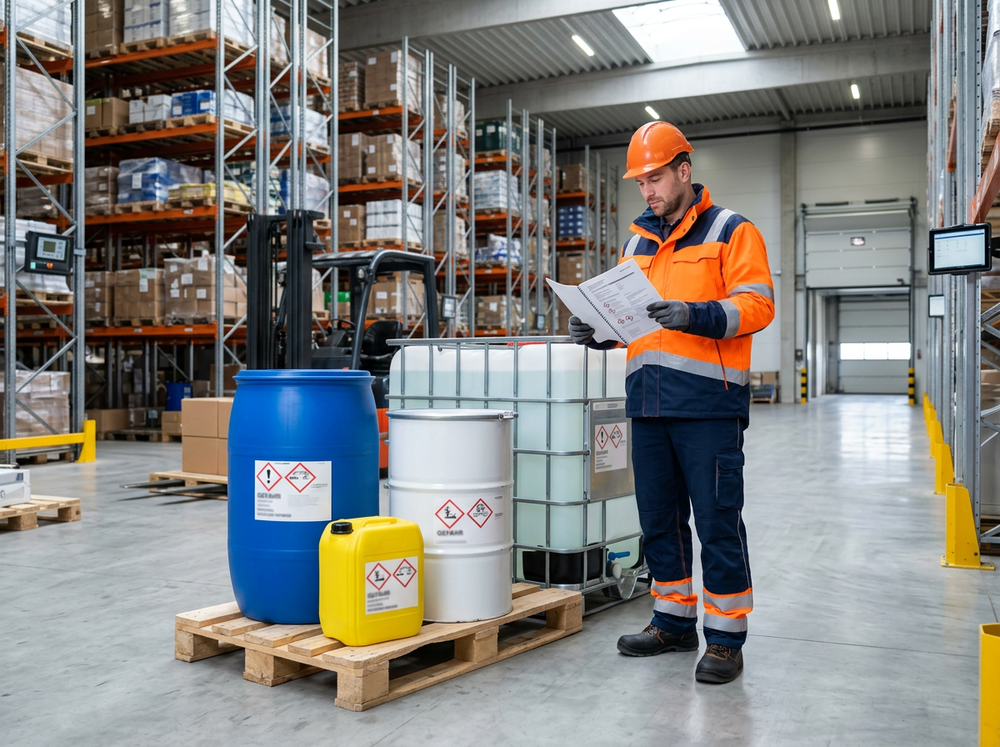
As goods that, due to their physical, chemical, or biological properties, pose a hazard to people, animals, property, or the environment during transport, so-called hazardous materials are subject to special legal requirements—this is the core of the relevant definition of hazardous materials under transportation law. The classification is based on the recommendations of the United Nations, known as the Orange Book, which assigns a four-digit UN number and a dangerous goods class to every hazardous substance or mixture. All national and European regulations are based on this internationally harmonized system.
A common misconception in practice is the conflation of “dangerous goods” and “hazardous substances.” Both terms describe potential risks but address fundamentally different areas of law: While “hazardous substance” is a term used in occupational safety law that regulates hazards in the workplace, “dangerous goods” refers exclusively to requirements under transport law—that is, the hazard that arises when a substance is transported. This distinction is crucial for operational practice because it determines which obligations, responsibilities, and regulatory authorities apply.
Section 14 of the safety data sheet serves as a practical identification tool: It specifies whether a substance is classified as a dangerous good and lists the UN number, class, and packaging group. This information is the starting point for any assessment under transport regulations—and is assumed as a given in the relevant sections of this guide.
Operationally, the following decision-making process is recommended: First, identify the substance; then check the UN number and determine the corresponding class and packaging group. Next, determine whether any exemption rules apply—such as limited or exempted quantities—before deriving the specific transportation requirements. Those who consistently apply this structured process lay the foundation for compliant dangerous goods transport and avoid costly mistakes even before handing the shipment over to the carrier.
Under what circumstances is a shipment considered a hazardous materials shipment?

Not every shipment containing potentially hazardous materials is automatically considered a regulated dangerous goods shipment under the ADR—the decisive factor is the interplay of several factors. As a general rule, as soon as dangerous goods are transported on public roads and no full exemption applies, the shipment is subject to the relevant dangerous goods regulations. Whether and to what extent the ADR actually applies is determined by four key parameters: the type of substance, the quantity being transported, the packaging, and the chosen mode of transport.
Particular attention should be paid to the question of which products are actually classified as dangerous goods. The answer surprises many shippers: Even everyday products such as paints and varnishes, commercially available aerosol cans, lithium batteries, or portable gas cylinders can be classified as dangerous goods—as long as they meet the substance-specific classification criteria and are listed in the ADR’s dangerous goods list. Mere familiarity with a product does not exempt one from complying with the regulations.
A frequently misunderstood distinction in practice concerns the geographical scope of the ADR: The agreement applies exclusively to transport on public roads. Intra-company transport on private property—such as moving dangerous goods containers within a factory premises using a company-owned vehicle—is not subject to the ADR as long as no public road is used. However, as soon as the vehicle travels on a public roadway—even briefly, such as to move from one part of the facility to another—the ADR requirements apply in full. This distinction is particularly relevant for companies with multiple locations or sprawling plant sites and should be carefully assessed on a case-by-case basis.
An Overview of the 9 Classes of Dangerous Goods
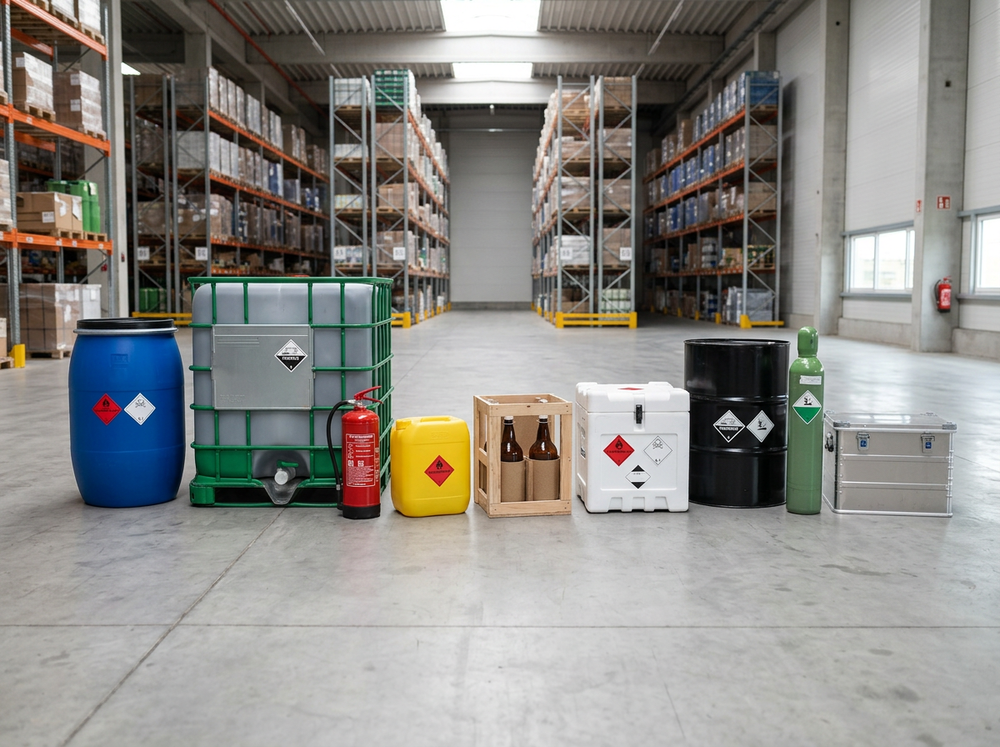
International dangerous goods regulations classify all hazardous substances and articles into a clearly structured classification system: The ADR —the European Agreement concerning the International Carriage of Dangerous Goods by Road—and the underlying UN classification system distinguish a total of nine classes of dangerous goods, each defined according to the primary hazard characteristic of a substance or article. The classification is based on the primary hazard associated with transport—whether the substance is explosive, flammable, toxic, corrosive, or radioactive. A substance with multiple hazard characteristics is assigned a main class and, if applicable, one or more subsidiary hazards, which are also subject to labeling requirements.
The practical significance of this classification system cannot be overstated: A substance’s class directly determines which labeling requirements apply, which packaging requirements must be met, which transport documents must be provided, and which vehicle and equipment requirements are necessary. Anyone who incorrectly determines a substance’s class or overlooks it entirely risks not only fines but also inadequate coverage in the event of a claim. Classification is thus the first and crucial step in the entire process chain of dangerous goods transport—before packaging, labeling, or documentation can even begin.
The nine classes cover a broad spectrum of hazardous properties, ranging from explosive substances and gases to flammable liquids and solids, as well as toxic, infectious, radioactive, and environmentally hazardous substances, and other dangerous substances and articles. The individual classes of dangerous goods, along with their respective definitions, example substances, and specific requirements, are described in the following sections of this guide. A basic understanding of the classification system—nine classes, primary hazard as the classification principle, and immediate legal consequences—is an essential prerequisite for properly classifying and applying the individual regulations.
Grade 7 – Radioactive Materials

Class 7 substances differ from all other classes of dangerous goods in one hazard characteristic that is neither visible nor detectable by smell: the emission of ionizing radiation. Typical substances in this class include medical radioisotopes—such as those used for diagnostic or therapeutic applications in nuclear medicine—as well as uranium-containing materials, which are generated, for example, in the energy sector. Both groups of substances can pose significant health risks to transport personnel and the surrounding environment during the transport of dangerous goods if the prescribed protective measures are not strictly adhered to.
The regulatory framework for Class 7 is particularly strict compared to all other classes: Every shipment of radioactive materials requires specific official permits and transport authorizations, which must be fully in place before transport begins. Depending on the type of material and the mode of transport, different authorities are responsible; the international framework is based on the regulations of the International Atomic Energy Agency (IAEA), which have been incorporated into the ADR.
Quantity-based exemptions, which apply to other classes of dangerous goods under certain conditions, do not apply to radioactive materials—details on this are provided in the section on the 1,000-point rule. Anyone who needs to ship radioactive goods should seek specialized expert advice early on, as virtually every shipment triggers the full ADR requirements.
Class 8 – Corrosive Substances

Class 8 substances are defined in the transport of dangerous goods by a distinct hazard characteristic: They damage living tissue or materials through chemical reactions. If a corrosive substance comes into contact with the skin, mucous membranes, or eyes, even brief contact can lead to irreversible tissue damage—a risk that is of immediate concern to transportation and warehouse personnel. Typical substances in this class include sulfuric acid, caustic soda, and battery acid, which are widely used in industry and commerce but still require strict safety measures.
For shipment preparation, classification into one of the three packaging groups (I through III ) is crucial: Packaging Group I designates particularly hazardous corrosive substances, Packaging Group II those with moderate hazard, and Packaging Group III, finally, weakly corrosive substances. The higher the hazard classification, the stricter the requirements for packaging and labeling. As a general rule, all Class 8 substances must be packed in corrosion-resistant and leak-proof packaging: Containers and enclosures must be resistant to the corrosive effects of the contents and reliably prevent leakage of the substance under normal transport conditions. UN-type-tested packaging approved by the BAM meets these requirements, provided it is designated for the respective substance and packaging group. Anyone who ships corrosive substances without suitable packaging not only endangers people but also risks property damage to the vehicle, cargo area, and other cargo, as well as serious liability consequences.
Class 9 – Miscellaneous Dangerous Substances and Articles

As the so-called “catch-all” class of the ADR, Class 9 covers all dangerous substances and articles that pose a transport hazard but cannot be clearly classified under any of the eight preceding classes of dangerous goods. At first glance, this definition sounds like a legal “catch-all”—but in fact, Class 9 is one of the most practically significant categories in modern dangerous goods transport because it encompasses some of the largest volume flows of goods in commerce and industry. Typical examples include dry ice (UN 1845), which releases carbon dioxide upon sublimation and can pose a suffocation hazard in poorly ventilated areas, as well as environmentally hazardous substances that can occur in liquid or solid form and are listed in the ADR under their own UN numbers. Asbestos in various forms—such as chrysotile asbestos under UN 2590 —also falls under this class and is subject to special handling requirements due to its carcinogenic properties. It is crucial for proper shipment preparation to understand that classification under Class 9 does not mean any relaxation of the requirements: Labeling, packaging, and documentation requirements apply in full. Lithium-ion and lithium-metal batteries, as well as asbestos products, are treated in detail as special cases within this class in separate sections of this guide.
Classes 4.1, 4.2, 4.3 – Flammable solids, self-igniting substances, water-reactive substances
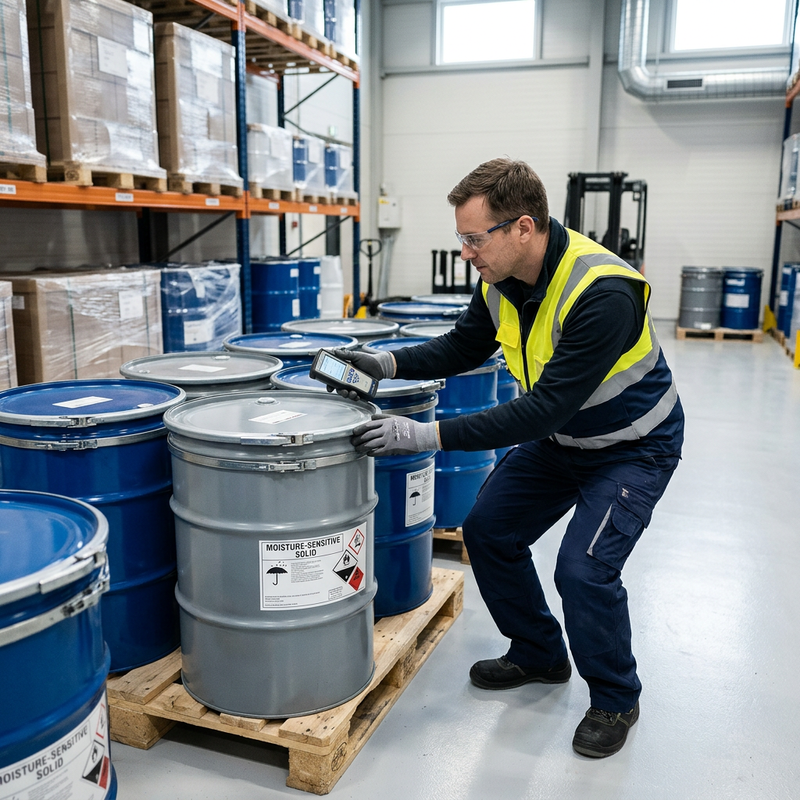
Within the ADR classification system, Classes 4.1, 4.2, and 4.3 hold a special position because, despite sharing the same numbering, they describe fundamentally different hazard profiles—and it is precisely these differences that are often underestimated in the practical handling of dangerous goods transport. What all three classes have in common is that they belong to the flammable hazardous materials classes; however, the nature of the hazard differs significantly.
Class 4.1 covers flammable solids, i.e., substances that are easily ignited under transport conditions or can cause a fire through friction. Typical examples include sulfur and matches. They react to an external energy source—sparks, heat, friction—and can then burn uncontrollably. Class 4.2 covers self-igniting substances: they ignite without an external ignition source, simply through contact with air or moisture. White phosphorus is considered a particularly striking example of this class and illustrates how closely storage and transport must be monitored.
Substances in Class 4.3 are subject to the strictest safety requirements: water-reactive substances such as sodium or calcium carbide form flammable or even explosive gases upon contact with water or atmospheric moisture. Even small amounts of moisture can trigger a chain reaction here. For this class, strict moisture protection is a mandatory requirement—from packaging through storage to the transport itself. Containers must be completely airtight and moisture-resistant; any damage to the container must be treated immediately as a safety-critical issue.
Classes 5.1 and 5.2 – Oxidizing Substances and Organic Peroxides

Among the most challenging classes of dangerous goods under the ADR are Classes 5.1 and 5.2, which—despite their numerical proximity—have fundamentally different hazard profiles—and are often confused with one another in the practical context of dangerous goods transport. Class 5.1 covers oxidizing substances: They do not burn on their own but significantly promote the combustion of other materials by releasing oxygen. Typical examples include hydrogen peroxide in higher concentrations or ammonium nitrate fertilizer—substances that can intensify fires due to their oxidizing properties and cause them to become uncontrollable. The key transport requirement for Class 5.1 is therefore the obligation to separate these substances from flammable materials: Oxidizing goods must not be packed together or loaded together if this could result in a hazardous reaction.
Class 5.2 covers organic peroxides such as benzoyl peroxide—substances that are both oxidizing and self-reactive and are also highly heat-sensitive. In addition to the requirement to separate these substances from flammable materials, this class is subject to specific temperature monitoring requirements: Many organic peroxides must be transported under refrigerated conditions throughout the entire journey, as an uncontrolled rise in temperature can trigger self-accelerating decomposition. The ADR specifies concrete control and emergency temperatures for Class 5.2 substances subject to temperature control, which must be strictly adhered to and documented at all times. Anyone who ships organic peroxides without a secure cold chain risks not only regulatory penalties but, in the worst case, an uncontrollable exothermic reaction during transport.
Classes 6.1 and 6.2 – Toxic Substances and Infectious Substances

Substances and preparations in Class 6.1 are defined as those that can harm or kill humans if inhaled, swallowed, or if they come into contact with the skin. Typical examples of this class of hazardous materials include pesticides, certain solvents, and industrial chemicals with acute toxicity. Classification is based on Packaging Groups I through III, with Packaging Group I indicating the highest level of hazard. Unlike many other classes, physical routes of exposure—such as vapor or dust formation—play a decisive role in classification alongside chemical exposure.
Class 6.2 covers biological substances known or reasonably believed to cause disease in humans or animals—including patient samples, viruses, and cell cultures. The P650 packing instruction is central to the practical preparation of shipments: It governs the packaging requirements for Category B infectious substances (UN 3373) and, among other things, mandates a three-layer packaging system consisting of a primary receptacle, an absorbent layer, and outer packaging. These requirements must be strictly adhered to and allow no room for simplifications.
Special attention should also be paid to the fact that Class 6.2 substances cannot be exempted under the quantity-based exemption in Subsection 1.1.3.6 of the ADR—regardless of the quantity being transported, the full transportation requirements always apply (see Section 1000-Point Rule).
Class 1 – Explosive Substances and Articles Containing Explosives

Substances and articles in Class 1 are among the most challenging goods in the entire field of dangerous goods transportation: Their defining hazard characteristic is the ability to cause a sudden release of gas as a result of deflagration, explosion, or detonation—reactions that occur in fractions of a second and are virtually uncontrollable. The ADR divides this class of dangerous goods into six subclasses: 1.1 covers substances and articles with a mass explosion hazard; 1.2 covers those with a fragmentation, projectile, or pressure effect but without a mass explosion hazard; 1.3 covers those with a fire hazard or a minor explosion effect; 1.4 covers articles posing only a minor hazard; 1.5 covers very insensitive substances with a mass explosion hazard; and 1.6 covers extremely insensitive articles. Typical examples include fireworks, ammunition, and commercial explosives. What these goods have in common is that, in the practical context of dangerous goods transport, they are subject to a particularly strict approval regime: Every substance and every article must be classified and approved by the authorities prior to transport. In addition, there are extensive accompanying requirements, such as those regarding documentation, vehicle equipment, and route planning. Quantity-based exemptions under Subsection 1.1.3.6 of the ADR are not applicable to Class 1 goods—with the exception of Subclass 1.4S. Anyone who needs to ship explosive substances should seek expert advice well in advance, as virtually every shipment triggers the full ADR requirements.
Class 2 – Gases
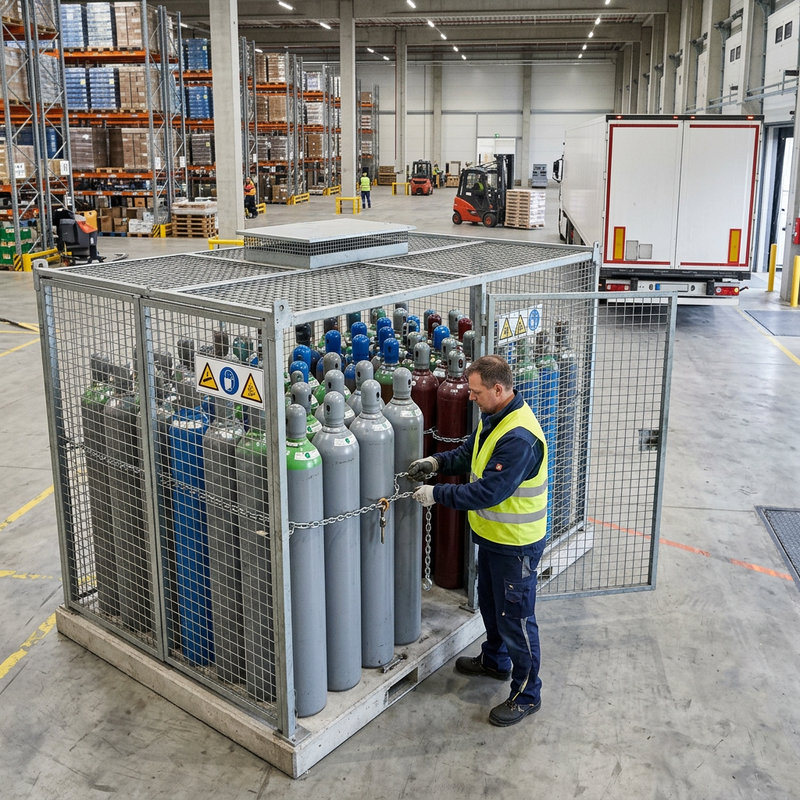
Compressed, liquefied, deep-frozen liquefied, and dissolved gases, as well as gas mixtures, make up Class 2 within the nine classes of dangerous goods—a group that is commonly encountered in the daily transport of dangerous goods by road and at distribution centers. The ADR divides this class into three subclasses: Subclass 2.1 covers flammable gases such as propane or acetylene; Subclass 2.2 covers non-flammable and non-toxic gases such as compressed oxygen; while Subclass 2.3 covers toxic gases that pose an acute health hazard. Classification into the correct subclass is mandatory because it directly determines labeling and transport requirements.
In operational practice, two particularly relevant requirements arise with regard to gases. First, valve protection for pressurized gas cylinders: Valves must be secured with protective caps or equivalent devices to prevent mechanical damage and uncontrolled gas leakage during transport. Second, ventilation in gas-tight vehicle bodies: When Class 2 gases are transported in enclosed vehicles, sufficient ventilation openings or active ventilation systems are required to prevent dangerous gas buildup. Both requirements apply regardless of the quantity exemption rules and must be verified before loading begins. Consistently integrating these practical considerations into shipment preparation significantly reduces both the safety risk and the risk of regulatory violations during the transport of hazardous materials.
Class 3 – Flammable Liquids

Among the nine classes of dangerous goods, Class 3 is particularly relevant in practice for commercial shippers: It covers flammable liquids with a flash point of 60 °C or less, according to ADR. Anyone who ships gasoline, ethanol, paints, or solvents are operating within one of the most common dangerous goods segments in road transport—and one of the most error-prone, because these products are often taken for granted in day-to-day operations, and their classification under transport regulations is therefore easily overlooked.
For Class 3, assignment to one of the three packaging groups is based on the flash point and boiling point of the respective substance: Packaging Group I applies to particularly hazardous liquids with a flash point below 23 °C and a boiling point up to 35 °C. Packing Group II covers substances with a flash point below 23 °C and a boiling point above 35 °C. Finally, Packaging Group III includes liquids with a flash point between 23 °C and 60 °C. This classification is of immediate importance: The higher the hazard classification, the stricter the requirements for packaging, labeling, and permissible quantities.
In practical terms, this means that when preparing a shipment, shippers must first determine the exact flash point and boiling point of the substance in question using the safety data sheet before the packaging group and other transportation requirements can be determined. Anyone who skips this step or assumes a lower hazard level across the board risks an incorrect classification, with all the associated liability consequences.
Legal Framework: ADR, GGBefG, and GGVSEB—What Applies in Germany?

Road freight transport in Germany is governed by a multi-tiered legal framework consisting of international, national, and subordinate regulations. At the top of this hierarchy of standards is the ADR —the European Agreement concerning the International Carriage of Dangerous Goods by Road—to which Germany is a signatory. The ADR is updated every two years; the currently valid version is ADR 2025, which entered into force on January 1, 2025. As an international agreement, the ADR is directly applicable in Germany and forms the substantive basis for nearly all transportation requirements related to the transport of dangerous goods by road.
At the national level, the Dangerous Goods Transport Act (GGBefG) provides the legal framework for this matter as a federal law: It defines the scope of application, identifies the parties subject to the regulations, and establishes the legal basis for subordinate regulations. This authorization is implemented by the Ordinance on the Transport of Dangerous Goods by Road, Rail, and Inland Waterways (GGVSEB), which transposes the ADR into German law, regulates national exceptions, and establishes additional domestic requirements. In addition, the Directive on the Implementation of the GGVSEB (RSEB) provides official guidance on interpretation to assist with resolving contentious issues; however, it does not itself create any legally binding obligations for companies. A detailed description of the three-tiered national regulatory framework can be found in the following section.
Separate sets of regulations apply to other modes of transport: RID for rail, ADN for inland waterways, the IMDG Code for maritime transport, and the IATA DGR for air transport. Which regulation applies in a specific case always depends on the chosen mode of transport. This guide provides general guidance and is not a substitute for legal or expert advice in specific cases.
ADR 2025 – Structure, Scope, and Update Cycle

The ADR —Accord relatif au transport international des marchandises dangereuses par route—is the central international regulatory framework for the transport of dangerous goods by road and forms the basis for virtually all transport requirements related to the transport of dangerous goods on European roads. It is an agreement negotiated under the auspices of the United Nations Economic Commission for Europe (UNECE), to which well over 50 contracting parties now belong. The regulations are revised on a two-year update cycle; the currently valid version, ADR 2025, entered into force on January 1, 2025. When a new version takes effect, a six-month transition period applies during which transport may still be carried out in accordance with the previous version—for ADR 2025, this period ended on June 30, 2025; since then, only the new version has been applicable. Structurally, the ADR is divided into nine parts (Parts 1 through 9), which build upon one another to cover all relevant regulatory areas: general provisions and exemptions (Part 1), classification (Part 2), special provisions and exemptions for limited and exempted quantities (Part 3), packaging instructions (Part 4), consignor’s obligations including marking and transport documents (Part 5), construction and testing of packaging (Part 6), conditions of carriage (Part 7), vehicle equipment (Part 8), and vehicle construction regulations (Part 9). The national implementation of the ADR into German law is explained in the following section.
GGBefG, GGVSEB, and RSEB—the three-tiered national implementation

The national implementation of dangerous goods regulations in Germany follows a three-tier regulatory framework that clearly distinguishes between the statutory framework, binding detailed regulations, and official guidance on interpretation. The first tier is the Dangerous Goods Transportation Act (GGBefG): As a federal framework law, it defines the scope of application of German dangerous goods regulations, specifies the basic obligations of all parties involved, and—in its central Section 3—establishes the legal basis for subordinate regulations. Without this parliamentary authorization, the entire regulatory framework would lack legal basis. The second tier is the GGVSEB —the Ordinance on the Transport of Dangerous Goods by Road, Rail, and Inland Waterways—which is enacted on the basis of the GGBefG and transposes the ADR into German law for road transport. It makes the ADR requirements for the transport of dangerous goods within Germany legally binding and incorporates national specificities, exceptions, and additional domestic obligations. Companies and those responsible for transport must always read the GGVSEB and the ADR together, as the two sets of regulations complement one another. The third level consists of the RSEB —the Guidelines for the Implementation of the GGVSEB—which is designed to assist authorities in interpreting the regulations. It is primarily intended for enforcement authorities and companies that require guidance on contentious issues of interpretation. The RSEB does not impose any independent legal obligations on private parties but serves to ensure the uniform application of the law in administrative practice.
Transportation of Dangerous Goods by Other Modes of Transport: RID, ADN, IMDG, IATA-DGR
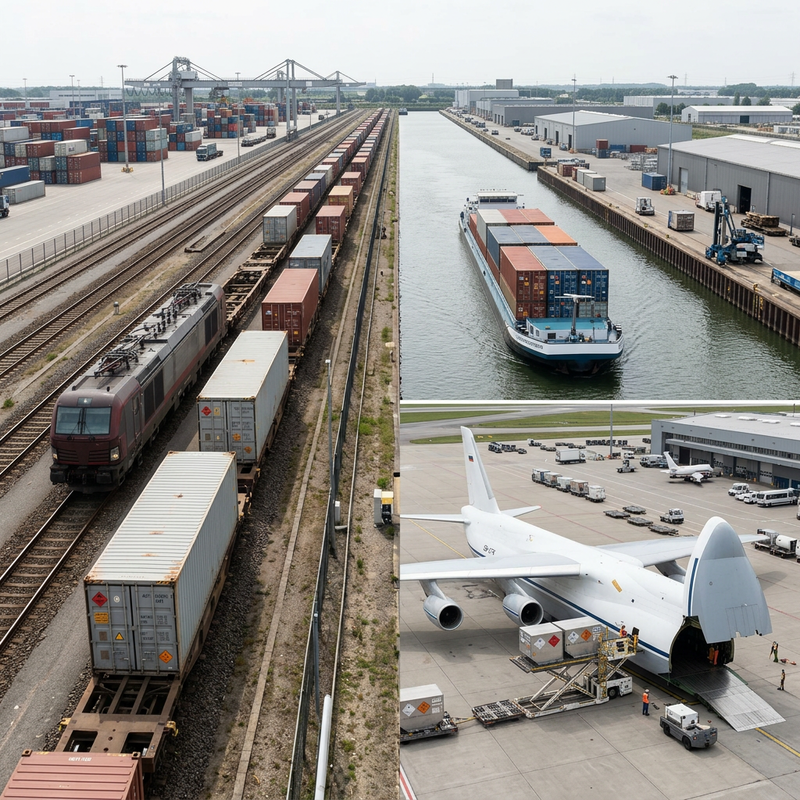
In addition to road transport, the transport of dangerous goods by other modes of transport is subject to separate sets of regulations, which are based on the same UN classification standards but differ significantly from one another in their operational requirements. For rail transport, the RID —the regulations for the international transport of dangerous goods by rail—applies; for inland waterway transport, the ADN (European Agreement concerning the International Carriage of Dangerous Goods by Inland Waterways) applies; for maritime transport, the IMDG Code; and for air transport, the IATA DGR. Current transportation data shows that these areas are by no means niche topics: In rail freight transport, industry revenue rose by approximately 2.7% in 2024, reaching its highest level in years; transport volume increased in domestic traffic and cross-border shipments, while declines were recorded on other major transport routes. Combined transport in rail freight saw particularly dynamic growth, with both volume (up by about 2.9%) and transport performance (up by about 5.4%) increasing in 2024 compared to the previous year. In inland waterway transport, the volumes transported rose by about 1.2% and transport performance by about 4.7%, although cross-border receipts declined by about 0.9%. Each of these sets of regulations for the transport of dangerous goods imposes its own mode-specific requirements for labeling, packaging, and documentation. While the overarching UN classification framework—with UN numbers and dangerous goods classes—applies equally to all modes of transport, the specific obligations derived from it sometimes differ significantly. For multimodal shipments in which the same consignment passes through multiple modes of transport, it is therefore advisable to coordinate with the dangerous goods safety advisor at an early stage to identify conflicts between regulations and fully comply with all mode-specific requirements.
Hazardous Materials Labeling: Properly Affix Hazard Labels, Warning Signs, and UN Numbers

Correct and complete labeling of hazardous materials is required by law—and it protects everyone involved in the transportation chain: packers, drivers, warehouse staff, and emergency responders alike. Anyone shipping dangerous goods must ensure that each shipment clearly displays the necessary information regarding the type of hazard and the contents at a glance—both on the individual package and on the vehicle or container. If even a single element is missing, authorities may object to or reject the shipment; in the event of an emergency, emergency responders will lack crucial information needed to respond safely. Labeling is therefore not merely a formal addition to the packaging, but an independent, equally important mandatory component of dangerous goods transport.
In practice, four main elements can be distinguished, each of which is discussed in detail in the following sections of this guide: first, the hazard label on the individual package, which indicates the hazard class using a standardized diamond symbol; second, the large placard —also known as a “placard”—which is affixed to vehicles and containers and bears the same symbols in an enlarged form; third, the orange warning sign, which identifies vehicles carrying dangerous goods as such and, in the case of tank transport, additionally bears the so-called Kemler number; fourth, the UN number, which uniquely identifies the substance being transported and enables emergency responders to quickly access substance-specific hazard information. Together, these four elements form the ADR labeling system—they complement one another and must be affixed in their entirety, provided that the applicable regulations so require.
For carrier-specific requirements—such as when shipping via parcel service providers—the respective carrier guidelines also apply. Further information on DHL’s labeling requirements can be found under DHL Labeling Requirements.
UN-approved packaging and the role of the BAM

For many dangerous goods, only packaging bearing the UN mark may be used in the transport of dangerous goods —an internationally binding certification symbol that verifies that the dangerous goods packaging meets the standardized design and testing requirements of the ADR. The so-called UN code is not just any abbreviation, but a structured system of symbols: A sample code such as UN 4G/X4/S/22/D/BAM-… contains, in condensed form, all information relevant to approval—packaging type and material (here: 4G for cardboard box with inner packaging), the approved packaging group, the physical state of the contents, the year of testing, the country code of the approving state, and the identifier of the responsible testing authority. Each of these codes has a specific legal meaning and determines for which substances, packaging groups, and quantities the packaging may be used.
In Germany, the Federal Institute for Materials Research and Testing (BAM) is the competent authority for the approval of UN packaging. The BAM grants type approval after the packaging has passed testing and assigns the BAM number, which appears in the UN code. A practical principle applies to shipment preparation with no exceptions: Only packaging bearing a valid BAM approval and designated for the specific packaging group of the substance to be transported may be used. Self-inspection by the shipper is not permitted—the standardized type approval test conducted by an authorized body is a mandatory requirement. Anyone who uses packaging without a valid UN approval mark violates the requirements of ADR 2025 and risks official objections as well as liability consequences.
Required Information on the Package: UN Number, Name, and Other Details

Every single shipment—whether a cardboard box, canister, or IBC —must bear certain required information for the transport of dangerous goods before it can be handed over. First and foremost is the four-digit UN number with the prefix “UN”—for example, “UN 1203” for carburetor fuel. Directly associated with this is the official name of the substance, which must be taken from the ADR 2025 list of dangerous goods and may not be replaced by a trade name. In addition, the hazard label for the applicable dangerous goods class must be affixed—for substances with secondary hazards, multiple hazard labels must be affixed simultaneously. Where required by ADR 2025, the packaging group code must also be indicated, reflecting the degree of hazard posed by the contents. This information is supplemented by the net quantity or net content of the package, as well as the name and address of the consignor. All information must be permanently affixed, clearly legible, and—unless the ADR provides for an exception—written in a language understood in the transit countries; for intra-European shipments, it is also recommended to include English text. Carrier-specific additional requirements, such as those of parcel service providers, must be checked separately.
Hazard Labels and Large Labels (Placards): Differences, Dimensions, and Affixing
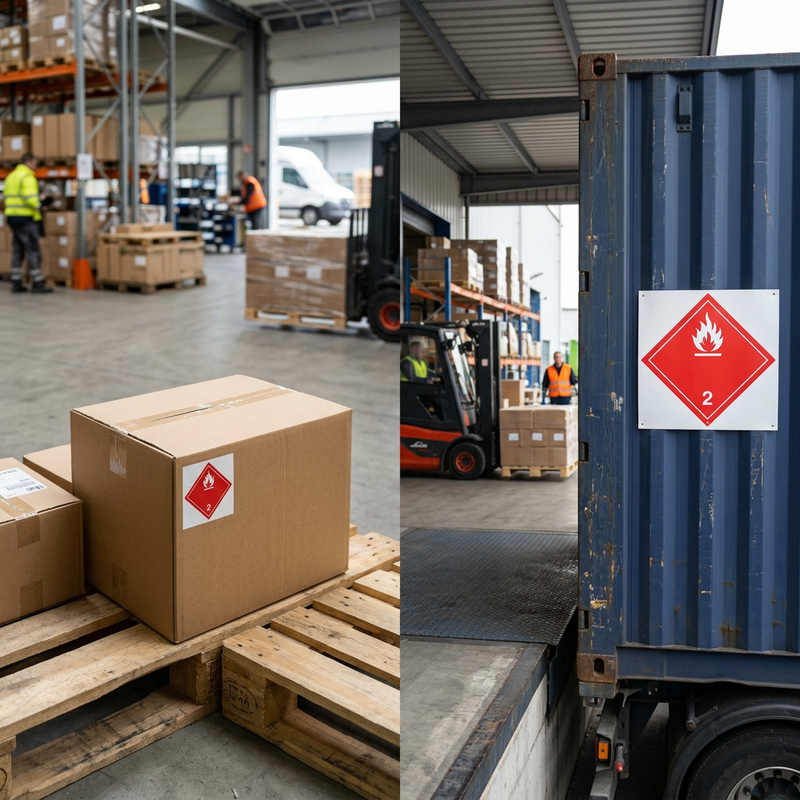
Visual identification elements for the transport of dangerous goods begin with the individual package: The hazard label affixed to the package is diamond-shaped and, according to ADR 2025, must measure at least 100 × 100 mm. It indicates the respective dangerous goods class through color and symbol—for example, a flame for flammable substances in Class 3, a skull and crossbones for toxic substances in Class 6.1, or a corrosive effect graphic for Class 8. By affixing a correct hazard label in accordance with standards, you ensure that everyone involved in the supply chain immediately recognizes the primary hazard. This is to be distinguished from the large placard —also known as a “placard”—which must be affixed to vehicles and containers: It bears the same color and symbol markings as the hazard label but is significantly larger at 250 × 250 mm and is mandatory for certain quantities. The following applies equally to both labeling elements: They must be permanently affixed, clearly legible, and must not be obscured by other stickers, labels, or packaging materials. Damaged or detached labels must be replaced immediately before the shipment is transported further.
Orange Warning Sign: Kemler Number and UN Number for Road Transport
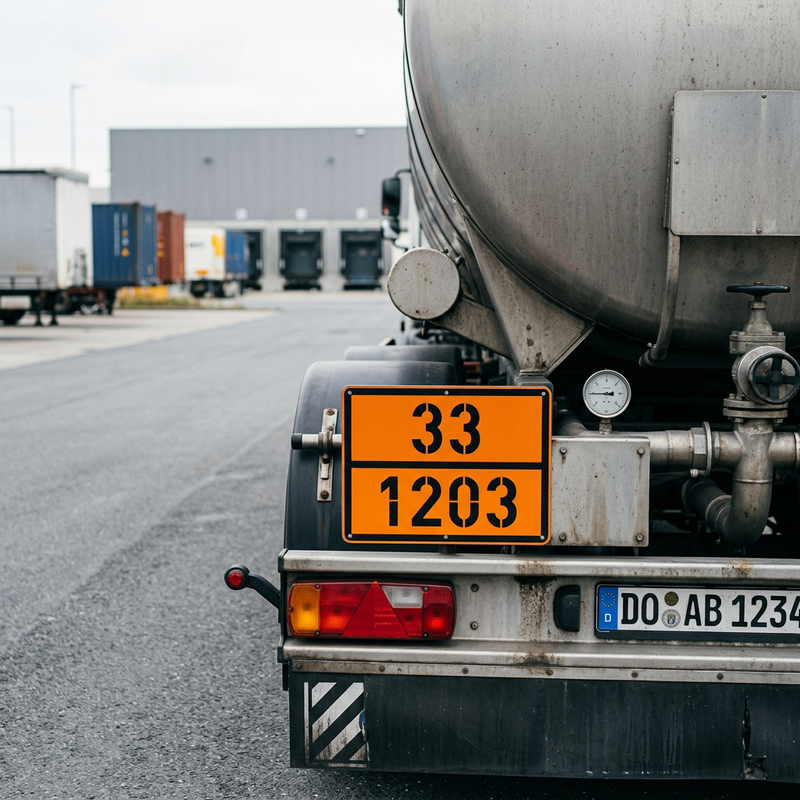
In ADR road transport, the orange warning sign is used exclusively to identify vehicles and tank containers—it is therefore a separate element of the labeling system for the transport of dangerous goods and must not be confused with the hazard label on an individual package or the large label on the vehicle. The placard consists of two halves: At the top is the Kemler number, a two- to three-digit hazard code that identifies the type of hazard posed by the substance being transported. A leading “X” indicates that the substance reacts dangerously with water—as is the case with certain substances in Class 4.3. Below is the four-digit UN number, which uniquely identifies the substance and allows emergency responders to access substance-specific hazard information directly in the event of an incident. If a vehicle is loaded with several different dangerous goods in packages—that is, a mixed load—the orange warning sign bears no numbers: It simply indicates that the vehicle is transporting dangerous goods without specifying a single substance. The warning panel does not replace either the hazard label on the package or the large label on the vehicle—all three labeling elements fulfill different, equally important mandatory functions and must be affixed side by side, provided that the ADR regulations require this in the respective case.
Packaging Groups I, II, and III – The Level of Hazard Determines the Packaging Requirements
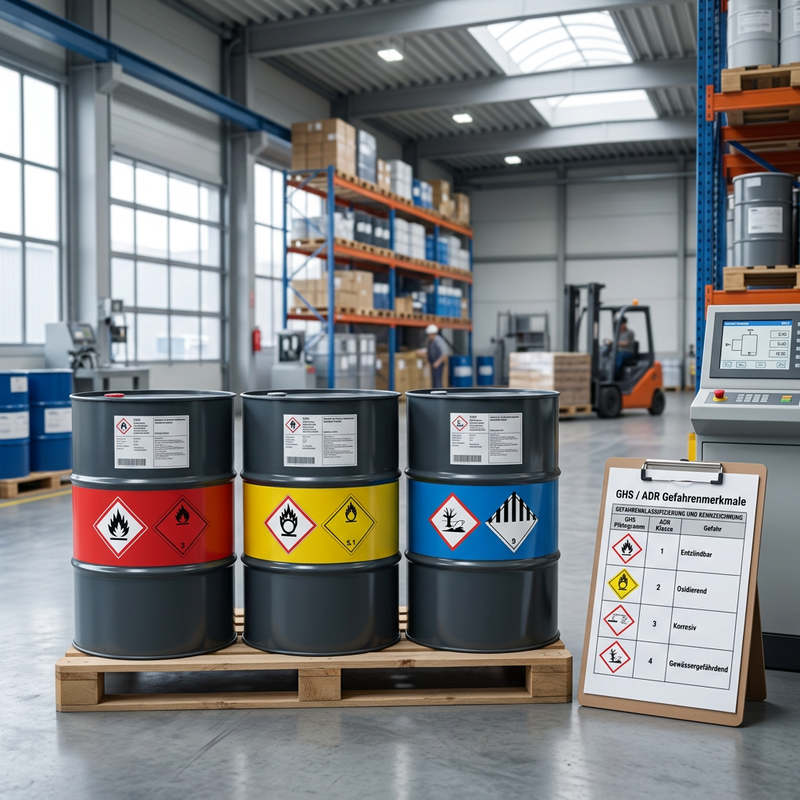
The ADR packaging group system is a three-tier classification system that translates the level of hazard of a dangerous good into specific requirements: Packaging Group I (PG I) indicates a high level of hazard and is subject to the most stringent packaging, labeling, and documentation requirements. Packing Group II indicates medium hazard with correspondingly moderate requirements, while Packing Group III denotes low hazard and entails the least stringent requirements. Assignment to a packaging group is directly determined by the ADR classification of the respective substance—it is not a matter of the shipper’s discretion, but rather follows the criteria of ADR 2025.
Anyone who wants to correctly prepare the labeling of a shipment must know the assigned packaging group, because it not only governs the packaging requirements but also determines which hazard labels and accompanying documents are required. A practical note that is often overlooked: The packaging group directly influences the point calculation for the quantity-based exemption under Subsection 1.1.3.6 of the ADR. In this context, substances in Packaging Group I are multiplied by a factor of 50, substances in Packaging Group II by a factor of 3, and substances in Packaging Group III by a factor of 1. An incorrectly determined packaging group can therefore result in a shipment that appears to be exempt actually being subject to the full ADR requirements. Substances without an assigned packaging group—such as certain Class 2 goods—are treated in accordance with the separate provisions of Subsection 1.1.3.6.
Exemptions and Exceptions for the Transport of Dangerous Goods

ADR 2025 does not provide for a rigid “all-or-nothing” principle when it comes to the applicability of dangerous goods regulations: Instead, there is a tiered system of exemptions that grants companies relief under clearly defined conditions—ranging from complete exemption from ADR requirements to simplified labeling and documentation requirements. Those who systematically understand and correctly apply the exemption options can significantly reduce transportation and administrative costs without compromising safety requirements.
Essentially, there are four main categories, each of which is discussed in detail in the following sections of this guide: First, the quantity-based exemption under Subsection 1.1.3.6 of the ADR, known as the “1,000-point rule,” in which the quantities of dangerous goods transported are added together on a weighted basis by transport category, and special exemptions apply if the total falls below a defined point threshold. Second, the regulation for limited quantities (LQ), which allows for simplified labeling requirements for packaged goods in commercially available small quantities. Third, the regulation for excepted quantities (EQ), which allows for extensive exemptions for very small quantities of substances under strictly defined packaging conditions. Fourth, the so-called “craftsman’s exemption,” which, under certain conditions, exempts commercial enterprises from some ADR obligations when goods are transported for their own business operations.
Crucial for operational practice is a fundamental principle that applies equally to all exemption scenarios: Exemptions are always tied to specific conditions that must be fully met —if even one requirement is not met, the entire exemption is void. Furthermore, certain basic obligations remain in effect regardless of any exemption: proper packaging, effective load securing, and meticulous record-keeping that, in the event of an inspection, provides reliable documentation proving that the respective exemption requirements were in fact met.

Limited Quantities (LQ) and Exempt Quantities (EQ) – Simplifications for Small Quantities

For shippers of standard consumer goods, ADR 2025 offers two independent, non-combineable exemption systems for small quantities of dangerous goods: limited quantities (LQ) and exempted quantities (EQ) —and thus tools that can significantly simplify operations in shipping practice. Both systems are based on the same fundamental principle: When the quantities per packaging unit are very small, the potential for damage is so limited that simplified or largely waived requirements are justifiable. Those shipping limited quantities (LQ) of dangerous goods use the system that accommodates larger quantities of the two: LQ permits commercially available small packages below substance-specific quantity thresholds per inner packaging and per shipping unit. The distinctive feature is the LQ diamond marked with a “Y,” which replaces the standard hazard label. UN-type-tested outer packaging is not required for LQ; furthermore, the transport document is not required for purely domestic transport within Germany. The exact quantity thresholds for each substance can be found in ADR 2025, as they vary by substance. The second system, the exempted quantities (EQ), applies to even smaller quantities of substances: The so-called E-codes E1 through E5 specify, depending on the class, the maximum amount of substance permitted per inner packaging and per package. EQ grants extensive exemption from ADR requirements; however, basic labeling and packaging obligations—including the indication of the E-code on the package—remain mandatory.
An Overview of the Craftsmen's Exemption and Other ADR Exemptions

In addition to the 1,000-point rule, limited quantities, and exempted quantities, ADR 2025 provides for other exemptions that are highly relevant in business practice—and particularly in the skilled trades. The most common of these provisions in practice is the so-called tradespeople’s exemption under ADR 1.1.3.1(c) and (d): According to this provision, tradespeople and similar businesses may transport dangerous goods—such as gas cylinders, paints, or solvents—to their own construction sites or business premises without having to comply with all regular ADR requirements, provided that the transport constitutes a secondary activity to their main business and certain quantity thresholds are not exceeded. Crucial: The requirements of the craftsman’s exemption must be carefully examined on a case-by-case basis—a blanket reliance on the exemption is not permitted. An overview of other exemptions for dangerous goods: ADR 1.1.3.1(a) covers private transport of goods intended for personal or household use; Section 1.1.3.3 provides exemptions for motor vehicles carrying dangerous goods as operational supplies; Finally, Subsection 1.1.3.5 exempts empty, uncleaned packaging from ADR requirements under certain conditions. An overarching principle applies to all of the aforementioned cases, one that is often underestimated in practice: An exemption from dangerous goods regulations does not mean complete freedom from regulatory requirements—basic obligations such as proper packaging, securing the load, and preventing the release of hazardous substances remain in effect in all cases.
The Dangerous Goods Safety Advisor: Responsibilities, Duties, and Qualifications

Within the framework of dangerous goods transportation, the dangerous goods safety advisor holds a legally well-defined special position: As a specialist appointed by the company, he serves as the legally mandated link between a company’s actual transport practices and the applicable dangerous goods regulations—primarily the ADR 2025, the GGVSEB, and the GGBefG. Companies involved in the transport of dangerous goods by road—as shippers, carriers, consignees, or in other capacities—may be required by the relevant regulations to appoint such a safety advisor. Whether and for whom this appointment requirement specifically applies is not a one-size-fits-all question, but depends on the respective operational circumstances and the goods in question. Those who underestimate or disregard this obligation risk not only regulatory sanctions but also structural gaps in operational compliance. The following sections therefore examine three key aspects of this topic in sufficient detail: first, under what conditions the obligation to appoint an officer arises and which companies are subject to it; second, what specific duties the dangerous goods safety advisor is responsible for during day-to-day operations; and third, what qualification requirements apply to this role and how proof of the necessary expertise must be provided. A detailed discussion of the specifics is reserved for the respective sections—this overview first provides a basic understanding of the significance and structure of this legally mandated role.
When is a dangerous goods safety advisor required?

In general, all companies that ship, transport, load, or package dangerous goods are required under the GGBefG in conjunction with the GGVSEB to appoint a dangerous goods safety advisor—unless their activities are fully exempt. The requirement to appoint a dangerous goods safety advisor applies regardless of whether the company carries out the transport itself or has it carried out by a third party—such as a freight forwarder or parcel service provider. The sole determining factor is participation in the transport chain, not the question of who is actually driving the vehicle. An exception applies if all activities carried out relate exclusively to fully exempted shipments—for example, because only quantities exempted under the EQ regulations are transported without exception and no other dangerous goods-related activities occur. This exception must be interpreted narrowly: as soon as even a single activity is not fully exempt, the registration requirement applies. Since determining the scope of the exemption can be complex in individual cases, it is always advisable, in case of doubt, to consult the competent authority before a company assumes it is exempt from the registration requirement. Misjudgments in this area can result in regulatory consequences. This section provides general guidance and is not a substitute for legal advice in specific cases.
Duties and Responsibilities of the Dangerous Goods Safety Advisor
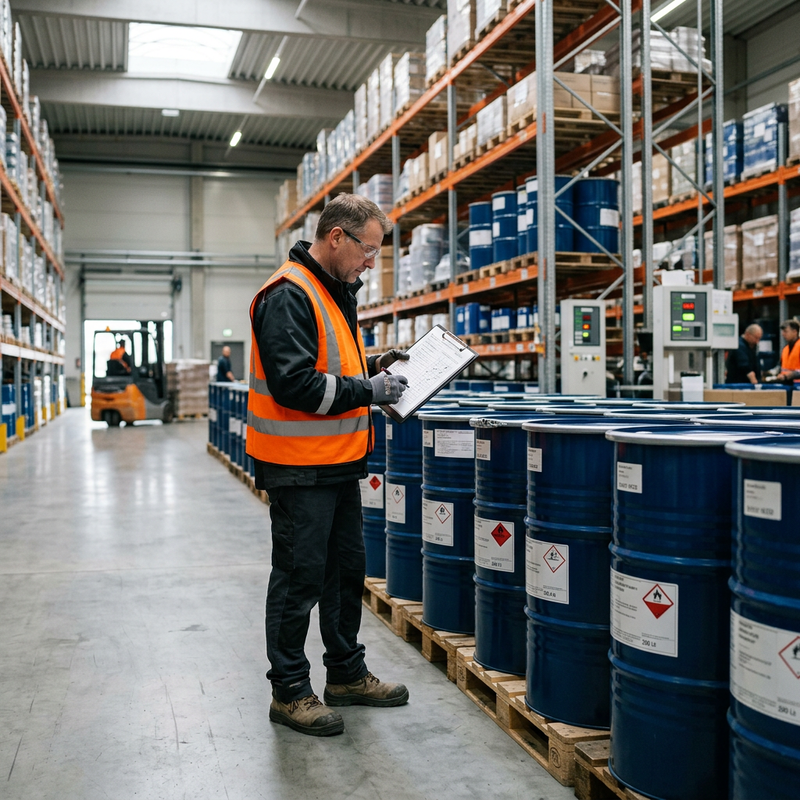
Within the company’s dangerous goods management system, the duties of the dangerous goods safety advisor, as defined by the GGVSEB, comprise a clearly defined scope of operational responsibilities—with a focus on the continuous monitoring of regulatory compliance within the company. Specifically, this means that the dangerous goods safety advisor regularly checks whether packaging, labeling, and transport documents comply with applicable requirements—in particular those of ADR 2025 and the GGVSEB. Errors or deviations are documented and reported to company management. Another key responsibility is advising company management: The dangerous goods safety advisor works to ensure that the company is familiar with and complies with the relevant dangerous goods regulations. In addition, the safety advisor is required to prepare an annual report documenting the activities carried out, any deficiencies identified, and recommended measures. If irregularities or accidents occur during the transport of dangerous goods, the dangerous goods safety advisor is responsible for investigating them and—where necessary—initiating appropriate corrective measures. With regard to criminal liability, a key principle applies: The dangerous goods safety advisor bears no personal criminal liability for violations for which he or she is not responsible. Primary responsibility for compliance with the regulations remains with the company and its management. Nevertheless, the safety advisor’s oversight function is indispensable—it establishes the structural foundation for robust operational compliance in the transport of dangerous goods.
GGB Certification and ADR 1.3 Training for All Participants

Under hazardous materials law, there are two clearly distinct qualification requirements that companies often confuse—sometimes with significant consequences for operational compliance. The first applies exclusively to the designated individual: The dangerous goods safety advisor must successfully pass a recognized proficiency examination administered by a competent authority—in Germany, this is typically a Chamber of Industry and Commerce. This qualification is time-limited and must be renewed every five years through a renewal examination; the role may not be performed without a valid qualification. The second requirement, by contrast, is much broader in scope and applies to the entire company: According to ADR 1.3, all persons involved in the transport of dangerous goods—that is, drivers, warehouse staff, and dispatchers alike—must receive task-specific training appropriate to their respective duties. This requirement applies regardless of whether the person in question holds a Dangerous Goods Safety Advisor certificate or not. Both qualification requirements are subject to documentation and refresher training obligations, which must be fully verified in the event of an audit. Identifying suitable training formats for dangerous goods safety advisor training and ADR 1.3 instruction can be complex—PackageHERO® helps companies find the right framework for their specific requirements.
Obligations of the Parties Involved: Shipper, Carrier, Loader, and Driver

Under the ADR 2025 system, responsibility for the compliant transport of dangerous goods is not assigned to a single person but is distributed among four clearly defined parties—and each of these parties bears its own, non-transferable set of obligations. This principle of shared responsibility is systematically addressed in Chapter 1.4 of the ADR as well as in the corresponding provisions of the GGVSEB. Those who understand their role and consistently fulfill their associated obligations lay the foundation for safe shipment preparation with minimal liability—even when integrated with the TUL processes of day-to-day operational logistics.
The shipper bears the most extensive preliminary responsibility: They must correctly classify the substance, select suitable and type-tested packaging, properly label the package, and issue a complete transport document containing all mandatory information required by ADR 2025. Errors at this stage ripple through the entire transport chain.
The carrier —usually the transportation company or freight forwarder—is required to verify that the shipment appears to comply with regulations before accepting it for transport. In addition, the carrier must provide the driver with written instructions in accordance with ADR and ensure that the vehicle is equipped with the necessary equipment.
The shipper assumes an independent inspection obligation at the interface between the warehouse and the vehicle: Before loading, the packaging and labeling must be checked for obvious defects. Furthermore, the shipper must comply with the ADR’s prohibitions on mixed loading —certain dangerous goods may not be transported together in a single vehicle if this could result in a hazardous reaction.
Finally, the driver is responsible for ensuring the safe completion of the transport chain: He must—to the extent required by the ADR—carry a valid ADR certificate, keep all transport documents and written instructions available in the vehicle, ensure the load is properly secured, and comply with the prescribed rules of conduct while driving. The driver’s obligations apply regardless of whether an exemption under Section 1.1.3.6 is invoked or the full ADR requirements apply.
What to Do in the Event of an Accident: Reporting Requirements and Immediate Actions
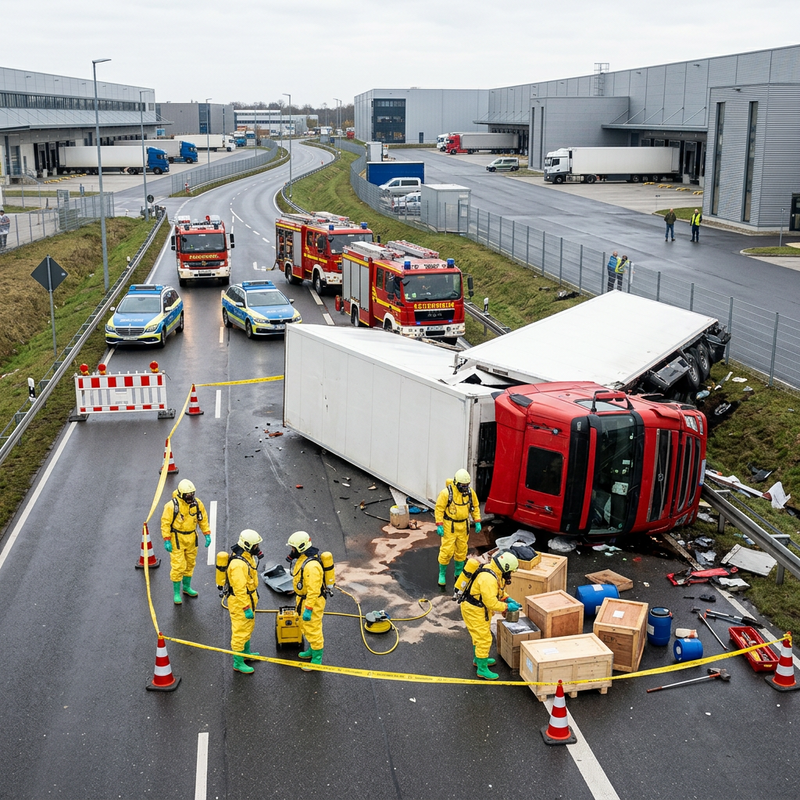
In the event of an accident involving hazardous materials, every minute counts: If there is a potential risk to people, the environment, or property, the driver must immediately alert the police and fire department. At the same time, immediate measures must be taken—the vehicle must be secured, the hazard area must be cordoned off over a wide area, personal protective equipment (PPE) must be worn, and the written instructions carried in accordance with ADR must be consulted. These instructions contain substance-specific guidelines and must be carried in the vehicle at all times. In addition, certain incidents involving the transport of dangerous goods trigger a separate reporting obligation to the competent authority: In accordance with the provisions of the GGVSEB in conjunction with the GGBefG, reportable accidents involving dangerous goods—such as the release of hazardous substances or significant property damage—must be reported to the respective responsible authority. Acting quickly and in compliance with regulations not only limits the immediate damage but also significantly reduces the risk of civil and administrative law consequences. Companies should therefore train their employees at regular intervals to prepare for emergencies—because improper conduct following an accident can further exacerbate the liability situation. This section provides general guidance and is not a substitute for legal advice in individual cases.
Practical Guide to Transporting Hazardous Materials: Documentation and Proper Shipment Preparation

A basic understanding of the legal framework is a necessary prerequisite—but in the practical world of dangerous goods transport, it is the operational implementation that determines whether a shipment actually leaves the company in compliance with regulations. Four key areas determine whether the transport proceeds smoothly or fails at the loading dock or during an inspection: a complete and accurate transport document; the precise determination and documentation of quantities through weighing; the provision of written instructions for the driver; and load securing in accordance with standards. Each of these areas is subject to a dense network of regulations in its own right and is covered in detail in the following sections of this guide.
What is often underestimated in practice is that these four key areas are not independent of one another. A correctly issued transport document, for example, requires that quantities and packaging groups be known exactly—which in turn requires careful weighing and classification. Errors in one link ripple through the entire shipment preparation process. It is precisely at this interface—where operational TUL processes and dangerous goods requirements intersect—that the greatest potential for errors arises in practice. PackageHERO® supports companies as an operational partner in designing these four areas of activity to ensure process reliability and regulatory compliance—from the selection of suitable packaging materials to the completion of shipment preparation. The following sections provide the factual basis for independently assessing and implementing each of these areas.
Written Instructions (Accident Information Sheet) – Requirements, Content, and Language Requirements

In the transport of dangerous goods, proper documentation is not limited to the transport document: Above certain quantities, drivers must also carry written instructions in the vehicle cab—specifically, as a separate document whose content must not be identical to that of the transport document and whose information must not be repeated. The mandatory content of these instructions is clearly defined in Part 5 of the ADR: They must describe the hazard class of the goods being transported, include information on the required personal protective equipment, and cover general and class-specific measures that the driver must take in the event of an emergency, as well as fire safety guidelines and first aid instructions. Before the journey begins, the driver is required to familiarize himself with the written instructions—meaning they must not only be in his possession but must also be actually available and understandable before the journey begins. A key requirement for dangerous goods transport documentation in cross-border traffic is the language requirement: The instructions must be written in a language that both the driver and the competent authorities of the transit countries can understand. For international trips, a multilingual version covering all relevant transit countries is therefore recommended. If the written instructions are incomplete or if versions in the appropriate languages are missing, this may be considered a violation in the event of an inspection.
Load Securing and Operational Safety in the Transport of Hazardous Materials
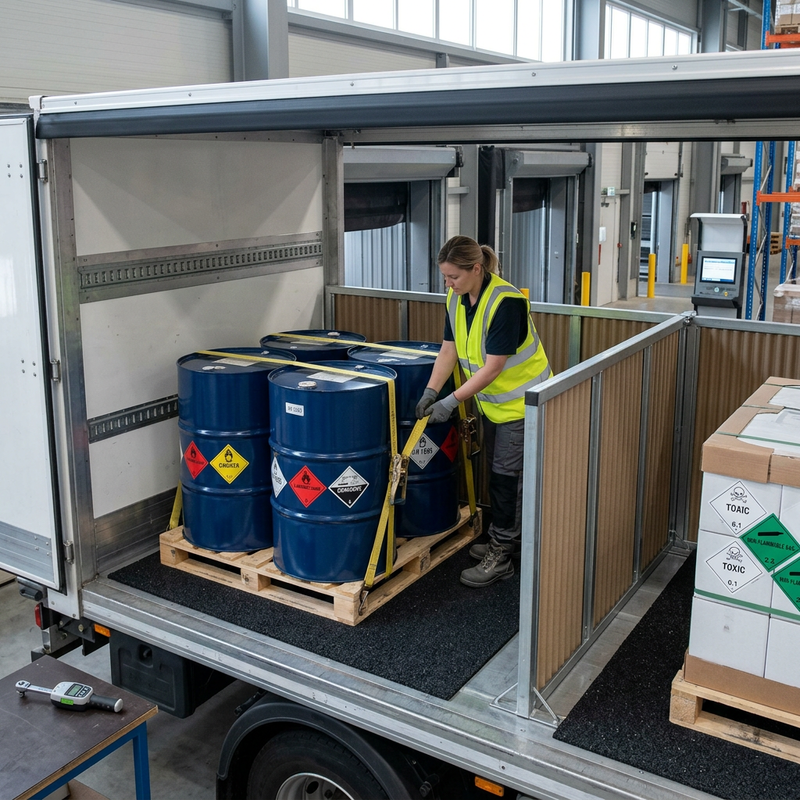
When transporting hazardous materials, securing the load in accordance with standards not only protects the goods but also prevents accidents and the release of hazardous substances. Shipments must be secured in such a way that they do not shift, tip over, or sustain damage during the entire transport—suitable methods include lashing straps, anti-slip mats, or form-fitting stowage, depending on the type of goods. Another fundamental principle applies: Not all dangerous goods may be transported together. So-called “prohibitions on mixed loading” forbid the joint transport of incompatible substances if this could result in a dangerous reaction —a typical example is flammable liquids and oxidizing substances of Class 5.1, whose combination can lead to uncontrollable fires in the event of an accident. In addition to the physical securing of the load, the ADR also regulates procedures during loading and unloading: During these operations, a strict ban on smoking and open flames applies in the vicinity of the vehicle. The driver is also required to secure the vehicle during breaks and to protect the cargo from unauthorized access and the elements. These operational safety rules apply regardless of whether an exemption under Subsection 1.1.3.6 of the ADR is invoked or the full regulations apply—they are a fundamental component of the safe transport of dangerous goods by road.
The Transport Document: Required Information and Proper Issuance

Anyone transporting dangerous goods by road must—unless a full exemption applies—issue a dangerous goods transport document that contains all the mandatory information required under ADR 2025. This document, often referred to in practice as a dangerous goods declaration, serves as a central source of information for authorities, emergency responders, and parties involved in the transport chain. The required information is specified in Part 5 of the ADR and includes: the four-digit UN number with the prefix “UN” (e.g., UN 1203), the official name according to the ADR List of Dangerous Goods — trade names are not permitted —, the dangerous goods class, the packing group (if applicable), the total quantity of dangerous goods being transported, the number and description of the packages, and the name and address of the shipper and consignee. In addition, the shipper must provide a declaration of acceptance confirming that the goods are packaged and labeled in accordance with regulations. ADR 2025 expressly permits the transport document to be carried in electronic form, provided that the data remains legibly accessible throughout the entire transport. A practical note: Incorrect or incomplete information in the transport document can constitute an administrative offense—therefore, exercising due care when issuing the document is not a mere formality, but a direct compliance obligation.
Weighing and Measuring Accurately: Why Precise Quantities Are Crucial
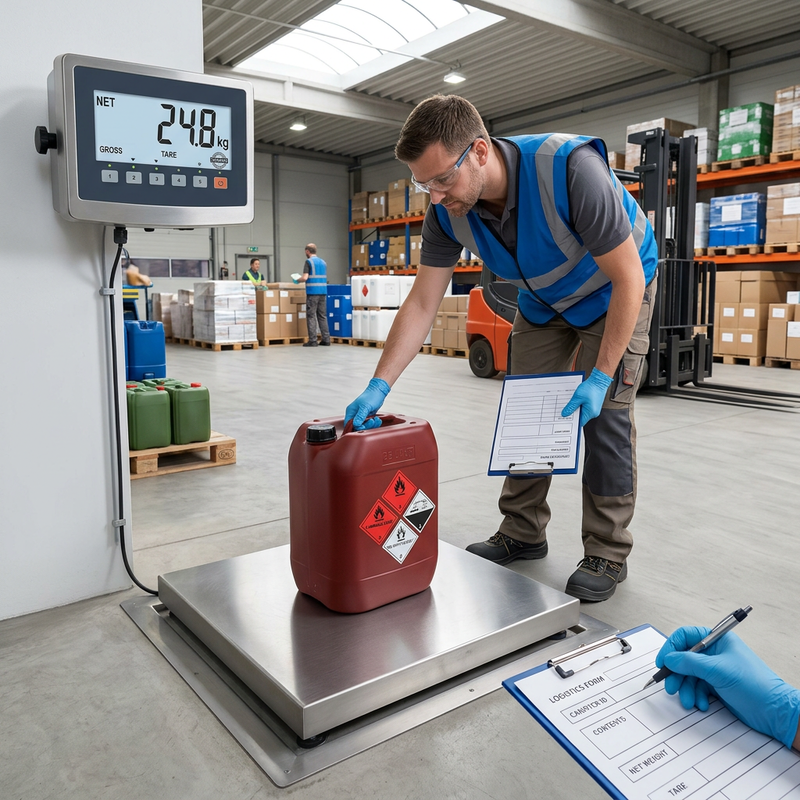
Precise quantity specifications are not a bureaucratic formality in the transport of dangerous goods, but rather a fundamental requirement for the correct classification of a shipment. The decisive factor is always the net quantity of the dangerous goods—that is, the mass or volume of the pure substance excluding the weight of the packaging. The gross weight of a shipment is irrelevant for compliance with transport regulations and must not be used as a substitute measure.
The consequences of incorrect quantity declarations are particularly evident in two areas: First, in calculations under Subsection 1.1.3.6 of the ADR. If the net quantity of a substance is reported as too low, a shipment may appear to be exempt when it is not, even though it actually exceeds the point threshold—an error that triggers the full ADR requirements in the event of an inspection. Second, in the assignment of packaging groups: Some substances shift between packaging groups I through III depending on their concentration or quantity, which directly affects labeling and packaging requirements. An incorrect quantity specification can result in the assignment of the wrong packaging group, thereby rendering the entire dangerous goods transport documentation incorrect.
In practical terms, this means that every shipment containing dangerous goods must be weighed before being handed over to the carrier, and the net quantity for each substance must be recorded in a traceable manner. PackageHERO® specifically supports shippers in accurately recording weights and maintaining shipment documentation—as part of a seamless distribution chain.
Step-by-Step: Is My Shipment Considered Dangerous Goods? – A Practical Decision-Making Guide

Anyone who wants to prepare for the transport of hazardous materials in a legally compliant manner needs one thing above all else: a clear decision-making process that maps out all relevant verification steps in the correct order. The structured sequence below—essentially a tried-and-true checklist for transporting dangerous goods —integrates the individual topics covered in this guide into a comprehensive overall process. Step 1 begins with substance identification: Section 14 of the Safety Data Sheet (SDS) provides the information relevant to transportation regulations and is therefore the indispensable starting point. Building on this, Step 2 determines the UN number and hazard class—both of which are derived directly from the SDS and the ADR list of dangerous goods. Step 3 determines the packing group: It not only dictates the packaging requirements but also influences the point calculation in the quantity threshold assessment, where substances in Packing Group I are weighted by a factor of 50. Step 4 involves checking for exemptions in the required order—EQ before LQ before the 1,000-point rule under Subsection 1.1.3.6 before the craftsman’s exemption. Only if no exemption applies does Step 5 follow, which involves selecting UN-type-tested packaging with a valid BAM approval. Step 6 concerns labeling: hazard labels on the package, a large label if applicable, and an orange warning sign on the vehicle must be affixed completely and permanently. Step 7 involves issuing the transport document with all mandatory information in accordance with ADR 2025—including the correct net quantity, which must be carefully weighed beforehand. Step 8 provides the written instructions for the driver; Step 9 checks the load securing and prohibited load combinations. Only once all of the aforementioned points have been fulfilled can the transport be authorized in Step 10.
Special Cases in the Transport of Dangerous Goods: Gases, Lithium Batteries, and Asbestos
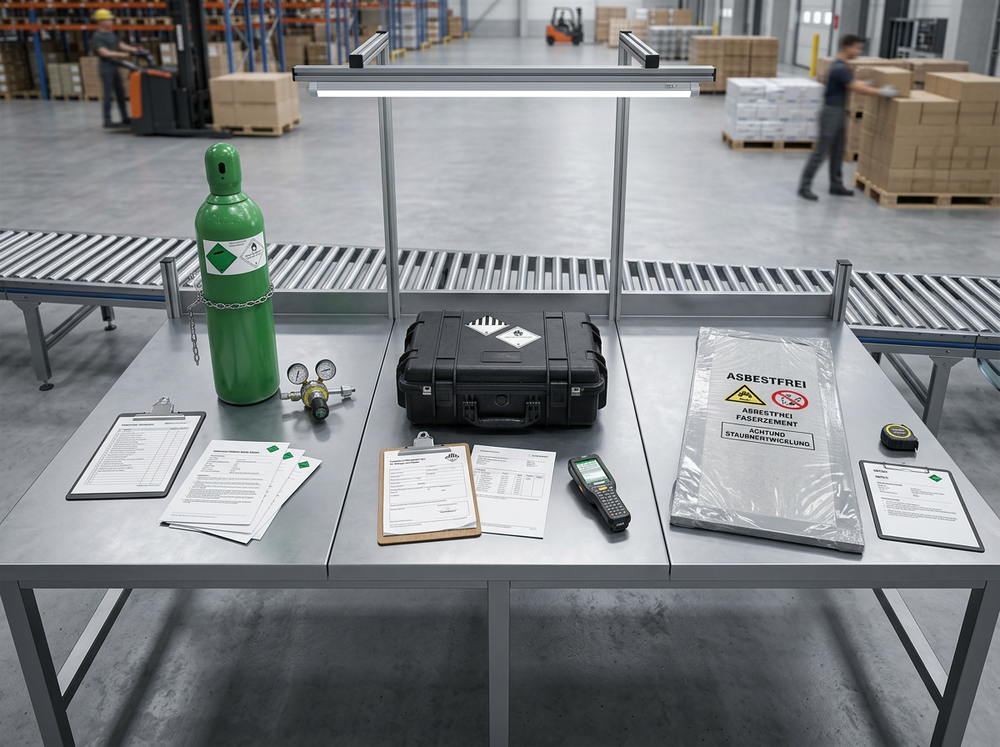
In the transport of dangerous goods, there are a number of commodity groups where even experienced shippers and transport managers regularly encounter uncertainties—not because the basic classification is unknown, but because the practical requirements go well beyond the general rules of the respective class. Three special cases deserve particular attention because they occur particularly frequently in day-to-day operations and, at the same time, account for a disproportionately high number of complaints and misclassifications: Class 2 gases, lithium batteries, and asbestos and asbestos-containing materials, both of which are classified under Class 9. Each of these three groups is characterized by a specific hazard profile that justifies special dangerous goods transport regulations going beyond the basic requirements of the respective class—regardless of whether further exemptions, such as limited quantities or exempted quantities, might apply in individual cases.
What these three special cases have in common is that the relevant additional requirements are easily overlooked during daily shipment preparation: partly because the goods are considered familiar, and partly because the relevant special provisions of ADR 2025 are spread across several sections of the regulations and are not summarized in a single location. The following sections of this guide examine each of these three special cases individually and from a practical perspective. They provide a structured overview of the specific requirements without prejudging the details of each case. Important: All three cases should always be reviewed on a case-by-case basis in accordance with the currently applicable regulations—in particular the ADR 2025 and the GGVSEB. The information provided in this guide is intended as general guidance and is not a substitute for legal or expert advice.
Transportation of Gases (Class 2): Special Operational Requirements

When transporting gases, in addition to the general classification requirements, there are a number of special operational requirements that must be consistently implemented in the practical transport of hazardous materials. Pressurized gas cylinders must be secured against tipping over throughout the entire transport—suitable methods include form-fit stowage or appropriate retaining devices that reliably prevent tipping under driving conditions. At the same time, the valves on the cylinders must be protected from mechanical damage, typically by means of screw-on protective caps. Gas-tight vehicle bodies—such as box trucks or comparable enclosed cargo compartments—pose a particular ventilation challenge: When transporting hazardous materials, they must be adequately ventilated to prevent escaping gases from accumulating to dangerous levels. Warning labels on gas cylinders, such as “No fire, open flames, or smoking,” are not merely informational signs but specific operational instructions that must be followed by all parties involved. The specific classification of the gas in question is fundamental to the vehicle equipment requirements: Depending on whether a gas is classified as flammable, toxic, or oxidizing, different requirements apply to equipment and protective measures. DGUV Information 210-001 (February 2020 edition) from the Liquefied Gas Division provides supplementary, practical guidance on the transport of liquefied gas by road.
Lithium Batteries (Class 9): A Common Stumbling Block in E-Commerce Shipping

In e-commerce shipping, lithium batteries—which are classified as hazardous materials—are among the most common sources of misclassification, even though the basic structure of the regulations is clearly organized. ADR 2025 makes a fundamental distinction between two categories here: Batteries on their own—that is, without an associated device—are classified under UN 3480 (lithium-ion) or UN 3090 (lithium metal). If the same batteries are installed in a device or included with it, the applicable UN numbers are UN 3481 (lithium-ion) and UN 3091 (lithium metal). This distinction is not merely a formality—it directly determines which packaging and labeling requirements apply.
For small batteries below defined watt-hour thresholds, ADR 2025 provides an exemption in Special Provision 188 that grants significant relief under strictly defined conditions. Compliance with all the requirements listed there—including specific packaging requirements and a state-of-charge limit of no more than 30 percent for certain battery types—is not a matter of discretion but a mandatory prerequisite for the exemption to apply.
As soon as the shipping route includes air freight, the IATA DGR also applies with its own set of requirements: The distinction between Section II and the stricter requirements of Sections IA and IB is crucial here and differs significantly from the ADR requirements in some cases. A package that has been properly prepared for road transport therefore does not automatically meet air freight requirements.
Finally, there is a practical aspect that even experienced shippers tend to underestimate: Parcel carriers often have their own restrictions for lithium batteries that go beyond the minimum legal requirements—such as quantity limits per shipment or bans on accepting shipments with certain battery conditions. It is therefore strongly recommended to verify compliance with the current carrier guidelines before each shipment. PackageHERO® helps shippers systematically integrate these carrier-specific requirements into the shipment preparation process.
Asbestos in Transportation: Special Provision 168 and When ADR Requirements Do Not Apply

In the transport of dangerous goods, asbestos holds a special status under Class 9, which is often misjudged in operational practice. Chrysotile asbestos (white asbestos) is classified under UN 2590 in the ADR and must generally be treated as a Class 9 dangerous good. Special Provision 168 (SV 168) of the ADR is of central importance for the transport of materials containing asbestos in the context of waste disposal: Under certain conditions, it may result in asbestos-cement products and similar finished products—in which the asbestos fibers are firmly embedded in a binder matrix—being exempt from most ADR requirements. The prerequisite is that the fibers cannot be released during transport and that the materials are in a form that reliably prevents fiber release. For classification in the context of waste disposal—such as when removing asbestos-containing building components—experts also refer to TRGS 519 and the LAGA Implementation Guide, which can provide guidance on the distinction. However, it is crucial to note that SV 168 does not apply across the board to all asbestos-containing materials. Whether the exemption requirements are met in a specific case must always be assessed on a case-by-case basis—consultation with the hazardous materials safety officer is strongly recommended. This section provides general guidance on the transport of asbestos as a hazardous material and on SV 168; it does not replace legal or expert advice in specific cases.
Hazardous Materials Logistics with PackageHERO®: Prepare and Ship Shipments in Compliance with Regulations

In day-to-day operations, the quality of dangerous goods logistics depends not only on legal knowledge but also on the operational preparation of shipments—and this is exactly where PackageHERO® comes in. As an operational shipping partner, PackageHERO® helps companies reliably integrate the requirements described in the previous sections of this guide into their daily shipping practices. Current economic data shows that this is a growing need: In 2024, revenue in the “Road Freight Transport and Moving Services” sector rose by approximately 1.8% compared to the previous year; in the “Other Transportation Services” sector, the increase was as high as approximately 4.7%. Greater volume also means more shipments for which classification, labeling, and documentation requirements must be met without error.
PackageHERO® provides concrete support in four operational areas: in the accurate recording of weight, so that the net quantity per substance—which is decisive for the transport document and the exemption check—is recorded in a traceable manner; support for the labeling of packages, so that hazard labels and mandatory information can be affixed completely and in accordance with standards; selection of suitable packaging, including UN-type-tested containers with valid BAM approval; and in carrier integration, which ensures that carrier-specific requirements—such as those for lithium batteries or other special cases—are systematically incorporated into the shipping process. Further details on integrating these tasks into overarching logistics processes are described in the guide to TUL processes and the distribution chain.
It must be expressly clarified that PackageHERO® is not a dangerous goods safety advisor and does not provide legal advice. The obligation to appoint a dangerous goods safety advisor, classification decisions, and legal responsibility for regulatory compliance remain entirely with the client company. PackageHERO® acts as an operational shipping partner that supports the practical preparation of shipments—not as a substitute for expert advice or operational compliance structures.
Conclusion: Transporting hazardous materials requires knowledge, care, and the right partners
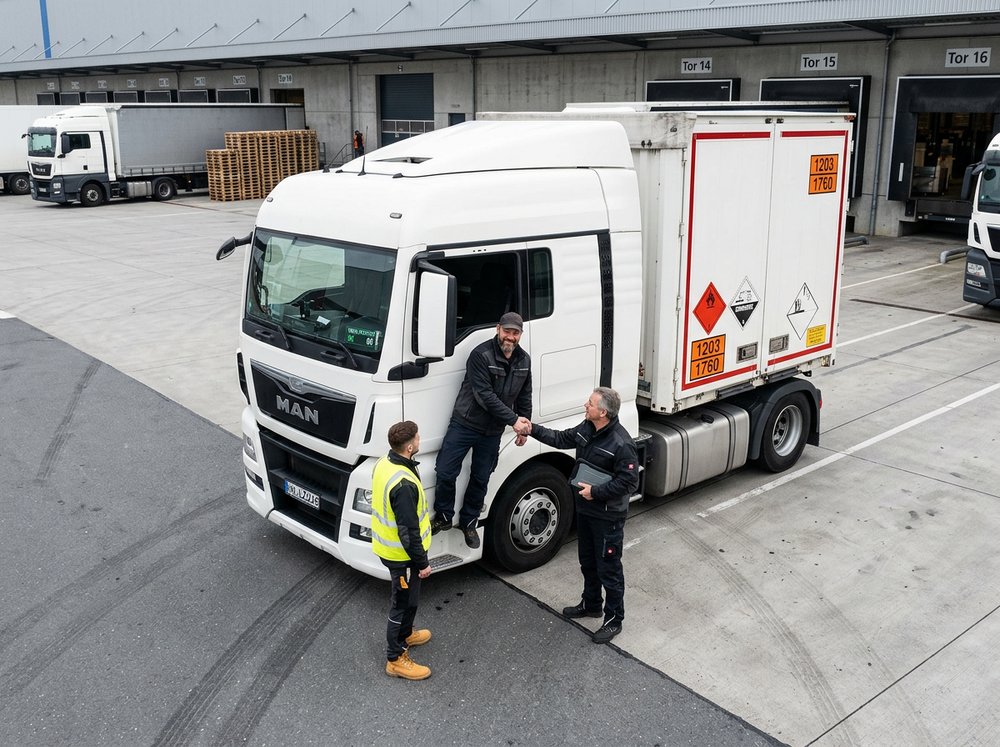
Anyone who ships, transports, or arranges for the loading of dangerous goods operates in a strictly regulated environment that requires all parties involved to stay up to date on the applicable regulations. Transporting dangerous goods is not an area where past experience provides reliable protection: With the entry into force of ADR 2025 on January 1, 2025—and the expiration of the transition period on June 30, 2025 —new classification and packaging requirements will become mandatory and must be incorporated into every existing shipping process. Anyone still operating under the previous version is in violation of applicable law.
The core message of this guide can be summarized in four points: Correct classification is the foundation—without it, all subsequent steps are vulnerable. Standard-compliant labeling and UN-type-tested packaging with valid BAM approval are not mere formalities; they serve to protect drivers, warehouse staff, and emergency responders. Complete documentation—transport documents, written instructions, and evidence of exemption testing—forms the foundation for robust operational compliance. And finally: The right partners—a designated dangerous goods safety advisor, employees who receive regular training in accordance with ADR 1.3, and an experienced shipping partner—make the difference between structured safety and avoidable liability risks.
Companies that have not yet fully established these structures should prioritize two measures: appointing a dangerous goods safety advisor and ensuring that all persons involved in the transport receive task-specific training. Both are legal obligations—and both pay off in practice. PackageHERO® supports companies as an operational shipping partner in ensuring that shipments are prepared in compliance with regulations.
Note: This page provides general guidance on the transport of dangerous goods and is not a substitute for legal advice. For specific questions regarding their own obligations—particularly regarding classification, the requirement to appoint a dangerous goods safety advisor, or the applicability of exemptions—companies should consult a qualified dangerous goods safety advisor or an attorney specializing in transportation law.
What is UN-approved packaging, and what role does the BAM play in this?
UN-type-approved packaging refers to packaging that has been successfully tested in accordance with ADR standards for resistance to typical transport stresses—such as stacking pressure, drop tests, and leak tests. The testing ensures that the packaging safely contains the hazardous substance it holds, even under real-world transport conditions. The Federal Institute for Materials Research and Testing (BAM) is the competent approval authority in Germany. It tests and certifies packaging and issues the UN approval mark—identifiable by the “UN” symbol on the packaging, supplemented by codes for packaging type, packaging group, and year of manufacture. Only approved packaging may be used for dangerous goods subject to labeling requirements.
What do packaging groups I, II, and III mean in the transport of hazardous materials?
Packaging groups classify dangerous goods according to their level of hazard and determine which packaging requirements must be met: - Packaging Group I (PG I): Highly hazardous substances—the strictest packaging and labeling requirements. - Packaging Group II (PG II): Moderately hazardous substances – moderate requirements. - Packaging Group III (PG III): Slightly hazardous substances – the least stringent requirements of the three groups. Among other things, this classification determines which UN-approved packaging is permitted, which quantity limits apply under exemption regulations, and what the point value is under the 1,000-point rule. Not all classes of dangerous goods use packaging groups—Class 2 (gases), for example, does not.
What does the orange warning sign with the Kemler number and UN number indicate, and when must it be displayed?
The orange warning sign is a rectangular, reflective sign (40 × 30 cm) used to identify vehicles transporting hazardous materials by road in accordance with ADR 2025. It bears the Kemler number (hazard number, e.g., 33 for highly flammable liquids) at the top and the UN number (substance identification, e.g., UN 1203 for gasoline) at the bottom. Mandatory placement applies: - At the front and rear of the vehicle—generally required for tanker trucks and tank containers - On each compartment for multi-compartment vehicles carrying different substances - On bulk cargo containers and certain other large packaging units. For general cargo shipments that exceed the exemption limits, however, only empty orange placards without numbers are often carried. The placards must be removed or covered when the vehicle is being unloaded or when the substance is being changed.
What labeling requirements apply to the transport of hazardous materials by road?
For the transport of dangerous goods by road, the following labeling requirements apply under ADR 2025: Packages must be marked with hazard labels (diamond-shaped symbols for each hazard class) and the UN number. For certain substances, additional handling labels or orientation arrows are required. Vehicles and containers carrying quantities above certain thresholds must display orange warning panels with the Kemler number and UN number, as well as large placards corresponding to the hazard class. For tank trucks, the warning panels must be affixed to both sides and the rear. Below the exemption limits of the 1,000-point rule (Section 1.1.3.6 ADR), simplified vehicle markings or no markings at all may apply. A separate diamond symbol applies to limited quantities (LQ).
How is the ADR implemented in German law—what are the GGBefG, GGVSEB, and RSEB?
The Dangerous Goods Transportation Act (GGBefG) serves as the fundamental national law governing the transport of dangerous goods in Germany: It authorizes the federal government to transpose international regulations, such as the ADR, into national law and establishes basic obligations as well as ranges of fines. The Regulation on the Transport of Dangerous Goods by Road, Rail, and Inland Waterways (GGVSEB) specifies the provisions of the GGBefG for these three modes of transport. It incorporates the ADR directly by reference and supplements it with special German regulations, such as the requirement for a dangerous goods safety advisor. The Guidelines for the Conduct of Vehicle Inspections (RSEB) provide enforcement authorities with binding interpretive guidance to ensure uniform inspection practices.
What does the ADR regulate, and why has the new ADR 2025 edition been in effect since January 1, 2025?
The ADR (Accord relatif au transport international des marchandises dangereuses par route) is the international agreement governing the transport of dangerous goods by road. It regulates the classification, packaging, labeling, documentation, and driver qualifications for both cross-border and domestic transport of dangerous goods within Germany. The ADR is published by the United Nations Economic Commission for Europe (UNECE) and updated every two years. The ADR 2025 version has been mandatory since January 1, 2025—with a transition period until June 30, 2025, for the previous version. Changes to the content include, among other things, updated special provisions, new packaging requirements, and revised classification rules for certain groups of dangerous goods.
What are the 9 classes of dangerous goods, and how are dangerous goods classified?
Dangerous goods are classified according to internationally established classes as defined by the ADR: - Class 1 – Explosives and articles containing explosives - Class 2 – Gases (flammable, toxic, non-flammable) - Class 3 – Flammable liquids - Class 4 – Flammable solids (Subclasses 4.1–4.3) - Class 5 – Oxidizing substances (5.1 oxidizing, 5.2 organic peroxides) - Class 6 – Toxic and infectious substances (6.1–6.2) - Class 7 – Radioactive materials - Class 8 – Corrosive substances - Class 9 – Miscellaneous dangerous substances and articles Classification is based on the physical, chemical, and biological properties of a substance. Each substance is assigned a UN number that uniquely identifies it and must be indicated on transport documents and packaging labels.
What is meant by the transport of hazardous materials, and which substances are considered hazardous materials?
The transport of hazardous materials refers to the movement of substances and objects that, due to their physical, chemical, or biological properties, may pose a danger to people, animals, property, or the environment. Such shipments are subject to specific legal requirements regarding labeling, packaging, documentation, and driver qualifications. Examples of hazardous materials include: - Flammable liquids (e.g., gasoline, solvents) - Gases (e.g., propane, compressed air cylinders) - Corrosive substances (e.g., acids, alkalis) - Explosive substances (e.g., fireworks) - Toxic or infectious substances - Radioactive materials Classification is standardized internationally using UN numbers and hazardous materials classes. In practice, whether a substance is considered a hazardous material can often be determined by referring to Section 14 of the safety data sheet.
What training and qualifications are required for drivers and shippers involved in the transport of hazardous materials?
Drivers who transport dangerous goods by road are required, in accordance with ADR 2025, to hold an ADR dangerous goods driver’s license (basic course plus, if applicable, advanced courses for tanks or explosive substances), which must be renewed every five years. For all persons involved in the company—including shippers, loaders, and packers—ADR Section 1.3 requires task-specific training. This training must be regularly refreshed and documented. The responsibility for documentation lies with the company and may be requested during inspections by regulatory authorities. Companies that regularly transport or ship dangerous goods are also required to appoint a certified dangerous goods safety advisor.
How can you tell if a service provider for hazardous materials transport is reputable and compliant with the law?
A reputable service provider for the transport of dangerous goods can be identified by several characteristics: It employs or contracts a certified dangerous goods safety advisor and can present the advisor’s certificate of appointment. Drivers hold valid ADR training certificates, including the required advanced training courses. The company demonstrably operates in accordance with the requirements of the current version of the ADR. Delivery slips and transport documents are completed fully and correctly. Vehicles bear the required markings. In addition, the service provider should be able to provide references, certifications, and a structured training program for its staff upon request. Regular internal audits and comprehensive documentation of training measures are further indicators of quality.
How does the transport of hazardous materials by road (ADR) differ from transport by rail, air, and sea?
Each mode of transport has its own set of international regulations: road = ADR, rail = RID, inland waterways = ADN, maritime shipping = IMDG Code, air freight = IATA-DGR (based on ICAO-TI). All are based on the UN Model Regulations and use the same hazard classes and UN numbers, but differ—sometimes significantly—in terms of quantity limits, packaging requirements, labeling requirements, and permitted substances. Air transport is particularly restrictive—many substances are completely prohibited or subject to strict quantity limits. In German domestic transport, the GGVSEB applies as supplementary national implementing legislation for all modes of transport; it incorporates the respective international agreement by reference and supplements it with special German regulations.
What are the potential consequences of violating the regulations governing the transport of hazardous materials?
Violations of hazardous materials regulations can result in serious consequences. Under administrative offense law, fines of several thousand euros may be imposed—on drivers as well as shippers, consignors, and companies. In the case of serious violations that endanger life and limb, criminal consequences are also possible, including imprisonment. Competent authorities—such as the labor inspectorate or the police—can halt shipments and impound vehicles. Companies also risk losing their transport permits and facing civil liability for damages. Repeated violations can result in regulatory requirements or operating bans.
What documents must be carried when transporting hazardous materials?
When transporting dangerous goods by road in accordance with ADR, the following documents must be carried: Transport document (Dangerous Goods Declaration): Contains the UN number, official name, hazard class, packaging group, quantity, and sender/recipient information. Written Instructions (Accident Information Sheet): Instructions for the driver on how to respond in the event of a hazard or accident—mandatory in an updated form as of ADR 2025. Driver’s ADR Training Certificate: Proof of valid dangerous goods driver qualification. Vehicle Registration Certificate (if vehicle approval is required, e.g., for EX or MEMU vehicles). Simplified requirements may apply in cases of exemptions (e.g., small quantities).
At what point is a company required to appoint a dangerous goods safety advisor?
Under the GGVSEB, in conjunction with the Dangerous Goods Safety Advisor Ordinance (GbV), companies are required to appoint a dangerous goods safety advisor as soon as they are involved in the transport of dangerous goods on a commercial basis or as part of their professional activities—that is, as a carrier, consignor, consignee, packer, loader, or filler. Exceptions apply to companies that transport only exempt quantities or whose total point value, calculated according to the 1,000-point rule, does not exceed the threshold. Micro-enterprises with very limited volumes of dangerous goods may also be exempt under certain conditions. The dangerous goods safety advisor must provide proof of passing an IHK examination and is authorized by a certificate of appointment issued by the company. In case of doubt, it is recommended to conduct an individual review of the specific job profile.
When does the "craftsman" rule apply to the transport of hazardous materials, and what requirements must be met?
The so-called craftsman’s exemption (ADR, Subsection 1.1.3.1(e)) provides exemptions for craftsmen who transport dangerous goods not as part of a transportation service, but in connection with their actual work. Specifically, it applies if: - the dangerous goods are required to carry out a job (e.g., paints, adhesives, fuel gas cylinders), - the quantities are limited and no significant hazards arise, - the goods are carried in small, ready-to-use containers, - the vehicle is not primarily used as a hazardous materials transporter. This regulation does not completely exempt operators from all obligations—basic safety requirements, such as fire extinguishers and accident information sheets, still apply.
What are limited quantities (LQ), and how do they differ from excepted quantities (EQ)?
Limited Quantities (LQ) and Exempted Quantities (EQ) are two different simplification provisions in ADR 2025: Limited Quantities (LQ) allow for the transport of smaller quantities of dangerous goods in inner packaging with significantly reduced requirements. Labeling requirements still apply: Packages must bear the distinctive LQ diamond symbol (white with a black border). Transport documents and basic packaging suitability are required. Excepted Quantities (EQ) allow for even smaller quantities per inner packaging and per package. Here, many requirements are almost entirely waived—marking is done using the EQ code, and a transport document is required only to a limited extent. The key difference: EQ quantities are smaller than LQ quantities and are subject to fewer requirements; however, they do require an annual quantity check and a separate packaging inspection by the shipper.
What does the 1,000-point rule (Section 1.1.3.6 of the ADR) state, and when does the exemption apply?
The 1,000-point rule under Section 1.1.3.6 of ADR 2025 allows for an exemption from numerous ADR regulations if the quantity of dangerous goods being transported does not exceed a total point value of 1,000. A point value is calculated for each substance: the quantity (in kilograms or liters) multiplied by a multiplier that depends on the dangerous goods class—particularly hazardous substances are assigned higher factors (e.g., 50), while less hazardous substances are assigned lower factors (e.g., 1 or 3). The packaging group also influences the multiplier. If the threshold is met, certain requirements are waived, including the obligation to carry written instructions, to equip the vehicle with specific fire extinguishers, and the driver’s ADR training requirement. However, basic requirements such as proper packaging, labeling of packages, and the transport document remain mandatory.

