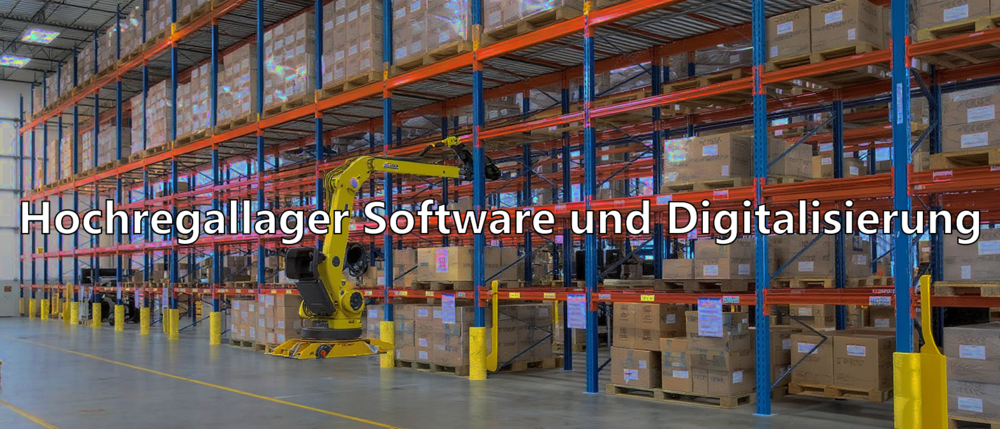
The digitization and automation of high-bay warehouses represent a significant advancement in modern logistics. The implementation of specialized warehouse management systems (WMS) significantly improves the control and manageability of goods. These systems collect data in real time, enabling more precise inventory management, which minimizes errors and increases efficiency.
A key feature of digital systems is their ability to integrate with ERP (Enterprise Resource Planning) systems. This integration ensures seamless communication between a company’s various departments and promotes transparency and efficiency throughout the entire supply chain. By combining data from ERP and WMS systems, companies can make informed decisions based on comprehensive real-time data.
Another dimension of digitalization in high-bay warehouses is the use of artificial intelligence (AI). AI systems analyze large amounts of data to identify patterns and predict future trends. These predictions help optimize warehouse processes such as route planning and warehouse layout design. In addition, AI plays a central role in the predictive maintenance of warehouse equipment by helping to detect potential failures early on and thus minimize unplanned downtime.
Finally, the continuous connectivity of all warehouse components enables the creation of responsive, scalable warehouse systems. These systems are capable of responding quickly to changing market demands, which is crucial in today’s dynamic business environment. Technological advancements in this field offer companies the opportunity to increase their efficiency and strengthen their competitiveness in the long term.
More about high-bay warehouses


High-Bay Warehouse Software
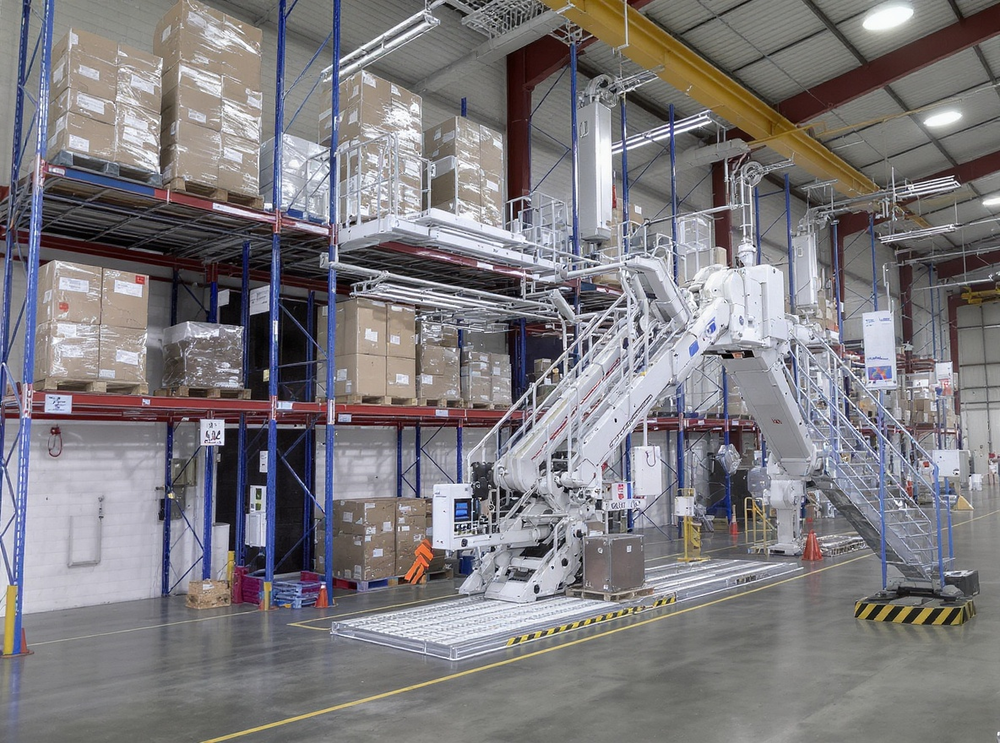
The digitization of high-rack warehouse software plays a crucial role in modern logistics. Advanced warehouse management systems (WMS) enable efficient organization and control of the warehouse. These systems integrate seamlessly with ERP solutions to ensure end-to-end transparency and control across the entire supply chain. The use of real-time data collected by sensors and the Internet of Things (IoT) enables precise inventory control and increases efficiency. Artificial intelligence (AI) is also playing an increasingly important role. Machine learning enables predictions to be made and processes to be optimized, leading to a significant increase in operational efficiency. Warehouse capacity is optimized, and manual intervention is minimized, which increases both productivity and safety in the warehouse. Digital twins—virtual representations of the physical warehouse—are used to simulate various scenarios and reduce risks. All of this results in a responsive and scalable warehouse system. The implementation of these technologies transforms high-bay warehouses into intelligent, self-regulating systems and enables companies to operate more competitively in a rapidly changing market environment. The continuous development of software solutions thus remains a key success factor for the future of warehouse logistics.
Core Features of High-Bay Warehouse Software
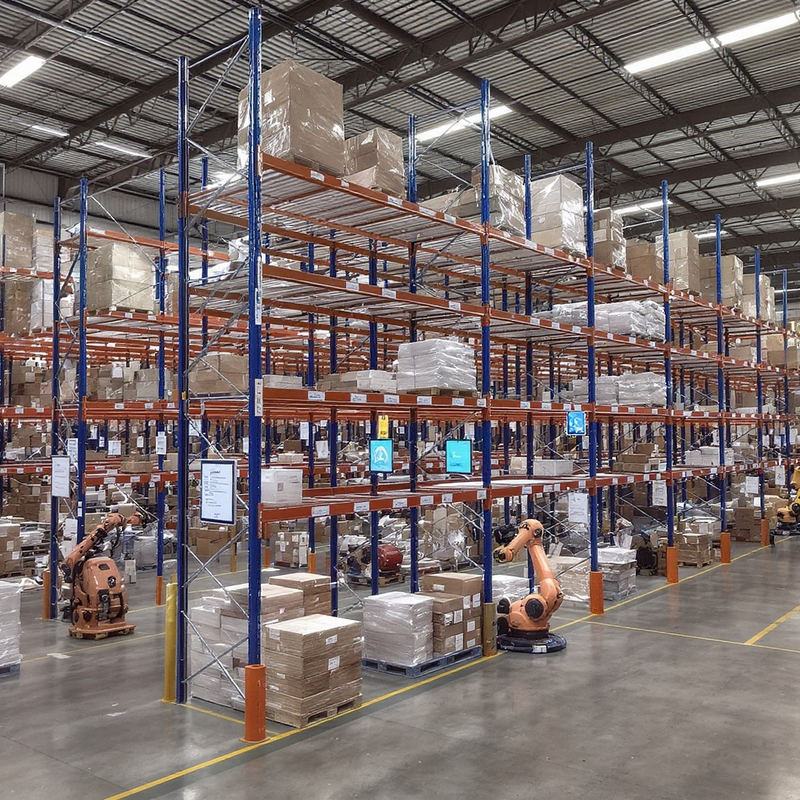
The core functions of high-rack warehouse software are essential for managing modern warehouse environments efficiently and accurately. Central to this is the warehouse management system (WMS), which ensures accurate inventory control and route optimization within the warehouse. Interfaces with ERP systems play a crucial role, enabling seamless data flows and ensuring end-to-end transparency in the supply chain. The integration of digitalization and artificial intelligence (AI) technologies enables intelligent control of warehouse processes, allows for the prediction of inventory trends, and optimizes resource allocation. Automated warehouse technologies such as stacker cranes and sensor systems provide high operational reliability and minimize manual intervention. The comprehensive networking of all system components creates a scalable and responsive warehouse system that meets the requirements of modern logistics. These features are crucial for increasing efficiency and significantly reducing the error rate in warehouse management. High-bay warehouse software helps companies optimize their logistics processes, reduce costs, and sustainably strengthen their competitiveness.
What is high-rack warehouse software?
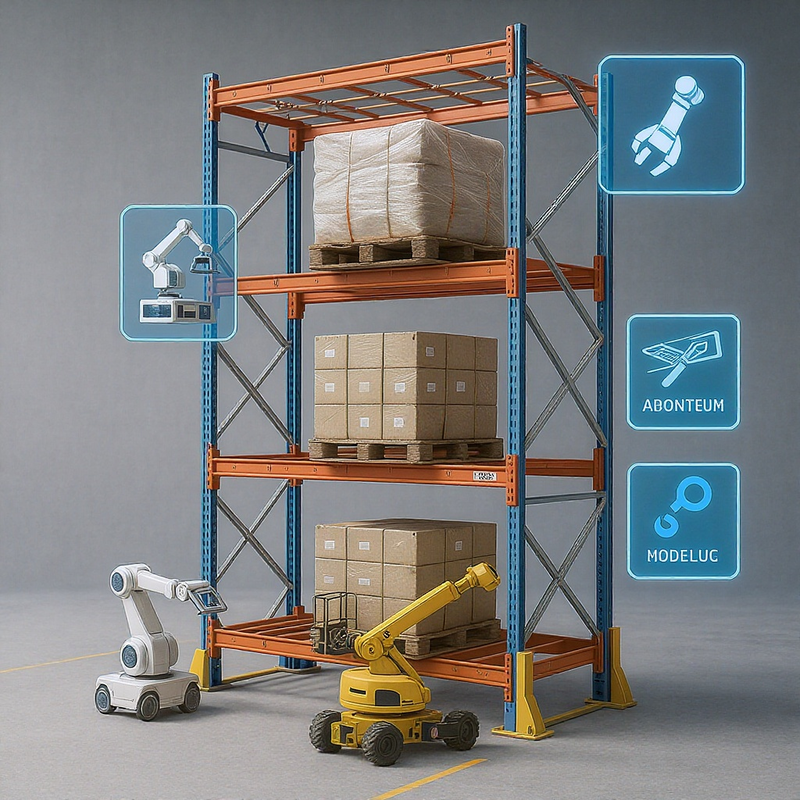
High-rack warehouse software is a specialized warehouse management system (WMS) designed to streamline the organization and management of high-rack warehouses. This software enables precise control of goods flows and offers functions for inventory management and warehouse capacity optimization. Through integration with ERP systems, the software achieves end-to-end transparency and improves control over the entire supply chain. The use of high-bay warehouse software is an important step toward the digitization and automation of modern logistics warehouses. This promotes innovative solutions such as robot-assisted order picking and the use of artificial intelligence (AI) to analyze warehouse data. The networking of systems and sensors in high-bay warehouses creates a responsive and scalable warehouse system that minimizes manual intervention and increases operational reliability. This enables rapid adaptation to the demanding challenges of today’s logistics, ultimately leading to increased efficiency and reduced operating costs.
Digitization of High-Bay Warehouses
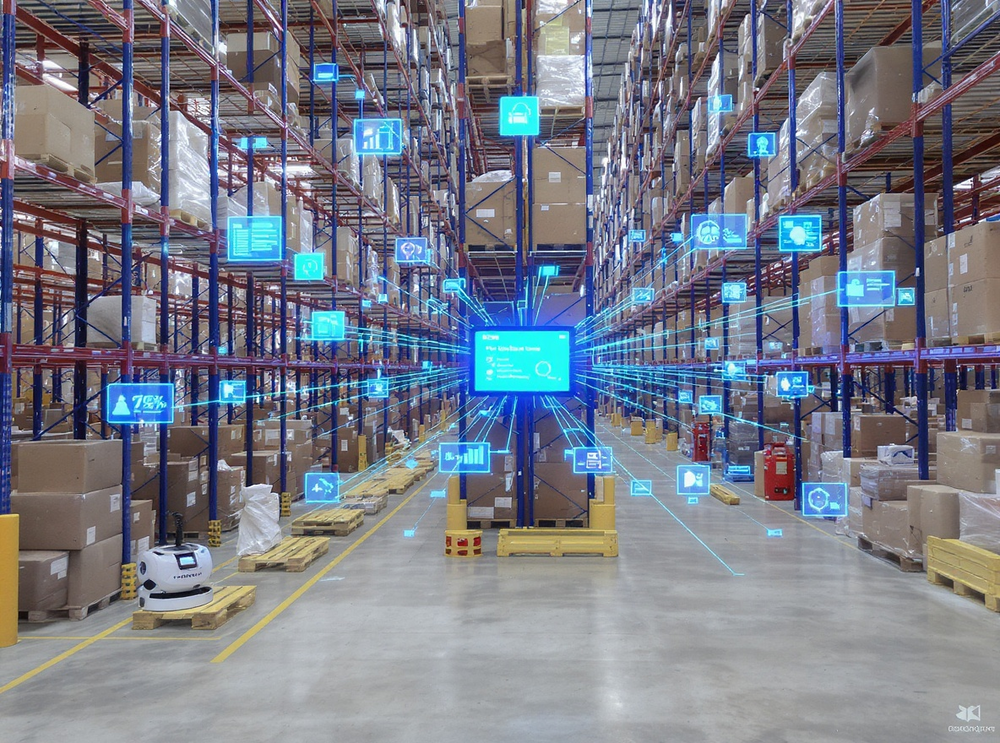
The digitization of high-bay warehouses is revolutionizing efficiency and precision in modern logistics. The implementation of advanced warehouse management systems (WMS) that integrate seamlessly with ERP systems significantly optimizes inventory management. These systems enable real-time monitoring of warehouse movements, thereby helping to reduce manual errors. In addition, artificial intelligence (AI) in warehouse logistics supports the analysis of large amounts of data to create optimal warehouse layouts and inventory forecasts. These technologies play a crucial role in minimizing turnaround times and reducing operating costs. Sensors and IoT devices continuously collect relevant data about the warehouse environment, enabling proactive control and adjustment of processes. The use of automated storage and retrieval systems and robot-assisted solutions ensures that goods are transported safely and efficiently, significantly boosting overall performance. The use of digital twins to simulate warehouse processes offers additional opportunities to anticipate potential bottlenecks and make adjustments before real-world consequences arise. Overall, the digitization of high-bay warehouses is transforming traditional warehouses into dynamic, intelligent systems that are not only more transparent and efficient but also more flexible, enabling them to meet rapidly changing market demands. Companies that implement these technologies benefit from increased revenue potential and a sustainable competitive advantage in today’s digitalized economy.
Benefits of Digitization
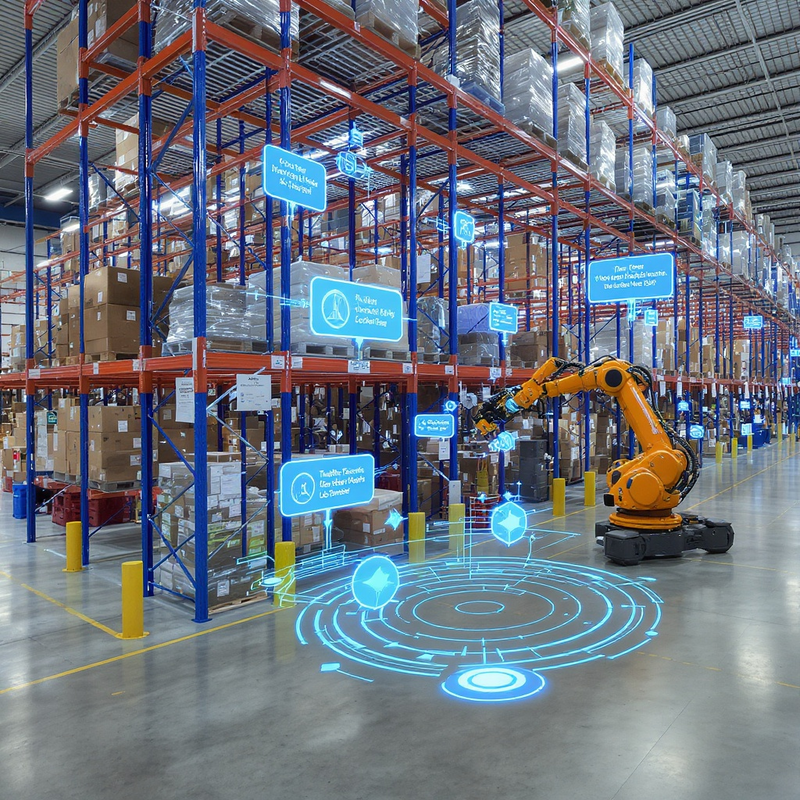
The digitization of high-bay warehouses offers numerous advantages that significantly increase efficiency and productivity. A key aspect is the improved management of material flows through automated warehouse management systems (WMS), which provide real-time information on inventory levels. This optimizes warehouse capacity and allows bottlenecks or excess inventory to be identified and avoided early on. Integration with ERP systems enables seamless integration into existing enterprise software, which increases transparency across the entire supply chain. Furthermore, digitization significantly reduces manual labor by having automated systems and robots take over tasks such as order picking, packing, and sorting. This not only eases the workload on staff but also leads to a lower error rate. In addition, the use of sensor technology and the Internet of Things (IoT) allows for continuous monitoring of the current status of inventory, which in turn leads to greater responsiveness and adaptability to changing conditions. Ultimately, these advancements contribute to cost efficiency and a competitive advantage in a dynamic market.
Digital Transformation in the Warehouse
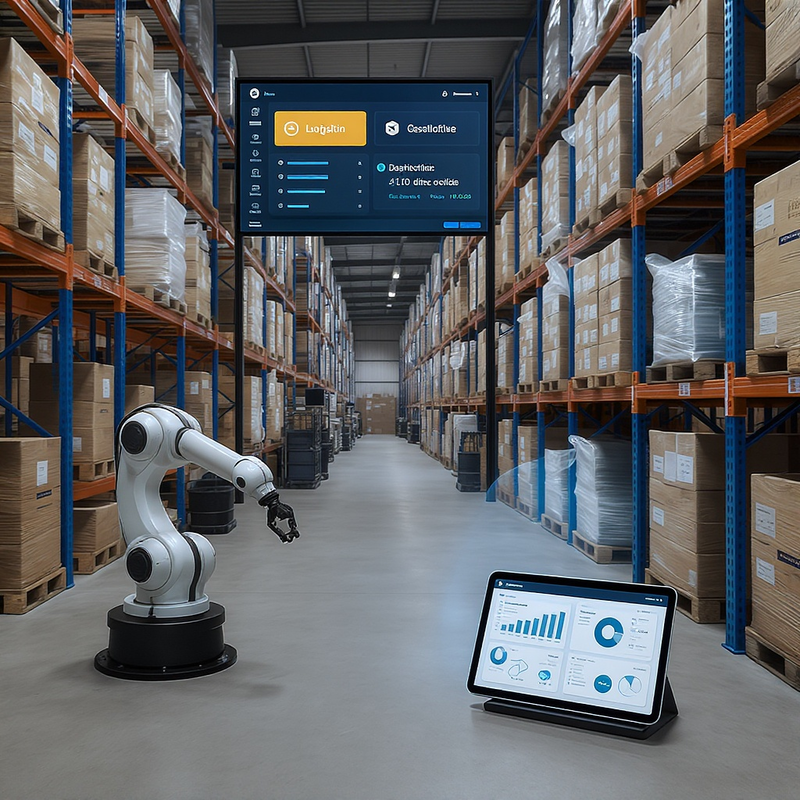
Digital transformation in warehousing is revolutionizing the way high-bay warehouses are operated. The introduction of warehouse management systems (WMS) optimizes processes and significantly increases efficiency. These systems not only provide precise control over inventory levels but also offer seamless integration with ERP systems, enabling comprehensive transparency and control across the entire supply chain. Digitization and the use of artificial intelligence (AI) in warehouses open up new possibilities for automating workflows and analyzing data in real time. This leads to a reduction in errors and a faster ability to respond to changes in the market. Such innovative technologies transform high-bay warehouses into flexible and scalable systems that not only meet current logistics requirements but are also future-proof. Digitalization drives efficiency and helps companies implement advanced logistics solutions capable of responding to the challenges of a rapidly changing market landscape.
High-Bay Warehouse Management System (WMS)
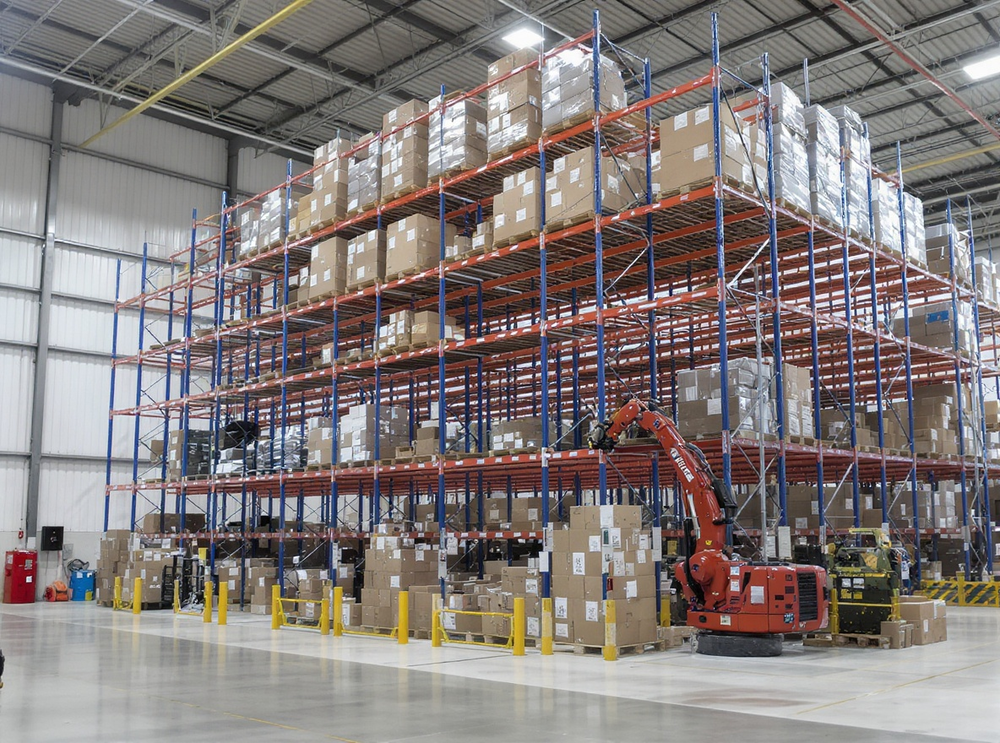
The high-rack warehouse WMS (Warehouse Management System) plays an essential role in optimizing and automating warehouse processes. It provides a complete overview of inventory and enables precise control of the flow of goods to maximize efficiency in modern warehouses. A well-integrated WMS can communicate seamlessly with ERP (Enterprise Resource Planning) systems to ensure both end-to-end transparency and improved control over the entire supply chain. Digitalization in the warehouse makes it possible to analyze data in real time and make informed decisions, which is particularly advantageous in dynamic and often unpredictable market conditions. Furthermore, the integration of technologies such as the Internet of Things (IoT) and artificial intelligence (AI) is becoming increasingly important for identifying trends and optimizing forecasts. The use of such technologies enables warehouses to respond more flexibly to changes and further increase operational efficiency. By implementing a high-performance WMS, companies are able to handle peak demand more effectively and enhance both their operational excellence and customer satisfaction. The implementation of a high-bay warehouse WMS is therefore a crucial step for companies that want to remain competitive in today’s highly automated logistics environment.
WMS Integration with ERP

Integrating a warehouse management system (WMS) with an ERP system is a crucial step toward the digitization and optimization of high-rack warehouses. This integration enables seamless communication between inventory management and business processes. A WMS provides precise, real-time control, thereby not only improving warehouse capacity but also reducing manual labor. With the help of artificial intelligence and sensor technology, processes are also automated and optimized, minimizing errors and ensuring efficient use of resources. Intelligent WMS-ERP integration thus forms the foundation for a responsive and scalable high-bay warehouse that meets the demands of modern logistics. This not only supports the supply chain but also ensures greater operational reliability and performance within the warehouse. Companies that rely on this combination gain a significant competitive advantage and can sustainably optimize their processes over the long term.
WMS Functions in a High-Bay Warehouse
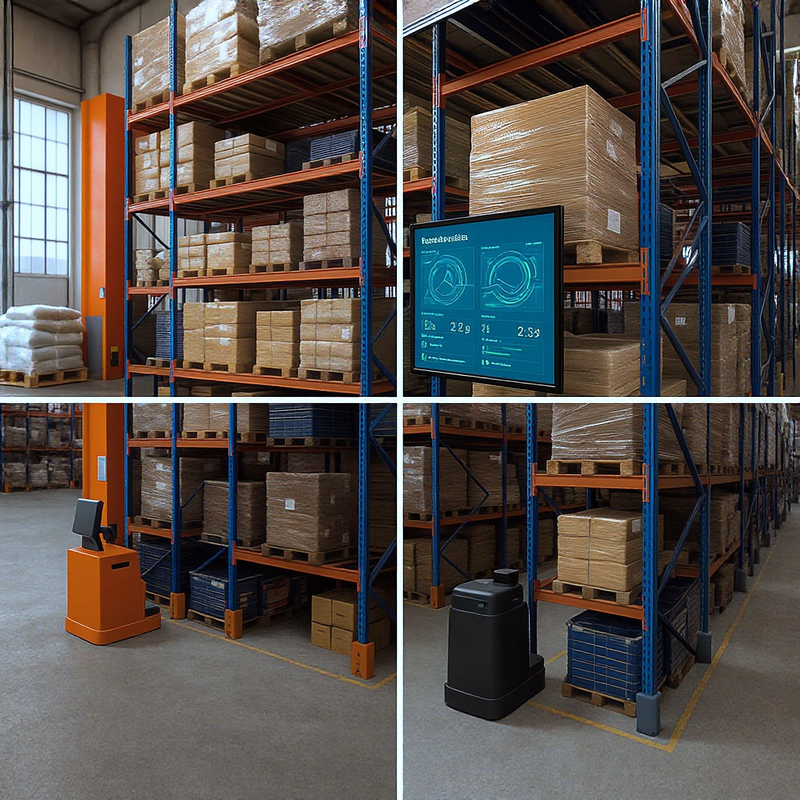
A Warehouse Management System (WMS) is an essential tool for optimizing high-rack warehouses. It enables efficient control of all warehouse processes, from inventory management to order fulfillment. Especially in today’s era of digitalization, a WMS can deliver significant efficiency gains through the integration of real-time data. Modern WMS solutions are not only capable of optimizing material flow within the warehouse but also provide interfaces to ERP systems, ensuring end-to-end transparency throughout the entire supply chain. These software solutions are key components of Industry 4.0 and help minimize manual intervention and strengthen companies’ competitiveness. The use of artificial intelligence (AI) within a WMS can identify patterns and make predictions, which further automates and optimizes processes, especially in high-rack warehouses. These features enable the warehouse to respond more quickly and accurately to the dynamic demands of the market, which ultimately also results in reduced operating costs.
High-Bay Warehouse ERP
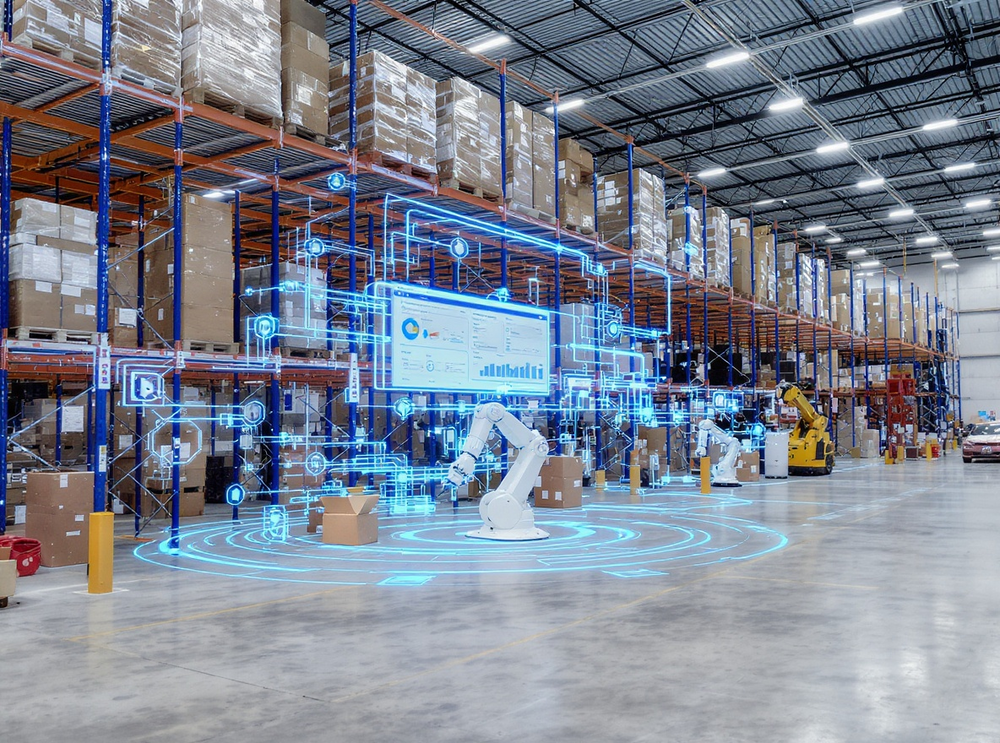
The implementation of a high-bay warehouse ERP solution plays a crucial role in modern intralogistics. Integrating warehouse management systems (WMS) into the ERP system enables all business processes to work together seamlessly. This not only leads to efficient control but also optimizes the flow of goods within the warehouse. In particular, digitalization and artificial intelligence (AI) have the potential to further revolutionize warehouse processes by enabling more precise predictions and automatic adjustments. The seamless integration of various systems enables continuous real-time monitoring and analysis, allowing companies to respond quickly to changes. Linking the high-bay warehouse ERP system with IoT devices further helps increase efficiency through the optimal use of space and resources. In summary, digitalization, when combined with an ERP system, ensures that high-bay warehouse solutions not only meet current requirements but also remain future-proof. Companies that leverage this advanced integration benefit from increased efficiency, reduced costs, and superior competitiveness in the global market.
Challenges & Tips
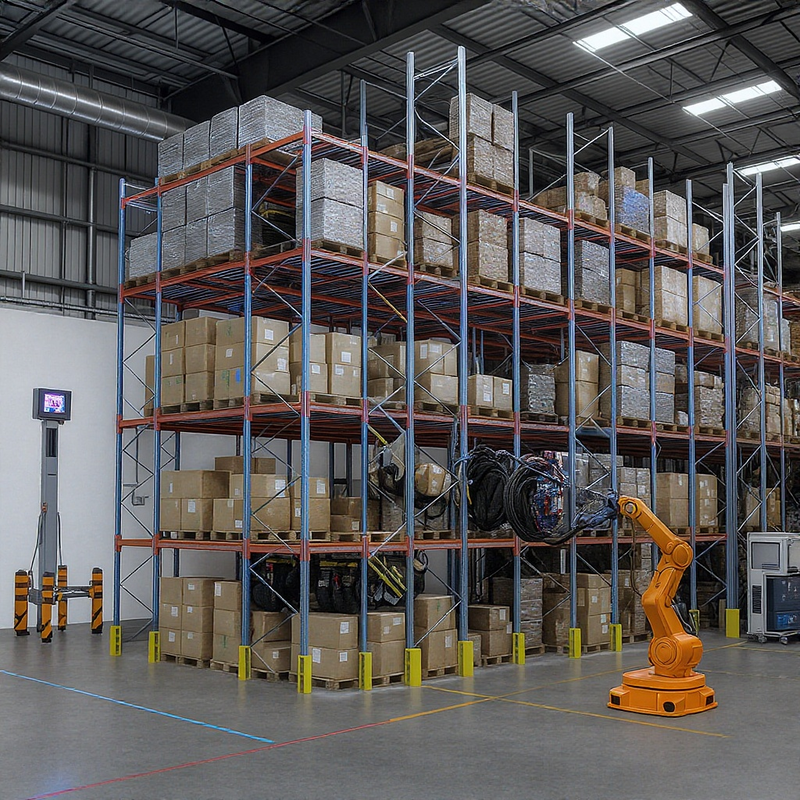
The digitization and automation of high-bay warehouses present numerous challenges that companies must overcome to increase efficiency. A key task is to seamlessly integrate the interfaces between the warehouse management system (WMS) and the ERP system. This connection is crucial for leveraging real-time data that can optimize both inventory management and order fulfillment. In addition to technical integration, companies must be able to consolidate data from various sources and transform it into meaningful decisions. Another key aspect is the implementation of artificial intelligence (AI) to forecast warehouse demand and identify patterns that make processes more efficient. To make the best use of these technologies, companies should regularly offer training and workshops for their employees. In addition, continuous adaptation and upgrading of the software are necessary to keep pace with the latest developments. Given these challenges, it is advisable to choose an experienced partner who can provide support both during implementation and in the ongoing optimization of the system, in order to derive maximum benefit from the digitization of the high-bay warehouse.
ERP Warehouse Logistics Integration
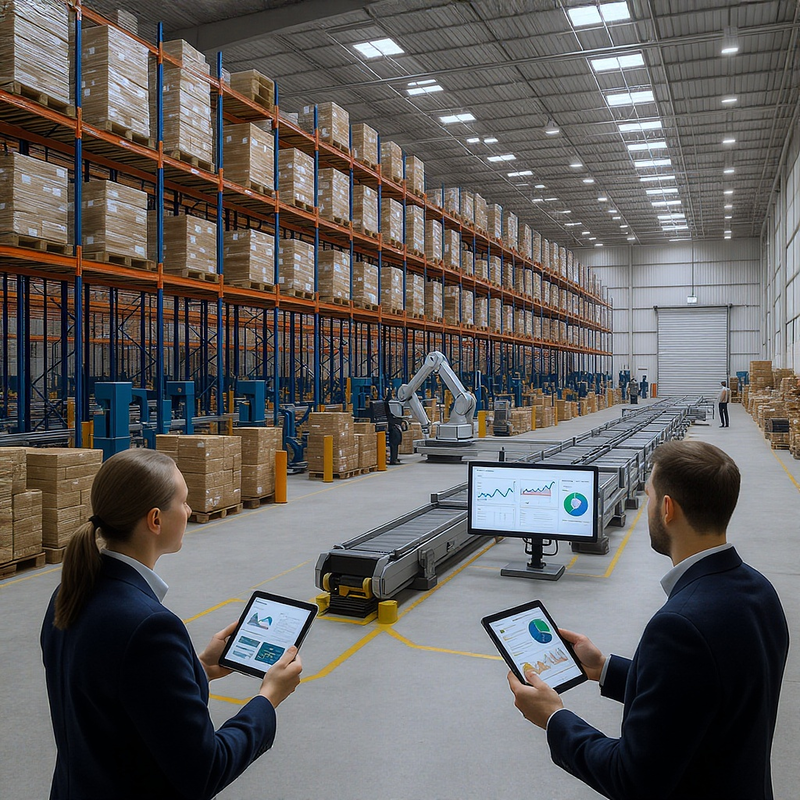
In modern warehouse logistics, ERP-warehouse logistics integration plays a crucial role in increasing efficiency and optimizing operational processes. Connecting ERP systems with warehouse management systems (WMS) enables smooth and automated control of the flow of goods. Interfaces between these systems seamlessly link all processes, leading to improved transparency and control across the entire supply chain. Modern technologies, such as the Internet of Things (IoT) and artificial intelligence (AI), drive digitalization in the warehouse by enabling real-time data monitoring and analysis. This data feeds into the ERP system, supporting decision-making and reducing error rates. Digitalization also offers the potential for increased scalability and flexibility, which is a significant advantage, especially in dynamic markets. Overall, ERP-warehouse logistics integration helps companies efficiently utilize their warehouse capacity and maximize goods throughput. This is essential for meeting the demands of modern high-bay warehouses and securing competitive advantages.
High-Bay Warehouse Management System
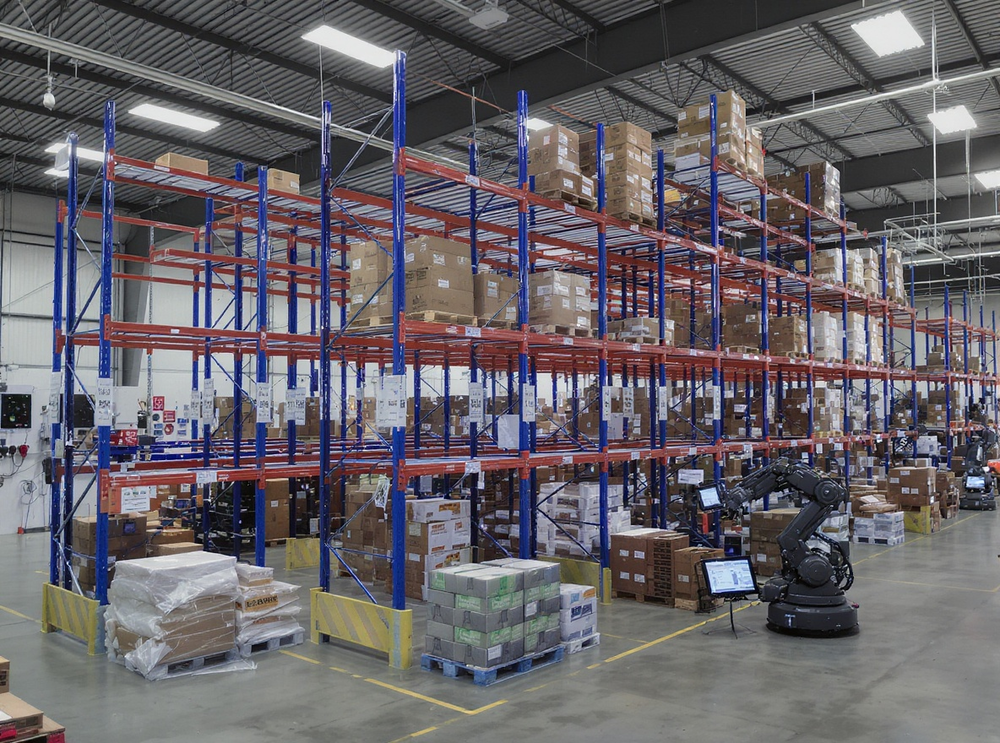
The digitization of high-bay warehouses offers numerous advantages for modern warehouse management. A key element in this process is the warehouse management system (WMS), which enables the effective control and monitoring of all warehouse processes. Integrating the WMS with ERP systems creates a seamless connection between warehouse operations and enterprise resource planning, resulting in comprehensive transparency and control.
Digitalization is supported by technologies such as the Internet of Things (IoT) and artificial intelligence (AI), which enable continuous monitoring of inventory and the warehouse environment. For example, IoT sensors collect real-time data on temperature and humidity, while AI uses algorithms to develop efficient warehousing strategies and optimize the maintenance of warehouse equipment.
High-bay warehouses also benefit from automation supported by technologies such as autonomous mobile robots (AMRs) and automated guided vehicles (AGVs). These systems can perform precise navigation and move goods within the warehouse, thereby optimally complementing human labor and relieving workers of repetitive tasks.
Another key aspect of digitalization is the implementation of digital twins. These virtual representations of a physical warehouse are used to simulate and test changes to the warehouse configuration, allowing companies to analyze and optimize processes before they are actually implemented. This minimizes risks and contributes to more efficient decision-making.
Overall, the combination of these digital solutions enables companies to create a smart and connected warehouse environment that not only improves the efficiency and accuracy of warehouse processes but also delivers sustainable economic benefits.
Requirements & Criteria
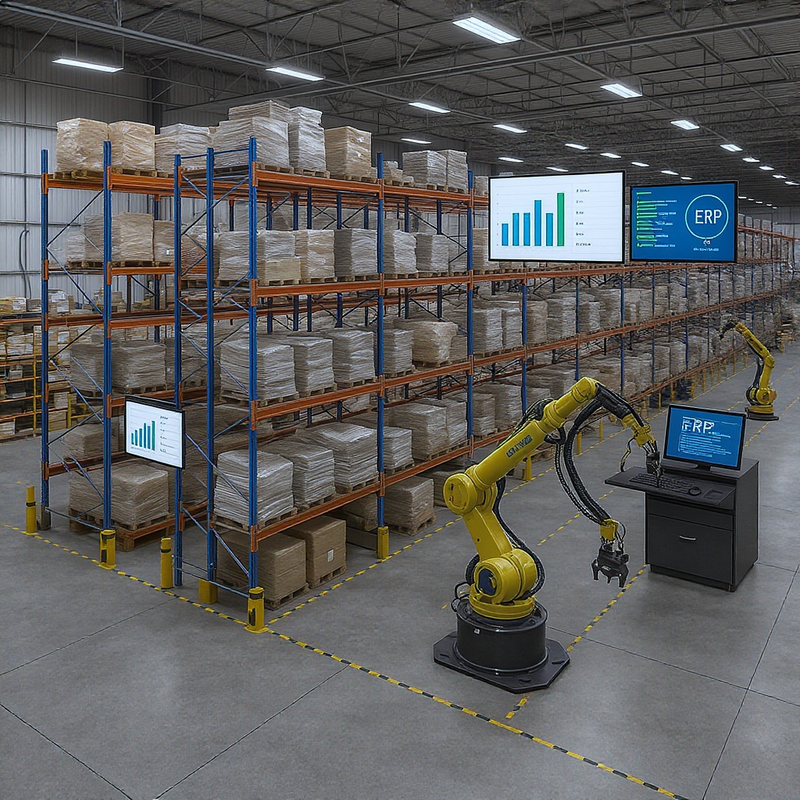
The digitization and automation of high-bay warehouses place specific demands on warehouse management systems (WMS). A key criterion is the seamless integration of interfaces with ERP systems to ensure end-to-end supply chain transparency. Optimal utilization of warehouse capacity depends on real-time data and precise control of goods flows, which are supported by advanced sensor technology and artificial intelligence (AI). In addition, the software must feature intuitive user interfaces to ensure ease of use. Another important requirement is scalability, so that the system remains functional even as warehouse demands grow. Equally crucial is ensuring high security standards to protect sensitive company data. Taken together, these criteria ensure that a warehouse management system for high-bay warehouses is not only efficient but also future-proof, capable of meeting the dynamic demands of modern logistics. Systems for digitizing high-bay warehouses enable companies not only to optimize their operating costs but also to increase their competitiveness in the global marketplace.
What is an LVS in a high-bay warehouse?
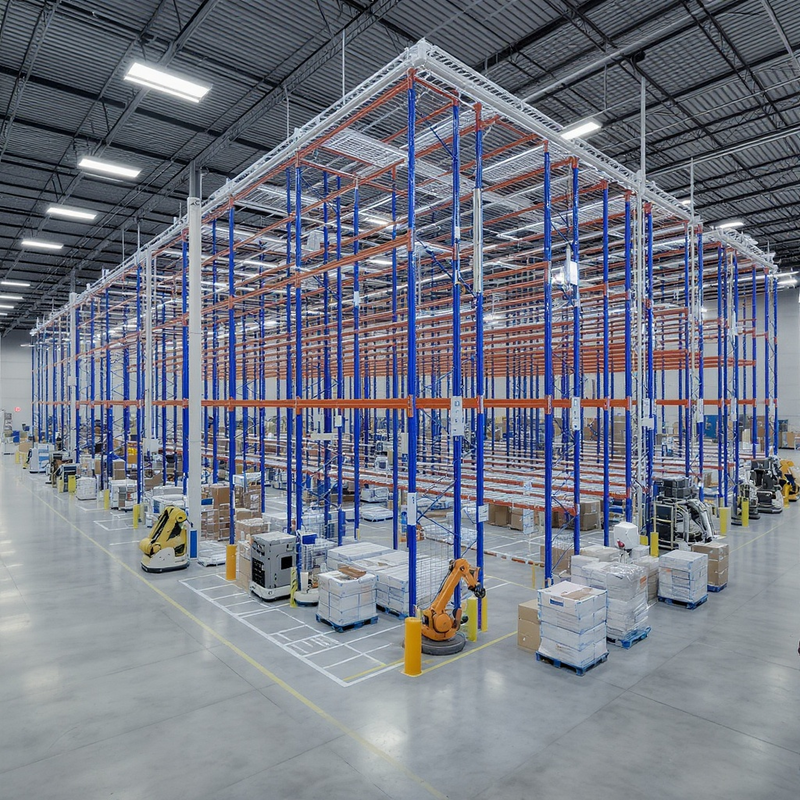
A warehouse management system (WMS) plays a central role in high-rack warehouses to ensure the efficiency and accuracy of warehouse processes. This software-based system supports the control and management of warehouse activities, including inventory management, putaway, order picking, and shipment of goods. Through integration with ERP systems, companies can ensure seamless data flows, which increases transparency and control across the entire supply chain. The digitization of these processes enables real-time data monitoring and analysis, optimizes warehouse capacity, and reduces manual intervention. With the help of artificial intelligence (AI), the WMS can also make predictions and contribute to early problem-solving. In a modern high-bay warehouse, the WMS ensures that automated storage and retrieval machines and sensors operate efficiently to guarantee smooth operations. In this way, the high-bay warehouse becomes a flexible and scalable component of a company’s logistics infrastructure, meeting the growing demands of digitalization and contributing to process optimization.
Automated Control
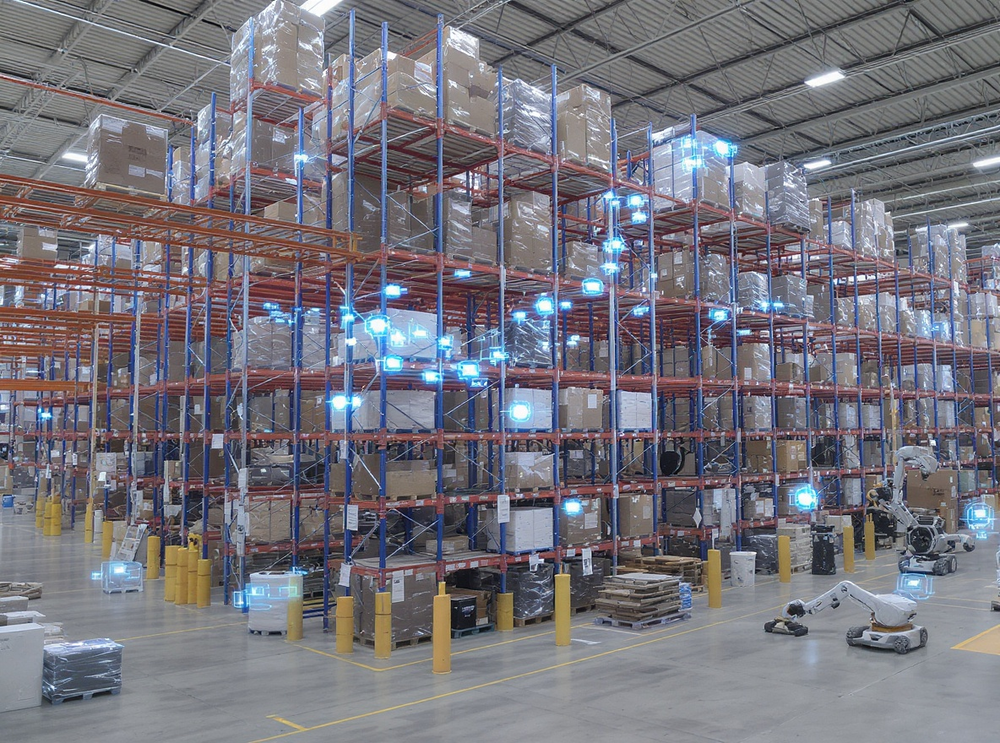
Automated control plays a crucial role in modern warehouse logistics to meet the growing demands for efficiency and flexibility. The use of advanced warehouse management systems (WMS) not only increases the accuracy of inventory tracking but also optimizes the process of receiving and shipping goods. The integration of ERP systems ensures seamless communication between different business units, which improves transparency and control across the entire supply chain. The use of technologies such as the Internet of Things (IoT) enables real-time data on warehouse conditions and goods movements to be collected and analyzed, facilitating quick and informed decisions. In addition, the use of artificial intelligence (AI) in automated control systems allows for the prediction of changes in demand and the optimization of warehouse layouts and internal processes. These technologies not only enable a more efficient use of warehouse capacity but also reduce costs and errors. The digitization of warehouse processes results in a responsive and scalable system capable of meeting dynamic market demands. The interconnection of all components creates a highly integrated environment that forms the foundation for innovative warehouse concepts and future-proof logistics. Overall, automated control helps to significantly optimize logistics and make companies more efficient and competitive in the global marketplace.
Control Logic & Interfaces
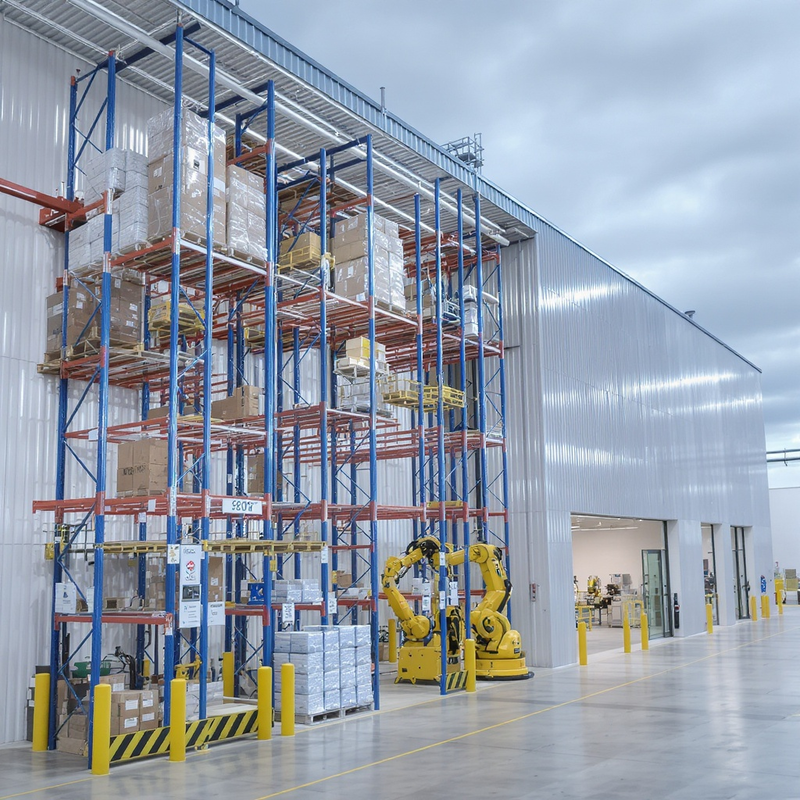
In the world of high-bay warehouses, control logic plays a crucial role in the successful automated management of logistics processes. Modern warehouse management systems (WMS) are designed not only to manage daily warehouse operations but also to integrate efficiently with ERP systems, enabling end-to-end transparency and control of supply chains. The interfaces between these systems and the warehouse infrastructure must operate seamlessly to exchange data in real time and make decisions based on current inventory levels and requirements. The digitization and integration of artificial intelligence (AI) in the warehouse increase precision and speed in logistics planning and execution. The control logic ensures that all components of the warehouse work together optimally, from goods receipt to shipping. It serves as the central nerve that connects various technologies and provides an efficient interface with partners and suppliers. In modern intralogistics, this is key to meeting requirements for flexibility and scalability while simultaneously optimizing costs.
RBG vs. Shuttle Systems
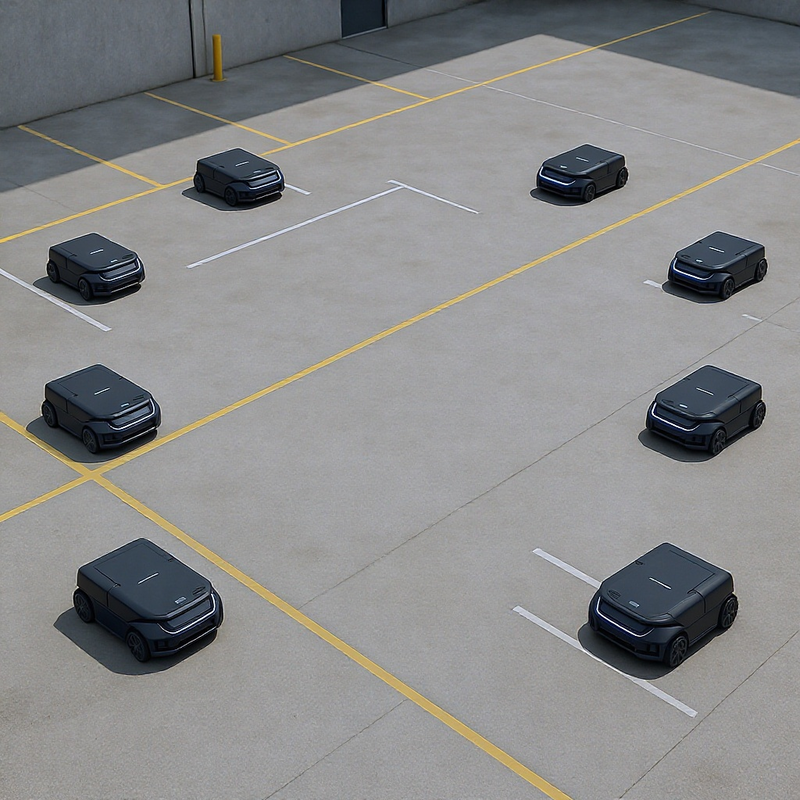
In modern intralogistics, stacker cranes and shuttle systems are at the center of the discussion on automated control. Both technologies offer significant advantages but differ in terms of flexibility and application. Stacker cranes are ideal for high-density warehouses with high utilization rates and offer efficient handling of large volumes. Their linear movement is specifically designed for standard layouts, with a focus on maximizing space utilization. On the other hand, shuttle systems offer greater dynamism and flexibility. These systems are particularly advantageous when frequent changes to the warehouse layout or a high degree of variability in the individual items to be stored are required. They are characterized by their ability to perform various tasks in parallel, thereby offering increased efficiency in complex material handling. When combined with advanced warehouse management software (WMS) and interfaces to ERP systems, both systems provide comprehensive automation solutions that meet the demands of today’s digitized warehouse environment. Ultimately, the choice between stacker cranes and shuttles depends on a company’s specific requirements and objectives.
WMS
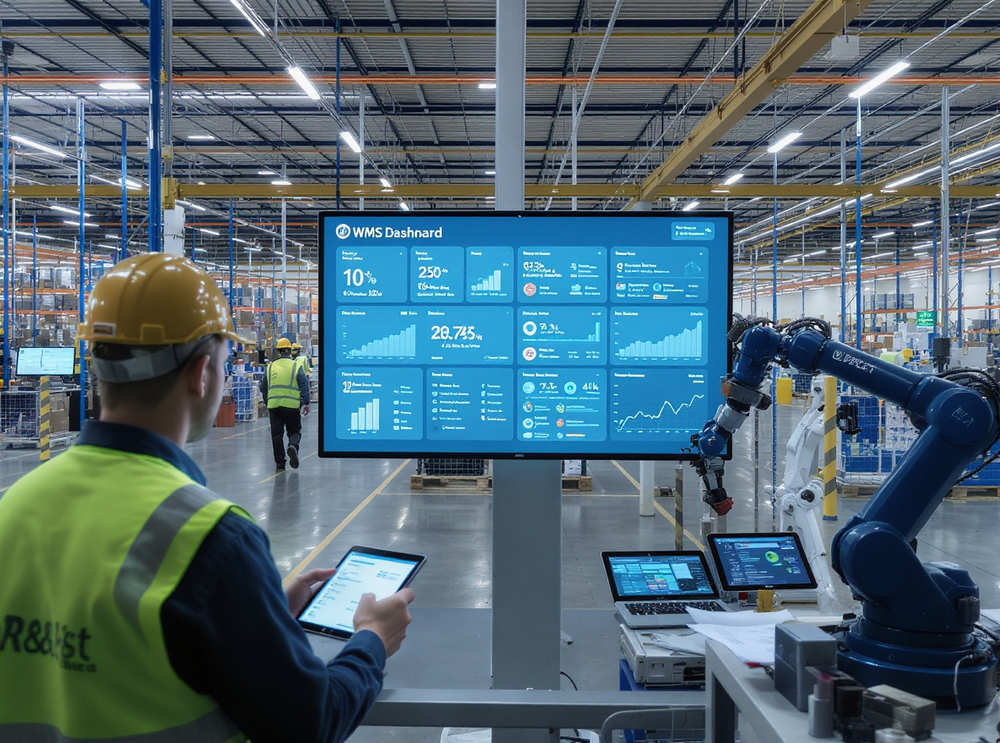
A warehouse management system (WMS) is an essential tool for modern intralogistics that enables the comprehensive control and optimization of warehouse processes. By integrating with existing ERP systems, WMS create a transparent link between operational warehouse processes and higher-level corporate planning. Digitalization has made it possible to take warehouse management systems to a new level by processing data in real time and implementing complex warehouse strategies. Modern WMS solutions are often equipped with artificial intelligence (AI) to make predictions and adjustments that lead to a more efficient use of warehouse space. They not only enable real-time tracking of inventory movements but also optimize picking processes using automatic prioritization algorithms. Another advantage of an advanced WMS is its ability to integrate seamlessly with various digital technologies, ensuring a flexible and scalable logistics solution. This is particularly important in times of rapidly changing market demands and increasing competitive pressure. Overall, a WMS helps companies make their logistics operations more efficient, cost-effective, and error-free, while simultaneously increasing transparency across the entire supply chain. In today’s digital age, advanced WMS systems are indispensable for remaining competitive in warehouse logistics.
WMS Implementation & ROI
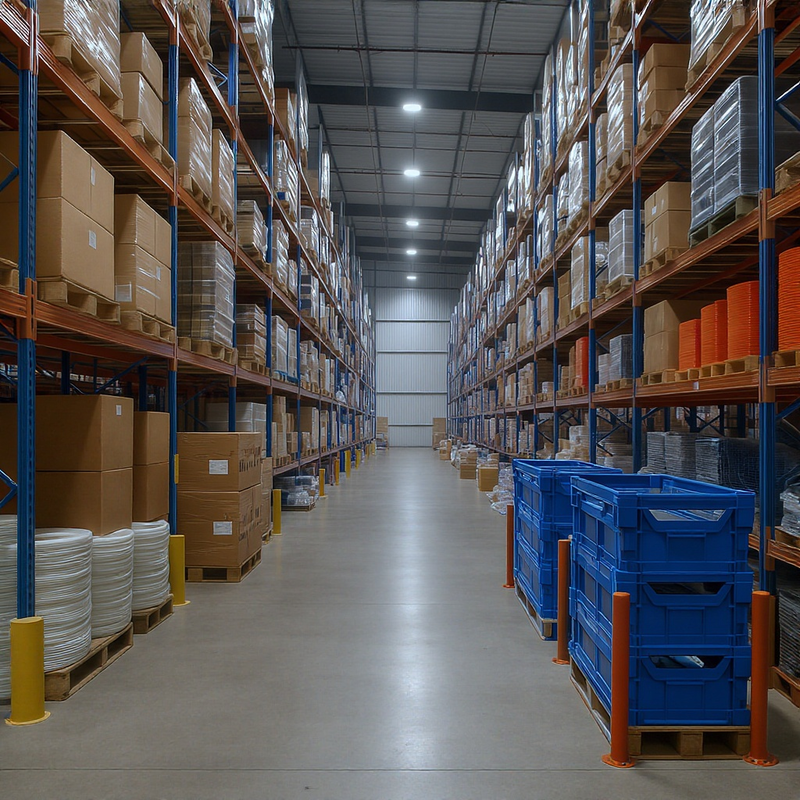
Implementing a Warehouse Management System (WMS) can be complex, but the effort is worth it to maximize the return on investment (ROI). Through seamless integration with existing ERP systems, WMS solutions enable real-time data monitoring and optimized material flows in high-bay warehouses. Digitization ensures more precise control of all warehouse processes and significantly reduces the need for manual intervention. Such a system increases efficiency and lowers operating costs in the long term, which has a significant impact on ROI. While implementing a WMS requires an initial investment of time and resources, it ensures that inventory levels are optimized and error-free order fulfillment is guaranteed. Furthermore, artificial intelligence and automation help increase profitability and improve competitiveness. Companies that invest early in a reliable WMS benefit from comprehensive control and transparency throughout the entire supply chain, which ultimately translates into increased profits.
WMS Basics & Modules
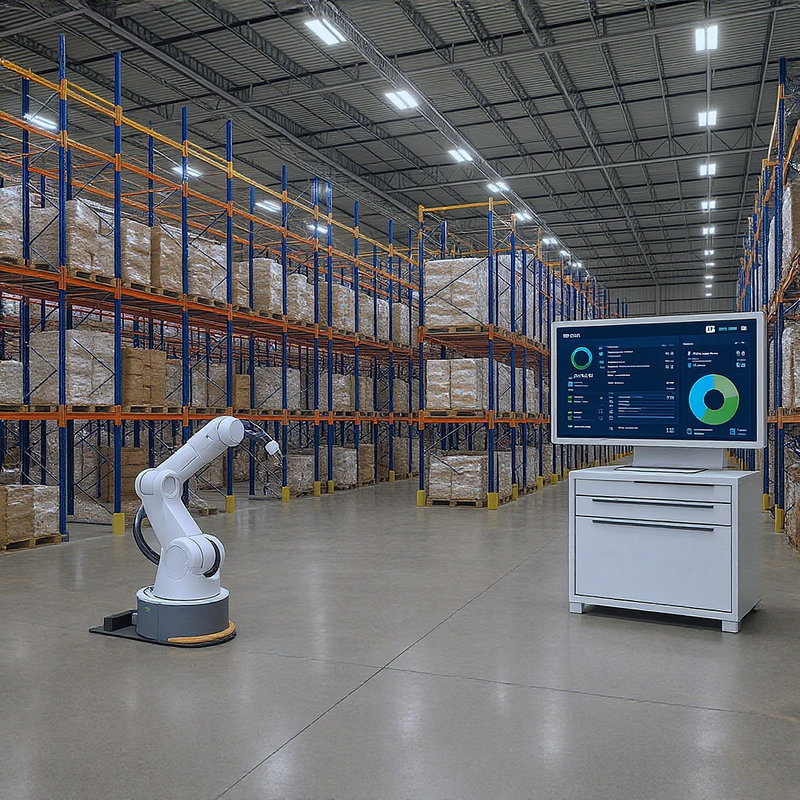
A Warehouse Management System (WMS) is specialized software designed to optimize warehouse logistics processes. It offers basic functions such as inventory management, putaway and retrieval, and order picking. One of the key features of a WMS is its interface with ERP systems, which ensures seamless communication between business processes and thereby enables the complete digitization of the warehouse environment. Modern WMS solutions are increasingly leveraging technologies such as artificial intelligence (AI) and the Internet of Things (IoT) to further advance automation. These systems offer advanced modules that can be dynamically adapted to a company’s requirements, such as the automation module or the predictive maintenance module, which forecasts potential failures and recommends preventive measures. By integrating all these components, a WMS offers significant advantages in increasing efficiency and transparency in logistics. Interoperability with existing systems also enables a rapid response to market changes and efficient resource management in the warehouse.
Digital Processes
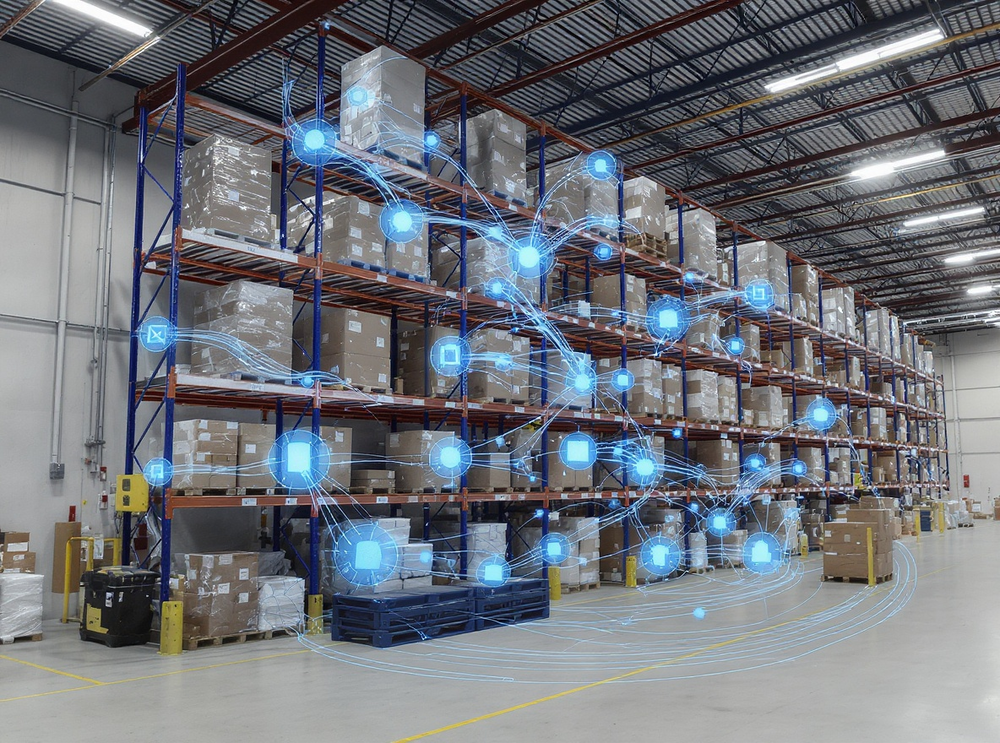
In today’s digital age, digital processes have become an indispensable part of modern high-bay warehouses. The integration of artificial intelligence (AI) and modern warehouse management systems (WMS) enables precise control and optimization of warehouse processes. In particular, the interconnection of systems creates a decentralized structure linked to ERP interfaces to ensure a seamless flow of information. This technology makes it possible to monitor inventory in real time, which not only increases efficiency but also improves flexibility in response to market demands. Automation and digitization ensure that manual intervention is minimized and workflows are consistently optimized, leading to a significant increase in effectiveness and a reduction in the error rate. Sensors and IoT technologies provide precise monitoring of warehouse conditions, while AI-powered systems help drive predictive decision-making. These intelligent methods not only enhance operational reliability but also boost the productivity and responsiveness of logistics processes. Overall, this comprehensive digital transformation creates a synergy that improves both performance and cost efficiency and supports sustainable growth in the modern logistics industry.
Process Automation with AI
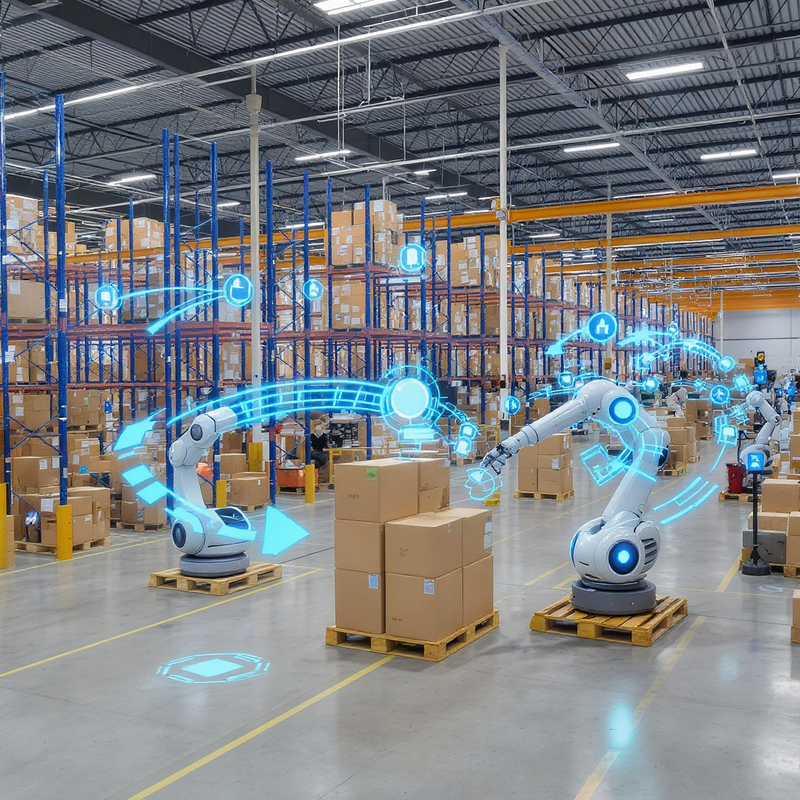
In modern warehouse logistics, process automation using artificial intelligence (AI) plays a central role in optimizing digital processes. AI enables precise control of the flow of goods within the warehouse management system (WMS) and ensures efficient inventory management. Through the networking of sensors and the implementation of real-time data analysis, valuable patterns are identified that support the automation of complex tasks in high-bay warehouses. This includes the integration of robots to handle repetitive tasks, which reduces the workload on human workers and lowers error rates. In addition to operational efficiency, AI-based automation also increases the flexibility of warehouse logistics systems and enables seamless integration with external systems such as ERP systems. The continuous analysis of processes and predictive maintenance of equipment offer further advantages. Companies that adopt these technologies benefit not only from optimized digital processes but also from increased competitiveness in a dynamic market environment.
Data Access & Governance
In the context of digitalization, data access and governance play a central role in modern warehouse management systems (WMS). They not only enable seamless integration with the ERP system but also ensure more efficient control and traceability of inventory. The use of artificial intelligence and the Internet of Things (IoT) enables greater precision in the control and monitoring of warehouse processes. Real-time data access facilitates decision-making and significantly improves responsiveness to market changes. Security protocols ensure that confidential information is protected and meets stringent governance requirements. These digital processes, in turn, promote seamless interoperability between systems, which boosts efficiency and productivity in high-bay warehouses. In this way, the warehouse is transformed into a dynamic network that digitizes and optimizes both human and mechanical processes. Integrating these concepts into warehouse operations enables companies to reduce their operating costs while operating in a more sustainable and competitive manner.
Simulations
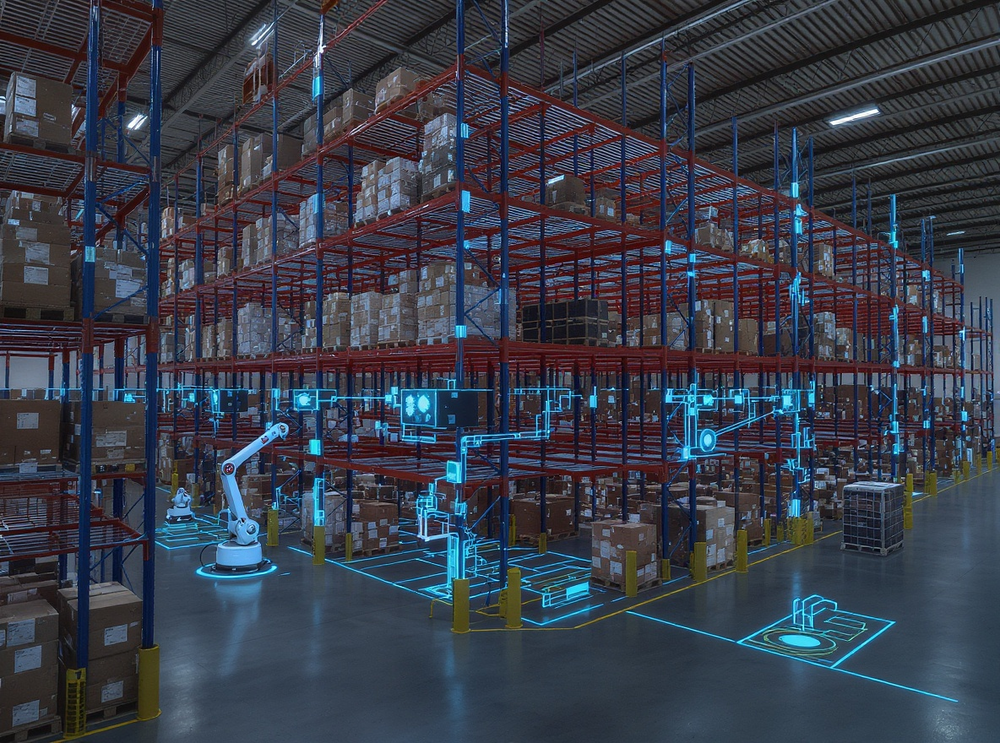
In modern warehouse logistics, simulations are an essential tool for optimizing and planning processes. They allow companies to maximize the efficiency of their high-rack warehouses by creating virtual models that replicate real warehouse environments. By using simulations, logistics professionals can test a wide variety of scenarios without having to make physical changes, which minimizes risks and saves costs. The integration of digitalization into warehouse processes makes this possible while also providing precise data analysis. Modern warehouse management systems (WMS) are often compatible with this technology, enabling real-time control and adjustment of processes.
Another important aspect is the collaboration between digital twins and simulations. They make it possible to monitor and continuously improve the entire lifecycle of a warehouse project. This leads to a significant reduction in errors and increases productivity. By using simulations, companies can respond to changing conditions and maintain flexibility in dynamic markets. Predicting future goods flows using artificial intelligence (AI) and machine learning also benefits significantly from simulations.
For these reasons, many companies view the implementation of simulation technologies as indispensable for sustainable development and a competitive advantage in warehouse logistics. The ability to test various scenarios in advance provides the assurance of maximizing the effectiveness of investments in digitalization while simultaneously optimizing operating costs. In a constantly changing business environment, simulations are therefore a crucial element of modern warehouse strategy.
Benefits & Examples
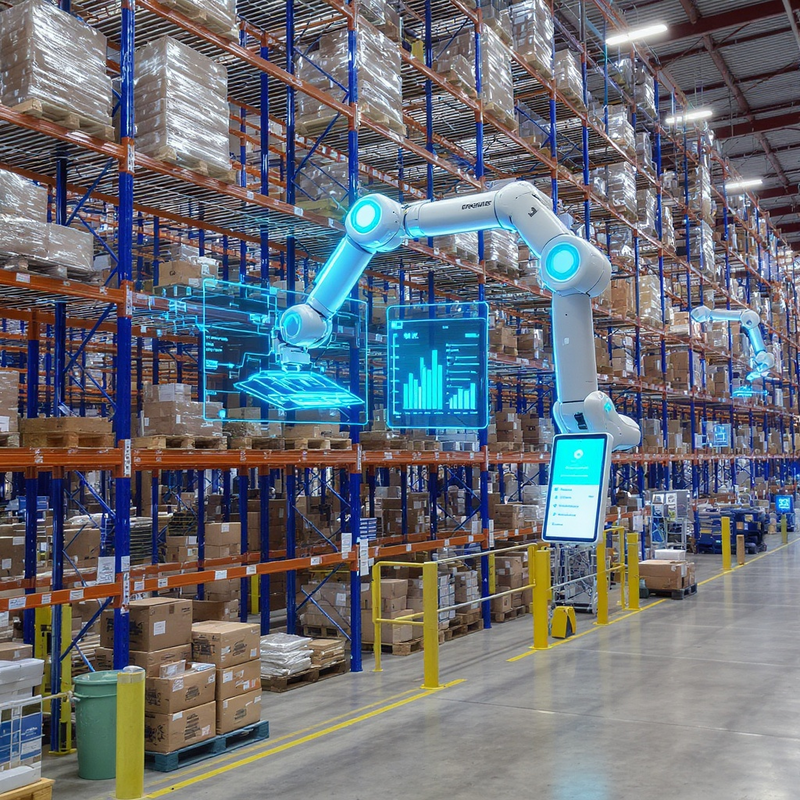
The digitization and automation of high-bay warehouses offer clear advantages and open up new opportunities for improving efficiency in intralogistics. By using warehouse management systems (WMS), companies can achieve precise control over the flow of goods and further increase benefits by integrating interfaces with ERP systems. This digital connectivity improves transparency and enables rapid adaptation to market changes. Artificial intelligence (AI) plays an increasingly important role here, as it enables optimizations through simulations and provides forecasts on inventory trends. A practical example is the use of digital twins, which create virtual representations of physical warehouses to simulate change processes before they are implemented. In this way, companies reduce risks and costs and significantly improve their decision-making. The integration of IoT devices and robots also boosts efficiency by continuously monitoring warehouse conditions and automating tasks such as order picking. Overall, these technologies lead to a clear optimization of warehouse processes, reduce manual intervention, and thereby increase productivity.
Digital Twins & Simulation
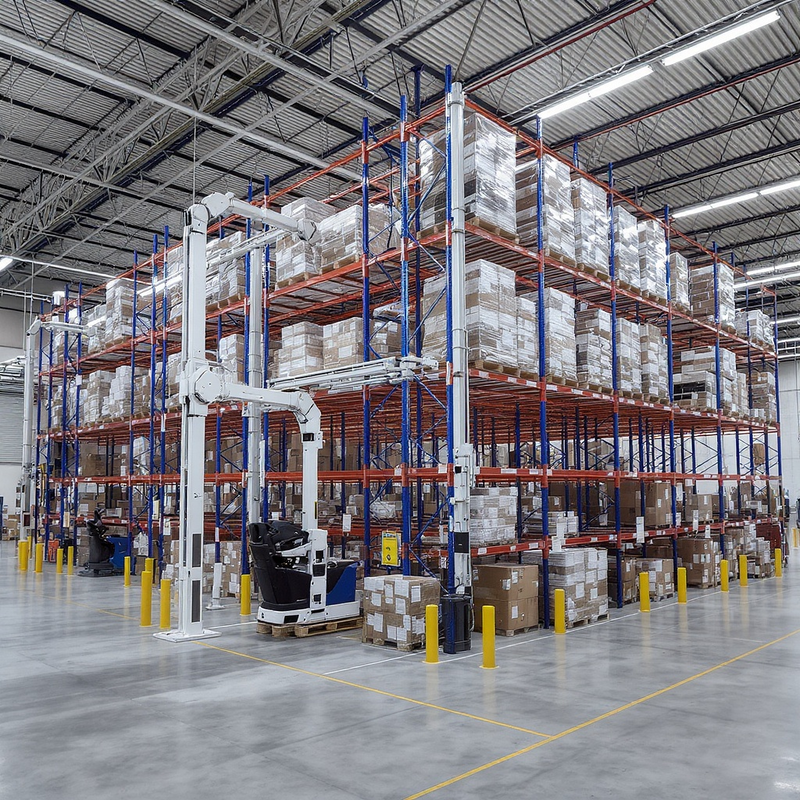
In modern intralogistics, digital twins and simulations play a crucial role by enabling real-time insights and improved planning processes in high-bay warehouses. A digital twin is a virtual representation of a physical warehouse. This technology allows companies to optimize warehouse processes by testing and simulating changes before they are implemented. This leads to a reduction in risks and costs. With precise simulations, companies can improve the layout and operational efficiency of their warehouse environment and anticipate unexpected challenges. Warehouse management systems (WMS) are supported by these digital technologies through seamless interaction with Enterprise Resource Planning (ERP) interfaces, thereby enabling full integration of digitalization into the warehouse environment. These advances in logistics accelerate decision-making, increase efficiency, and lead to smarter warehouse solutions. Ultimately, they help address the challenges of modern, dynamic supply chains and realize competitive advantages through intelligent, data-driven systems.
Artificial Intelligence
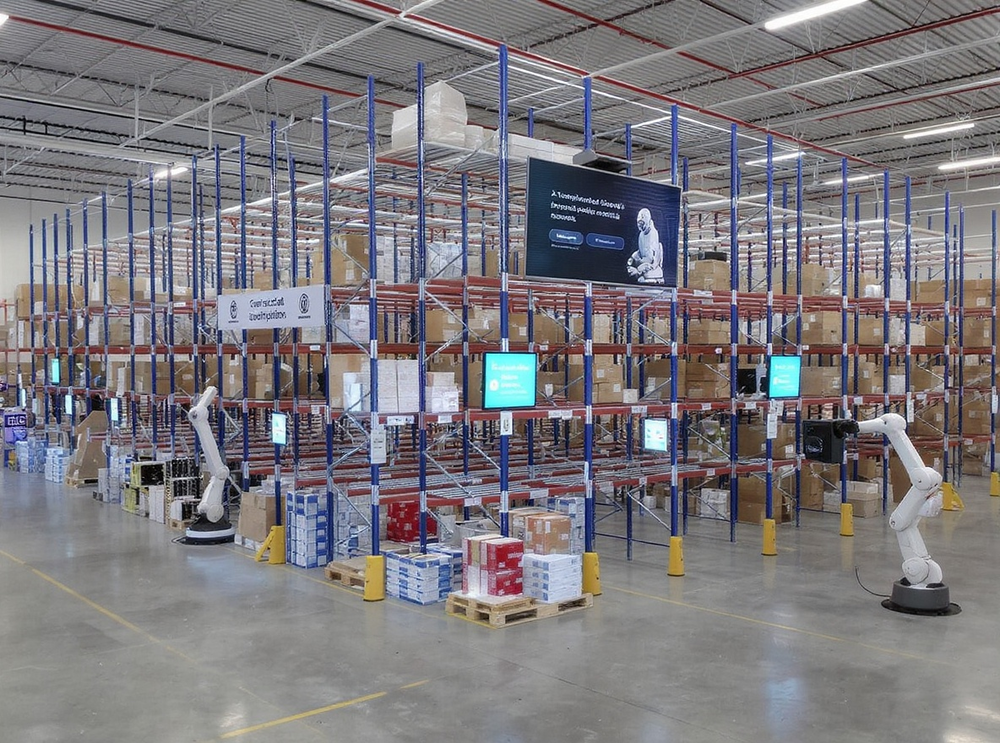
Artificial intelligence (AI) is revolutionizing warehouse management systems (WMS) through its ability to analyze vast amounts of data and make accurate predictions. In a digitized high-bay warehouse, AI optimizes warehouse layout planning and improves the forecasting of inventory trends. The use of machine learning automates complex decision-making processes, making warehouse operations more efficient and less prone to errors. For example, autonomous mobile robots equipped with AI technologies can handle the picking and sorting of goods. These systems continuously learn from past interactions, further increasing efficiency. Thanks to improved transparency and scalability of processes, companies increase operational reliability and adapt more quickly to the demands of modern logistics. AI-driven predictive maintenance strategies set new standards by forecasting warehouse equipment failures and initiating targeted maintenance measures before problems arise. Integrating AI into an ERP system expands control over the entire supply chain and ensures a seamless connection between different system components. This not only reduces operating costs but also enhances a company’s competitiveness in the dynamic logistics sector. The creation of a digital twin makes it possible to virtually simulate warehouse changes, thereby minimizing risks and enabling innovative solutions to be implemented more efficiently. AI’s intelligent connectivity and analytical capabilities transform high-bay warehouses into agile, responsive units that not only meet today’s requirements but can also anticipate future logistical challenges.
AI-Powered Optimization & Maintenance
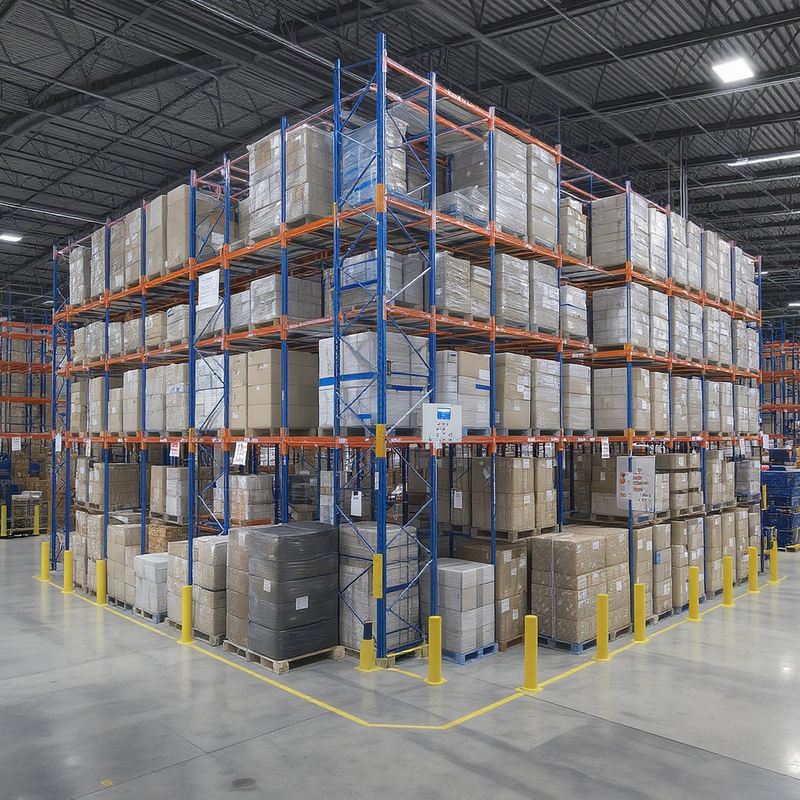
In high-bay warehouses, artificial intelligence (AI) plays a crucial role in optimizing and maintaining these complex systems. AI not only helps optimize warehouse layout planning and efficient order picking, but also aids in predicting and preventing breakdowns. Through predictive maintenance, AI can identify potential problems early on and forecast necessary maintenance tasks, which significantly increases operational reliability. By integrating real-time data, the warehouse management system (WMS) becomes significantly more efficient and provides a better overview of the entire inventory. This enables seamless integration with ERP systems and ensures end-to-end transparency within the supply chain. Such digitalization initiatives not only improve performance but also reduce operating costs and minimize downtime. High-bay warehouses thus become smarter, more autonomous environments in which AI, at their core, elevates efficiency and reliability to a new level.
AI Use Cases in High-Bay Warehouses
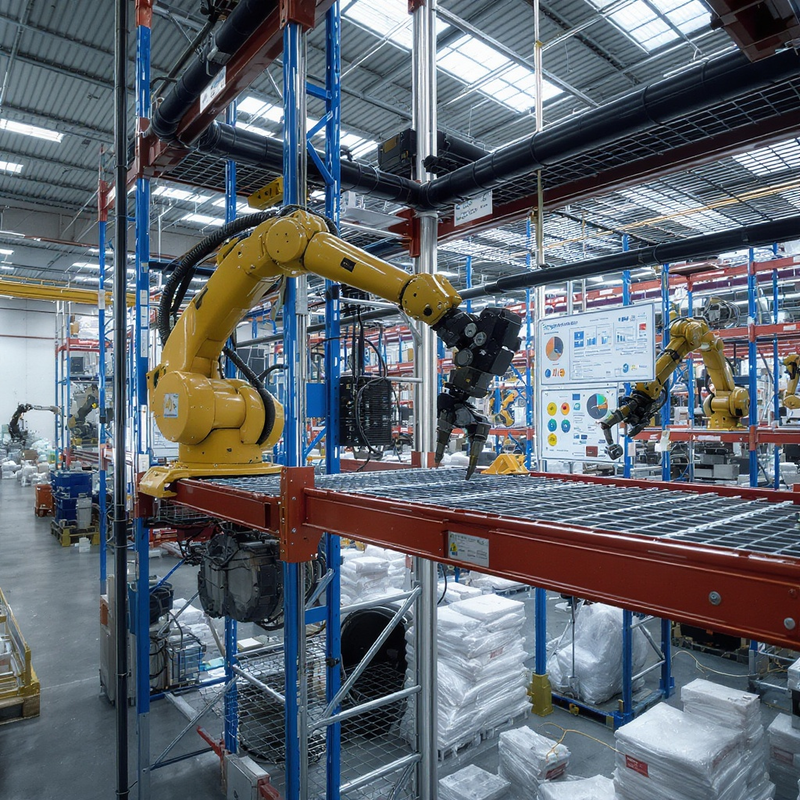
Artificial intelligence (AI) is revolutionizing the world of high-bay warehouses by improving efficiency and precision. Thanks to AI-powered warehouse management systems (WMS), warehouse processes can be optimized to fully utilize storage capacity and identify bottlenecks early on. The integration of interfaces with ERP systems enables seamless coordination between warehouse and business processes, resulting in end-to-end transparency throughout the supply chain. In addition, AI analyzes large volumes of data to identify production patterns and forecast inventory trends. Digitalization and automation also offer the opportunity to minimize manual intervention, leading to greater operational reliability. In modern warehouses, autonomous robots perform tasks such as order picking and sorting, supported by networked sensors that ensure continuous monitoring of warehouse conditions. As a result, companies achieve unprecedented flexibility and scalability that meet the demands of modern logistics and strengthen their competitiveness in the market.
Inventory Management Software
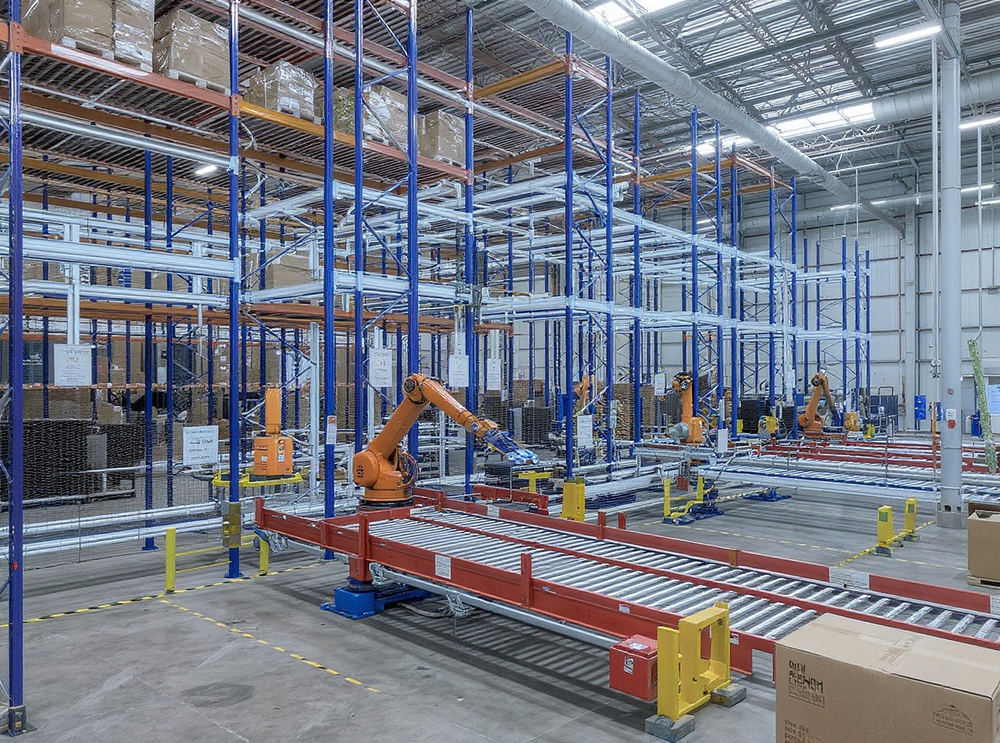
In the fast-paced world of logistics, warehouse management software (WMS) is a critical success factor. It serves as the core system that efficiently coordinates complex warehouse processes. In modern high-bay warehouses, digitalization enables precise control of goods flows and the optimization of warehouse capacity. Interfaces with ERP systems ensure seamless integration and comprehensive transparency across the entire supply chain. Artificial intelligence plays a crucial role by making predictions through pattern recognition and machine learning, thereby contributing to process optimization. The networking and automation of all components result in a dynamic, scalable warehouse system that is capable of meeting the demands of the modern logistics environment. Such a system reduces manual intervention and significantly increases efficiency. In addition, warehouse management software ensures improved inventory control, optimized picking strategies, and increased productivity by monitoring and adjusting processes in real time. The digitization of these systems not only opens up new possibilities in inventory management but also enables the implementation of more sustainable and cost-efficient processes. Companies that rely on a sophisticated WMS are able to respond flexibly to changing market conditions and thus secure a competitive advantage in the ever-evolving world of intralogistics.
Selection Criteria

Choosing the right warehouse management software is crucial for optimizing warehouse processes and integrating modern technologies. From compatibility with existing interfaces to ERP systems to support from artificial intelligence and digitalization, a system’s success depends on various factors. An important consideration during the selection process is the system’s flexibility to adapt to future market demands. The ability to process and analyze real-time data is equally essential for making quick and informed decisions. Ease of implementation and user-friendliness also play a crucial role in ensuring high user acceptance. Security aspects—particularly the protection of sensitive data against cyber threats—should not be overlooked. Good warehouse management software should also be supported by regular updates and support from the provider to ensure it remains up to date with the latest technology and meets evolving requirements.
LVS vs. WMS: Differences
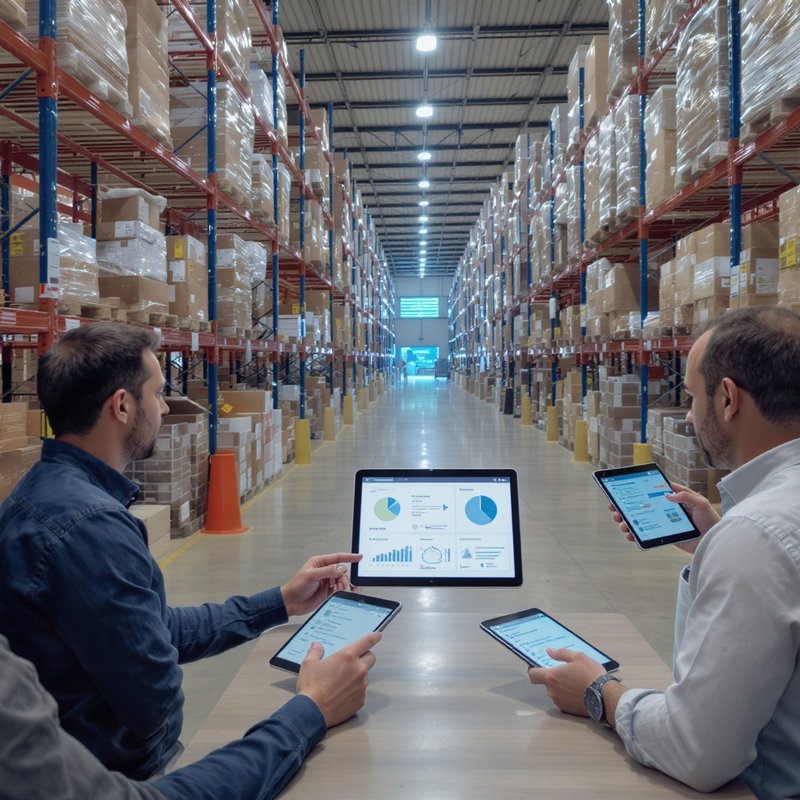
In modern warehouse logistics, the distinction between warehouse management systems (WMS) and warehouse management systems (WMS) plays a key role. A warehouse management system (WMS) is designed to automate basic tasks such as inventory control, putaway and retrieval processes, and inventory management. A WMS is often used in smaller operations where requirements are manageable and focused on core logistics processes. In contrast, Warehouse Management Systems (WMS) offer a more comprehensive solution for warehouse logistics. A WMS integrates additional functions, such as planning warehouse operations, optimizing storage space utilization, and providing seamless interfaces to ERP (Enterprise Resource Planning) systems. Modern WMS solutions leverage digitalization and artificial intelligence (AI) to generate more accurate forecasts and streamline processes. For companies whose warehouse management is characterized by high complexity and multifaceted requirements, a WMS is the appropriate option. In summary, a WMS represents an enhanced WMS with strategic and operational advantages that meets the challenges of digitalization in logistics.
Digital Twins
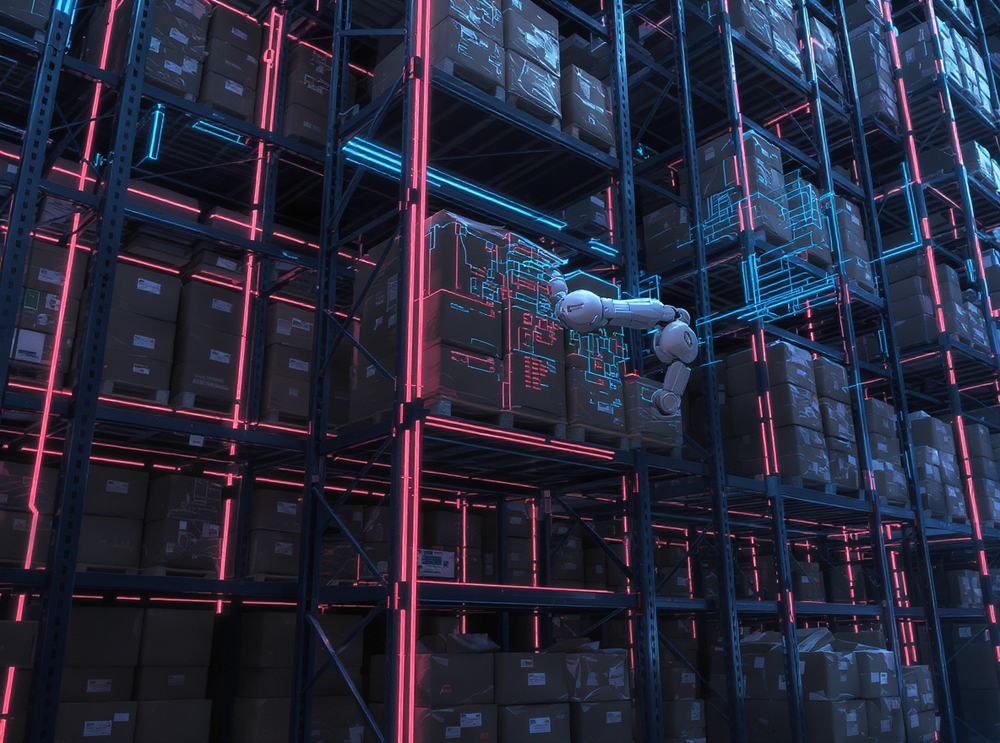
The use of digital twins is revolutionizing the way high-bay warehouses are operated and optimized. A digital twin is a virtual representation of a physical warehouse that makes it possible to simulate and analyze various scenarios before implementing them in practice. This technology offers enormous advantages, as it not only minimizes sources of error and reduces costs but also supports decision-making in the optimization of warehouse processes. Through the interconnected collaboration between the real and virtual warehouse spaces, for example, layout changes or process optimizations can be tested for efficiency before they are physically implemented. The digitization of high-bay warehouses is being further driven by the integration of modern technologies such as artificial intelligence and the Internet of Things (IoT). These enable precise control and monitoring of goods movements in real time, which significantly improves the efficiency and safety of warehouse operations. However, the digital transformation of high-bay warehouses requires not only technological innovations but also targeted planning and continuous process improvement to fully realize its potential. Digitalization is advancing inexorably, and digital twins are a central element in ensuring the flexibility and responsiveness of modern warehouse environments and meeting the challenges of the logistics industry.
Benefits & Applications
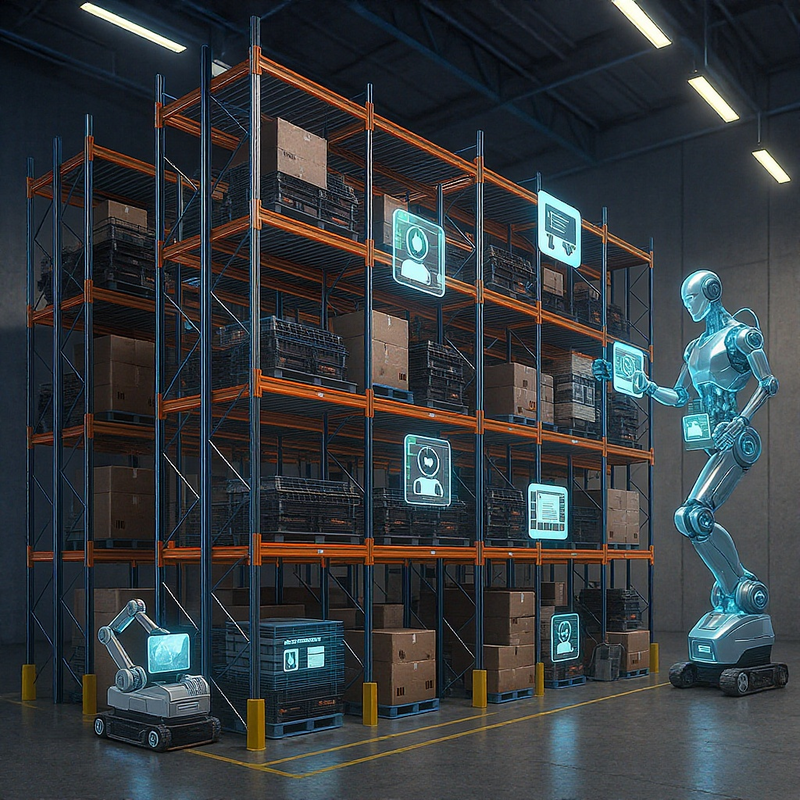
High-bay warehouse software and digitalization offer significant advantages in the modern warehouse management landscape. The use of advanced warehouse management systems (WMS) optimizes workflows, leading to a significant increase in efficiency. These systems integrate seamlessly with ERP interfaces to ensure continuous data processing and increase transparency throughout the supply chain. The use of artificial intelligence (AI) and machine learning in the warehouse environment makes it possible to automate complex processes and perform precise pattern recognition. An outstanding tool for visualizing and optimizing warehouse processes is the digital twin. It enables physical warehouse structures to be virtually mapped and various scenarios to be simulated before changes are implemented. This technology not only reduces risks and costs but also supports decision-making and process optimization. Such digital innovations make high-bay warehouses more agile and responsive to market demands, which is essential, especially in times of fluctuating demand and complex global supply chains.
What is a digital twin in a warehouse?
A digital twin in a warehouse is an accurate virtual representation of a physical warehouse that combines real-time and historical data. This technology enables a comprehensive analysis of the warehouse environment and processes, allowing companies to plan and implement potential optimizations. Digital twins utilize warehouse management systems (WMS) and integrate with ERP systems to ensure end-to-end transparency. Changes—such as layout adjustments or process improvements—can be simulated before they are physically implemented, thereby minimizing risks and costs. Combined with sensors and AI-powered analytics, warehouse processes can be monitored and optimized in real time. In this way, the digital twin offers a flexible, scalable platform to increase logistical efficiency and support decision-making, which contributes significantly to improved operational reliability and responsiveness in modern warehouse environments.
Transportation Systems
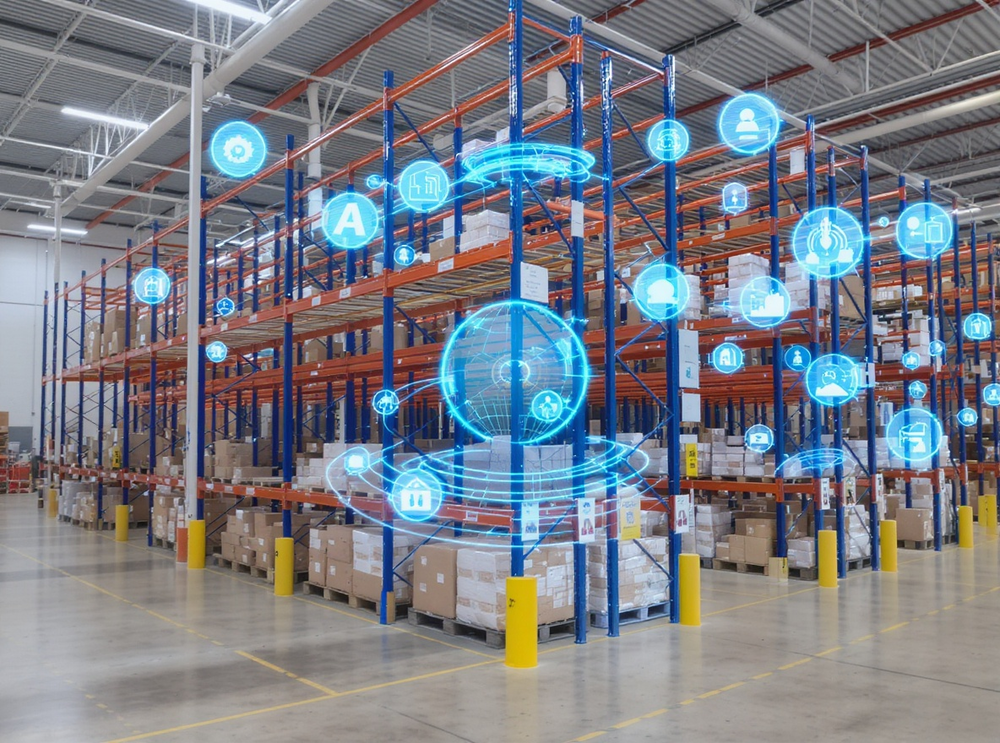
Transportation systems play a crucial role in the digitization and automation of high-bay warehouses. They offer efficient solutions for optimizing the flow of materials within warehouses. Modern transport systems, such as autonomous mobile robots (AMRs) and automated guided vehicles (AGVs), integrate seamlessly with warehouse management systems (WMS) and enable precise control of the flow of goods. Interfaces with ERP systems ensure end-to-end transparency and control across the entire supply chain. The use of artificial intelligence (AI) in these systems allows routes to be adjusted in real time, which not only increases efficiency but also reduces the error rate. Sensors and IoT devices continuously monitor conditions in the warehouse and ensure that transport systems can respond quickly to changes. This integration and connectivity create a highly intelligent and flexible warehouse environment that not only meets the current requirements of the logistics industry but is also future-proofed to address the challenges of Industry 4.0. The combination of automation, software, and real-time data gives transport systems the agility needed to maximize goods throughput while simultaneously reducing operating costs.
Integration into the warehouse
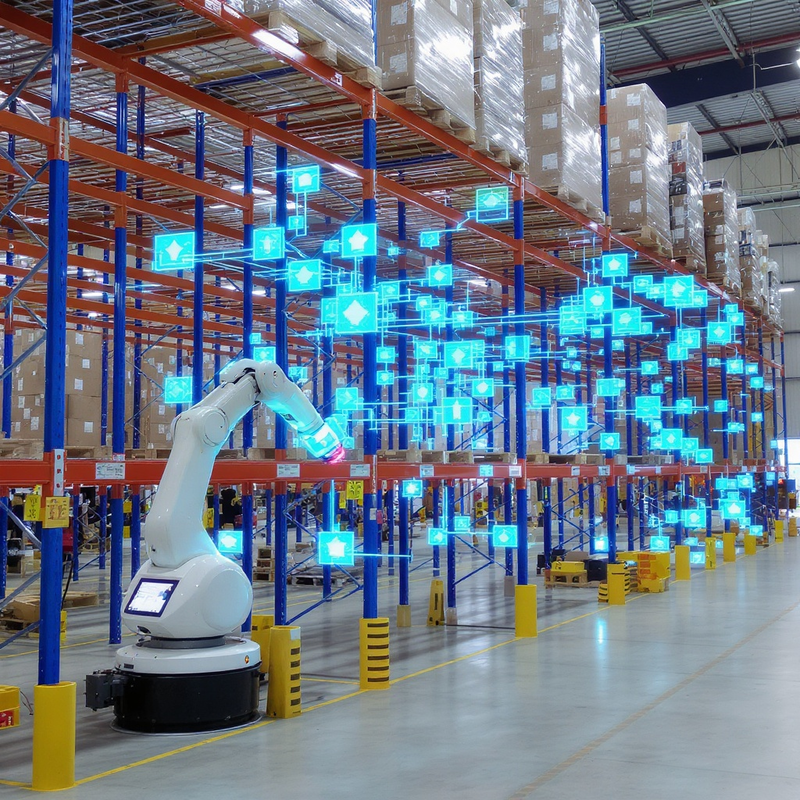
The integration of modern technologies into warehouse processes is revolutionizing the efficiency and flexibility of high-bay warehouses. At the heart of this transformation is the warehouse management system (WMS), which enables seamless integration with ERP systems and thus provides a unified information platform. Through the use of digitalization and artificial intelligence (AI), complex processes are automated and optimized. This includes autonomous transport systems that ensure efficient and precise movement of goods. Such systems use sensors and intelligent algorithms to adjust transport routes in real time and optimize warehouse flow. The resulting transparency in warehouse management enables a faster response to changing market demands while ensuring error-free order fulfillment. In this way, modern software solutions play a crucial role in enhancing companies’ competitiveness in the context of an increasingly interconnected logistics landscape, while also offering the ability to adapt flexibly to dynamic market conditions.
AMR/AGV & Material Handling
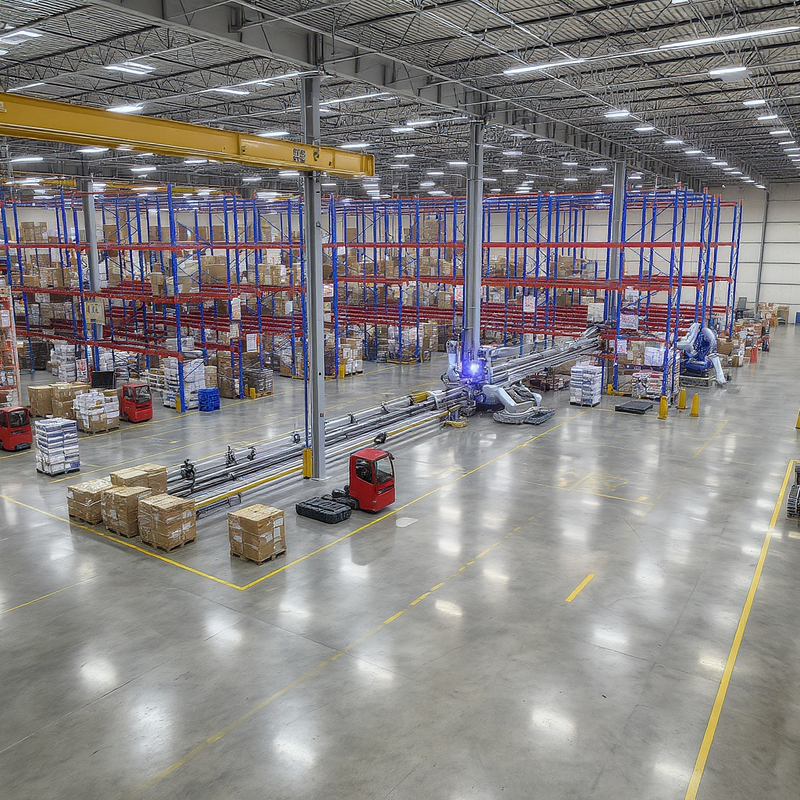
AMRs/AGVs and material handling technology play a crucial role in the digitalization of high-bay warehouses. These intelligent transport systems automate logistics processes and minimize manual intervention. Autonomous mobile robots (AMRs) and automated guided vehicles (AGVs) are capable of navigating warehouse facilities independently and transporting goods. This increases efficiency and reduces costs. Material handling systems, on the other hand, optimize the transport of goods between storage locations by coordinating the flow of materials with high speed and precision. Through the use of advanced warehouse management software, AMRs and AGVs are seamlessly integrated into existing systems, ensuring that warehouse processes run smoothly. The combination of AMRs/AGVs and modern conveyor technology enables companies to optimize their internal operations, make the best possible use of warehouse capacity, and secure a competitive advantage. In an increasingly digitized world, the integration of such technologies plays a key role in achieving success in the logistics industry.
Robots

In modern warehouse logistics, robots are playing an increasingly central role in meeting the growing demands for efficiency and productivity. One example is autonomous mobile robots (AMRs), which are used in high-bay warehouses to pick, pack, or transport goods. This robot-assisted automation reduces the workload on staff, minimizes errors in repetitive processes, and improves the warehouse’s overall efficiency. Particularly when combined with warehouse management systems (WMS) and digitalization, there is significant potential to optimize inventory management and order fulfillment. Artificial intelligence (AI) and machine learning complement this system by analyzing complex data and identifying patterns to further optimize processes. The integration of robots enables the real-time processing of large volumes of data, resulting in a scalable and responsive warehouse system architecture. In addition, interfaces with ERP (Enterprise Resource Planning) systems facilitate data exchange, increase transparency, and provide end-to-end control over the entire supply chain. This combination of digitization and automation makes it clear that the use of robots in high-bay warehouses is an indispensable component of modern logistics. Overall, robots play a key role in increasing operational efficiency and meeting the demands of a dynamic market.
Safety & Human-Robot Collaboration

In modern high-bay warehouses, safety plays a crucial role, especially when humans and robots work together. The use of advanced automation technologies and digital warehouse management systems ensures smooth and safe interaction between human workers and robot-controlled systems. These technologies minimize the risk of accidents while optimizing warehouse operational efficiency. Human-robot collaboration combines human flexibility and decision-making ability with the precision and endurance of robots. To maximize safety, sophisticated safety protocols and sensors are integrated to monitor the movements of both partners. This allows potential hazards to be detected and avoided early on. The integration of artificial intelligence also enables continuous improvement of safety measures through machine learning and data analysis. This innovative collaboration not only promotes the growth and productivity of modern warehouses but also sets new standards in the logistics industry in terms of safety and efficiency.
Types of Robots in High-Bay Warehouses
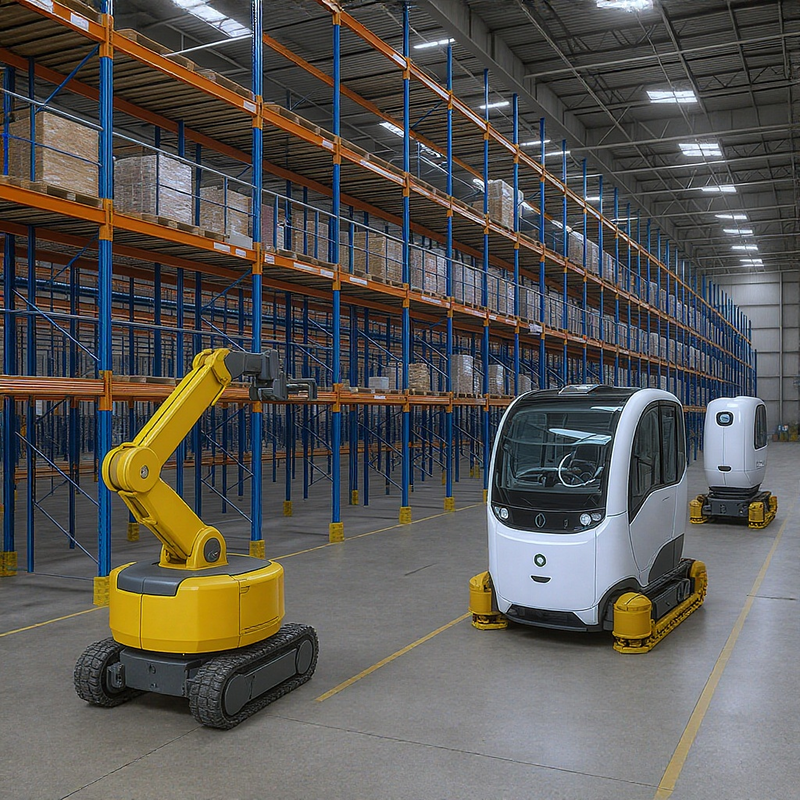
In modern high-bay warehouses, robots play a crucial role in optimizing efficiency and precision. Various types of robots perform specialized tasks to minimize the need for human labor and speed up processes. A common type of robot is the automated storage and retrieval system (AS/RS), which quickly and safely stores and retrieves goods. Autonomous mobile robots (AMRs) navigate the warehouse independently to perform transport tasks. In addition, there are automated guided vehicles (AGVs) that follow fixed routes for transporting goods. This integration of robots significantly increases productivity and reduces error rates. Furthermore, flexibility is enhanced because the robots are capable of performing various tasks as warehouse requirements change. The integration of such robotic solutions into the existing warehouse infrastructure ensures that companies can better respond to market fluctuations and make optimal use of their capacities. In the context of digitalization, the use of robots in warehouses has become indispensable and is an essential component of modern intralogistics systems.
What security issues arise from connected warehouse solutions?
Connected warehouse solutions increase efficiency but also introduce new security requirements. Centralized systems represent potential targets for cyberattacks; therefore, network security, access controls, regular patch management, encryption, and network segmentation are necessary. Physical security remains just as important: secure access points, robotic safety features, emergency stop switches, and protective covers. Data protection compliance, audits, and role-based access controls prevent data misuse. Backups, disaster recovery plans, and redundant infrastructure ensure business continuity. Employee training promotes safe behavior. Finally, clear governance, stable SLAs with suppliers, and monitoring of security incidents ensure sustainable operational security. Regular penetration tests, training, and emergency drills keep the system resilient and ensure that customer data remains protected. Transparent reporting of security incidents strengthens trust and compliance worldwide.
How can WMS integration increase transparency in the supply chain?
WMS integration increases transparency by consolidating warehouse data, production orders, shipping information, and delivery dates in real time. Through bidirectional interfaces with ERP, transportation management, CRM, and partner portals, stakeholders gain immediate access to status updates, inventory levels, and capacity. Transparent workflows lead to consistent documentation, seamless tracking, and auditable processes. Historical data supports trend analysis, budget planning, and risk management. Automated notifications minimize delays, while dashboards provide planners with a clear overview. Improved transparency builds trust, facilitates communication with suppliers and customers, and enables more proactive management of the entire supply chain. Furthermore, the real-time view facilitates fair billing, accurate delivery records, and better forecasts for inventory requirements and capacities, thereby strengthening competitive advantages in the long term.
What are the benefits of IoT sensors in high-rack warehouses?
IoT sensors provide continuous data on temperature, humidity, air quality, vibrations, movements, and shelf locations. Sensors enable real-time monitoring of environmental conditions, the condition of the infrastructure, and the condition of stored goods. Alerts triggered when threshold values are exceeded help minimize waste, spoilage, or damage. Sensor technology also supports location tracking, inventory tracking, and deviation analysis. The collected data is integrated into WMS and ERP systems, enabling predictive maintenance, optimized storage conditions, and more efficient safety measures. Scalable networks and edge computing reduce response times, improve availability, and contribute to transparency, compliance, and sustainable operations. In addition, sensors enable better planning of warehouse capacity, help reduce costs, and significantly support environmental and safety goals in day-to-day operations.
How do automated storage and retrieval systems (ARS) and shuttles work?
Automated storage and retrieval machines (SRMs) move shelves and pallets to a picking station or putaway point. They operate in aisles and control putaway and retrieval via linear or vertical axes. SRMs increase capacity, reduce manual movement, and improve safety by automating repetitive tasks. Shuttle systems operate as standalone transport systems: storage bays are served by dedicated shuttles that transport pallets to picking stations based on order priority. Both solutions require precise control, sensor technology, barcode/RFID identification, and a robust infrastructure. Interfaces with the WMS, conveyor systems, and ERP are essential for consistently tracking real-time data, performance metrics, and error scenarios. Training on operation, maintenance requirements, and safety inspections ensure long-term operational reliability and enhance availability and quality.
What technologies enable real-time inventory management in a high-bay warehouse?
Real-time inventory management relies on sensor technology, RFID tagging, barcode scanning, mobile devices, and cloud/edge computing. The WMS updates inventory levels immediately after goods receipt, stock transfers, order picking, or shipping. IoT sensors monitor temperature, humidity, or the locations of items. RFID tags provide contactless location tracking, while barcodes enable rapid validation. The integration of scanning stations, conveyor systems, warehouse control, and ERP ensures end-to-end transparency. Dashboards display discrepancies, fluctuations, or stockouts in real time. Predictive analytics complements the system, forecasts bottlenecks, enables stock level planning, and supports proactive reordering as well as just-in-time deliveries. In addition, seamless integration with the ERP system increases accuracy, reduces error rates during inventory counts, enables rapid resource planning, and minimizes labor requirements in the warehouse.
What are digital twins, and how do they help with the planning of high-rack warehouses?
A digital twin is a virtual representation of a physical warehouse, including structures, conveyor systems, sensor data, and operational logic. It is used to simulate, analyze, and validate concepts before changes are implemented in the real world. Planners test layout variations, maintenance strategies, space allocations, and robot paths within the model, identify bottlenecks, and evaluate investments. Fed with real-time data, the twin also enables monitoring, deviation analysis, and predictive maintenance scenarios. The project becomes low-risk, cost-effective, and faster to implement. In the long term, the digital twin creates transparency, facilitates budget decisions, and improves the quality of digitization projects through iterative optimization. It complements decision-making processes, supports scenario planning, helps stakeholders assess investment risks, and ensures acceptance. It also significantly accelerates commissioning.
What role do AI and machine learning play in warehouse optimization?
AI and machine learning identify patterns in large volumes of warehouse data, optimize layouts, forecast demand, and automate decision-making. Models predict inventory trends, optimize FIFO/LIFO strategies, determine picking routes, and reduce search times. During operations, AI-driven algorithms support material flow control, improve slotting strategies, and perform predictive maintenance to prevent downtime. Deep learning approaches allow route planning to be adapted in real time to changing conditions. AI also enables anomaly detection, quality controls, and safety optimization, for example through the assignment of tasks to robots. AI increases productivity, reduces costs, and strengthens competitiveness through data-driven, adaptive processes. Additional benefits include flexible scalability, improved employee safety, and consistent delivery performance—even during seasonal fluctuations.
How does digitalization support the flow of goods in high-bay warehouses?
Digitalization optimizes the flow of goods through centralized planning, real-time data, and automated material handling systems. WMS software coordinates goods receipt, storage, order picking, packaging, and shipping in a logical sequence. Sensors, AML (AMR) robots, AGVs, and shuttle systems move goods with precision and document every movement. Transparent status displays, location data, and delivery priorities minimize search times, misloads, and idle time. Route optimization, continuity checks, and just-in-time mechanisms significantly reduce throughput times. Digital dashboards support dispatchers, enable proactive decision-making, and reduce disruptions. The integration of the warehouse, ERP, and suppliers creates a stable, scalable supply chain that responds flexibly to fluctuations in demand. Furthermore, digitalization facilitates traceability, auditability, and compliance in sensitive industries and strengthens customer trust in the long term.
What are the typical interfaces between WMS and ERP systems?
Typical interfaces connect WMS systems with ERP systems to ensure consistency in master data, inventory, orders, and transactions. These include API-based REST/SOAP interfaces, file-based integrations, as well as event screens and messaging queues such as MQTT or AMQP. Key data objects include material master records, bills of materials, suppliers, sales orders, scheduling agreements, storage locations, movements, and financial data. Tight integration enables end-to-end transparency, consistent postings, and automated documents. Typical integration patterns include synchronous real-time updates upon goods receipt, asynchronous post-processing of picking data and ERP updates, and bidirectional synchronization of master data. Quality control, error management, and governance are crucial for ensuring data consistency. In addition, companies benefit from standardized interfaces, versioning, monitoring, error handling, and role-based access control. Clear governance prevents data duplication and enhances compliance. Efficiency.
What is a Warehouse Management System (WMS), and what benefits does it offer in high-rack warehouses?
A Warehouse Management System (WMS) controls, documents, and optimizes all operational warehouse processes. It manages inventory, orders, storage locations, and shipments in real time and ensures consistent data quality. In high-bay warehouses, a WMS enables centralized planning of order picking, automated stock transfers, and efficient route planning through narrow aisles. It also provides auditability, traceability, and transparency for sales, production, and logistics partners. Graphical user interfaces, mobile devices, and interfaces with conveyor systems increase accuracy and reduce errors. Scalability, integration with ERP systems, and regular updates ensure adaptability to growing demands, e-commerce requirements, and regulatory standards. This helps reduce costs, shorten lead times, increase customer satisfaction, and improve competitiveness.
Which case studies illustrate the successful digitization of high-rack warehouses?
Case studies show measurable benefits from digitalization. The VitaCube example from Vitakraft demonstrates centralized control, 44,000 pallet spaces, 230 putaways and retrievals per hour, and full EDY integration with SAP. Other case studies highlight SSI Schäfer solutions that combine WMS/WES integration, cloud modules, and AI-driven optimization. Automated shuttles, robotic operations, and IoT sensors lead to a reduction in manual tasks, greater accuracy, and lower error rates. Companies report faster throughput and process speeds, improved transparency, sustainable energy use, and significant cost reductions over several quarters. Such success stories serve as references, measure ROI, reduce implementation risks, and support planning for scaling and multi-site rollouts. They provide best practices, key metrics, and roadmaps for Industry 4.0 transformations in logistics and inspire both investors and customers.
What standards and specifications apply to interfaces in intralogistics?
Various standards and specifications apply to interfaces in intralogistics, facilitating interoperability and data exchange. Key references include EDI sub-specifications, API standards (OpenAPI), OPC UA for industrial communication, MQTT or AMQP as messaging standards, and ISO/IEC standards for IT security, data protection, and quality management. Many providers use SAP, Oracle, or Microsoft standards, making the harmonization of data formats and terminology essential. Additionally, industry standards such as GS1 barcodes, GTIN, lot IDs, and serialization are supported. Compliance with regulatory requirements, documentation obligations, and audit trails enhances transparency, compliance, and traceability throughout the supply chain. Companies should therefore factor in audits, certifications, and regular updates to remain legally compliant and competitive in the long term.
How do cloud-based and on-premises approaches affect high-bay warehouse software?
Cloud versus on-premises models affect costs, scalability, security, and availability. Cloud solutions offer rapid implementation, automatic updates, global access options, and a scalable infrastructure without high upfront costs. They are well-suited for multi-site environments, fluctuating workloads, and SaaS models. On-premises solutions offer maximum control, meet specific security and compliance requirements, and enable custom integrations. They are suitable for highly sensitive data, slow internet connections, or heavily regulated industries. A hybrid architecture combines the advantages of both approaches. The choice depends on data sovereignty, total cost of ownership, security audits, operational profiles, and business development. Consider availability, response times, migration requirements, data migration, backup strategies, compliance, and the long-term impact on service levels. A hybrid architecture combines the advantages of both approaches. The choice depends on data sovereignty, total cost of ownership, security audits, operational profiles, and business development. Consider availability, response times, migration requirements, data migration, backup strategies, compliance, and the long-term impact on service levels.
What are the best practices for migrating legacy systems to WMS?
Best practices for migration include a clear roadmap, stakeholder alignment, a requirements foundation, and risk management. Start by taking stock of existing systems, identifying redundant processes, and defining target KPIs. Choose phased migration paths, start with pilot areas, and test interfaces and data migrations before expanding the rollout to other areas. Data quality is critical: cleanse, normalize, and harmonize master data. Ensure interface standards and use middleware to increase stability. Training, change management, and support structures help prevent resistance. Plan operations, backups, and contingency plans in parallel to minimize disruptions. Identify success factors, document lessons learned, and ensure long-term optimization of warehouse logistics for the company.
What level of interoperability is required between WMS, WES, ERP, and IoT?
Interoperability means seamless communication and data exchange between WMS, WES, ERP, and IoT. This requires open APIs, accepted data models, standardized message formats, and clear governance. WMS controls warehouse processes, WES allocates capacity within the material flow, ERP manages resources and finances, and IoT provides sensor data. A successful model enables bidirectional updates, consistent master data, and synchronization of inventory levels, order statuses, and maintenance events. Security and compliance aspects must be taken into account. Data consistency, error handling, versioning, and monitoring prevent inconsistencies. Scalability, SSO, logging, and auditing support operations across different system landscapes. Clear SLA agreements, data ownership, and role models facilitate operations, security, and compliance in multinational logistics environments and enable greater flexibility when switching providers in the long term.
How does digitalization affect workforce deployment and the shortage of skilled workers?
Digitalization is transforming workforce deployment by automating repetitive tasks, improving employee utilization, and increasing productivity. AI-powered systems assist schedulers, reduce manual planning, and enable just-in-time decisions. Robots, AMRs, and automated material handling systems take over repetitive tasks, allowing skilled workers to focus more on supervision, maintenance, data analysis, and system optimization. This helps mitigate the shortage of skilled workers by utilizing existing staff more efficiently. Nevertheless, new requirements for qualifications, training, and safety knowledge are emerging. Companies are investing in training, change management, and operational expertise to successfully navigate the digital transformation and maintain job satisfaction. In the long term, this leads to lower employee turnover, higher motivation, and better customer experiences thanks to more stable warehouse operations.
What role does the digital twin play in layout optimization?
The digital twin enables the virtual optimization of warehouse layouts, aisles, storage location configurations, and conveyor systems. By simulating goods receipts, picks, congestion points, and bottlenecks, the layout can be tested for cost-effectiveness without disrupting operations. Various alternatives are evaluated, sensitivities are identified, and investment decisions are supported. Real-time data from the physical warehouse is fed into the twin, allowing models to be validated and continuously adjusted. The results serve as the basis for route logic, slotting, safety zones, and maintenance schedules. This increases throughput while minimizing costs and reducing risks before changes are implemented. The validation also supports compliance requirements, facilitates change management in operations, and provides clear decision-making templates for executives.
How can AI help with maintenance (predictive maintenance)?
AI supports predictive maintenance by analyzing sensor and usage data, identifying patterns, and forecasting maintenance intervals. Anomaly detection allows atypical behavior patterns to be identified early on, before failures occur. Machine learning models take into account operating times, load profiles, temperature, vibration, and environmental factors to estimate remaining service life. Data-driven prioritization ensures that high-priority components are serviced in a timely manner, reducing unplanned downtime. Automated maintenance schedules, fault diagnostics, and remote maintenance enable faster problem resolution. Overall, predictive maintenance extends the service life of equipment, reduces costs, and increases the availability of critical infrastructure in high-bay warehouses. Through simulations and predictions, AI models support maintenance budgets, investment decisions, and long-term capacity planning, while further improving safety and compliance.
Which KPIs are relevant for digitized high-bay warehouses?
Key KPIs measure performance, efficiency, and service levels. These include hourly throughput, putaway rate, error rate, percentage of pick-by-voice/light operations, and percentage of automated movements. Inventory accuracy, goods turnover time, warehouse utilization, fleet utilization (AMR/AGVs), and planning accuracy indicate how effectively digitization is working. Orders per hour, on-time delivery rate, and delivery reliability support delivery performance. Energy consumption, maintenance costs per unit, and downtime provide insights into cost efficiency. The effectiveness of route planning, slotting optimization, and inventory changes can be tracked via KPI dashboards. The goal is continuous improvement, transparent accountability, and traceable variance analyses to support data-driven decisions. Together, these metrics enable better prioritization, resource planning, and customer satisfaction, as well as a robust ROI assessment for digitalization projects. Regular audits ensure stability and build trust among stakeholders worldwide.
How can you plan the implementation of an LVS (implementation steps)?
When implementing a warehouse management system (WMS), a multi-stage process is typically followed. Phase 1: Requirements analysis, assessment of existing processes, definition of objectives, KPIs, and data models. Phase 2: System selection, architecture design, and planning of interfaces to ERP, WMS, TMS, and material handling systems. Phase 3: Pilot operation, master data migration, user training, and process adaptation. Phase 4: Rollout in specific areas, monitoring, optimization, and change management. Phase 5: Operations & continuous improvement, regular updates, and evaluation of KPI trends. Clear governance, stakeholder engagement, and a realistic timeline are crucial for avoiding cost overruns and resistance. Risk management, pilot phases, deployment strategies, and training plans ensure sustainable adoption and acceptance within the team and enable a rapid ROI in the long term.